4 Million Barrels a Day: How U.S. Oil Exports Have Defanged Iran
- U.S. crude exports hit an all-time high of 4.0 million barrels per day in 2023, up 567% since 2015.
- Iran’s own shipments have collapsed to 0.7 mb/d under sanctions, a 74% drop from 2017 levels.
- American petroleum products now reach 50 countries, eroding Tehran’s once-dominant Asian customer base.
- Every extra U.S. barrel on the water trims Iran’s pricing power and its geopolitical leverage.
Washington’s shale boom quietly achieved what decades of diplomacy alone could not.
U.S. OIL EXPORTS—When U.S. crude export bans were lifted in December 2015, few analysts predicted America would overtake Iran within seven years. Yet the numbers are unambiguous: the United States is now the world’s largest oil and gas producer, and its surging exports have re-drawn global energy maps at Iran’s expense.
Iranian crude shipments, worth $55 billion in 2017, fetched barely $25 billion last year, according to IMF estimates. Meanwhile, U.S. condensate cargoes sail into China, South Korea, and even the EU—markets Tehran once called its own.
This shift is more than statistical; it is strategic. By saturating markets once cornered by Iran, American hydrocarbons have blunted Tehran’s “energy weapon” and slashed the revenue it funnels to regional proxies.
The Shale Revolution by the Numbers
Between 2010 and 2023, hydraulic-fracturing output from the Permian, Eagle Ford, and Bakken turned the United States into the planet’s swing supplier. Production leapt from 5.5 million barrels per day to a peak of 13.2 mb/d in March 2023, according to the Energy Information Administration (EIA). No other country added so much supply so quickly.
Private operators led the charge. Pioneer Natural Resources, now part of ExxonMobil, lifted 650,000 b/d from the Permian last year, more than the entire United Kingdom. EOG Resources added 500,000 b/d, while Chevron’s shale division doubled to 400,000 b/d between 2018 and 2023.
Export terminals raced to keep pace.
Corpus Christi’s channel was deepened to 54 feet in 2022, allowing Very Large Crude Carriers (VLCCs) to load 2 mb/d. Louisiana’s LOOP and Texas’ Freeport added another 1 mb/d of combined capacity, pushing total U.S. waterborne exports past the 4 mb/d milestone.
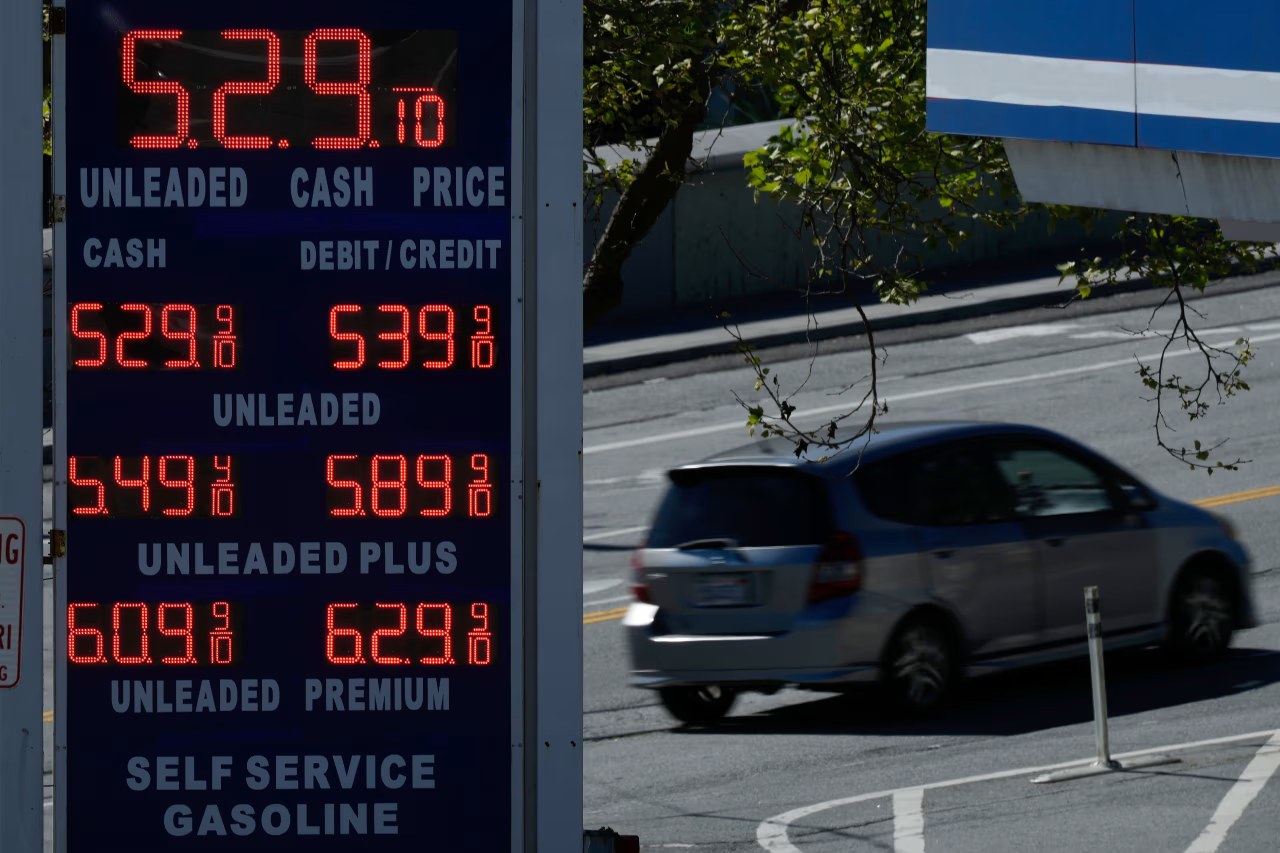
The consequence: Brent prices, which averaged $111 a barrel in 2012, have hovered near $80 since 2021 despite OPEC+ cuts. That $30 discount erodes Iran’s fiscal breakeven, which the IMF pegs at $97 per barrel, and leaves American motorists paying less at the pump.
Yet geology imposes a treadmill. Shale wells decline 60–80% within two years, so holding 13 mb/d requires 800–900 new rigs each year. The Dallas Fed Energy Survey shows producers need $55 WTI to keep output flat; at $45, growth stalls. Even so, EIA’s reference case sees U.S. output staying above 12 mb/d through 2030—high enough to keep Iran boxed in.
Capital discipline also matters. After burning $300 billion of investor cash in the 2010s, public explorers now tie dividends to free cash flow. Exxon’s Permian breakeven fell to $35 in 2023, RBN Energy calculates, meaning every $5 price increment adds $1.2 billion annual cash—cash that funds more exports and further dilutes Tehran’s market share.
Iran’s Lost Customers: Who Picked Up the Slack?
In 2017 Iran sold crude to 16 countries; today only China, Syria, and Venezuela accept its barrels in defiance of U.S. sanctions. Beijing’s refiners lifted 650,000 b/d last year, but even they demanded discounts of $10–12 per barrel versus Brent, cutting Tehran’s take to roughly $55 per barrel landed.
Meanwhile, U.S. light sweet crude has displaced Iranian barrels in South Korea. Seoul imported 260,000 b/d from Iran in 2017; by 2023 it bought zero Iranian oil and instead imported 420,000 b/d from the United States, according to Korea National Oil Corp data.
India’s pivot was even starker.
New Delhi once relied on Iran for 18% of its crude diet. After sanctions snapped back in 2019, Indian refiners replaced Iranian grades with U.S. West Texas Intermediate and Iraqi Basra Light. Indian purchases of American crude jumped from 30,000 b/d in 2017 to 290,000 b/d in 2023, commerce-ministry figures show.
Europe, once Iran’s second-largest buyer, now receives U.S. condensate shipped from Beaumont, Texas, to Rotterdam. Dutch imports of American oil products topped 450,000 b/d last year, up from 85,000 b/d in 2015, according to Eurostat.
Japan and Taiwan likewise shifted. Tokyo lifted 160,000 b/d of Iranian crude in 2017; last year U.S. barrels met 210,000 b/d of Japanese demand. The net result: Tehran forfeited roughly 1.8 mb/d of formerly captive sales, while U.S. exporters gained 1.9 mb/d across the same nations.
Contracting habits hardened. Refiners signed six-month term deals with U.S. suppliers because shale output is scalable—if prices spike, more wells can be drilled within months. Iranian supply, by contrast, carries sanctions risk that can sever bank credit lines overnight.
Trading houses reinforced the trend. Vitol, Trafigura, and Gunvor booked an estimated 1.1 mb/d of U.S. exports in 2023, offering on-the-water cargoes with five-day lead times—logistics Tehran cannot match while operating a “dark fleet” of ageing tankers.
Revenue Shock: $50 Billion Vanishes
Iran’s oil ministry budgeted for $75 billion in hydrocarbon sales in 2017; actual receipts were $55 billion, still enough to fund the Islamic Revolutionary Guard Corps (IRGC) at $14 billion that year. By 2023, however, official oil revenue had fallen to $25 billion, according to the Central Bank of Iran, forcing a 28% cut in defense outlays.
U.S. sanctions target dollar-clearing, but the market share loss hurts more. Every million barrels removed from Iran’s daily sales equates to roughly $29 billion annually at $80 Brent, according to Rystad Energy estimates.
Tehran turned to clandestine channels.
Ship-to-ship transfers in the Strait of Malacca and falsified AIS transponders helped move 400,000 b/d off the books, yet even these “dark” trades fetched only 60–70% of market price once insurance, freight, and laundering fees were deducted.
The fiscal squeeze shows in inflation: Iran’s CPI rose 47% in 2023, the rial plunged to 500,000 per dollar on the unofficial market, and pension arrears sparked protests in Khuzestan and Kurdistan. By contrast, U.S. crude royalties pumped $22 billion into Texas coffers the same year, allowing Austin to cut property taxes 7%.
Social spending is also hit. Iran’s subsidy budget for gasoline, diesel, and kerosene—once $20 billion—was halved, pushing pump prices to 30¢ per litre, still cheap globally but triple 2019 levels. Hospitals in Isfahan reported medicine shortages because importers lacked hard currency to buy Indian pharmaceuticals.
Parliament responded by raising export duties on petrochemicals and mining, yet non-oil exporters now lobby against subsidized exchange rates, arguing they subsidize imports that undercut domestic production. The vicious cycle underscores how lost oil revenue ripples across the economy.
Meanwhile, America’s shale windfall finances other geopolitical tools. Texas’s Permanent School Fund, seeded by royalties, swelled to $55 billion in 2023, underwriting K-12 budgets while Congress debates LNG aid for Europe—an asymmetry Tehran can only watch.
How Sanctions and Surplus Oil Defanged Iran’s ‘Energy Weapon’
Tehran once brandished Hormuz-closure threats each time nuclear talks stalled. In 2012 Admiral Habibollah Sayyari boasted Iran could choke the 21-mile strait through which 21% of traded oil transits. But the calculus changed once the United States became the world’s top oil producer.
Energy Aspects, a London consultancy, estimates that a three-week Hormuz disruption today would push Brent to $120—painful, yet below the 2008 peak of $147. Strategic Petroleum Reserve releases from the United States and IEA members could cover 60% of lost barrels within 45 days.
Washington’s maximum-pressure campaign exploits the cushion.
By flooding the market with sanctioned Venezuelan and Iranian barrels replaced by U.S. supply, Washington keeps prices stable while tightening the financial noose. The Treasury Department’s 2023 report estimates Iran’s foreign-exchange reserves fell below $20 billion for the first time since 2015, limiting its ability to prop up the rial or subsidize gasoline.
Geopolitically, diminished revenue curtails Tehran’s proxy spending. U.S. Special Envoy for Iran Abram Paley told Congress in March 2024 that IRGC-Quds Force transfers to Hezbollah dropped from $700 million annually in 2017 to about $350 million last year, according to Treasury intelligence.
Missile programs also feel the pinch. The Shahid Hemmat Industrial Complex, which builds ballistic motors, had its budget trimmed 15% in 2023, satellite imagery shows reduced activity at the Khojir production site. Likewise, Iran’s Syria garrison shrank from 2,400 personnel in 2020 to an estimated 1,200 today, freeing Damascus payroll for Russian contractors paid in oil.
Naval deterrence is costlier. Every patrol boat Iran adds to the Persian Gulf faces U.S. destroyers escorting Suezmax tankers. Fifth Fleet spokesman Cmdr. Tim Hawkins told reporters in February 2024 that American warships now accompany 90% of VLCCs transiting the strait, a service Washington can afford with a $886 billion defense budget partly funded by oil-royalty income.
Looking ahead, Tehran’s leverage will likely shrink further. By 2026, EIA projects U.S. LNG capacity will reach 24 bcf/d, turning America into the world’s largest gas exporter. If Iran attempts to mine Hormuz, Europe could replace Qatari LNG with American cargoes—an option that did not exist a decade ago.
Is U.S. Oil Dominance a Permanent Check on Iran?
Shale wells decline steeply—output can fall 60% in year two—so maintaining 13 mb/d requires relentless drilling. The Dallas Fed Energy Survey shows producers need $55 WTI to hold production flat; at $45, growth stalls. Yet even conservative forecasts see U.S. output staying above 12 mb/d through 2030, according to EIA’s Annual Energy Outlook 2024 reference case.
Iran, meanwhile, faces mature fields. The giant Ahvaz and Marun reservoirs are 60% depleted, and Tehran lacks the $150 billion it says is needed for enhanced-recovery projects. Without technology partners, Iranian capacity could slip from 3.0 mb/d today to 2.3 mb/d by 2030, Wood Mackenzie projects.
Environmental politics add another layer.
While Washington debates flaring rules and methane fees, both parties see energy exports as leverage. A 2023 Gallup poll found 58% of Americans favor using oil and gas to counter adversaries, up from 42% in 2016. That bipartisan consensus underpins continued licensing in the Gulf of Mexico, where 1.7 mb/d of capacity is slated to come online by 2028.
The net result: Iran’s window to weaponize energy is narrowing. Unless sanctions are lifted or Asian demand soars beyond U.S. supply, Tehran will likely remain a price-taker, not a price-maker, for the foreseeable future.
Technology also favors America. Innovations like EOG’s “double-stack” completions and Chevron’s seismic-guided drilling have cut shale breakevens another 12% since 2020. If benchmark prices merely hold near $70, Rystad expects Permian output to rise another million barrels by 2032, offsetting any Iranian comeback.
Finally, capital markets reinforce the trend. Post-SVB, regional banks tightened energy credit, but deep-pocketed majors stepped in. Exxon, Chevron, and Conoco pledged a combined $55 billion of capex for 2024–26, mostly in the Permian and Gulf, ensuring the investment conveyor belt stays loaded while Iran remains starved of foreign finance.
Bottom line: absent a seismic diplomatic shift, U.S. oil dominance has moved from temporary advantage to structural reality—and Iran’s era of petro-power plays appears over.
Frequently Asked Questions
Q: How much U.S. oil is exported daily?
The United States exported a record 4 million barrels of crude per day in 2023, up from 0.6 million in 2015, according to the Energy Information Administration.
Q: Why has Iran’s oil revenue fallen?
Tighter U.S. sanctions plus rising American supply have cut Iran’s crude exports from 2.7 mb/d in 2017 to 0.7 mb/d in 2023, shrinking annual energy revenue by roughly $50 billion.
Q: Does U.S. oil dominance affect global prices?
Yes. Surging U.S. output—now 13 mb/d—has kept global markets well-supplied, capping Brent near $80 even after OPEC+ cuts, leaving Tehran with fewer customers willing to risk sanctions.
Q: Will U.S. shale production keep growing?
Most analysts see output plateauing around 13 mb/d through 2030, enough to maintain America’s price leverage and keep Iran in check even if wells decline faster than conventional fields.
Q: Could Iran ever regain market share?
Only if sanctions are lifted and it secures $150 billion for field upgrades; without foreign technology partners, capacity could slip another 25% by decade’s end, Wood Mackenzie warns.
