56% of Americans Oppose Iran War as Trump Weighs Escalation
- 56% of Americans oppose U.S. military action in Iran, 44% support it (PBS/NPR/Marist poll, 2026-03-06)
- Iran has disrupted Middle East oil flows, pushing global energy prices higher
- Trump approval on Iran drops to 36%, down 6 points from January 2020
- No signs of Iranian regime collapse or pragmatist takeover after U.S.-Israeli strikes
With oil markets rattled and public support eroding, the White House faces a choice between accepting a limited outcome or committing ground troops to another Middle East quagmire.
IRAN WAR—President Donald Trump’s air campaign against Iran has entered its second week under the name Operation Epic Fury, yet air superiority has not broken Iranian resolve. Tehran has retaliated by throttling the region’s oil exports, sending energy prices soaring and global equities lower, according to a Wall Street Journal opinion piece published Tuesday.
A PBS News/NPR/Marist survey released Friday finds 56% of Americans now oppose the U.S. military action, while only 44% support it. Approval of Trump’s handling of the crisis has slipped to 36%, down six percentage points from the 2020 drone strike that killed Iranian general Qasem Soleimani.
Air Supremacy Fails to Break Iranian Pressure
Despite weeks of precision strikes on Iranian military and government sites, the Islamic Republic has kept up its chokehold on Middle East oil exports. The Wall Street Journal notes that air superiority, even supremacy, hasn’t prevented Iran from putting massive political and economic pressure on Washington by disrupting global energy flows.
No Popular Uprising in Sight
U.S. planners had hoped that degrading Iranian command centers might spark a domestic revolt or empower regime pragmatists. So far, neither has materialized. The Journal concludes there are no signs yet of a popular rebellion capable of toppling the regime, leaving Washington without a low-cost exit ramp.
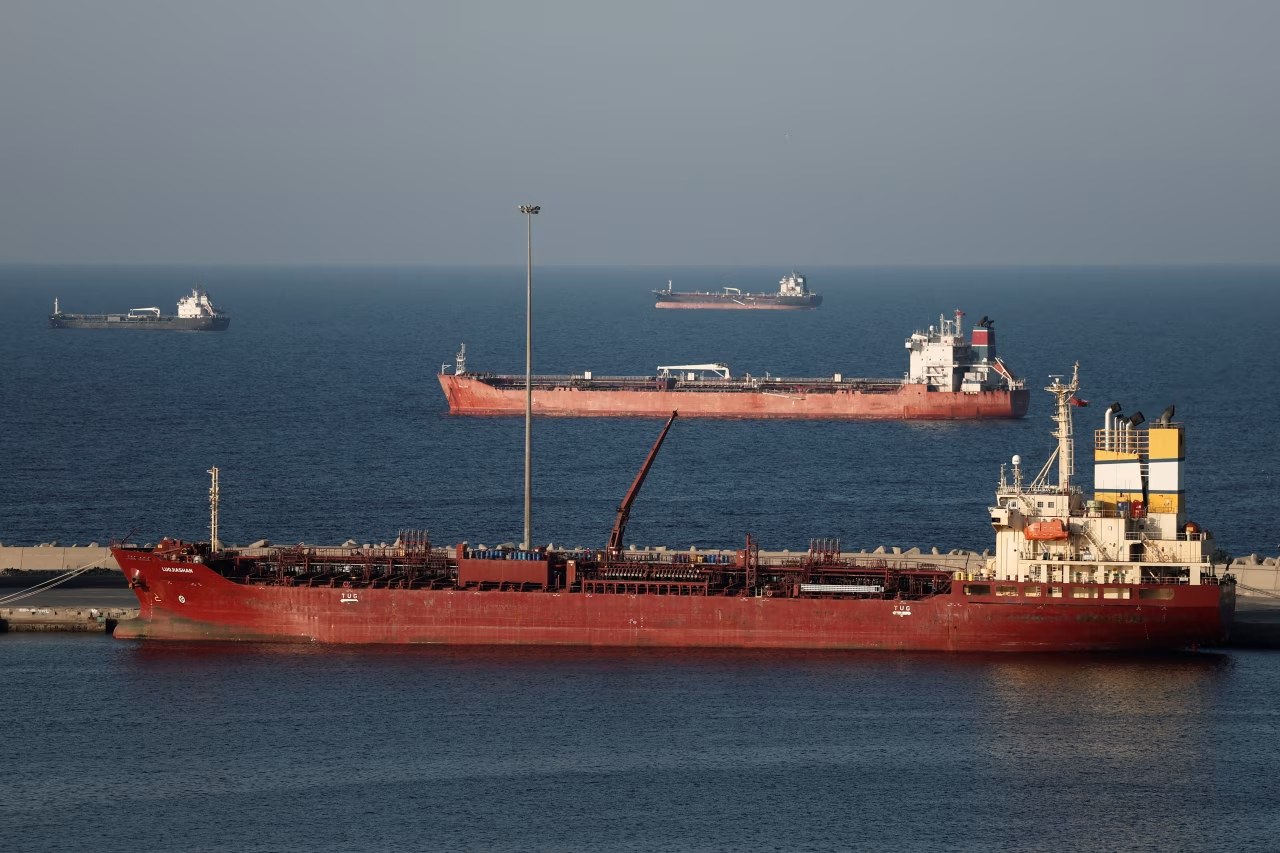
The campaign’s opening salvos destroyed radar sites, drone hangars, and Islamic Revolutionary Guard Corps training bases from the Persian Gulf to the Zagros Mountains. Satellite images show craters where Iranian missile silos once stood. Yet Tehran’s response has been asymmetrical: more than a dozen tankers have been harassed or delayed at the Strait of Hormuz, insurers have hiked premiums, and Brent crude has vaulted above $100 a barrel for the first time since 2022, according to trading screens cited by energy analysts.
Inside Iran, state media broadcasts images of downed U.S. drones and cheering crowds, bolstering the narrative that resistance is working. Western intelligence officials say Supreme Leader Ayatollah Ali Khamenei—before his reported death—personally authorized the oil-interdiction strategy, calculating that economic pain abroad would fracture the coalition against him faster than precision bombs could fracture his government at home. The calculation appears, so far, to be accurate.
Public Opinion Turns Against the War
The PBS/NPR/Marist poll conducted after an Iranian drone strike killed six U.S. soldiers in Kuwait shows opposition cutting across party lines. While 84% of Republicans back the strikes, 86% of Democrats and roughly 60% of independents disapprove of both the president’s approach and the military action itself.
Civilian Casualties Fuel Skepticism
Images of destroyed infrastructure and reports that 175 students and staff died at a girls’ school in what a preliminary U.S. probe suggests was an American air strike have intensified domestic criticism. The poll finds 54% of Americans now disapprove of Trump’s Iran handling overall.
Opposition is strongest among women under 50, suburban voters, and self-described independents—demographics both parties will court in the 2026 mid-term elections. Focus groups conducted alongside the poll found respondents repeatedly invoking “endless war” and “another Iraq,” phrases that strategists in both parties say could haunt incumbents if casualties mount. Several Senate Republicans from energy-producing states have privately warned the White House that gasoline above $4 a gallon changes the electoral math, according to senior GOP aides who requested anonymity to discuss internal conversations.
The survey also reveals a subtle but important shift in threat perception: 44% of Americans now view Iran as a “major threat,” down from 48% last summer, suggesting that battlefield setbacks may have dented Tehran’s aura of menace. Yet the same voters are not convinced that further bombing will deliver security. “We’ve degraded them, but we haven’t defeated them,” said one independent voter in Pennsylvania, summarizing a sentiment that pollsters say dominates the political center.
What Comes After the Bombing?
Even if the air campaign continues for weeks, analysts see no clear end-state. An AOL opinion column notes that no one can predict just how the war with Iran will go on, listing at least half a dozen possible outcomes.
Post-Khamenei Power Struggles
With Ayatollah Ali Khamenei reportedly killed, Iran’s Assembly of Experts is said to have elected his son Mojtaba to succeed him, a move favored by the Islamic Revolutionary Guard Corps. Whether a new hard-line leader would continue the war or seek an economic lifeline from the West remains uncertain.
Other scenarios include a Guard general stepping in if the corps tires of Mojtaba’s leadership, or exiled royal Reza Pahlavi returning to head a transitional government backed by the regular army, which historically distrusts the Guard. Each pathway carries risks: a fractured elite could splinter the country into armed fiefs, while a monarchist restoration could provoke urban unrest among Iranians who associate the Pahlavi name with corruption and autocracy. What seems clear is that the bombing campaign has not produced a unified, pro-Western opposition ready to govern.
Regional diplomats say neighboring capitals are gaming out contingencies ranging from refugee flows to loose ballistic missiles. One Gulf official told reporters that contingency plans assume “a three-to-six-month window of fragmented authority” if the Guard implodes, a vacuum that could be filled by militias or regional powers. The same official admitted that no Arab state wants to host U.S. ground forces again, complicating any eventual stabilization mission.
Is a Ground Invasion Inevitable?
Trump has publicly floated a four- to five-week timeline for Operation Epic Fury but concedes it could go longer. With Iranian oil leverage intact and no internal collapse on the horizon, Washington may face a choice between accepting a limited outcome or deploying large numbers of ground troops into what the Journal already labels another Middle East quagmire in the making.
Congressional and Allied Hesitation
Domestic opposition, allied concerns over energy security, and memories of Iraq and Afghanistan raise the political cost of escalation. Unless Tehran blinks first, the administration may have to redefine what victory looks like.
Pentagon planners have briefed lawmakers on force packages ranging from a 30,000-strong Marine expeditionary unit to secure the southern oil fields to a full Army corps of more than 100,000 to push toward Tehran. Yet even proponents concede that occupying a country three times the size of Iraq with a population famous for nationalist resistance could dwarf previous nation-building efforts. Senate Armed Services Committee members emerged from a classified briefing last week warning that any authorization for ground troops would face “extraordinary scrutiny,” according to a senior Democratic staffer.
European allies, already jittery over energy prices, have ruled out contributing combat formations. One NATO diplomat quipped that the alliance is “happy to provide humanitarian ships, not bayonets.” With coalition support thin and U.S. public support thinner, the White House may opt for a face-saving cease-fire that leaves Iran’s nuclear program suspended but its regime intact—an outcome that hawks will label appeasement and doves will hail as prudence.
Frequently Asked Questions
Q: What is Operation Epic Fury?
Operation Epic Fury is the U.S.-Israeli military campaign against Iran that began in early 2026. After a week of strikes, Iran has disrupted Middle East oil flows, killed six U.S. soldiers in a drone strike on a Kuwait command center, and triggered global energy price spikes.
Q: How many Americans oppose the Iran war?
A PBS News/NPR/Marist poll released 2026-03-06 finds 56% of Americans oppose U.S. military action in Iran, while 44% support it. Opposition is strongest among Democrats (86%) and independents (60%), while 84% of Republicans back the strikes.
Q: Has the war affected oil markets?
Yes. The Wall Street Journal reports Iran has choked off Middle East oil flows, driving surging energy prices and declining stock markets worldwide, increasing pressure on Washington to either escalate with ground troops or accept a limited outcome.
Q: Who might rule Iran after Khamenei?
Iran’s Assembly of Experts reportedly elected Ayatollah Khamenei’s son, Mojtaba, to replace his father, a move favored by the Islamic Revolutionary Guard Corps. Other scenarios include a Guard general taking power or exiled royal Reza Pahlavi returning, though each carries uncertain policy implications.
Sources & References
- Primary SourceOpinion | How the Iran War Endswsj.com
- Source 1Majority of Americans oppose military action in Iran, new poll findsMar 06, 2026bing.com
- Source 2Opinion – Operation Epic Fury: ‘Tell me how this ends’Mar 06, 2026bing.com
