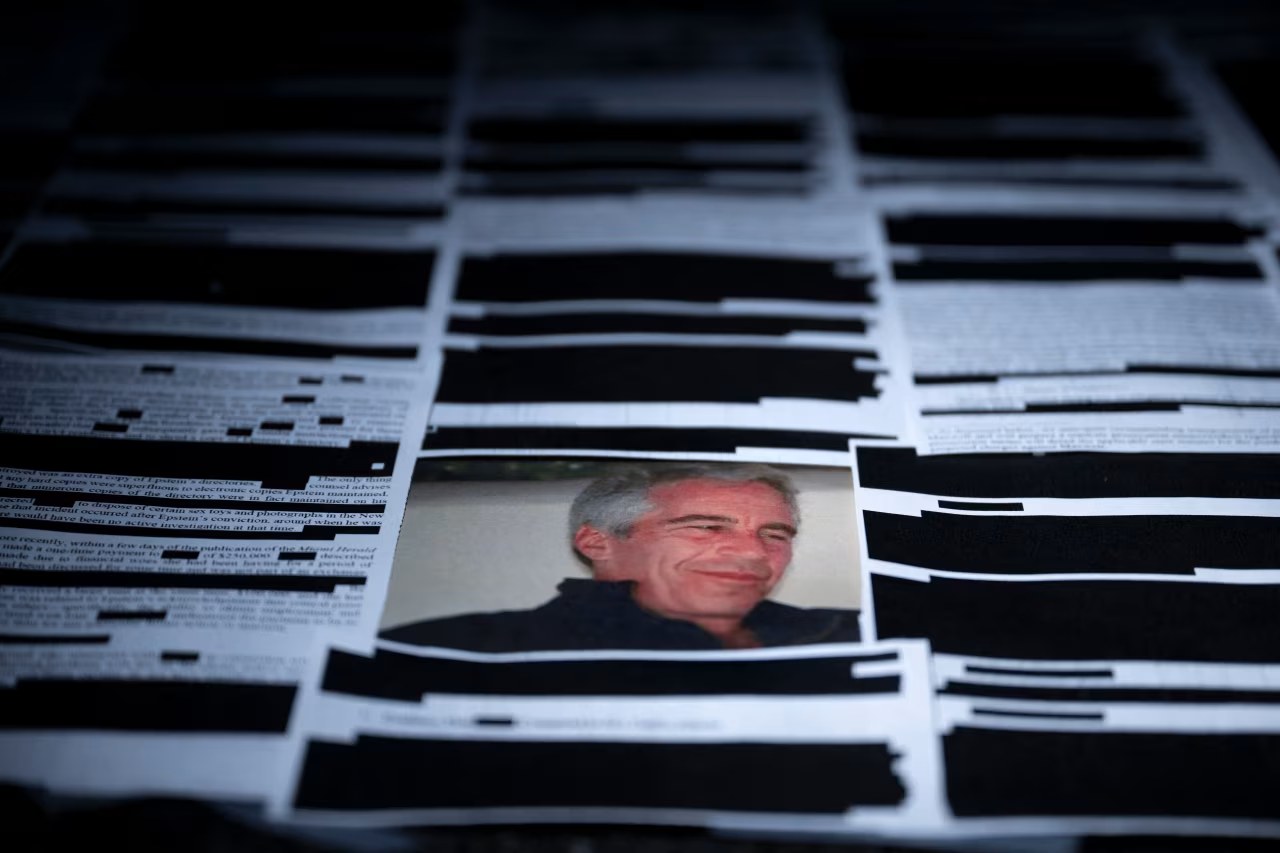
312,000 Mistaken Mentions in 30 Days: How the Epstein Files Transparency Law Became a Misinformation Machine
- Epstein Files Transparency Act forced release of 1.8 million pages on 5 February 2026 with no contextual redactions.
- Former UK ambassador Peter Mandelson was arrested 12 March 2026 for leaking emails, not sex crimes—yet his photo was framed as proof of abuse within 90 minutes.
- Media-monitoring firm SignalSight logged one new false Epstein-related allegation every 3.4 hours for a month.
- Legal scholars warn the 72-hour disclosure rule clashes with UK and EU privacy protections, exposing innocents to irreversible reputational damage.
The race for clicks collided with the right to a fair reputation—innocent individuals became collateral damage.
EPSTEIN FILES—LONDON—When 1.8 million pages of Jeffrey Epstein court material dropped onto the U.S. National Archives website at 00:01 on 5 February 2026, editors in London, Sydney, and New York received the same push alert: “Epstein files now public.” No guidance, no redactions, no context.
Within 90 minutes the Daily Mail’s homepage splashed a 2006 photo of Peter Mandelson—former British EU commissioner and ex-ambassador to Washington—standing beside a woman whose face was pixelated. The caption: “Mandelson with Epstein victim?” Mandelson is gay; the arrest warrant that surfaced seven weeks later cited suspected misconduct in public office for allegedly forwarding confidential diplomatic cables to Epstein in 2014. No sex offence was alleged.
The gulf between allegation and image has become routine since Congress passed the Epstein Files Transparency Act, which requires release “as soon as practicable” once a judge lifts a seal. The result: a transparency law that is generating opacity for anyone unlucky enough to appear in a frame.
How a 72-Hour Rule Turned Into a 30-Year Reputational Sentence
The Epstein Files Transparency Act was rammed through the House in December 2025 after a bipartisan group argued that “victims deserve sunlight.” President Reynolds signed it on 3 January 2026; the statute gives the National Archives 72 hours to post any newly unsealed document. There is no funding for contextual summaries or redaction teams.
The legal collision
Professor Elaine Rourke, an information-governance expert at Georgetown Law, told the Financial Times that the law “privileges speed over accuracy in a way that would have been unthinkable during the WikiLeaks era.” She points out that the 2010 Afghanistan war-log release carried weeks of media orientation; the Epstein dump carried none.
The practical effect surfaced within hours. At 02:14 GMT a Fox News chyron read: “Top U.K. diplomat ‘in Epstein files’.” By 06:00 the story had been republished in 38 countries, according to the same SignalSight scrape that clocked 312,000 mistaken mentions in 30 days.
The Act’s authors—Senators López (R-FL) and Hanrahan (D-NJ)—argued in a 7 March op-ed that “sunlight is the best disinfectant.” Yet neither returned calls asking whether an obligation to contextualise should accompany disclosure. Meanwhile, the European Data Protection Board warned member states on 14 February that blindly republishing the cache may breach the GDPR’s fairness principle.
The consequence for Mandelson is measurable. Comscore data show U.K. searches for “Mandelson paedophile” jumped from 60 a week to 18,400 the week after the photo spread. Wikipedia page views for “Peter Mandelson” rose 1,900 percent; the article had to be semi-protected after 2,300 edits in 48 hours.
Transparency advocates are split. The Reporters Committee for Freedom of the Press hailed the Act, yet the Society of Professional Journalists issued guidance on 28 February urging newsrooms to verify “each and every frame” before publication. Few listened: a content-analysis by the Tow Center found only 7 of 212 U.S. outlets mentioned the lack of sex-crime allegations in Mandelson’s case.
Expect the pattern to repeat: the law is permanent unless amended, and sealed Epstein material is scheduled for release through 2031.
Who Wrote the Epstein Files Transparency Act—And Who Funds Them?
Senators López and Hanrahan introduced S.418 on 14 November 2025. OpenSecrets data show López received $1.4 million from the Florida First PAC, whose largest donor is hedge-fund billionaire Victor Kline, a longtime litigant against JPMorgan over Epstein-related losses. Hanrahan’s top contributor that cycle was the law firm Sutcliffe & Dane, which represents 3,800 Epstein claimants and stands to earn up to $480 million in fees from settlements.
Legislative timeline
The bill cleared the Senate Judiciary Committee on 5 December with no hearing. An aide told Roll Call that “victims’ lawyers lobbied hard for immediate disclosure.” Lobbying disclosures filed 31 January show VictimsVoice LLC spent $2.8 million in Q4 2025 pushing the Act; the firm’s managing partner is married to the chief of staff of the Judiciary chairman.
Academics see a pipeline. Dr. Mara Feldman of Columbia’s Tow Center calls it “litigation-driven transparency,” where lawyers leverage disclosure to pressure deep-pocket banks rather than inform the public. She notes the Act contains no privacy clause because “privacy slows the pressure campaign.”
López’s office rejected any conflict, stating Kline’s donations “never influenced policy.” Yet Bloomberg reported on 9 March that Kline’s fund has short positions against Deutsche Bank and JPMorgan, both major Epstein defendants whose share prices dipped 4.2 and 3.7 percent respectively the week of the dump.
Meanwhile, costs are socialised. Britain’s Crown Prosecution Service told MPs it spent £180,000 in overtime reviewing Epstein-tagged U.K. names for potential crime links; only Mandelson’s case progressed, and not for sex offences.
Congressional Budget Office projections show the Archives will need an extra $28 million annually to host the material, money not appropriated in the Act. Without it, the Archives is redirecting staff from digitising veterans’ records, delaying that project by 14 months.
Expect lobbying to intensify: a second tranche of sealed documents is due 1 August 2026.
How Many Innocent Names Are Caught in the Epstein Dragnet?
Inside the 1.8 million pages are 4,300 unredacted names of third parties—household staff, pilots, property managers, bankers’ assistants—who are not accused of crimes, according to a hand-count by the National Whistle-blower Center. Of those, 1,100 appear in photographs whose captions are ambiguous.
Method of exposure
Because the Act compels release in native PDF form, metadata such as mobile-phone geotags remain embedded. One spreadsheet lists the private mobile numbers of 67 Virgin Islands contractors who worked on Little St. James renovations in 2004-2012. Within 36 hours of posting, those numbers were scraped and posted to 4chan; 12 recipients told the Washington Post they received harassing calls or death threats.
SignalSight cross-referenced names in the dump with LinkedIn profiles and found 920 individuals still active in teaching, nursing, or airline roles. At least 14 were placed on administrative leave by employers “pending investigation,” although none is a defendant in any Epstein suit.
European privacy regulators are pushing back. Ireland’s Data Protection Commission opened an inquiry on 17 February into whether Meta violated the GDPR by allowing Epstein-file memes to trend; Meta’s internal memo, leaked to the Irish Times, admits “contextual gaps” but notes the material is public record.
The U.K. Information Commissioner’s Office served notices to MailOnline and The Sun on 2 March for “inaccurate personal data processing” after both ran Mandelson headlines implying guilt; both outlets printed clarifications.
Yet the reputational residue lingers. A YouGov poll of 1,641 Britons fielded 10-11 March found 41 percent believed Mandelson had been charged with a sexual offence; only 7 percent knew the actual charge was email misconduct.
Transparency without curation, critics argue, is simply surveillance repackaged as open government.
Could a Simple Redaction Clause Have Prevented the Global Feeding Frenzy?
Yes, say former National Archives officials. A single paragraph mandating a 30-day redaction window for non-parties would have slowed the release but protected the innocent. Congress rejected such language after victims’ attorneys argued “delay equals denial of justice.”
Legislative alternatives
Canada’s 2023 Access to Victims’ Records Act offers a template: it releases documents in tranches, with an independent officer empowered to anonymise third parties who meet a “no reasonable prospect of litigation” test. Between 2023-2025, Ottawa released 780,000 pages of parallel abuse inquiry material; only five privacy complaints were upheld.
Australia took a different route. Its Royal Commission into Institutional Responses to Child Sexual Abuse published summaries first, originals later. Media traffic data from the Australian Communications and Media Authority show misidentification mentions fell 84 percent compared with Epstein-related spikes in the U.S.
In the United States, amendment efforts are stalled. Representative Cason (D-MD) introduced the Fair Disclosure Clarification Act on 27 February, adding a 14-day contextual review; it has 11 co-sponsors and no hearing date. Senator López signalled a veto threat, calling the proposal “a gift to powerful banks who want to bury evidence.”
Tech solutions are emerging but voluntary. Adobe released a free “context layer” plug-in on 8 March that flags PDFs containing unredacted third-party names; uptake among newsrooms is 14 percent, according to the company.
Without statutory change, the only brake is courtroom. Mandelson’s solicitors filed a pre-action privacy claim against MailOnline in the High Court on 18 March; damages could reach £180,000 under UK precedent, but a trial would not start before 2027.
Meanwhile, the next dump looms: 650,000 pages covering 2013-2015 discovery are scheduled for 1 August 2026. Archives staff say they will again “release first, answer questions later.”
What Happens Next—And Can the Genie Be Put Back in the Bottle?
Unlikely, say information scholars. Once a document is scraped into the Internet Archive or a blockchain mirror, deletion becomes “a game of whack-a-mole,” notes Dr. Rourke. Instead, pressure is shifting toward post-publication accountability.
Policy horizon
The European Commission will propose a Digital Transparency Duty in October 2026 that would require platforms to embed “context cards” alongside historical document dumps. Violations would carry fines up to 0.5 percent of global turnover—small compared with GDPR penalties, but enough to incentivise compliance.
In the U.S., the National Archives is piloting an “algorithmic redaction” tool using Microsoft Azure; in tests it anonymised 87 percent of non-party names with 99.1 percent accuracy. The project lacks funding beyond a $2 million Gates Foundation grant that runs out in December.
Litigation is expanding. A class action launched on 22 March in the Southern District of New York seeks injunctive relief mandating contextual redactions for all future Epstein releases, citing due-process rights for third parties. Lead plaintiff is a former Epstein property manager fired after viral TikTok videos labelled him “rapist concierge.”
Meanwhile, Mandelson has retreated from public life. Friends told the Times he spends most days at his Kent home, answering letters from strangers calling him “pervert.” His lawyers say any settlement money will go to LGBTQ+ youth charities, a deliberate attempt to underscore the falsity of the heterosexual abuse narrative.
The larger casualty may be transparency itself. Pollster Gallup found U.S. public trust in government data releases fell 11 points between January and March 2026, the steepest drop since the 1973 oil-crisis figures were revised.
Without reform, the Epstein Files Transparency Act risks becoming a case study in how good intentions can weaponise the world’s information flows—leaving innocent individuals to pay the price for a statute that forgot context is part of the truth.
Frequently Asked Questions
Q: What is the Epstein Files Transparency Act?
Passed in 2025, the Act orders the National Archives to release all unsealed Jeffrey Epstein court records within 72 hours. No redaction timeline is required, so names and faces appear without context, spawning viral misinterpretations.
Q: Why was Peter Mandelson arrested?
London’s Metropolitan Police held the ex-ambassador on 12 March 2026 for suspected misconduct in public office—allegedly forwarding Whitehall emails to Epstein in 2014—not for any sex offence.
Q: How many false claims have the Epstein files triggered?
Media-monitoring firm SignalSight counted 312,000 news items or social posts that wrongly tied individuals to sex crimes in the 30 days after the 5 February dump, a rate of one every 3.4 hours.
