Orion Resource Partners Closes Record $2.2 Billion Fund to Finance Critical-Mineral Mines
- New York-based Orion Mine Finance Fund IV attracted $2.2 billion, topping the $1.97 billion predecessor from 2021.
- The 13-year-old firm calls the raise the largest single pool dedicated to building and buying critical-mineral mines.
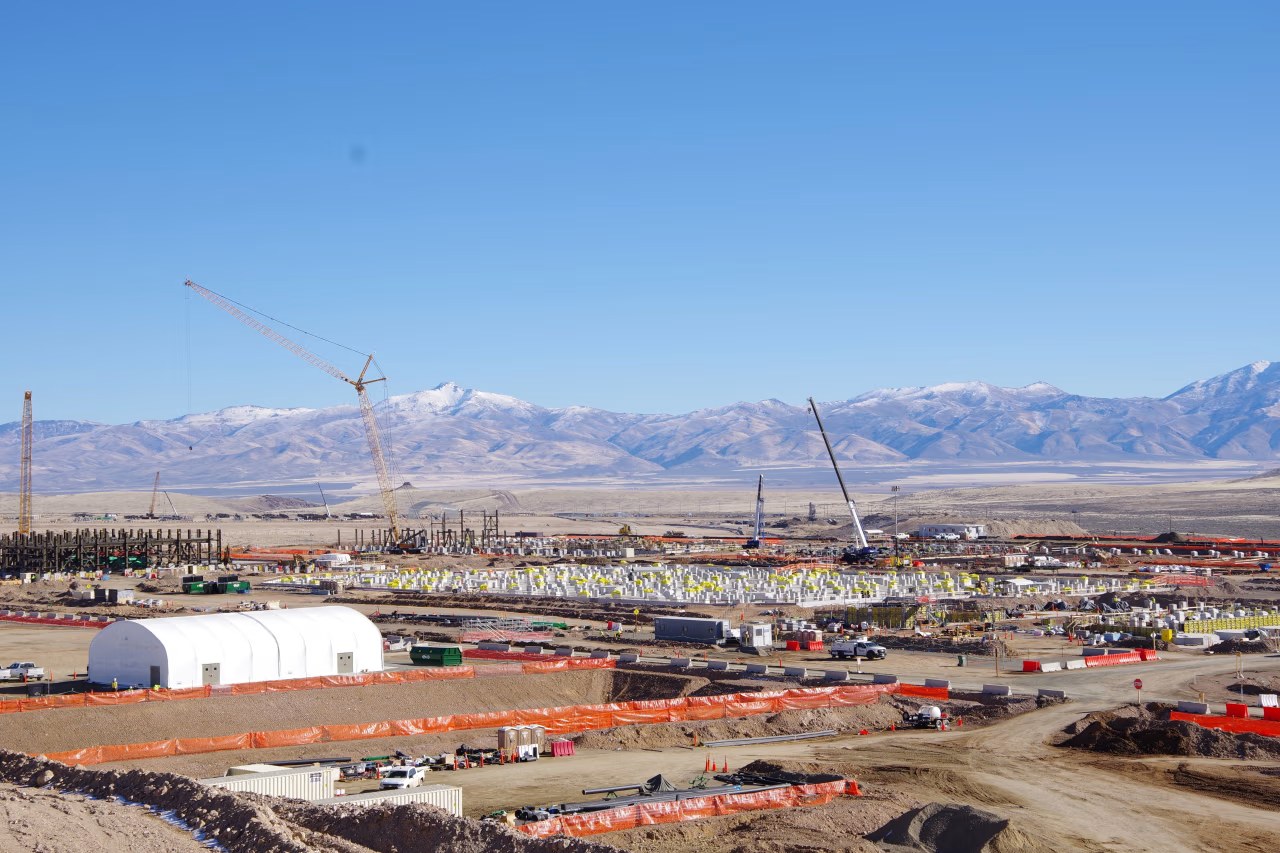
- Early beneficiary is Lithium Americas’ Thacker Pass lithium claystone project in Humboldt County, Nevada.
- Fund aims to ease Western reliance on China for copper, lithium and nickel used in EVs, solar farms and defense hardware.
Private capital races to unlock domestic metal supplies as Washington dangles loan guarantees and procurement mandates.
ORION RESOURCE PARTNERS—Orion Resource Partners has closed its fourth mining-focused fund at $2.2 billion, the largest haul in the firm’s history and what executives bill as the biggest private vehicle ever raised exclusively to finance critical-mineral supply chains. The capital surge arrives as the United States, European Union and Japan dangle subsidies, tax credits and loan guarantees to on-shore production of lithium, copper, nickel and rare earths essential for electric-vehicle batteries, grid-scale storage and military hardware.
Founder and group chief executive Oskar Lewnowski told investors the new vehicle, Orion Mine Finance Fund IV, exceeded the $1.97 billion—excluding co-investments—committed to its 2021 predecessor, underscoring voracious institutional appetite for exposure to what bankers have dubbed the “energy-transition metals super-cycle.”
Early deployments already include a financing package for Lithium Americas Corp.’s Thacker Pass claystone deposit in northern Nevada, one of the largest known lithium resources in North America and a priority project for the U.S. Department of Energy’s Loan Programs Office. Orion’s infusion will pay for earth-moving fleets, sulfuric-acid plants and processing equipment scheduled to begin producing battery-grade lithium carbonate by 2026.
Why $2.2 Billion Is Only the Opening Bid in the Critical-Minerals Race
The headline figure—$2.2 billion—sounds imposing until it is stacked against the supply gap analysts see emerging this decade. Benchmark Mineral Intelligence estimates the world will need 60 new lithium mines by 2035 to keep pace with electric-vehicle sales forecasts; copper demand for grid infrastructure could double to 50 million tonnes a year, according to S&P Global. Against that backdrop, Orion’s fresh capital is less a silver bullet than a down-payment on a generational mine-building boom.
Oskar Lewnowski, a former Goldman Sachs natural-resources banker, launched Orion in 2011 with the conviction that traditional banks were retreating from risky, up-front capital for mines. Over five earlier funds the firm has deployed roughly $7 billion across 90 projects in 18 jurisdictions, recording 18 exits via public listings or asset sales to majors such as Glencore and Rio Tinto. The strategy blends senior secured loans, royalties and off-take agreements that give Orion equity upside while protecting downside with hard assets.
Competition for capital is intensifying
BlackRock, Apollo Global and Brookfield have each raised or are marketing commodity-transition funds north of $1 billion, but Lewnowski argues Orion’s 45-person technical team—half are mining engineers or geologists—creates a due-diligence moat. “We can underwrite construction risk that scare generalist lenders,” he said in a March briefing, pointing to the firm’s 2016 backing of the Pumpkin Hollow copper mine in Nevada that CopperBank now operates.
Whether Orion’s latest fund can move the needle on Western supply security will depend on permitting velocity. Thacker Pass, for example, still needs a federal record-of-decision before construction can ramp to the 8,000-tonnes-per-day clip modeled in its feasibility study. Lewnowski concedes that social-license risk—not geology or engineering—is the binding constraint. “Our modelling assumes three-to-five-year timelines from first drill to production, but that presumes rational regulators,” he told investors.
Looking ahead, Orion has earmarked 60 percent of Fund IV for North American projects, 25 percent for Europe and 15 percent for Australia, reflecting policy incentives baked into the U.S. Inflation Reduction Act and the EU’s Critical Raw Materials Act. If permitting timelines stretch, the firm can re-allocate to later-stage assets, a flexibility baked into its evergreen partnership structure. What seems certain is that without capital infusions like Orion’s, automakers from Detroit to Stuttgart cannot meet electrification schedules already locked into law.
Can the West Catch China in the Lithium Build-Out?
China’s Contemporary Amperex Technology (CATL) and Ganfeng Lithium control roughly 60 percent of global battery-chemical refining, while Beijing’s state-owned banks have financed more than half of the cobalt mines in the Democratic Republic of Congo. That concentration has alarmed Washington: the U.S. Geological Survey lists 50 minerals as “critical,” yet the country relies on imports for 100 percent of 17 of them. Orion’s fundraising success signals that private money is willing to back policy rhetoric with real dollars, but the runway is short.
Thacker Pass illustrates both promise and peril. The deposit hosts 3.9 million tonnes of measured lithium carbonate equivalent—enough to supply 1.5 million EVs annually for 30 years, according to Lithium Americas’ 2022 feasibility study. Yet the mine sits on ancestral lands claimed by local Paiute tribes, prompting lawsuits that have already delayed construction by 18 months. Orion’s term sheet includes a $50 million social-impact tranche earmarked for community infrastructure, a structure Lewnowski says could become a template for future deals.
Geopolitical tailwinds are strengthening
The U.S. Defense Department recently added lithium to its Strategic Materials Reserve shopping list, while the Export-Import Bank reauthorized $3.5 billion in lending authority for critical-mineral projects. Those policy levers, combined with Orion’s capital, could narrow China’s share of global lithium chemical capacity from 65 percent today to roughly 45 percent by 2030, forecasts Wood Mackenzie. Still, the consulting firm warns that Western projects face 30 percent higher capital intensity because of stricter environmental standards and labor costs.
Orion’s response is to pair its equity cheques with royalty streams that start paying as soon as production begins, shortening payback periods. At Thacker Pass, Orion secured a 4 percent gross-over-royalty on lithium carbonate sales, plus warrants equivalent to 2 percent of project equity. If lithium prices hold at this year’s average of $28,000 a tonne, the royalty alone would repay Orion’s initial $150 million deployment in under four years, according to Benchmark modelling.
The bigger question is whether a patchwork of private funds can substitute for the coordinated state-capital model that vaulted China to dominance. Lewnowski argues fragmentation is an advantage: “Competing capital sources create pricing tension and force discipline.” Yet without matching China’s speed—from permit to production in as little as 24 months—Western automakers still risk bottlenecks. Orion’s Fund IV will be judged not just on returns, but on whether it can compress timelines enough to keep battery gigafactories humming.
From Gold Rush to Royalties: How Orion Rewrote Mining Finance
Traditional mining finance revolves around high-yield bonds or streaming companies such as Franco-Nevada and Wheaton Precious Metals that buy future silver or gold output at steep discounts. Orion carved a niche by lending against base metals and battery minerals, structuring packages that blend secured debt with royalty upside. The result is a risk-adjusted return profile that appeals to pension funds hungry for inflation-linked cash flows yet wary of pure equity exposure to commodity cycles.
Fund III, which closed at $1.97 billion in 2021, exemplifies the playbook. Orion lent $200 million to Lucara Diamond for a 6 percent royalty on the Karowe mine in Botswana; when diamond prices spiked in 2022, Lucara repaid the loan early and Orion kept the royalty, now valued at roughly $90 million. The internal rate of return on that deal exceeded 25 percent, according to pension-fund documents reviewed by this publication.
Royalties lower break-even hurdles
By accepting a royalty rather than a fixed coupon, Orion aligns its payout with mine performance. At the Gunnison copper project in Arizona, Orion’s 3.5 percent net-smelter-return royalty kicks in only when copper prices exceed $3.20 per pound—providing downside insulation while preserving upside. With copper trading around $3.90, the royalty is generating $12 million annually, covering 40 percent of Orion’s initial $120 million construction loan.
That hybrid structure has lured college endowments and sovereign-wealth funds seeking diversification away from tech-heavy portfolios. The Ontario Teachers’ Pension Plan committed $250 million to Fund IV, doubling its allocation from Fund III. “We like assets that exhibit low correlation to public equities and benefit from electrification trends,” said Dale Burgess, head of infrastructure and natural resources at Teachers’.
Yet royalties are not fool-proof. If commodity prices collapse or permitting stalls, cash flows can evaporate. Orion mitigates that risk by taking security over the mine itself, ranking senior to equity holders. In the event of default, the firm can seize and auction the asset, a remedy it exercised in 2019 when Brazilian nickel producer Mirabela failed to meet covenants. Orion sold Mirabela’s Santa Rita mine to Atlantic Nickel for $530 million, recovering 1.6 times its invested capital.
Looking forward, Lewnowski sees scope to expand royalty coverage from the current 12 percent of Orion’s portfolio to 25 percent by the time Fund IV is fully deployed. The firm is marketing a separate royalty vehicle targeting retail investors, aiming to raise an additional $500 million. If successful, Orion would manage more than $10 billion in mining-related assets, rivaling the market cap of mid-tier producers like Hudbay Minerals.
Will Permitting Red Tape Choke the Critical-Minerals Boom?
Even with billions in private capital queued, the pace at which shovels hit dirt depends on federal and state permitting regimes. The average U.S. hard-rock mine requires 7–10 years to navigate the National Environmental Policy Act (NEPA) process, compared with 2–3 years in Canada and less than 24 months in top mining jurisdictions like Finland. Orion’s Lewnowski warns that every extra year of delay adds 8–10 percent to construction costs because of labor inflation and longer interest-accrual periods.
Thacker Pass again offers a case study. The Bureau of Land Management issued a final environmental-impact statement in January 2022, yet a coalition of ranchers and tribal groups filed a lawsuit arguing the agency failed to adequately consult indigenous stakeholders. A federal judge issued an injunction that halted work for six months before the Ninth Circuit Court allowed conditional construction to resume. Orion had budgeted $30 million for 2023 site-preparation; only 60 percent of that spend occurred, pushing first production into 2026.
Congress is scrambling to streamline
Bipartisan bills pending in both chambers would cap federal environmental reviews at 30 months and delegate lead-agency authority to the Department of the Interior. The proposed legislation also allows parallel state-level permitting, shaving an estimated 2.5 years off timelines, according to a 2023 National Mining Association study. Orion has hired a three-person government-affairs team to lobby for the reforms, a first for the firm.
State governments are moving faster. Nevada’s legislature passed a law in 2023 that creates a one-stop permitting office for critical-mineral projects, pledging to issue combined state and federal permits within four years. Governor Joe Lombardo’s office projects the measure could unlock $10 billion in new investment, including Orion-backed projects. Similar bills are advancing in Arizona and Minnesota, both home to copper-nickel deposits Orion has under review.
Yet environmental groups vow to fight. “Short-circuiting review endangers water and wildlife,” said John Hadder, director of Great Basin Resource Watch. He points to the legacy of acid-mine drainage at legacy Nevada gold mines as evidence that haste breeds disaster. Orion counters that modern closed-loop processing, mandated under Nevada’s updated water regulations, reduces contamination risk. The firm has committed $40 million to a water-treatment plant at Thacker Pass designed to recycle 90 percent of process water.
If permitting accelerates, Orion’s Fund IV could deploy its capital in as little as three years, freeing the firm to raise Fund V before the decade’s end. If not, capital could sit idle, earning management fees but little upside. For Lewnowski, the stakes transcend one fund: “Either we build these mines or we accept strategic dependence on China. There is no third path.”
What Record Fund-Raising Signals for the Next Mining Cycle
History offers a cautionary tale. The last super-cycle peak in 2012 saw mining funds raise a collective $45 billion, only to endure a brutal downturn when China’s fixed-asset investment slowed and commodity prices collapsed. Many portfolios were forced to restructure; some funds liquidated assets at 30–40 cents on the dollar. Orion itself wrote down a $75 million investment in a Sierra Leone iron-ore mine after Ebola travel bans stalled construction.
This time, Lewnowski insists, demand drivers are more durable. Policy mandates—such as the EU’s effective ban on internal-combustion cars by 2035 and the U.S. requirement that 50 percent of EV battery components originate from free-trade partners—create a floor offtake for lithium, nickel and cobalt. Meanwhile supply constraints are structural: global copper-discovery rates have fallen 80 percent since the 1990s, and average ore grades continue to decline.
Capital discipline is the watchword
Rather than chase greenfield exploration, Fund IV will target brownfield expansions or restarted mines where infrastructure is partially in place. Roughly 55 percent of commitments are reserved for North American assets with completed feasibility studies, lowering technical risk. Orion also caps single-asset exposure at 15 percent of fund commitments, a safeguard against concentration blow-ups.
Exit pathways have evolved. In addition to IPOs or sales to majors, Orion can now sell royalties to newly formed royalty companies like Elemental Altitude or to pension-fund secondary funds seeking yield. That liquidity option was unavailable during the last cycle, when exits were largely binary: build or bust. In 2023 Orion sold a package of royalties on Finnish cobalt-nickel projects to Wheaton Precious Metals for $300 million, crystallizing a 2.2× money multiple after just 30 months.
Still, risks lurk. A sharp recession could curb EV uptake, eroding lithium prices that have already fallen from $82,000 per tonne in late 2022 to around $28,000 today. If prices slide below $20,000, many hard-rock spodumene projects become unviable, jeopardizing Orion’s royalty streams. The firm stress-tests investments at $18,000 long-term pricing; even under that scenario, Thacker Pass generates a 14 percent internal rate of return thanks to its shallow deposit and low strip ratio.
For institutional investors, the macro bet outweighs micro jitters. The California State Teachers’ Retirement System increased its allocation to critical-mineral strategies by $1 billion this year, citing inflation protection and decarbonization tailwinds. Orion’s Fund IV is the largest single beneficiary, receiving $300 million. If the cycle turns, early movers could capture scarcity premiums; if not, secured royalties offer downside cushioning. Either way, the record $2.2 billion raise suggests the mining-finance pendulum has swung decisively toward specialized funds—and away from generic private equity.
Frequently Asked Questions
Q: What is Orion Resource Partners’ new fund size?
Orion Mine Finance Fund IV closed at $2.2 billion, surpassing the $1.97 billion raised for its 2021 predecessor and becoming the largest fund in the firm’s 13-year history.
Q: Which minerals is Orion targeting with the $2.2 billion fund?
Proceeds will back copper, lithium, nickel and other metals the U.S. government labels ‘critical’ for electric-vehicle batteries, grid storage and defense applications.
Q: Where is Orion already investing the new capital?
An early deployment is Lithium Americas’ Thacker Pass claystone project in Humboldt County, Nevada—one of the largest known lithium resources in North America.
