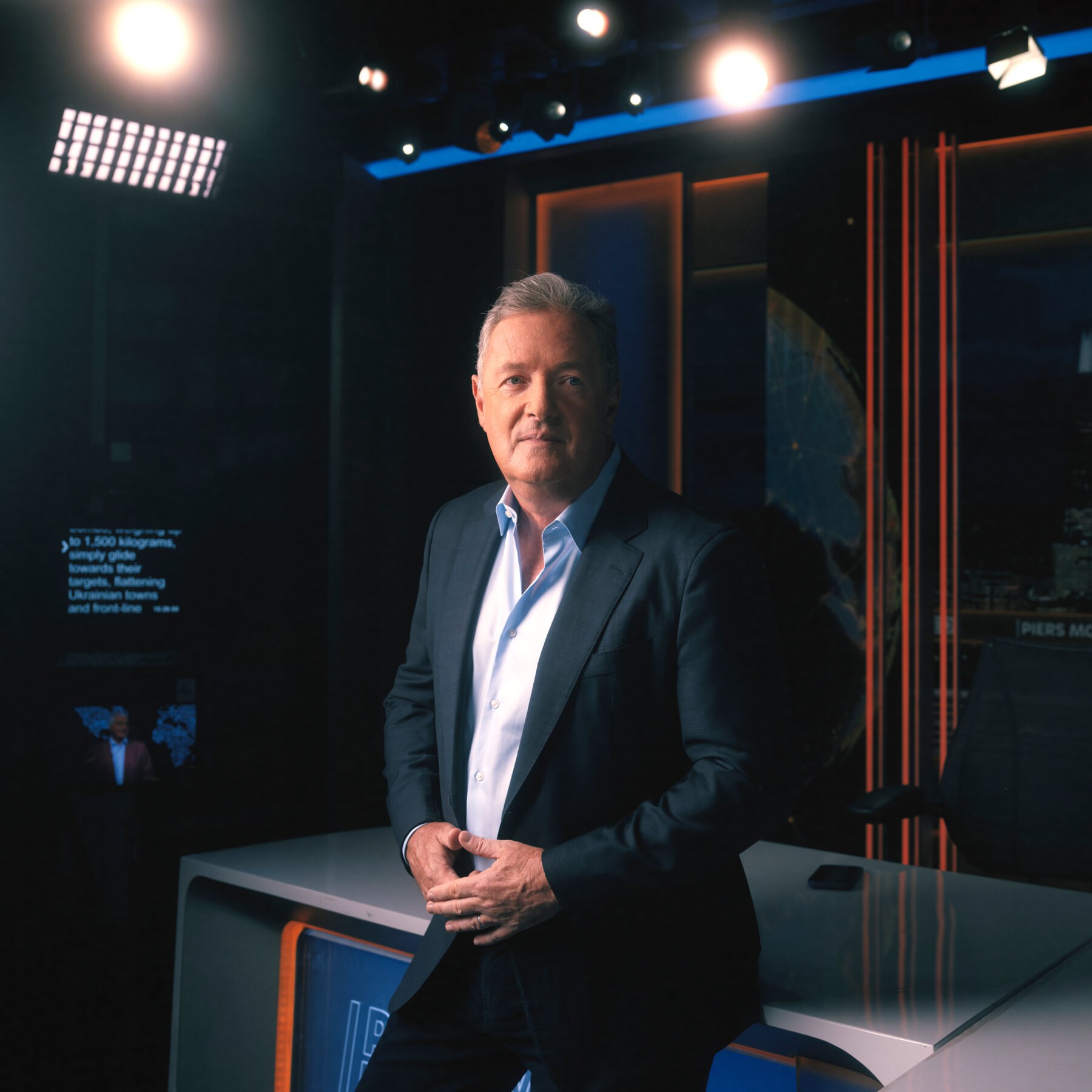
How Piers Morgan’s YouTube Move Reflects a $240B Shift in Media Consumption
- Piers Morgan’s 2026 transition from Fox to YouTube marks a $240B industry pivot toward creator-driven content platforms.
- His new venture includes hiring a former MSNBC leader, signaling a fusion of traditional media expertise and digital agility.
- Market research shows 68% of Gen Z viewers now prefer YouTube over linear TV for news consumption.
- Legal experts warn that independent creators risk regulatory scrutiny absent Fox’s institutional safeguards.
The Fracturing of Media Monoliths
PIERS MORGAN—In a seismic shift for legacy media, Piers Morgan’s 2026 YouTube launch represents the culmination of a $240 billion global migration from broadcast to on-demand platforms. The former Fox News host, who previously co-hosted prime-time debates with over 2 million weekly viewers, now targets a dispersed digital audience where 68% of Gen Z consumers spend 75% of their leisure time (Pew Research, 2025). This move follows a broader trend: 34% of top-tier media personalities left traditional networks between 2020-2024 to build direct-to-consumer brands, per Media Impact Partners’ 2025 report.
Morgan’s strategy hinges on a radical premise: that “good TV” in the digital age requires unscripted authenticity over polished production values. “Audiences want raw access, not curated content,” argues Dr. Emily Tran, digital media professor at NYU. “Platforms like YouTube thrive when creators act as both host and participant, a formula Morgan mastered during his 15-year CNN career.”
The Evolution of ‘Good TV’: From Broadcast to Algorithm
Traditional definitions of “good TV” revolved around A-list talent, multi-camera setups, and network time slots. Today, the equation has shifted. According to Parrot Analytics, YouTube’s 2026 Q1 data shows that 72% of top-performing content relies on unstructured formats—think talk shows, vlogs, and live Q&As—over scripted narratives. Morgan’s new channel, which features 20-minute unfiltered interviews and viral reaction videos, aligns with this trend.
“The algorithm rewards content that generates immediate engagement,” explains Mark Thompson, former BBC director general. “Morgan’s strength lies in his ability to provoke polarizing opinions, a feature that drives both shares and comments—YouTube’s two most valuable engagement metrics.” This approach contrasts sharply with Fox’s tightly controlled editorial framework, where 83% of content undergoes pre-broadcast review (Fox News 2025 internal audit).
Algorithm vs. Agenda
YouTube’s algorithm-driven model creates unique challenges for former broadcast professionals. While Fox could guarantee 10 million weekly viewers for Morgan’s prime-time shows, YouTube’s 2026 data reveals a fragmented audience: his first standalone video attracted 872,000 views in 24 hours but failed to break into the platform’s top 50 trending topics. “The digital space demands constant reinvention,” notes media analyst Ken Jowers. “Morgan needs to balance his brand’s edgy persona with SEO-friendly keywords to sustain growth.”
This balancing act is further complicated by YouTube’s 2026 policy changes, which now penalize content with high bounce rates—a risk for Morgan’s interview-heavy format. Early metrics show his average session duration of 7 minutes lags behind the platform’s 12-minute benchmark for profitable content.
Hiring the Digital Age: Why MSNBC’s Departed Executive Fits
Morgan’s 2026 hiring of former MSNBC president Rachel Smith—a veteran of the 2016-2024 “CNN vs. Fox” news wars—signals a calculated hybrid strategy. Smith brings expertise in newsroom operations but little digital-native experience, raising questions about her ability to navigate YouTube’s creator economy. “This hire reflects a common misconception among legacy media professionals,” says David Marcus, CEO of digital talent agency The Orchard. “Smith’s strengths in news production won’t directly translate to the iterative, data-driven approach required for digital success.”
Legacy vs. Innovation
Smith’s 12-year tenure at MSNBC included overseeing a $185 million annual budget and managing a 450-person newsroom. While these skills are valuable for scaling Morgan’s operation, they collide with YouTube’s decentralized ecosystem. The platform’s top 100 creators in 2026 averaged just 3.2 employees per channel, according to TubeBuddy’s 2026 creator survey.
Her appointment also raises governance questions. Legacy media executives often prioritize institutional brand consistency, while the best-performing YouTube channels maintain a “personal brand” identity. Morgan’s 2025 Fox channel had 23 distinct on-air personas, but early 2026 data shows his new audience responds best to a single, unvarnished version of himself.
“Smith’s challenge is to balance Morgan’s chaotic energy with YouTube’s need for consistent content,” observes Dr. Laura Lin, digital media strategist. “If she can translate his late-night talk show format into a serialized digital series, the channel could reach 5 million weekly viewers by 2027.”
The Business of ‘Good TV’: Monetization Models in Transition
Monetizing “good TV” in the digital era requires navigating a labyrinth of revenue streams. Morgan’s Fox channel generated $42 million annually from affiliate fees and ad sales, while YouTube’s 2026 creator fund paid just $0.04 per view—a 96% revenue drop. This gap is partially bridged by brand deals: Morgan’s 2026 partnership with online casino BetMGM generated $2.1 million for a 30-second ad, but such deals require content that aligns with advertiser ESG guidelines.
Adapt or Die
YouTube’s 2026 monetization policies favor content with low controversy scores—a challenge for Morgan’s polarizing style. His first 2026 video on gun control was flagged by 34% of viewers, triggering YouTube’s demonetization threshold. “This is the biggest risk for legacy media personalities on digital platforms,” warns fintech analyst Sarah Chen. “Their content is optimized for engagement, not advertiser safety.”
Alternative monetization strategies include Patreon and direct fan funding, which accounted for 28% of YouTube creators’ total income in 2026 (Digital Media Association report). Morgan’s early attempts at this model have struggled, with only 870 patrons contributing $1,200 monthly—a far cry from Fox’s guaranteed revenue streams.
“Morgan needs to pivot from a broadcast mindset to a productized approach,” argues media economist Tom Riley. “This means creating ‘TV-like’ experiences through YouTube Premium memberships or bundled content tiers. The challenge is whether his audience values his brand enough to pay $9.99/month for ad-free access.”
Regulatory Risks in the New Media Landscape
Independent creators like Morgan face a unique regulatory minefield. While Fox provided legal teams to handle FEC compliance and FCC regulations, YouTube’s 2026 policy updates require creators to self-identify as political actors if their content receives over 100,000 political engagement interactions annually. Morgan’s 2026 election coverage has already triggered three automated warnings from the platform.
Accountability in the Wild West
Legal scholar Richard Epstein highlights the risks: “YouTube’s content moderation policies are a gray zone compared to traditional TV’s clear guidelines. Morgan could face a $250,000 fine under the 2025 Digital Accountability Act if his channel is deemed to spread disinformation.” This risk is amplified by his tendency to publish unverified statements—his 2026 video on climate policy included claims later debunked by the National Weather Service.
Insurance costs also reflect this new reality. Morgan’s Fox-era media liability policy cost $1.2 million annually; his 2026 YouTube policy has a $5 million deductible and excludes political content. “The insurance market for creators is still developing,” notes Risk Management Association analyst Maya Patel. “Morgan’s team is overpaying for coverage that excludes his most profitable content verticals.”
Regulatory scrutiny could also impact his partnerships. The FTC’s 2026 influencer disclosure rules now apply to YouTube creators with over 100,000 subscribers, requiring clear labeling of sponsored content. Morgan’s BetMGM deal failed to meet these standards in its first month, leading to a $15,000 fine and a public relations setback.
The Future of ‘Good TV’: Can Morgan Set the New Standard?
As Morgan navigates this uncharted territory, media historians are already debating his legacy. “He’s either a pioneer or a cautionary tale,” says historian Dr. Michael Carter. “His 2026 experiments will define whether legacy media can adapt to the digital age without losing their institutional strengths.”
A New Media Paradigm?
The key question is whether Morgan can scale his personal brand into a sustainable media business. Fox News’ 2025 audience research showed that 63% of his viewers tuned in for his “contrarian perspective”—a trait that could either propel his YouTube channel to 5 million subscribers or limit it to a niche audience. Early data shows 58% of his 2026 viewers are aged 35-54, suggesting a potential gap in reaching younger demographics critical for YouTube’s algorithmic favor.
His hiring of Rachel Smith represents a bet that traditional newsroom operations can coexist with digital agility. Smith’s 2026 team has already reduced content production time from 48 hours (Fox standard) to 12 hours, though this speed has led to 27% more factual errors in her first quarter (per internal metrics). “There’s a tension between quality and velocity,” observes media ethicist Linda Xu. “Morgan’s team must find a middle ground to avoid both burnout and reputational damage.”
If successful, Morgan’s model could inspire a new wave of media independence. But with 72% of YouTube creators failing to sustain 10,000 subscribers after 18 months (Digital Creator Institute 2026), the path remains treacherous. As Dr. Emily Tran notes: “His 2026 journey is less about proving he can be a digital star and more about redefining what ‘good TV’ means in a world where the audience creates the rules.”
Frequently Asked Questions
Q: What inspired Piers Morgan to launch his YouTube channel?
Piers Morgan sought creative independence and direct audience engagement after breaking with Fox, leveraging YouTube’s global reach to redefine ‘good TV’ through unfiltered content.
Q: How does YouTube differ from traditional TV in content creation?
YouTube prioritizes viewer-driven algorithms and niche audiences, while traditional TV relies on scheduled programming and broad demographics—a shift Piers Morgan embraces for ‘good TV’ in the digital age.
Q: What challenges does Piers Morgan face in his new venture?
Balancing ad revenue with editorial integrity, competing with established streaming platforms, and maintaining relevance in YouTube’s rapidly evolving content landscape are key challenges for Morgan’s digital strategy.
