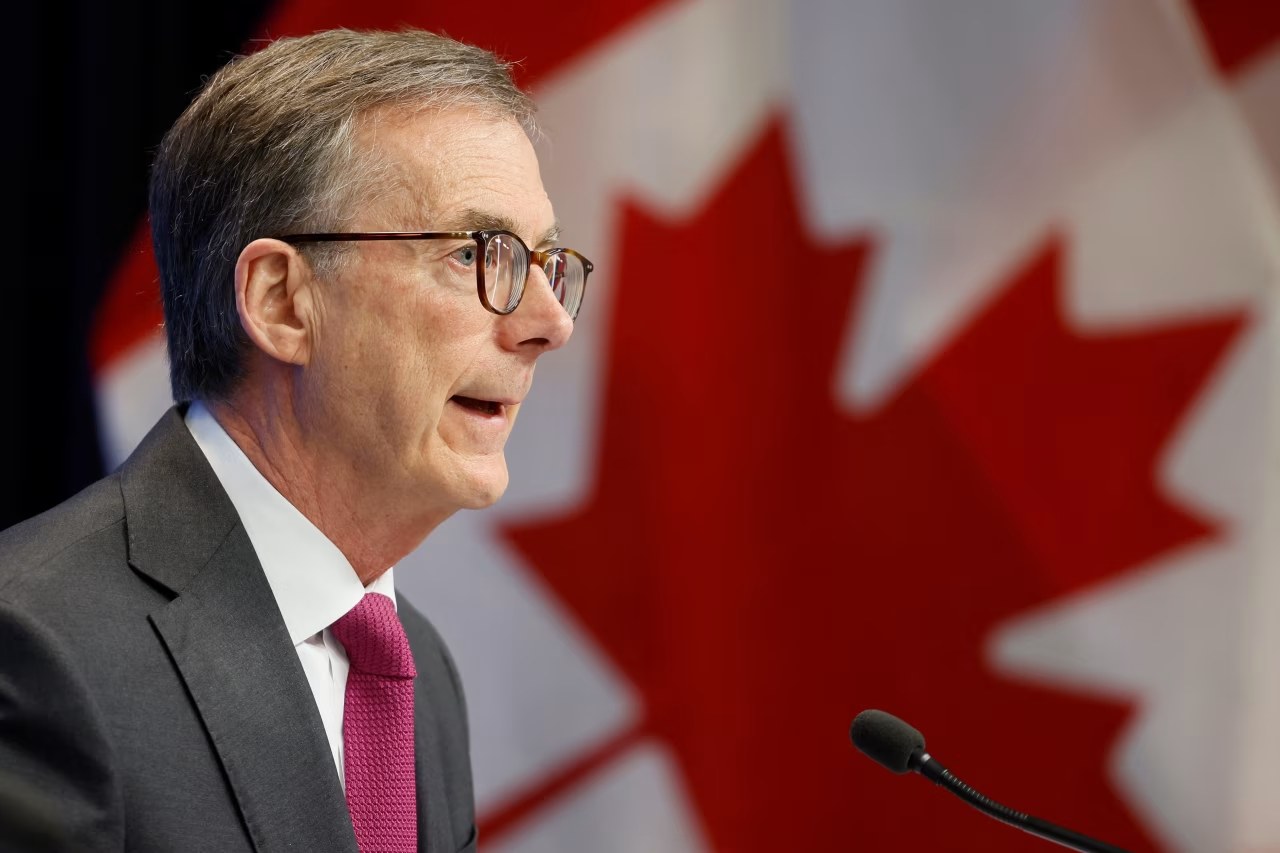
Bank of Canada Calls for Urgent Surveillance of Nonbank Lending
- Bank of Canada Governor Tiff Macklem urged global authorities to step up surveillance.
- The focus is on lending by nonbank players, including hedge funds and institutional investors.
- The goal is to minimize risks to financial stability.
- This is a developing story, with the exact publication date of the statement unknown.
Regulators face pressure to address growing shadow banking risks amid private credit expansion
PRIVATE CREDIT—This is a developing story. Global authorities must intensify their monitoring of lending activities conducted by nonbank financial entities, according to Bank of Canada Gov. Tiff Macklem. The central banker emphasized the pressing need for regulators to enhance their oversight of players like hedge funds and institutional investors to mitigate potential threats to the stability of the financial system. His remarks underline a crucial period for financial supervision.
Macklem’s statement highlights a significant concern: that regulators need to ‘play catch-up’ on private-credit risk. This implies a current deficiency in the level of scrutiny applied to certain parts of the financial market. The objective of such heightened vigilance is explicitly stated as minimizing risks to financial stability, suggesting that the current approach leaves the system exposed to potential vulnerabilities from the expanding sphere of private credit. This call to action from a prominent central bank governor points to an evolving understanding of systemic risks.
The Urgent Call for Enhanced Surveillance
Tiff Macklem highlights a critical gap in global financial oversight
The Governor of the Bank of Canada, Tiff Macklem, articulated a clear and urgent imperative for global authorities to act. Macklem stated unequivocally that these authorities must significantly increase their surveillance efforts concerning lending practices by nonbank entities. This proactive approach to monitoring is deemed absolutely essential to ensure that risks emanating from these less-regulated sectors do not jeopardize broader financial stability. The urgency in his message suggests that merely observing market trends is no longer sufficient, and a more robust, hands-on regulatory engagement is required to safeguard the integrity of the financial system.
Macklem’s comments directly address the perception that regulators are currently behind the curve, needing to ‘play catch-up’ on the risks associated with private credit. This implies a recognition that the rapid expansion of private lending, especially by nonbank actors, has outpaced the development and implementation of comprehensive oversight mechanisms. The call to ‘step up their surveillance’ signifies a demand for more intensive, granular, and possibly proactive monitoring, moving beyond traditional forms of financial oversight that have historically focused more on chartered banks.
The central banker’s remarks indicate that existing regulatory measures may not be adequately keeping pace with the rapid growth and increasing complexity of private credit markets. The objective of stepping up surveillance is specifically to minimize potential risks, indicating a recognition of inherent vulnerabilities that could arise if these activities remain inadequately monitored and unregulated. This proactive posture is designed to prevent systemic issues from developing, rather than merely reacting to crises once they have materialized within the financial landscape.
The emphasis on global authorities implies that no single national regulator can effectively manage these emerging risks in isolation. The interconnected nature of modern finance means that nonbank players often operate across multiple jurisdictions, making coordinated international surveillance efforts crucial. Tiff Macklem’s statement serves as a high-level warning, underscoring the necessity for a collective and intensified focus on understanding and mitigating the potential for systemic shocks originating from the less transparent segments of the lending market.
This development is particularly significant because it comes from a leading central banker, highlighting that the concern about private credit risk is not confined to academic discussions but is now a serious focus for policymakers tasked with maintaining economic stability. The push for enhanced surveillance by the Bank of Canada Gov. Tiff Macklem signals a potential shift in regulatory priorities, compelling global bodies to review and adapt their strategies to address the evolving contours of financial risk. The core message remains consistent: increased vigilance is paramount for minimizing future financial instability.
Who Are the Nonbank Players Driving Concern?
Hedge funds and institutional investors singled out for increased scrutiny
In his direct call for heightened vigilance, Tiff Macklem specifically identified the types of entities whose lending activities require greater attention from global authorities. These “nonbank players” include prominent financial actors such as hedge funds and institutional investors. These groups engage in significant lending operations but often operate with different regulatory oversight compared to conventional banks, creating a potential blind spot for financial watchdogs. The distinction is critical because their operational frameworks and risk profiles may diverge substantially from those of traditional deposit-taking institutions.
The designation of hedge funds and institutional investors as key sources of concern underscores the growth of private credit markets. These markets involve direct lending by nonbank entities to companies, often bypassing public debt markets or traditional bank loans. The appeal of private credit lies in its flexibility and speed for borrowers, and potentially higher returns for lenders. However, this growth also means that a significant volume of credit is now extended by institutions that are not subject to the same capital requirements, liquidity rules, or stress tests as regulated banks.
The distinction between traditional banks and these nonbank players is central to the call for enhanced surveillance by the Bank of Canada Gov. Tiff Macklem. While banks typically adhere to stringent capital requirements and regulatory stress tests designed to ensure their resilience in economic downturns, the lending practices of hedge funds and institutional investors might not be subject to the same level of scrutiny. This divergence in oversight is precisely what Governor Macklem believes needs to be addressed by global authorities to ensure a comprehensive approach to financial stability across the entire economic ecosystem.
The rise of these nonbank players in the lending landscape has been a notable trend in recent years, drawing capital from various sources, including pension funds, endowments, and sovereign wealth funds, all of which are a part of the broader category of institutional investors. Their participation in direct lending means that a larger proportion of corporate debt is now held outside the traditional banking system. This structural shift necessitates a corresponding evolution in regulatory thinking, according to Macklem, who warns that regulators must ‘play catch-up’ to adequately monitor these evolving financial channels.
Without increased surveillance of these specific entities, global authorities may lack a full picture of the leverage, interconnectedness, and potential vulnerabilities building up within the financial system. Macklem’s identification of hedge funds and institutional investors provides a clear target for regulators, guiding where intensified monitoring efforts should be concentrated to effectively minimize risks to financial stability. This focused warning underscores the specific nature of the regulatory challenge at hand.
What Are the Risks to Financial Stability?
Unmonitored lending by nonbank entities poses systemic threats
The core concern articulated by Bank of Canada Gov. Tiff Macklem revolves critically around the potential for risks to financial stability. When significant portions of credit markets, particularly those involving nonbank players like hedge funds and institutional investors, operate outside the direct purview of comprehensive regulatory bodies, systemic vulnerabilities can emerge. These vulnerabilities could manifest if a large nonbank lender faces distress, potentially triggering broader market disruptions without adequate safeguards in place to contain the fallout. The opacity inherent in some private credit arrangements makes assessing and mitigating these risks particularly challenging for oversight bodies.
The push for increased surveillance is fundamentally a preventative measure, aimed at identifying and mitigating these nascent risks before they escalate into full-blown crises. Macklem’s emphasis on minimizing risks to financial stability underscores the interconnected nature of the global financial system and the importance of a holistic regulatory approach that spans both traditional and shadow banking sectors. Without proactive monitoring, weaknesses in one area of the financial system could quickly transmit across others, creating a domino effect that impacts the real economy.
The risks stem from several factors inherent to private credit. These include potentially higher leverage, less transparency regarding underlying assets, and weaker underwriting standards compared to traditional bank lending. Furthermore, the illiquid nature of many private credit investments means that if investors in hedge funds or institutional investors suddenly seek to withdraw capital, these funds might struggle to meet redemption requests, leading to asset fire sales and further market instability. These scenarios highlight the specific types of threats Macklem’s call for surveillance seeks to address.
The ‘catch-up’ aspect of Macklem’s warning indicates that regulators may not yet fully understand the scale or precise mechanisms through which stress in the private credit sector could translate into broader financial instability. This necessitates a more thorough investigation and data collection by global authorities to accurately map the interconnections and potential contagion channels. Minimizing risks means not just reacting to problems, but actively building a robust framework that can foresee and preempt them, thereby protecting the stability of the entire financial architecture.
Ultimately, the goal is to safeguard the financial system against unforeseen shocks that could arise from the less transparent and less regulated corners of the lending market. The statements from the Bank of Canada Gov. Tiff Macklem highlight that ignoring these expanding areas of finance is no longer an option for responsible global authorities. The imperative is clear: the potential for systemic risk demands immediate and concerted regulatory attention to prevent future financial disruptions originating from private credit.
Who Are the ‘Global Authorities’ Expected to Act?
International cooperation is key to closing regulatory gaps in private credit
The call to action from Tiff Macklem is directed at ‘global authorities,’ indicating a crucial need for coordinated international efforts. While the statement does not specify individual bodies, this term typically refers to a consortium of central banks, financial regulators, and international organizations responsible for overseeing the worldwide financial system. Examples of such bodies might include the Financial Stability Board (FSB), the International Organization of Securities Commissions (IOSCO), and committees under the Bank for International Settlements (BIS), though none are explicitly named in the source.
Such cooperation would be vital to effectively monitor entities like hedge funds and institutional investors that often operate across multiple jurisdictions. The challenge lies in harmonizing regulatory approaches across different countries to create a unified framework for surveillance, thereby ensuring that no significant part of the global financial market remains under-regulated and poses a threat to stability. A fragmented regulatory landscape could allow risks to migrate to areas with lighter oversight, undermining the effectiveness of any single national effort.
The concept of ‘playing catch-up’ implies that these global authorities currently face a gap in their collective capacity to adequately oversee the burgeoning private credit sector. This necessitates a proactive dialogue among international bodies to share information, develop common standards, and potentially coordinate enforcement actions. The effectiveness of any surveillance enhancement will depend heavily on the willingness of individual nations and their respective regulatory agencies to collaborate and align their efforts in addressing a shared financial stability concern.
Macklem’s emphasis on ‘global authorities’ underscores that the risks associated with nonbank lending are not confined by national borders. Capital flows, investment vehicles, and the operations of large hedge funds and institutional investors are inherently international. Therefore, a purely domestic regulatory response would likely be insufficient to minimize the broader risks to financial stability. This international dimension makes the coordination among diverse regulatory bodies a complex yet indispensable task.
The call from the Bank of Canada Gov. Tiff Macklem serves as a critical reminder that global financial stability requires continuous adaptation of regulatory frameworks. As financial innovation and market structures evolve, so too must the mechanisms of oversight. The implication is that ‘global authorities’ are not just tasked with current supervision but also with foresight—identifying future sources of systemic risk and developing appropriate tools to address them before they destabilize the international financial system. Their collective response to this warning will be pivotal.
Central Bank Governors Calling for Action
1Governor
Source: wsj.com
Frequently Asked Questions
Q: What is the main concern raised by the Bank of Canada?
Bank of Canada Governor Tiff Macklem expressed concern that global authorities need to increase their surveillance of private credit lending by nonbank players. This enhanced oversight is deemed necessary to minimize potential risks to overall financial stability, indicating a gap in current regulatory practices.
Q: Who is Tiff Macklem?
Tiff Macklem is the Governor of the Bank of Canada. He made the statement emphasizing the need for global authorities to play catch-up on monitoring risks associated with private credit, highlighting his role in overseeing Canada’s central banking policies and financial stability.
Q: What are ‘nonbank players’ in this context?
In the context of private credit risk, ‘nonbank players’ refer to financial entities that engage in lending outside of traditional banking systems. Bank of Canada Governor Tiff Macklem specifically identified hedge funds and institutional investors as examples of these nonbank entities whose lending activities require increased surveillance by global authorities.
Q: Why is surveillance of nonbank lending important?
According to Bank of Canada Gov. Tiff Macklem, stepping up surveillance of lending by nonbank players is crucial to minimize risks to financial stability. Without adequate oversight, the activities of entities like hedge funds and institutional investors could potentially pose systemic dangers to the broader financial system.
Sources & References
- Primary SourceRegulators Need to Play Catch-Up on Private-Credit Risk, Canada Central Banker Sayswsj.com
