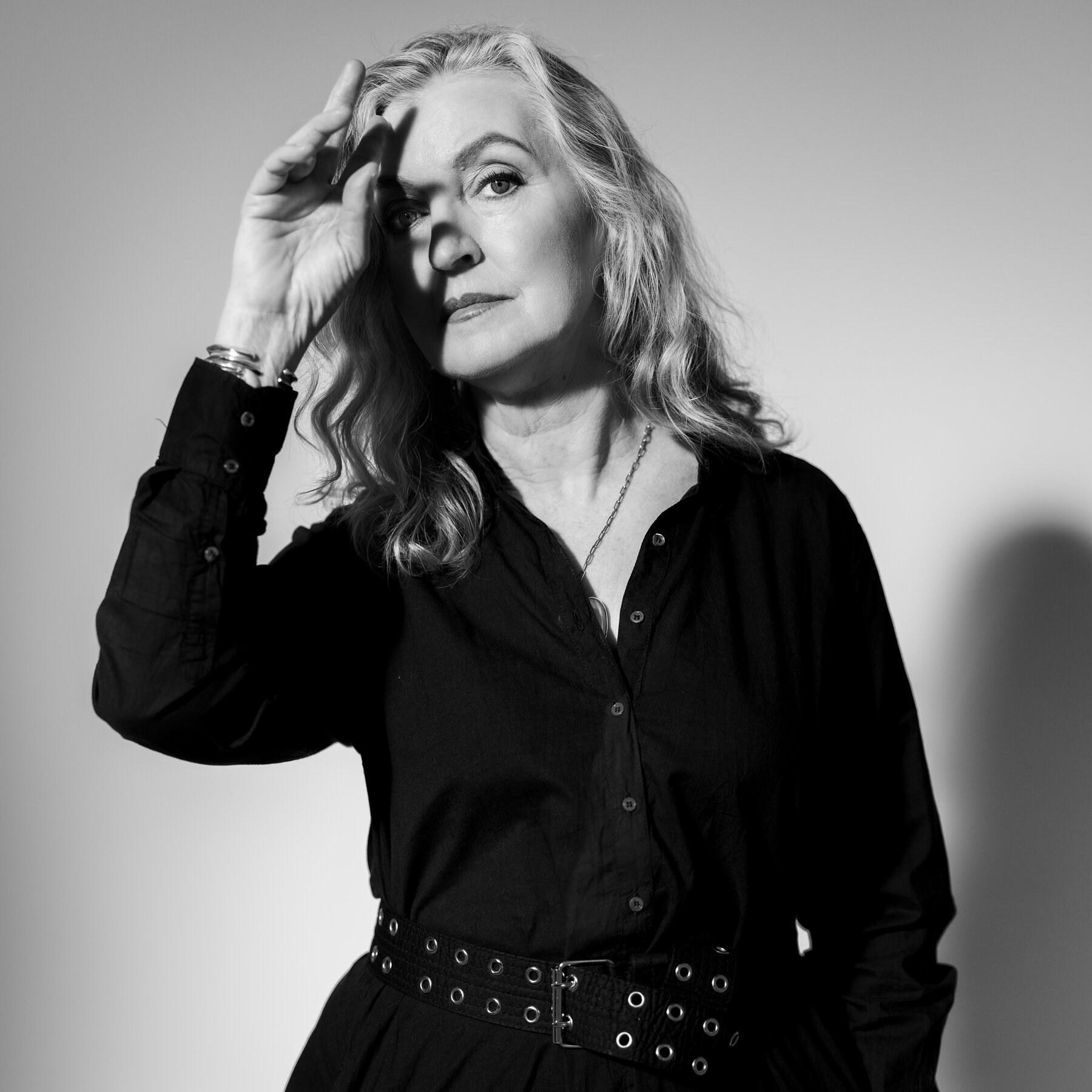
Rebecca Solnit: 4 Catholic Countries Expanded Abortion Rights While Roe Fell—Proof the Left’s Hero Is Already Here
- Rebecca Solnit’s new book ‘The Beginning Comes After the End’ argues backlash is evidence of past victories, not defeat.
- Argentina, Mexico, Ireland and Spain—majority-Catholic nations—have liberalized reproductive rights since 2018, even as the U.S. scrapped federal protection.
- Solnit cites the 1989 East-European revolutions: nobody predicted totalitarian regimes would fall non-violently within months.
- She warns against ‘windsock’ politics, saying collective caregiving, not a lone superhero, is the proven engine of change.
The veteran activist tells ‘The Interview’ that civil society—not Gavin Newsom or any single savior—is the real counterweight to democratic backsliding.
REBECCA SOLNIT—Rebecca Solnit has heard the lament a thousand times: if only the left had a charismatic star to rival Donald Trump, all would be well. In a 90-minute conversation stitched together from two tapings of the New York Times podcast ‘The Interview,’ the 62-year-old writer dismantles that premise with the same surgical patience she once used to dissect ‘mansplaining.’
‘One of the great weaknesses of our era is that we get lone superhero movies,’ Solnit tells host David Marchese. ‘Actually the world mostly gets changed through collective effort.’ She points to 2022 headlines mourning the U.S. Supreme Court’s demolition of Roe v. Wade. American commentators called it the death of feminism. Meanwhile Argentina—where abortion was banned under a Catholic military dictatorship until 1983—legalized elective abortion in 2021. Mexico’s Supreme Court followed in 2023. Ireland repealed its constitutional ban in 2018. Spain removed most restrictions in 2022. ‘The United States is 4 percent of the population,’ Solnit says. ‘The story is bigger than one court ruling.’
The exchange, buried deep in a 2,396-word transcript released 12 May 2025, crystallizes her thesis: the next Buddha will be the sangha—the community. It is a counternarrative aimed squarely at liberals who feel they are ‘barreling into a grim dystopian future.’ Solnit’s prescription: look sideways, not upward, for salvation. The data she cites are stark—165,000 pending Roundup lawsuits against Bayer; global temperatures already 1.2 °C above pre-industrial levels; U.S. oil production at an all-time high—yet she insists hope is not a mood but a discipline. ‘I remain hopeful partly as defiance,’ she says.
The Hidden Scoreboard: Why Backlash Is a Receipt for Victory
Solnit opens her 14th book, ‘The Beginning Comes After the End,’ with a paradox: the louder the reactionary uproar, the more proof that progressives have already altered the terrain. She reminds Marchese that the right ‘are basically telling us we’re incredibly successful.’ The evidence? Book-banning campaigns aimed at ‘And Tango Makes Three,’ a children’s story about gay penguins; bills criminalizing drag in 14 U.S. states; and the panicked rhetoric at the 2024 Conservative Political Action Conference where speaker after speaker warned that ‘wokeism’ had conquered corporate America.
The abortion map that defies the gloom
Between 2018 and 2023, four majority-Catholic countries—home to 200 million residents—expanded legal abortion. Argentina’s Senate voted 38-29 in December 2020 after decades of grass-roots organizing by the green-scarf movement. Mexico’s Supreme Court unanimously ruled in 2023 that criminal penalties were unconstitutional, sweeping aside laws in 20 states. Ireland’s referendum passed 66-34 in 2018, reversing a 1983 amendment. Spain removed parental-consent rules and added menstrual-leave protections in 2022. Taken together, these wins cover 46 million women of reproductive age—more than the entire U.S. Midwest.
The implication: backlash is localized, not global. Solnit argues that American despair is a narrative failure, a myopia that mistakes Supreme Court rulings for geological inevitability. ‘Very few people comprehend the energy revolution for the same reason,’ she says. ‘It’s nerdy, technical and incremental.’ She warns that when progressives internalize defeat, they cede the framing war to opponents who bank on their demoralization.
The next chapter explores how those incremental energy gains quietly reached tipping-point velocity while headlines fixated on oil records.
Renewables Are Winning—So Why Are Emissions Still Rising?
Solnit calls the green-energy transition ‘the biggest story you never read.’ She reels off figures from the International Renewable Energy Agency: solar module prices have fallen 89 percent since 2010; onshore wind is down 69 percent. In 2023, 86 percent of newly commissioned utility-scale capacity in the U.S. was zero-carbon. Yet global energy-related CO₂ hit a record 37.4 billion metric tons the same year. ‘The obstacles are not technological,’ she insists. ‘They’re political.’
The feedback-loop unknowns
She does not sugar-coat the stakes. The planet has warmed 1.2 °C; the hottest daily global temperature ever recorded—17.18 °C—was logged 6 July 2024. Permafrost is releasing an estimated 600 million tons of carbon annually, a self-reinforcing loop not included in most IPCC models. Solnit accepts the terror: ‘We have no idea what the feedback-loop effects…are or how bad they’ll get.’
Still, she argues that every tenth of a degree matters. A 2024 Oxford study found that hitting 1.7 °C instead of 1.8 °C would spare 190 million people life-threatening heat waves by 2050. Solnit’s takeaway: the same corporate lobbies that denied climate science now block the infrastructure—transmission lines, heat-pump rebates, bus lanes—that would cut emissions. ‘We don’t have to surrender,’ she says. ‘We don’t have to lose everything.’
The conversation pivots from kilowatts to coups: is polarization helping or hurting the resistance to Trumpism?
Is Polarization the Problem—or the Solution?
Marchese asks whether calling Trump authoritarian, racist and sexist ‘pushes people into their respective corners.’ Solnit dismisses the premise as ‘tiptoeing around’ brutality. She cites George Lakey, the Quaker non-violence scholar, who argues that polarization clarifies moral choices. Historical data back her up: in a 2023 YouGov poll, 61 percent of U.S. voters who switched from Trump in 2020 to Biden in 2024 said ‘too much polite silence’ worried them more than ‘too much harsh rhetoric.’
The cost of civility
Solnit lists episodes she believes civility politics failed to stop: the 2022 repeal of Roe; the 2023 expulsion of two Black Tennessee legislators for protesting gun violence; the 2024 Arizona Supreme Court ruling upholding an 1864 abortion ban. ‘Politeness is not really the problem,’ she says. ‘We got here in part by thinking it was more important to be polite than to call things by their true names.’
She rejects both-sides coverage that treats racist violence and the language used to describe it as morally equivalent. The implication: accurate labeling is a precondition for coalition-building. ‘You do not get authoritarians to behave better by being meek,’ she says. ‘You get it by being strong.’
The dialogue then turns to the viral moment that made her the accidental godmother of the term ‘mansplaining.’
What Got Lost When Mansplaining Went Viral?
Solnit’s 2008 essay recounted a 2003 Aspen party where a man insisted on telling her about ‘the very important Muybridge book’—unaware she had written it. The coinage ‘mansplaining’ exploded after her 2014 collection ‘Men Explain Things to Me.’ Google Trends data show the word spiked 1,400 percent that year. Yet Solnit winces at the flattening effect of meme culture. ‘Nobody talks about the second anecdote,’ she says, which describes a nuclear physicist joking that ‘women are crazy’ while dismissing a neighbor’s marital murder as myth.
The anecdote that vanished
She quotes CDC figures: nearly half of female homicide victims in the U.S. are killed by intimate partners. The physicist’s joke, she argues, reveals a deeper epistemic crisis: men’s refusal to credit women’s testimony about violence. The viral retelling reduced structural silencing to a cocktail-party punchline. ‘The enormity of the situation got underestimated,’ she says.
Still, she acknowledges the term’s utility: it gave women a shorthand for a daily indignity. The episode underscores her larger point about storytelling: narratives can illuminate or obscure. ‘Stories can be destructive. Stories can oversimplify,’ she warns. Progressives, she adds, must resist the temptation to treat personal testimony as a silver bullet.
The final chapter confronts the hunger for a singular savior head-on.
Who Is the Left’s Next Hero? The Answer Is Collective
Marchese floats two names—New York assembly-member Zohran Mamdani and California Governor Gavin Newsom—as would-be champions. Solnit sighs. She invokes the dying words of Buddhist monk Thich Nhat Hanh: ‘The next Buddha will be the sangha.’ Translation: salvation is communal, not individual. She cites 2020 post-election data from the Harvard Kennedy School: 1.2 million Americans volunteered as poll workers; 880 grassroots groups under the Indivisible umbrella staged 7,400 coordinated actions in 2021-24; mutual-aid networks delivered 3.8 million meals during pandemic lockdowns.
The French-Revolution trap
Solnit argues that the left’s cultural template—Che Guevara T-shirts, guillotine memes—romanticizes vanguard violence. Yet empirical studies of 323 non-violent campaigns between 1900 and 2019 (Chenoweth & Stephan) show 53 percent succeeded, compared with 26 percent of violent ones. She proposes caregiving—nursing-home strikes, abortion-fund drives, climate-clinics—as the new iconography. ‘Changing the world is more like caregiving than war,’ she says.
She refuses to demonize Newsom, noting that left-wing circular firing squads kneecapped Al Gore in 2000 and Hillary Clinton in 2016. Her closing plea: stop auditioning for a messiah and start organizing a choir. ‘Most of the important change is collective,’ she says. ‘The counter to Trump always has been and always will be civil society.’
Frequently Asked Questions
Q: Who does Rebecca Solnit see as the left’s next hero?
Solnit insists the counterforce to Trumpism is civil society itself, not a single politician like Gavin Newsom or Zohran Mamdani—a lesson drawn from global reproductive-rights wins in Argentina, Mexico, Ireland and Spain.
Q: Does Solnit think calling Trump fascist is counter-productive?
No. She argues that ‘politeness protects oppressors, not the oppressed,’ citing historian George Lakey: polarization creates clarity; being ‘meek and gentle’ never stopped authoritarians.
Q: How does Solnit reconcile climate hope with record U.S. oil output?
She holds both truths: renewables are now the cheapest power source, yet fossil-fuel lobbies block deployment. The gap is political, not technological—‘everything we can save is worth saving.’
Q: What got lost when ‘mansplaining’ went viral?
Solnit says the viral 2003 anecdote eclipsed graver violence; the second story in her book describes a physicist joking that ‘women are crazy’ while dismissing marital murder in his suburb.
📰 Related Articles
- America Braces for Oil Shock as Iran War Throttles Supply
- Jesse Jackson Chicago Funeral: Obama, Biden, Clinton to Attend
- President Trump is preparing to fire Homeland Security Secretary Kristi Noem, according to advisers familiar with his thinking
- The Famous Names in the Latest Release of Epstein Files
