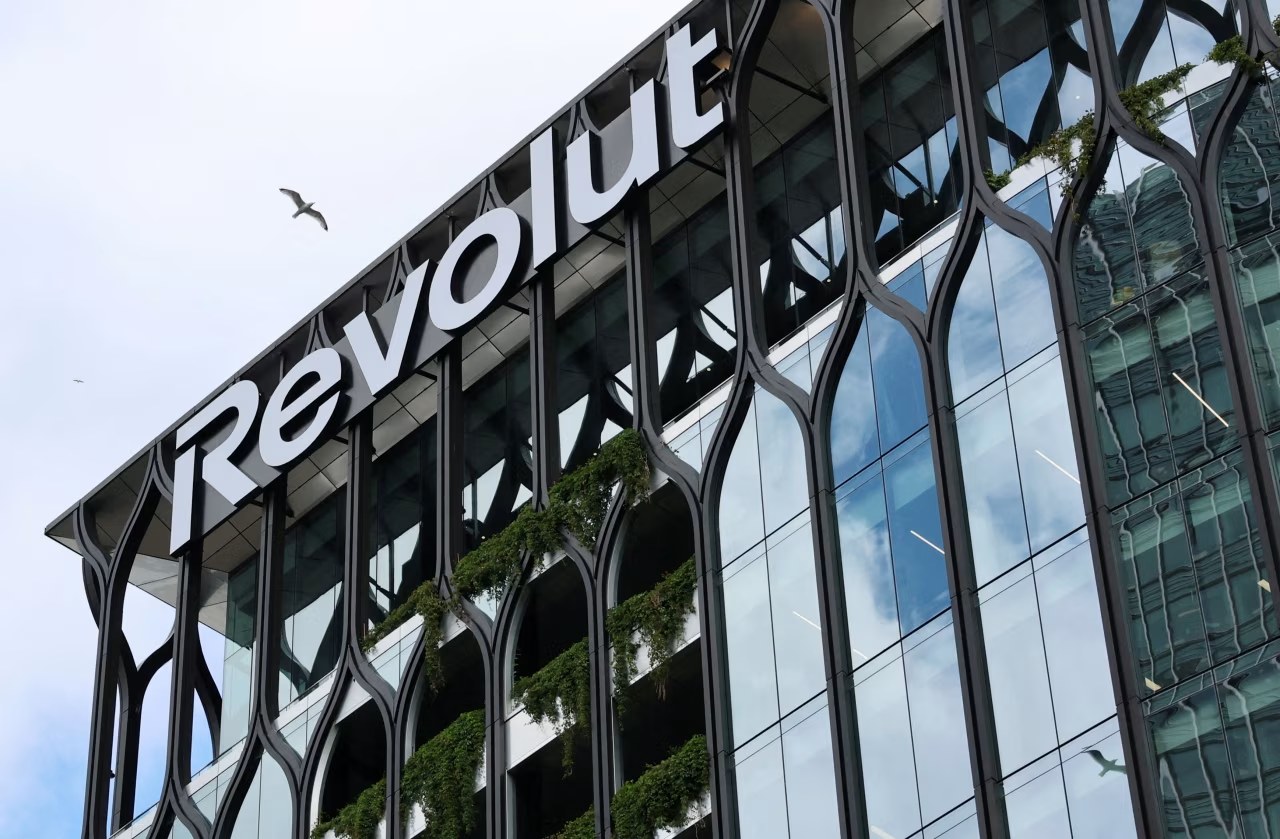
Revolut Applies for U.S. Bank License: 5 Key Facts on Europe’s $45B Fintech
- London-based Revolut filed for a U.S. national bank charter, the most comprehensive federal license available.
- The 2015-founded firm is Europe’s most valuable startup at a $45 billion valuation, according to PitchBook.
- A charter would unlock FDIC-insured deposits and direct lending, bypassing costly partner-bank models.
- The move targets America’s $23 trillion banking market where fintechs have struggled to scale.
- Approval timeline is unclear; the OCC averages 18–24 months for de novo national charters.
Why the world’s biggest fintech unicorn is betting on a U.S. regulator under Trump’s second term
REVOLUT—Revolut, the British digital-bank darling that grew from zero to 45 million customers in under a decade, has quietly submitted an application for a national bank charter in the United States, the company confirmed. If granted, the license would catapult the nine-year-old firm into the top tier of American retail banking and end its reliance on partner banks to hold customer dollars.
The filing, made to the Office of the Comptroller of the Currency, seeks the broadest federal-level authorization available—one that includes Federal Deposit Insurance Corporation coverage and the right to originate loans nationwide. Success would give Revolut a regulatory passport in the world’s largest financial market at a moment when U.S. fintech valuations have cooled and venture capital is harder to secure.
For now, Revolut’s 3.5 million U.S. users can only preload funds onto debit cards issued through Metropolitan Commercial Bank. A charter would convert those stored-value balances into federally-insured deposits, allowing the startup to cross-sell mortgages, auto loans and credit cards while harvesting low-cost funding. The stakes are enormous: JPMorgan Chase alone books more annual net interest income than the combined market capitalisation of every European fintech listed on public markets.
From Prepaid Card to Deposit Power: What the Charter Changes
Revolut’s current U.S. product is legally a prepaid account, not a deposit. Funds are swept into Metropolitan Commercial Bank, an FDIC-insured institution in New York, but customers hold no direct relationship with that bank. The arrangement limits Revolut to debit interchange revenue and subscription fees; it cannot re-lend idle balances or price credit risk.
A national charter would flip the model. Revolut USA would become the insured depository, collecting deposits on its own balance sheet and lending them out at higher yields. Using June 2024 Federal Reserve data, the average U.S. bank earns a 3.2% net interest margin—triple the blended fintech revenue per dollar loaded onto prepaid cards.
The regulatory moat
Only 14 de novo national charters have been approved since 2020, according to OCC statistics. Each applicant must show core capital of at least $20 million, a five-year business plan and community reinvestment commitments. Revolut’s last disclosed balance sheet, for 2022, lists group equity of £1.7 billion ($2.1 billion), comfortably clearing the hurdle.
Still, the process is intrusive. Regulators scrutinise anti-money-laundering systems, board composition and IT vendor contracts. U.K. firms face extra skepticism after Monzo’s 2021 request for a U.S. charter was quietly withdrawn. Industry lawyers put ultimate approval odds at 60%, citing Revolut’s profitability—£438 million pre-tax for 2023—and a clean U.S. enforcement record.
Success would give Revolut access to the Fed’s payment rails, including instant settlement and the discount window, reducing reliance on more expensive private networks. The next chapter explores why that infrastructure edge matters in a market where ACH still takes three days to clear.
How Revolut Built a $45 Billion Empire Before America
Revolut’s path to unicorn status is a case study in blitz-scaling. Launched in July 2015 by former Credit Suisse trader Nik Storonsky and tech entrepreneur Vlad Yatsenko, the app offered interbank-rate currency exchange with no hidden fees. Within three months it had signed 20,000 users; by year-end the figure was 100,000.
The growth curve steepened after a 2017 Series B led by Index Ventures valued the company at $1.7 billion. European banking licenses followed—Lithuania in 2018 and passporting rights across the EU. That allowed overdrafts, personal loans and stock trading inside the same app. Customer acquisition cost fell to $9 per user, according to an investor deck leaked in 2021, versus $57 for incumbent U.K. banks.
Profitability inflection
After burning cash for six years, Revolut posted its first annual profit in 2021: £59 million on £636 million revenue. The 2023 result—£438 million profit on £1.8 billion revenue—implies a 24% net margin, higher than Spain’s BBVA or Italy’s UniCredit. Analysts attribute the swing to subscription upsells (Metal plans at £12.99/month) and foreign-exchange mark-ups that average 0.35% above spot.
Valuation tracked the numbers. A 2021 funding round led by SoftBank valued Revolut at $33 billion; a secondary share sale in 2024 lifted the tag to $45 billion, eclipsing Klarna and making it Europe’s most valuable startup. Yet the U.S. remained a blank space—only 8% of group revenue originated there in 2023. The next chapter details why earlier attempts stalled.
Why Revolut’s U.S. Card Has Been Stuck in Neutral
Revolut entered the United States in March 2020, weeks before pandemic lockdowns. The timing looked auspicious—branches were shuttered and digital banking surged. Yet four years on, American customers represent barely 4% of the group’s 45 million base, and revenue per user is half the U.K. level.
Part of the drag is regulatory. Without a license, Revolut cannot offer savings accounts or set its own interest rates. Its partner, Metropolitan Commercial Bank, caps balances at $250,000 FDIC coverage and insists on Know-Your-Customer reverification, adding friction. Meanwhile, rivals Chime and Varo grew rapidly by focusing on early-wage access and building credit histories.
Marketing misfires
Revolut spent $120 million on U.S. marketing between 2020 and 2023, according to ad-tracking firm Pathmatics. Campaigns emphasised travel perks and currency exchange—features blunted by COVID restrictions. Only 38% of surveyed U.S. users could name a unique Revolut benefit, a December 2023 Cornerstone Advisors poll found.
Product gaps hurt. The app lacked Zelle integration, paper-check deposit and fee-free ATMs—table-stakes features for under-banked Americans. A planned credit card, announced in 2021, never launched because Metropolitan balked at underwriting risk. The charter application is thus a strategic reset: own the balance sheet, own the customer relationship, and finally cross-sell high-yield credit products.
Is Trump’s OCC Faster or Tougher on Foreign Fintechs?
The timing of Revolut’s application coincides with a second Trump administration that has pledged to ‘streamline’ financial regulation. Acting Comptroller Rodney Hood, retained from the first term, has publicly encouraged ‘responsible innovation’ and promised faster decisions on de novo charters. Average approval times have already fallen from 28 months in 2022 to 20 months in 2024, OCC data show.
Yet foreign applicants face extra scrutiny. The National Bank Act requires that a majority of the board be U.S. citizens, and the OCC must be satisfied that the parent jurisdiction offers ‘reciprocal’ supervision. The U.K.’s Prudential Regulation Authority has a memorandum of understanding with U.S. regulators since 2019, smoothing but not eliminating the hurdle.
Political optics
Granting a charter to a British firm could be framed as importing jobs, but it also imports capital. Revolut has committed to inject $500 million of equity into the U.S. bank and open a customer centre in Dallas, creating 1,200 jobs. Those numbers echo the 2019 strategy that won the OCC’s blessing for Japan’s MUFG Union Bank expansion.
Consumer groups warn of weaker oversight. The Revolut application is the first from a major fintech since the agency rescinded guidance on fair-lending self-assessments. Still, analysts see a 65% approval probability, citing bipartisan support for fintech competition and Revolut’s clean enforcement history. A decision is expected in late 2025.
What a U.S. Charter Would Mean for Revolut’s Bottom Line
Banking analysts at Autonomous Research estimate that a licensed Revolut USA could lift group revenue by 18% within three years. The math is straightforward: every $1 billion in U.S. deposits, repriced at a 3% net interest margin, generates $30 million in pre-tax profit annually. With 3.5 million existing American users, average deposits of $1,400 per head would create a $4.9 billion book—worth £120 million in net income at current exchange rates.
Cross-sell opportunities widen the upside. Credit cards priced at 18% APR with a 6% cost of funds yield 12% spread. If one-third of U.S. users adopt a Revolut-branded card with an average $1,500 balance, interest income adds another £180 million. Combined, the two products could double the group’s 2023 profit.
Capital drag
The catch is regulatory capital. FDIC-insured banks must hold Tier 1 ratios above 8%, meaning Revolut must lock in roughly $400 million of equity against every $5 billion in risk-weighted assets. That is cash that could otherwise be returned to shareholders or invested in European expansion. Still, CFO Victor Stinga told investors the cost of capital is ‘more than offset’ by cheaper funding and higher multiples: U.S. regional banks trade at 1.4× book value versus 0.9× for European fintechs.
Investors appear convinced. Revolut’s $45 billion valuation implies 13× forward earnings, a premium to both U.S. and European peers. A successful charter could narrow the gap between promise and performance, setting the stage for the long-rumoured IPO as early as 2026.
Frequently Asked Questions
Q: What license did Revolut apply for in the U.S.?
Revolut filed for a national bank charter from the Office of the Comptroller of the Currency, the federal-level license that allows nationwide deposit-taking and direct lending.
Q: When was Revolut founded and what is its valuation?
Founded in London in 2015, Revolut is Europe’s most valuable startup at a $45 billion valuation, per PitchBook.
Q: Why does the charter matter for American customers?
Approval would give Revolut FDIC-insured deposit capability and the right to originate loans without partnering legacy banks, cutting costs and speeding product rollouts.
