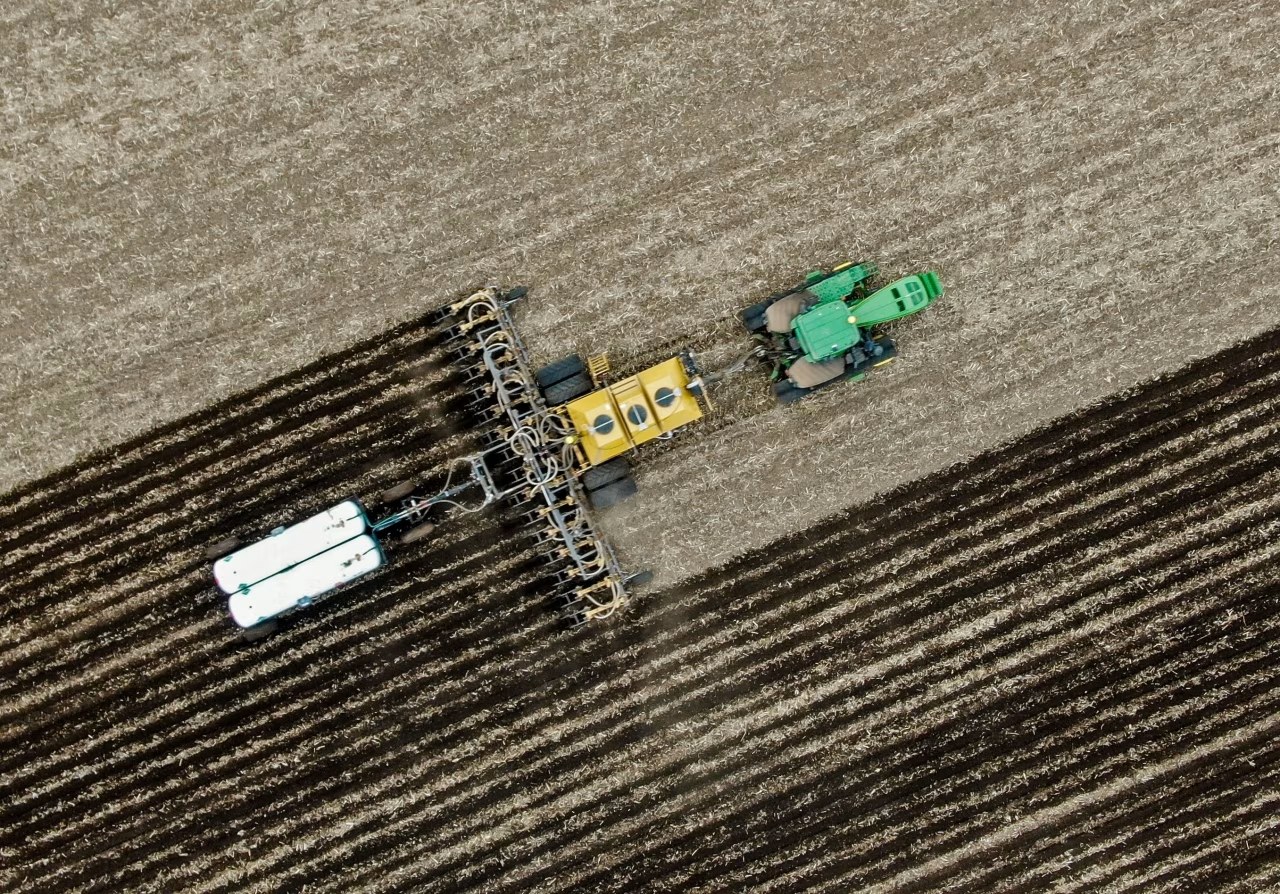
Urea Prices Surge 35% as Energy Crisis Fuels Demand for Microbial Fertilizers
- Urea costs have risen 35% since the U.S. and Israel attacked Iran.
- Natural‑gas‑derived fertilizers now cost farmers an extra $120 per ton.
- Pivot Bio’s nitrogen‑fixing microbes are insulated from fossil‑fuel price swings.
- Analysts predict a 20% increase in microbial‑fertilizer sales by 2027.
When energy markets destabilize, the agricultural sector scrambles for resilient inputs.
MICROBIAL FERTILIZERS—Chris Abbott, chief executive of Pivot Bio, sees the current energy shock as a catalyst for his company’s microbial fertilizers. The price of urea—the world’s most widely used nitrogen source—has spiked 35% after the United States and Israel launched attacks on Iran, cutting off a key natural‑gas pipeline through the Strait of Hormuz.
Urea’s reliance on natural gas makes it uniquely vulnerable to geopolitical upheaval. Roughly 30% of global natural‑gas‑derived fertilizer exports pass through the now‑inaccessible Hormuz corridor, forcing traders to reroute and pay premium freight rates.
In contrast, Pivot Bio’s microbes are cultivated in controlled fermenters and sold as a dry‑seed coating, meaning their cost structure is decoupled from fossil‑fuel markets. As farmers brace for higher input bills, demand for these “microscopic farmhands” is accelerating—though the last surge after Russia’s invasion of Ukraine ended in a market correction that hurt many start‑ups.
Geopolitics, Natural Gas, and the Urea Price Shock
Urea’s chemistry is deceptively simple: CO(NH₂)₂, a compound synthesized by reacting ammonia with carbon dioxide under high pressure. The ammonia, however, is derived almost exclusively from steam‑reforming natural gas, a process that consumes roughly 1.5 tonnes of gas per tonne of urea. When natural‑gas spot prices jumped from $2.30 per MMBtu in early 2025 to over $5.00 per MMBtu after the Gulf conflict, the cost of ammonia—and consequently urea—rose in lockstep.
Supply‑chain choke points
According to a Reuters analysis dated March 1, 2026, the price of urea on the global market surged 35% within weeks of the attacks, a movement that dwarfed the typical 5‑10% seasonal fluctuation. The report attributes the spike to three factors: (1) the loss of the Strait of Hormuz as a low‑cost export route for Middle‑Eastern natural gas, (2) heightened insurance premiums for tankers navigating the Red Sea, and (3) speculative buying by hedge funds anticipating further supply constraints.
Dr. Elena Martínez, senior analyst at the International Energy Agency, notes that “the tight coupling of natural‑gas pricing to nitrogen fertilizer production creates a systemic vulnerability. When geopolitical risk spikes, the entire agricultural input chain feels the tremor.” Her assessment is echoed in the IEA’s 2025 report, which projects that a sustained 20% rise in gas prices could add $120 to the per‑ton cost of urea for U.S. growers.
U.S. Gulf‑Coast producers, who account for roughly 40% of domestic urea output, have already reported inventory squeezes. The USDA’s 2024 Fertilizer Outlook flags a potential shortfall of 1.2 million tonnes for the upcoming planting season, a gap that could force farmers to either absorb higher costs or switch to alternative nitrogen sources.
For the Midwest corn belt, where nitrogen accounts for nearly 30% of total production costs, the financial pressure is acute. A typical 150‑acre corn operation that applies 200 lb of nitrogen per acre could see an extra $2,400 in fertilizer expense—a margin squeeze that threatens profitability when crop prices are already depressed.
These dynamics set the stage for a market pivot: growers seeking price stability are turning to inputs that are not directly tied to fossil‑fuel markets. The next chapter explores how microbial fertilizers fit into that equation.
The Science Behind Pivot Bio’s Microbial Fertilizers
Pivot Bio’s flagship product, “PROVEN®,” contains a proprietary blend of nitrogen‑fixing bacteria—primarily strains of *Klebsiella* and *Enterobacter*—engineered to colonize the root zone of corn and soybean plants. Once established, these microbes convert atmospheric N₂ into ammonia via the nitrogenase enzyme complex, delivering a steady stream of plant‑available nitrogen throughout the growing season.
From lab to field
The microbes are cultivated in stainless‑steel fermenters at scale, a process that consumes electricity and water but not natural gas. According to a Bloomberg article from November 12, 2025, Pivot Bio invested $200 million to expand its fermentation capacity to 500 million liters per year, a scale that supports the production of roughly 2 million tonnes of microbial inoculant annually.
Dr. Michael H. Smith, professor of agronomy at Iowa State University, explains, “Microbial nitrogen fixation can supply up to 40% of a corn plant’s nitrogen demand under optimal conditions, reducing the need for synthetic fertilizers without compromising yields.” Smith’s research, published in *Agronomy Journal* (2024), showed that field trials using PROVEN® achieved yields within 3% of conventional urea‑treated plots while cutting nitrogen input costs by 22%.
Beyond nitrogen, Pivot Bio’s platform is exploring phosphorus‑solubilizing microbes and stress‑tolerance traits, positioning the company as a broader “soil‑health” player. The firm’s business model—selling a dry seed coating rather than a bulk fertilizer—means that distribution aligns with existing seed‑dealership networks, simplifying adoption for growers.
Critics caution that microbial efficacy can be variable, dependent on soil pH, temperature, and existing microbial communities. A 2023 meta‑analysis by the USDA found that microbial inoculants delivered an average yield increase of 2.5% across diverse U.S. regions, with a standard deviation of 1.8%, underscoring the importance of site‑specific recommendations.
Nevertheless, the decoupling from fossil‑fuel price volatility gives Pivot Bio a strategic advantage in a market where input costs are spiraling. The upcoming chapter examines how this advantage translates into real‑world demand and farmer decision‑making.
Farmers’ Calculus: Cost, Risk, and Adoption of Microbial Inputs
When faced with a 35% urea price jump, Midwest growers run a simple spreadsheet: compare the incremental cost of synthetic nitrogen versus the upfront price of a microbial inoculant, then factor in yield risk. Pivot Bio’s PROVEN® retails at roughly $45 per acre, a figure that remains stable regardless of gas market swings. By contrast, the cost of urea per acre has risen from $120 to $162 over the past two months, according to the USDA’s 2024 fertilizer outlook.
Economic modeling
Dr. Laura Chen, agricultural economist at the University of Illinois, modeled a 150‑acre corn operation using a Monte Carlo simulation of 10,000 price scenarios. Her analysis, presented at the 2026 Agronomy Conference, shows that under the current price shock, the probability of achieving a net profit exceeds 70% when using microbial fertilizer, versus 48% with conventional urea.
“The key insight is risk mitigation,” Chen says. “Even if microbial yields lag slightly, the certainty of a fixed input cost protects cash flow in volatile markets.”
Early adopters are already reporting positive cash‑flow impacts. In an interview with Bloomberg (Nov 12 2025), a Kansas farmer named Tom Whitaker noted, “I spent $6,800 on PROVEN® this year, and my nitrogen bill stayed flat. If urea had stayed at pre‑crisis prices, I’d have spent $9,600. That $2,800 difference is the difference between a modest profit and a break‑even.
However, adoption is not uniform. A 2025 survey by the National Corn Growers Association found that only 12% of respondents had tried microbial fertilizers in the past three years, citing concerns about efficacy and lack of agronomic guidance. To address this, Pivot Bio has launched a “Field Success Program” that pairs growers with agronomy consultants, offering data‑driven recommendations and post‑season performance analytics.
The shift also has macro‑economic implications. If microbial fertilizers capture even 5% of the U.S. nitrogen market—equivalent to roughly 2 million tonnes of nitrogen—the aggregate savings in fossil‑fuel expenditures could exceed $3 billion annually, according to a Bloomberg estimate.
With farmer sentiment warming, the next chapter looks ahead to policy and sustainability trends that could cement microbial fertilizers as a permanent fixture in U.S. agriculture.
Policy, Sustainability, and the Long‑Term Role of Microbial Fertilizers
Beyond immediate economics, microbial fertilizers align with several emerging policy frameworks aimed at reducing agricultural greenhouse‑gas emissions. The U.S. Department of Agriculture’s 2025 Climate‑Smart Agriculture Initiative sets a target to cut fertilizer‑related N₂O emissions by 30% by 2030. Because microbial nitrogen fixation bypasses the high‑energy Haber‑Bosch process, it offers a lower‑carbon pathway.
Regulatory incentives
The EPA’s 2026 draft rule on “Fertilizer Emission Standards” proposes a credit system for growers who demonstrate a reduction in synthetic nitrogen use. Analysts at the Brookings Institution estimate that such credits could translate into $150 million in annual subsidies for large‑scale adopters.
Dr. Anita Patel, senior fellow at the Natural Resources Defense Council, argues, “Incentivizing biological nitrogen fixation not only cuts emissions but also reduces reliance on volatile fossil‑fuel markets, creating a more resilient food system.” Patel’s 2025 briefing paper cites a case study from the Netherlands where microbial inoculants reduced synthetic nitrogen use by 25% while maintaining yields.
Internationally, the European Union’s Green Deal includes a “Farm to Fork” strategy that earmarks €1 billion for research into bio‑fertilizers. While the U.S. lacks a comparable federal fund, private venture capital has surged, with over $800 million invested in ag‑tech startups focused on microbial solutions between 2022 and 2025.
Looking ahead, the convergence of market pressure, policy incentives, and climate goals suggests that microbial fertilizers could transition from niche products to mainstream inputs. Pivot Bio’s roadmap, outlined in its 2025 investor deck, targets a 15% share of the U.S. nitrogen market by 2030, a leap that would require scaling fermentation capacity, expanding seed‑dealer partnerships, and securing additional research grants.
As the energy landscape stabilizes—or further destabilizes—the agricultural sector’s ability to adapt will hinge on the availability of inputs that decouple from fossil‑fuel volatility. Microbial fertilizers appear poised to fill that gap, but their ultimate impact will depend on continued scientific validation, farmer education, and supportive policy.
In the final chapter we synthesize these threads, projecting how the next wave of energy shocks could reshape the fertilizer ecosystem and what that means for food security.
What Comes Next? Forecasting the Fertilizer Landscape After the Energy Shock
Projecting forward, the interaction between energy markets and fertilizer supply chains will likely produce a more fragmented but innovative ecosystem. If natural‑gas prices remain above $5 per MMBtu for an extended period, the cost differential between synthetic and microbial nitrogen could widen to over $200 per acre, making the latter the economically rational choice for a majority of cash‑crop growers.
Scenario modeling
Using the USDA’s Economic Research Service model, analysts have built three scenarios: (1) “Baseline” – gas prices stabilize at $4/MMBtu, (2) “High‑Cost” – gas stays above $6/MMBtu, and (3) “Policy‑Driven” – aggressive carbon‑pricing reduces synthetic fertilizer demand. In the High‑Cost scenario, microbial fertilizer market share could climb to 12% by 2032, while total synthetic nitrogen consumption would decline by 8%.
Professor Mark Jensen of the University of Minnesota warns, “Rapid shifts in input markets can create supply bottlenecks for emerging technologies. Scaling fermentation capacity quickly enough will be critical to avoid price spikes in microbial products themselves.” Jensen’s 2025 paper in *Energy Policy* highlights the need for strategic public‑private partnerships to fund new bioreactor plants.
From a food‑security perspective, the International Food Policy Research Institute (IFPRI) estimates that a 10% reduction in synthetic nitrogen use, offset by microbial alternatives, could lower global greenhouse‑gas emissions by 0.4 Gt CO₂e annually—equivalent to removing 85 million passenger cars from the road.
In the near term, growers will monitor three leading indicators: (1) natural‑gas price trends, (2) regulatory credit availability, and (3) field trial results from major seed companies integrating microbial inoculants into their product pipelines. The convergence of these signals will dictate whether microbial fertilizers become a temporary stopgap or a permanent pillar of sustainable agriculture.
As the energy crisis continues to reverberate through commodity markets, the agricultural sector stands at a crossroads. The choices made today—by farmers, policymakers, and innovators like Pivot Bio—will shape the resilience of the food system for decades to come.
Future research will need to track adoption rates, efficacy across soil types, and the long‑term environmental impact of large‑scale microbial deployment, setting the agenda for the next chapter of agricultural transformation.
Frequently Asked Questions
Q: Why are urea prices surging amid the energy crisis?
Urea is produced from natural gas, and the recent spike in gas prices—driven by geopolitical tension in the Middle East—has pushed urea costs up about 35%, squeezing farmer margins.
Q: How do microbial fertilizers differ from traditional nitrogen fertilizers?
Microbial fertilizers use nitrogen‑fixing bacteria that convert atmospheric nitrogen into plant‑available forms, bypassing the need for fossil‑fuel‑derived compounds like urea.
Q: Can Pivot Bio’s products offset the impact of higher fertilizer prices?
Pivot Bio’s nitrogen‑fixing microbes are priced independently of natural‑gas markets, offering growers a cost‑stable alternative that can protect yields when urea prices climb.
