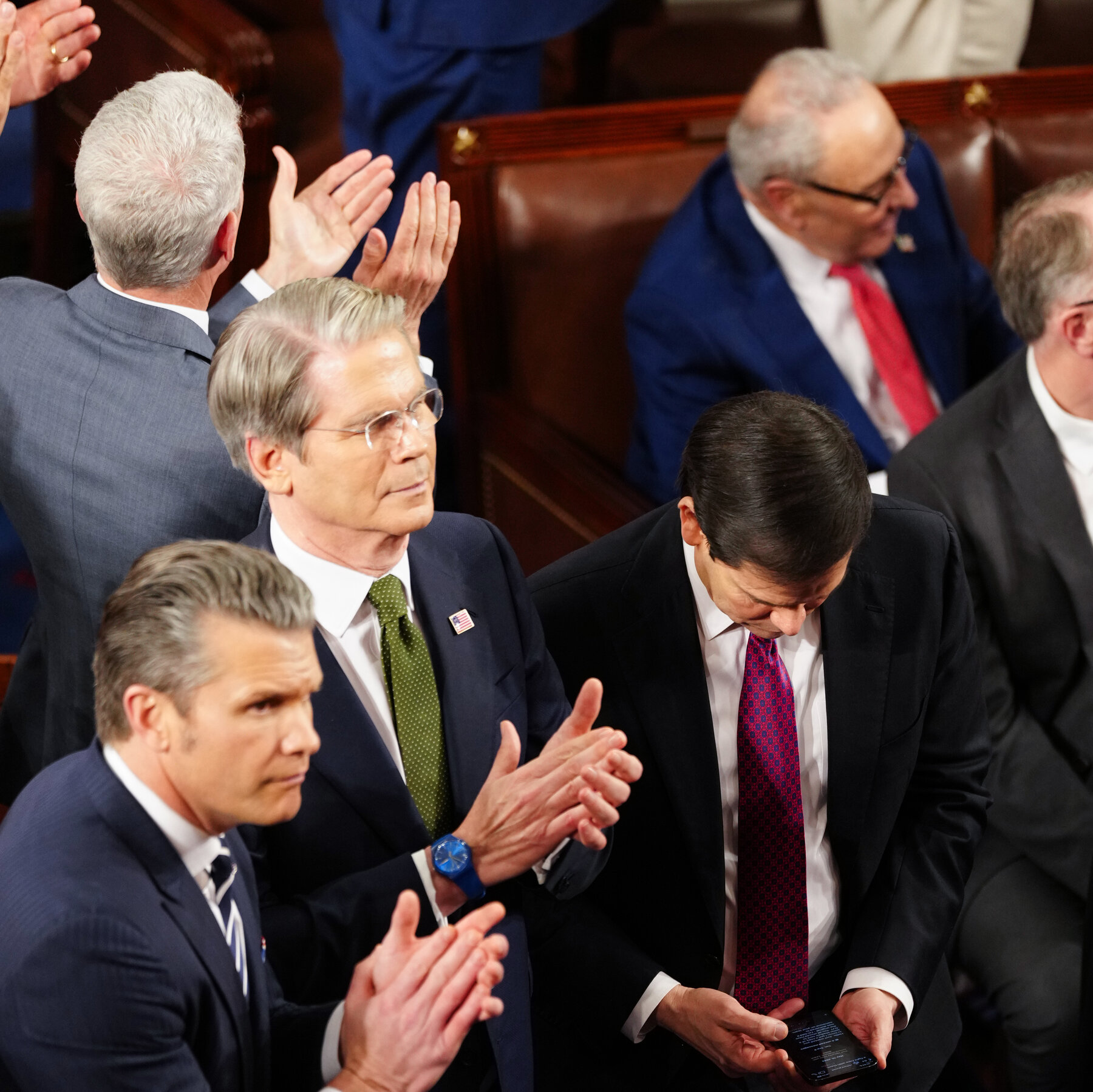
MARCO RUBIO—In a moment that has sparked both intrigue and criticism, Secretary of State Marco Rubio was caught looking at his phone during the State of the Union speech, shortly after being praised by President Donald Trump. The incident, captured by a New York Times photographer, shows Rubio reading messages from Mr. Trump’s special envoy to Venezuela, highlighting the complex and often tense relationship between the U.S. and Venezuela.
The State of the Union Address: A Presidential Praise
Introduction to the Speech
The State of the Union address is a pivotal moment in American politics, where the President outlines the nation’s progress and future goals. This year’s speech was no exception, with President Trump addressing various domestic and foreign policy issues. One of the notable moments came when he praised Secretary of State Marco Rubio for his efforts in promoting democracy and human rights in Venezuela.
Rubio’s Response: A Moment of Distraction
However, shortly after being praised, Rubio was caught looking at his phone, which has raised questions about his level of engagement and attention during the speech. The photo, taken by a New York Times photographer, shows Rubio reading messages from Mr. Trump’s special envoy to Venezuela, Elliott Abrams. This incident has sparked a mix of reactions, ranging from criticism of Rubio’s behavior to speculation about the content of the messages.
The Venezuela Connection: Understanding the Context
Venezuela’s Political Landscape
Venezuela has been embroiled in a deepening political and economic crisis, with the opposition leader Juan Guaidó recognized by the U.S. and other countries as the interim president. The country’s authoritarian regime, led by Nicolás Maduro, has been accused of human rights abuses and corruption. The U.S. has imposed sanctions on Venezuela and has been actively supporting the opposition’s efforts to bring about democratic change.
Rubio’s Involvement in Venezuela Policy
As Secretary of State, Marco Rubio has been at the forefront of the U.S. efforts to promote democracy and human rights in Venezuela. He has been a strong critic of the Maduro regime and has supported the opposition’s efforts to bring about change. However, his involvement in Venezuela policy has also been subject to scrutiny, with some critics questioning the effectiveness of the U.S. approach.
The Significance of the Moment: Reading Between the Lines
Interpreting Rubio’s Actions
The incident has sparked a range of interpretations, from suggestions that Rubio was simply checking his phone to more conspiratorial theories about the content of the messages. While it is impossible to know for certain what Rubio was doing, the photo has highlighted the complexities of the relationship between the U.S. and Venezuela. The fact that Rubio was reading messages from Mr. Trump’s special envoy to Venezuela suggests that the U.S. is actively engaged in efforts to promote democratic change in the country.
Implications for U.S. Foreign Policy
The incident has also raised questions about the implications for U.S. foreign policy, particularly in relation to Venezuela. The U.S. has been criticized for its handling of the crisis, with some arguing that the sanctions have exacerbated the humanitarian situation. The photo of Rubio looking at his phone has sparked a renewed debate about the effectiveness of the U.S. approach and the need for a more nuanced and comprehensive policy.
Conclusion: A Moment of Truth
A Reflection of the Times
The incident involving Marco Rubio and his phone has sparked a range of reactions and interpretations, reflecting the complexities and challenges of the current political landscape. As the U.S. continues to navigate its relationships with countries like Venezuela, moments like these serve as a reminder of the need for careful consideration and nuanced understanding of the issues at stake.
A Call for Engagement
Ultimately, the incident highlights the importance of engagement and attention in politics, particularly during critical moments like the State of the Union address. As citizens, it is essential to stay informed and engaged, to question and critique the actions of our leaders, and to demand a more transparent and accountable government.
