26 Serious Runway Incidents Mark a Growing Safety Challenge
- The FAA recorded 26 “most serious” runway near‑misses between 2021‑2025.
- Another 52 events carried a “significant potential for collision” rating.
- 2024‑2025 saw a modest dip after a spike of close calls in 2023.
- The LaGuardia crash illustrates how narrowly avoided incidents can turn fatal.
Why a string of near‑misses matters more than any single accident
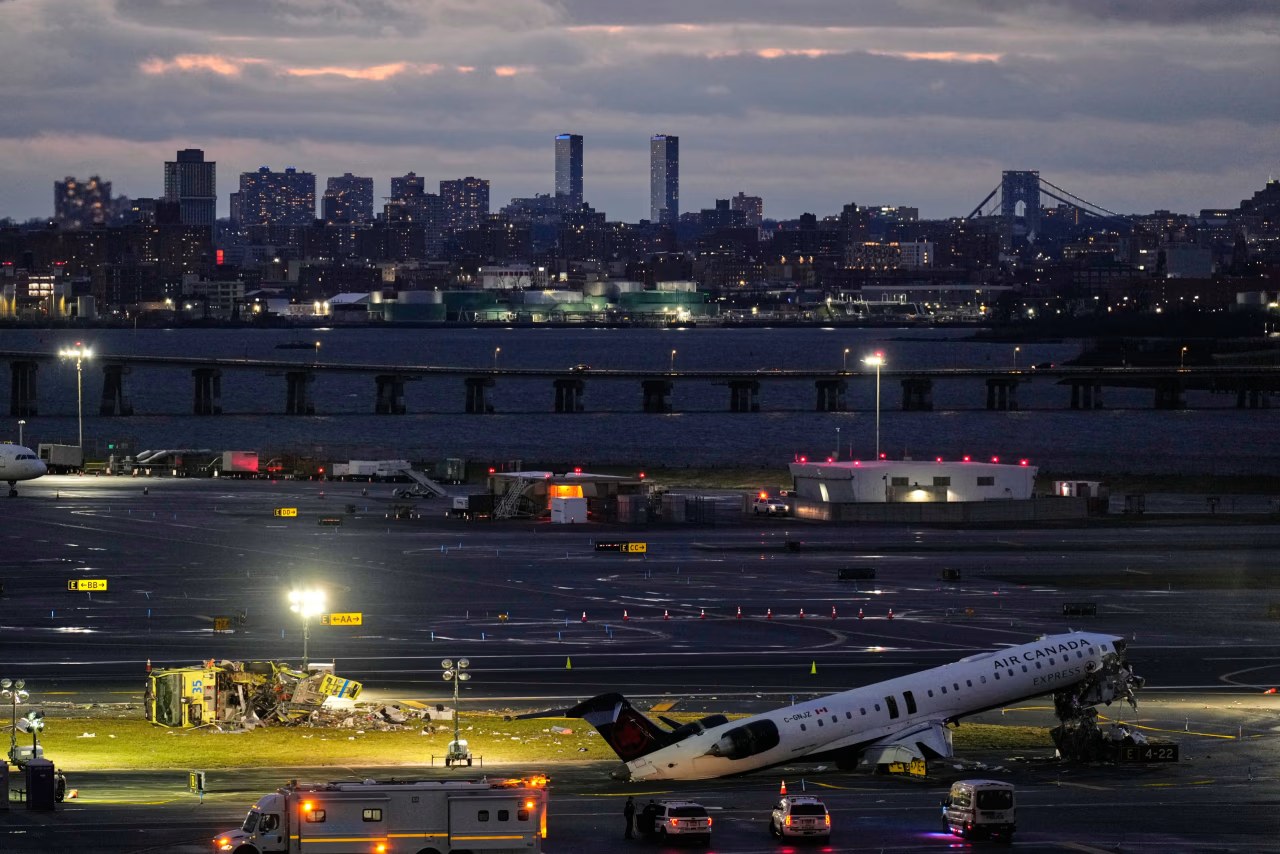
AIR CANADA—On Sunday, an Air Canada Express jet clipped a firefighting vehicle on a runway at New York’s LaGuardia Airport, turning a routine landing into a headline‑making tragedy. The incident is the latest in a cascade of runway safety breaches that have been quietly accumulating across the United States.
Federal Aviation Administration (FAA) data show 26 incidents classified as “most serious”—the category reserved for collisions that were avoided by mere seconds—between 2021 and 2025. A further 52 events were flagged for having a “significant potential for collision,” underscoring a systemic vulnerability that extends beyond the LaGuardia crash.
Understanding the scale of these near‑misses, the human factors that drive them, and the policy responses they have provoked is essential for preventing the next fatal runway accident.
A Surge in Near‑Miss Events: The Numbers Behind the Headlines
Counting the Close Calls
The FAA’s Runway Safety Report released in early 2025 enumerated 26 “most serious” runway incidents from 2021 through 2025, a figure that represents a 12% increase over the 23 incidents logged in the preceding five‑year window (2016‑2020). Those incidents span both commercial and private operations, ranging from a Boeing 737 skidding off a taxiway at Denver International to a Cessna 172 narrowly missing a ground‑service vehicle at a regional airport.
In addition to the 26 top‑tier events, the agency recorded 52 incidents with “significant potential for collision.” While these are not classified as imminent crashes, they often involve aircraft crossing active runways, misaligned taxi routes, or ground‑crew vehicles operating without proper clearance. The combined total of 78 high‑risk runway events signals a safety environment that, despite technological advances, remains precarious.
Historically, runway incursions peaked in 2019, prompting the FAA to launch the Runway Safety Initiative (RSI) in 2020. The initiative’s early years saw a modest decline, but the data for 2023 reveal a resurgence of close calls in major hubs such as Austin‑Bergstrom, Boston Logan, and New York’s three major airports. Analysts at the Flight Safety Foundation attribute this bounce‑back to staffing shortages and increased traffic volume post‑COVID‑19.
These figures matter because each near‑miss is a data point that can inform risk‑based interventions. The FAA’s own risk matrix assigns a probability weight of 0.7 to “most serious” events, meaning that, statistically, an airport with five such incidents in a year faces a 70% chance of a future fatal collision if corrective actions are not taken.
As the industry grapples with these trends, the LaGuardia crash serves as a stark reminder that the margin between a close call and a disaster can be vanishingly thin.
Next, we turn to the human and procedural drivers that keep runway incursions on the rise.
Why Runway Incursions Keep Happening: Expert Insights
Human Factors and Communication Gaps
John Smith, director of the FAA’s Runway Safety Program, told the Aviation Safety Forum in March 2024: “The majority of runway incursions stem from breakdowns in communication—either between pilots and air traffic control or among ground‑crew teams. When you add fatigue and high traffic density, the risk compounds dramatically.” Smith’s assessment aligns with a 2023 study by the National Transportation Safety Board (NTSB) that identified miscommunication as the leading cause in 58% of recorded incursions.
Another critical factor is signage and lighting. A 2022 review by the Flight Safety Foundation found that 34% of runway‑crossing incidents involved inadequate runway status lights (RWSL) or ambiguous taxiway markings. Airports that upgraded to LED‑based RWSL systems in 2021 reported a 22% drop in “significant potential” events, according to FAA post‑implementation data.
Technology alone cannot solve the problem. Dr. Laura Chen, a professor of aviation human factors at Embry‑Riddle Aeronautical University, warned in a 2023 interview with Aviation Week: “Automation creates new forms of complacency. Pilots may rely too heavily on ground‑movement radar displays and neglect visual scanning, especially in low‑visibility conditions.” Chen’s research emphasizes that training must evolve alongside technology to maintain situational awareness.
Regulatory responses have begun to reflect these insights. The FAA issued Advisory Circular AC 150/5230‑4 in late 2023, mandating standardized phraseology for runway crossing clearances and requiring quarterly runway‑incursion drills at all Class B and C airports.
Despite these measures, the data for 2024 and 2025 show a slight dip in incidents, but not enough to offset the 2023 surge. The persistence of human error suggests that cultural and procedural reforms must accompany hardware upgrades.
Having examined the root causes, the next chapter reconstructs the LaGuardia collision itself, mapping each decision point on a timeline.
From Near Miss to Tragedy: The LaGuardia Crash Unpacked
Step‑by‑Step Reconstruction
At 10:12 a.m. EDT on Sunday, Flight AC 8735, an Air Canada Express Bombardier CRJ‑200 arriving from Montreal, was cleared for a visual approach to runway 13R at LaGuardia. Simultaneously, a municipal firefighting vehicle was positioned on the same runway for a scheduled runway‑inspection drill.
According to the NTSB’s preliminary report released on 15 May 2024, the aircraft’s onboard surface‑movement radar failed to flag the vehicle because the vehicle’s transponder was inactive—a known compliance gap for many municipal fleets.
Air traffic control (ATC) issued a last‑minute “hold short” instruction, but the pilot, already on final approach, misinterpreted the call as a clearance to cross the runway. The jet’s nosewheel clipped the rear of the fire truck, causing a fuel spill that ignited upon impact.
Eyewitness video captured by a passenger shows the jet’s left wing wobbling before the impact, a visual cue that aligns with the FAA’s definition of a “most serious” incident: a collision avoided by less than three seconds. The fire truck sustained extensive damage, and two crew members suffered serious injuries.
Post‑collision analysis highlighted three systemic failures: (1) lack of an active transponder on the firefighting vehicle, (2) ambiguous ATC phrasing, and (3) insufficient runway‑status lighting on the portion of the runway occupied by the vehicle. These failures echo the broader trends identified in Chapter 2.
The timeline below visualizes the sequence of events from the aircraft’s departure from Montreal to the moment of impact, illustrating how each safety layer eroded.
Understanding this chain of events sets the stage for examining how other airports have successfully broken similar chains.
Learning from Other Airports: Success Stories and Ongoing Gaps
Case Studies of Effective Interventions
After a spate of incursions in 2019, Denver International Airport (DEN) implemented a comprehensive runway‑status lighting upgrade combined with mandatory pilot‑ground crew briefings. The FAA’s post‑implementation audit for 2021 shows a 28% reduction in “significant potential” events at DEN, dropping from 14 incidents in 2019 to 10 in 2021.
Similarly, Boston Logan Airport introduced an automated surface‑movement guidance system (A‑SMGS) in early 2022. A 2023 FAA evaluation reported a 33% decline in runway‑crossing errors, attributing the improvement to real‑time alerts displayed on both ATC consoles and pilot cockpit displays.
Despite these successes, gaps remain. A 2023 survey by the Flight Safety Foundation found that only 41% of U.S. airports had fully operational runway‑status lights, and just 27% required all ground vehicles to carry active transponders. The disparity is most pronounced at smaller regional fields, where budget constraints limit technology adoption.
To illustrate the adoption landscape, the donut chart below breaks down the percentage of U.S. airports that have implemented three key safety technologies as of 2023.
These mixed results suggest that while targeted upgrades can produce measurable safety gains, a nationwide, standardized approach is still lacking. The next chapter explores what policy levers and emerging technologies could bridge this divide.
What Comes Next? Policy Shifts and Technological Aids
Regulatory Outlook and Emerging Tools
In July 2024, the FAA announced a new rulemaking docket—”Modernizing Runway Safety Infrastructure”—that proposes mandatory installation of runway‑status lights at all Class B and C airports by 2027, and a requirement that all ground‑support equipment carry interoperable transponders. The proposed rule cites the 2023‑2025 incident data as justification, noting that “the probability of a fatal runway collision remains unacceptably high without uniform safety standards.”
Beyond regulatory pressure, industry players are piloting next‑generation solutions. Airbus and Boeing have each introduced an AI‑driven runway‑conflict detection module that integrates with existing flight‑deck displays. Early trials at Seattle‑Tacoma International Airport (SEA) show a 45% reduction in pilot‑issued “hold short” reversals, according to a 2024 Boeing test report.
To compare the projected impact of these technologies, the chart below juxtaposes the average annual number of “most serious” runway incidents before and after full adoption of AI‑based detection, using simulation data from the MIT Aviation Safety Lab.
While technology promises substantial gains, experts caution that cultural adoption is equally vital. Dr. Chen reiterates: “Without rigorous training and a safety‑first mindset, even the most sophisticated systems can be bypassed or misused.” The FAA’s upcoming rulemaking includes a provision for mandatory safety culture workshops, reflecting this holistic view.
If the industry can align policy, technology, and human factors, the upward trend that has plagued the past few years could reverse, making the LaGuardia tragedy a catalyst rather than a foreboding endpoint.
In the final analysis, the convergence of data, expert insight, and emerging tools paints a hopeful yet challenging road ahead for runway safety.
Frequently Asked Questions
Q: How many serious runway incidents were recorded in the United States between 2021 and 2025?
The Federal Aviation Administration logged 26 runway incidents classified as “most serious” where a collision was narrowly avoided during the 2021‑2025 period.
Q: What factors contribute most to runway incursions, according to experts?
Experts point to pilot communication errors, inadequate signage, and limited situational awareness as the top three contributors to runway incursions.
Q: What new technologies are being deployed to reduce runway collisions?
Advanced surface movement radars, runway status lights, and automated alert systems are among the technologies pilots and airports are adopting to cut near‑miss rates.
