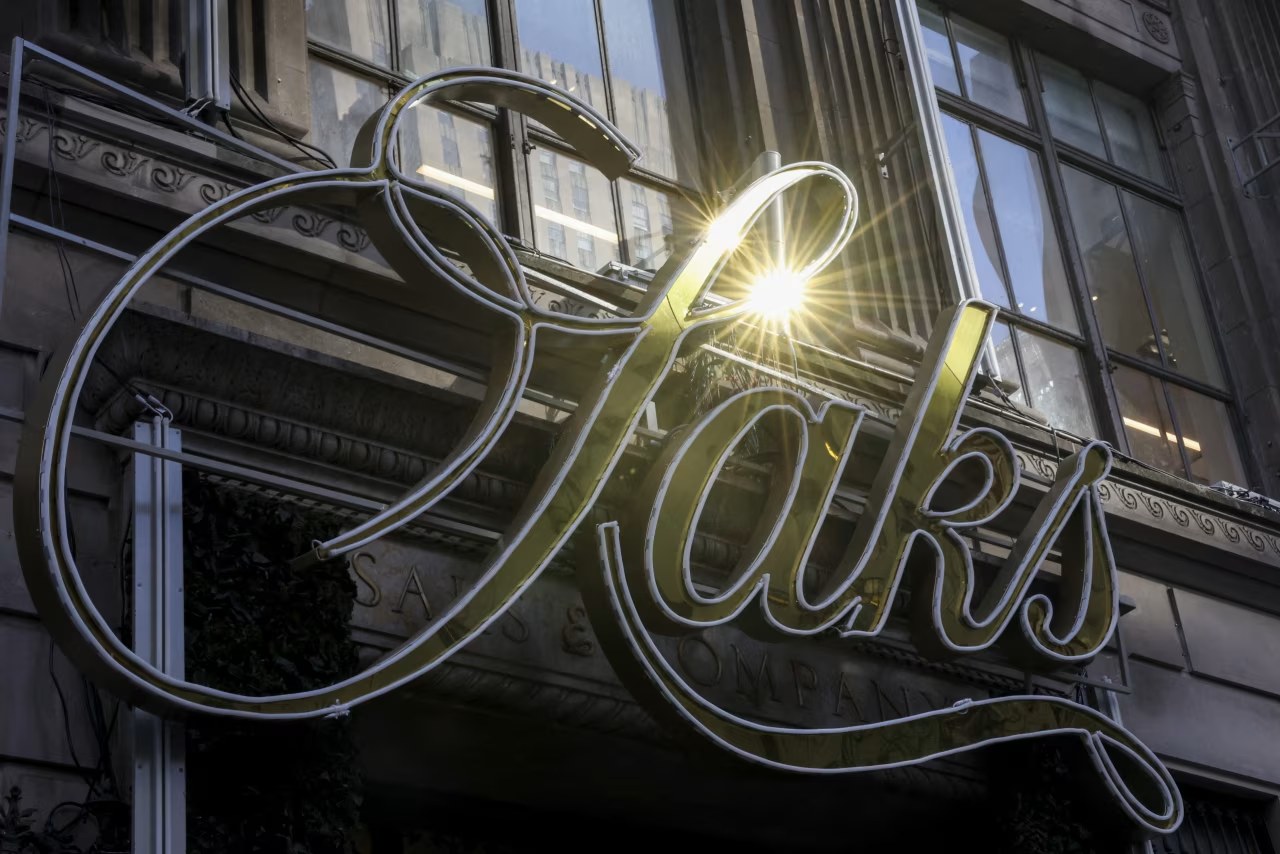
Saks Global to Close 15 More Stores in Bankruptcy Push, Bringing 2025 Total to 24
- Saks Global will shutter 12 Saks Fifth Avenue and 3 Neiman Marcus stores by May 2025.
- The move raises total 2025 closures to 24 after an earlier February announcement of 9 shutdowns.
- Company cites need to ‘focus more on luxury shoppers’ while cutting fixed costs in Chapter 11.
- No timeline given for potential further waves as bankruptcy review continues.
Flagship dominance or retail extinction? Inside the math driving America’s oldest luxury chain to shrink its physical footprint at record speed.
SAKS GLOBAL—Saks Global—the newly combined parent of Saks Fifth Avenue and Neiman Marcus—confirmed Friday it will eliminate another 15 full-line department stores by Memorial Day, deepening a retail bloodbath that has already claimed 9 locations since February and sent shock waves through America’s embattled luxury corridor.
The disclosure, buried in a one-paragraph court filing, means the storied conglomerate will jettison nearly 10 percent of its combined 250-store fleet in a five-month span. Executives argued the closures are “necessary to right-size the store base and concentrate investment on high-touch flagship experiences,” according to people familiar with the deliberations.
But inside malls from Boca Raton to Beverly Hills, the announcement lands like a death knell. Luxury suppliers—already reeling from a 13 percent year-over-year drop in U.S. department-store orders—now face the prospect of even fewer wholesale doors, while landlords brace for another spike in vacancy rates that last year hit a 14-year high of 11.8 percent, according to Moody’s Analytics.
— The Escalating Shutdown Math
The Friday filing marks the second wave of closures since Saks Global entered Chapter 11 in January. In February the company said it would close eight Saks Fifth Avenue stores and one Neiman Marcus. Today’s disclosure adds 12 more Saks and three Neiman Marcus locations, bringing the 2025 total to 24 stores—equivalent to one closure every 6.4 days.
From 250 to 226: the shrinking store map
Combined, Saks Fifth Avenue and Neiman Marcus operated roughly 250 full-line stores at the start of the year. By June the footprint will drop to 226, a 9.6 percent reduction. Management has not ruled out additional waves, telling creditors it will “continue to evaluate lease terms, regional performance, and capital allocation priorities” throughout 2025.
While the company did not release a location-specific list, people briefed on the plan said the targeted stores average 140,000 square feet and posted same-store sales declines of 8–12 percent in 2024—double the chain-wide slide. Landlords have been granted 60-day wind-down windows, meaning final clearance sales must begin by April 1 to avoid conflict with Memorial Day weekend.
The accelerated timeline reflects mounting liquidity pressure. Saks Global burned through $210 million of cash in the first nine weeks of bankruptcy, court statements show, and needs to shave at least $180 million in annual rent within 12 months to satisfy lender covenants. Every closed store yields an estimated $2–4 million in yearly occupancy savings, according to industry consultancy HRC Advisors.
— Flagships vs. Flyover Country: Who Dies First?
Executives are candid about the strategy: protect trophy assets in New York, Beverly Hills, and Boston’s Copley Place, while abandoning secondary markets where luxury spending has flat-lined. Of the 24 targeted stores, 19 sit in metros with median household incomes below $85,000—well under the $120,000 threshold analysts say is needed to sustain full-price designer apparel.
Case study: Town Center at Boca Raton
The Boca Raton Saks—opened in 2000—will close May 17, ending a 25-year run. Sales per square foot dropped from $480 in 2019 to $310 last year, according to CoStar, as high-net-worth shoppers migrated to Bal Harbour and Aventura malls 40 miles south. The store’s lease, struck at $96 per square foot, is now 40 percent above market, making profitability “near impossible,” a former buyer said.
In contrast, the Fifth Avenue flagship—where annual sales top $650 million—received a $250 million renovation commitment in February, backed by new-money DIP lenders. The bifurcated approach mirrors what Macy’s, Nordstrom, and JCPenney pursued before them: shrink the periphery, polish the crown jewels.
Implication: luxury brands must now re-route inventory. One senior merchandiser at a European handbag house said he is reallocating 18 percent of his U.S. wholesale budget from closing doors to e-commerce and off-price channels, accelerating a shift that began during the pandemic.
— How Fast Can a Store Actually Shut? Inside the 60-Day Death Sprint
From the moment a lease-termination notice is served, Saks Global has roughly 60 days to extract every dollar of inventory, fixtures, and goodwill. The template was honed during the 2020 liquidation of Lord & Taylor: week 1–2—freeze receipts; week 3—launch 20–40 percent off promotions; week 6—escalate to 70–80 percent; final week—auction mannequins, POS systems, even artwork.
Inventory math: $85 million at risk
The 15 stores earmarked for closure hold about $85 million in owned inventory, half of it designer apparel with strict return-to-vendor clauses. Negotiations with brands such as Valentino, Brunello Cucinelli, and Akris are underway to convert shipments to consignment or accept buy-backs at 70 cents on the dollar.
Logistics are brutal. Liquidator Hilco Merchant Resources has booked 450 trucks to redistribute unsold goods to remaining doors or Saks’s 780,000-square-foot York, Pa., e-commerce fulfillment center. Any residual units after week 8 flow to off-price sibling Saks Off 5th, where average ticket prices run 65 percent below full-line.
Employees face an equally compressed timeline. Under the Worker Adjustment and Retraining Notification (WARN) Act, companies must give 60-day notice for mass layoffs. Saks Global HR began individual consultations March 1, offering severance of one week of pay per year of service—capped at 26 weeks—and outplacement services through July 31.
— What Happens to the $4 Billion in Secured Debt?
The store closures are only one piece of a $4 billion balance-sheet overhaul. Saks Global’s first-lien lenders—led by Silver Point Capital and Brigade Capital—have agreed to swap $1.7 billion of secured debt for 60 percent of post-bankruptcy equity, according to term sheets filed in U.S. Bankruptcy Court for the Southern District of Texas.
Second-lien holders get the squeeze
Second-lien notes totaling $900 million will be converted to warrants exercisable at a $1.2 billion enterprise value—effectively a 90 percent haircut. Unsecured bondholders owed $650 million are slated to recover 5–10 cents in cash plus litigation trust interests tied to future asset sales.
The company projects annual interest savings of $240 million once the plan is confirmed, offset by up to $300 million in store-closing costs and employee severance in 2025. Moody’s estimates Saks Global will exit bankruptcy with leverage of 4.2× EBITDA—down from an unsustainable 8.9× at filing.
But creditors are demanding deeper cuts. An ad-hoc group of unsecured suppliers argues that projected EBITDA of $550 million is “aggressively optimistic,” citing the risk of further sales erosion if macro conditions weaken. They want the right to appoint an independent CRO and require minimum liquidity of $300 million at all times.
— Can Luxury Department Stores Survive at All?
Industry historians note that every prior wave of consolidation—from the 1980s department-store mergers to the 2005 Federated-May union—ultimately reduced national door counts by half, yet luxury flagships endured. The difference today is the speed of e-commerce penetration: online sales now represent 34 percent of global personal-luxury purchases, up from 12 percent in 2015, according to Bain & Company.
Expert view: ‘Flagships as media’
‘The surviving stores won’t be points of distribution—they will be billboards,’ says Luca Solca, luxury analyst at Bernstein. He predicts that by 2030 the U.S. will support at most 120 full-price luxury department-store doors, down from 250 today.
Saks Global’s own data support the thesis. Digital gross margin is 48 percent versus 28 percent in stores, and online customer-acquisition cost has fallen to $38 per new buyer—below the $45 in-store average. Management believes a 30 percent store reduction could actually lift consolidated EBITDA by 18 percent through mix shift.
Still, brands worry about image dilution. One European jewelry house recently shifted $30 million of holiday spend from Saks’s remaining doors to Farfetch and its own e-commerce, citing ‘lack of clarity on which cities will still have a physical touch-point.’ If that mindset spreads, the closures could accelerate the very online shift that weakens wholesale leverage.
Forward-looking: Saks Global has promised a post-bankruptcy growth plan by September. If it mirrors the Nordstrom playbook—smaller showrooms, on-site stylists, and same-day delivery hubs—expect another round of shutdowns before the snow flies again.
Frequently Asked Questions
Q: How many Saks Fifth Avenue stores are closing in 2025?
Saks Global plans to close 12 Saks Fifth Avenue locations by the end of May 2025, bringing the year-to-date total to 20 after an earlier February wave of eight closures.
Q: Is Neiman Marcus also closing stores?
Yes, three Neiman Marcus stores will shut alongside the Saks closures; this follows one previous Neiman Marcus closure announced in February, raising the 2025 tally to four.
Q: Why is Saks Global closing stores?
The closures are part of the company’s Chapter 11 bankruptcy restructuring to trim under-performing locations, cut fixed costs, and refocus capital on flagship luxury experiences and digital growth.
