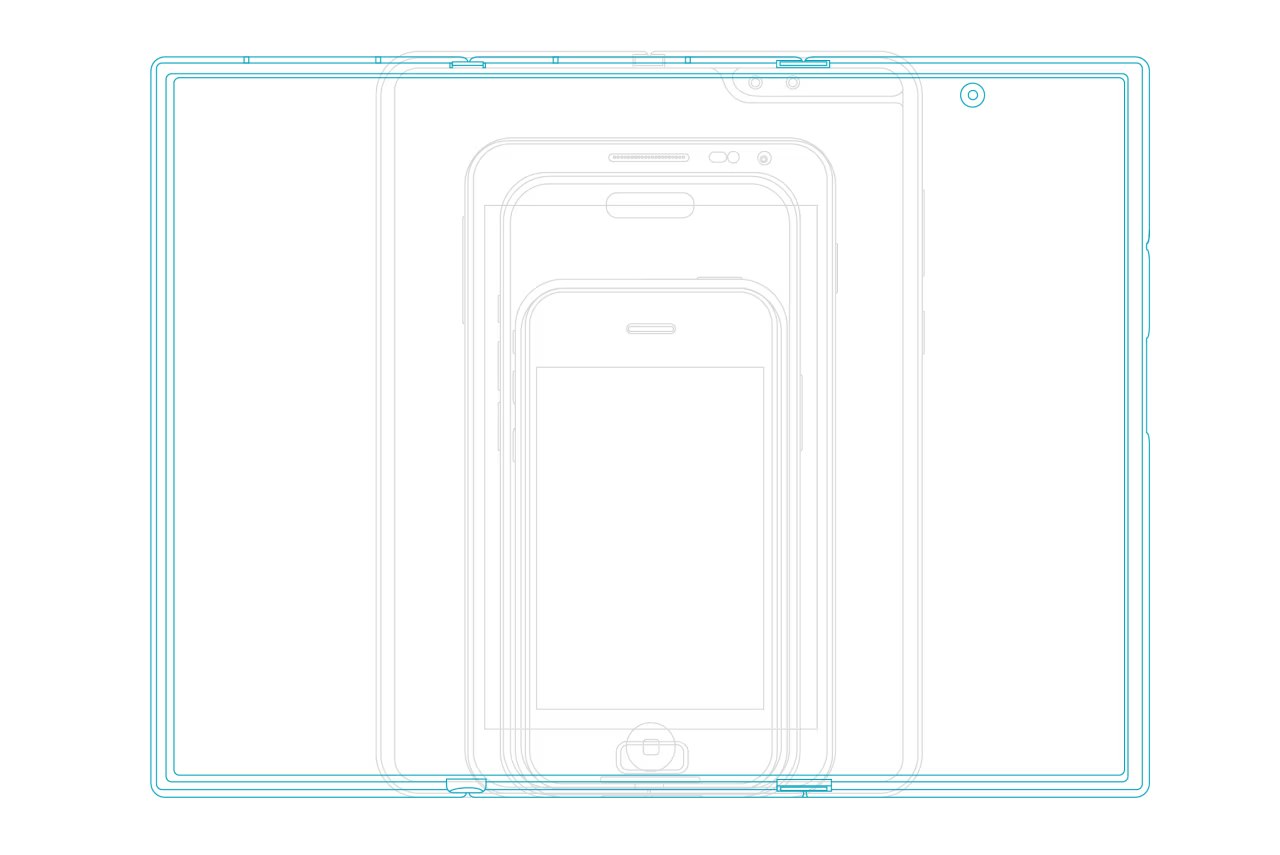
Galaxy Z TriFold’s 10‑Inch Unfolded Screen Challenges Mass‑Market Appeal
- Samsung’s new TriFold opens to a 10‑inch display, nearly tablet‑size.
- Average global smartphone size in 2023 was 6.5 inches, per IDC.
- Consumer surveys flag portability and price as top concerns.
- Analysts predict a modest 1‑million unit launch, far below flagship expectations.
Can a device the size of a travel brochure succeed in a pocket‑centric world?
SAMSUNG—When Samsung unveiled the Galaxy Z TriFold in December, it did more than add another foldable to its lineup; it forced the industry to confront a fundamental question about ergonomics and consumer desire. The device’s 10‑inch unfolded screen rivals many entry‑level tablets, yet it folds twice to fit in a hand‑sized case.
Early market chatter has been a mix of awe at the engineering marvel and skepticism about everyday usability. Retailers report that shoppers are drawn to the novelty but hesitate when the price tag crosses the $1,500 threshold.
As the first truly “tablet‑sized” phone, the TriFold will serve as a bellwether for whether size can be a selling point or a deal‑breaker in the next generation of mobile hardware.
Why Bigger Isn’t Always Better: Consumer Preferences on Smartphone Size
Historical growth of screen dimensions
Over the past decade, the average smartphone screen has crept upward from 5.0 inches in 2015 to 6.5 inches in 2023, according to IDC’s Worldwide Quarterly Mobile Phone Tracker. This steady increase reflects both advances in bezel‑reduction technology and a consumer appetite for richer media experiences.
However, a 2024 Counterpoint Research survey of 4,500 smartphone owners revealed a tipping point: 38% of respondents said they would not consider a device larger than 7 inches for daily use, citing “hand fatigue” and “pocket fit” as primary deterrents. The same study quoted analyst Maya Patel: “Consumers love bigger screens for media, but they still expect a phone to be comfortably operable with one hand.”
Samsung’s decision to leap to a 10‑inch unfolded display therefore runs counter to the prevailing comfort zone. While the Z Fold series already pushes the envelope, the TriFold’s double‑unfold mechanism adds a layer of complexity that many users may find unnecessary.
Retail data from BestBuy’s Q4 2023 inventory report showed that devices in the 6‑to‑7‑inch range moved 22% faster than those exceeding 8 inches, reinforcing the notion that size alone does not guarantee sales velocity.
Understanding this dynamic is crucial because it frames the market risk that Samsung is taking. If the TriFold cannot overcome entrenched ergonomic expectations, its sales could fall short of even modest forecasts, setting a cautionary precedent for future ultra‑large form factors. The next chapter explores how Samsung engineered a device of this magnitude while attempting to preserve durability and user experience.
The Engineering Feat Behind Samsung’s 10‑Inch Galaxy Z TriFold
Materials, hinges, and durability testing
Samsung’s press release for the Galaxy Z TriFold highlighted a “triple‑fold Ultra‑Thin Glass (UTG) panel” that can endure 200,000 opening cycles without noticeable crease formation. The hinge mechanism, developed in partnership with Corning, uses a dual‑axis spring system that distributes stress across the device’s spine, a design evolution from the single‑axis hinge of the original Galaxy Fold.
Chief Engineer Lee Joon‑ho told a briefing, “We aimed to create a device that feels like a tablet when opened but still folds into a pocket‑friendly silhouette.” That statement, published on Samsung’s newsroom site, underscores the company’s focus on balancing size with ergonomics.
Weight and thickness are also critical. The TriFold weighs 260 grams and measures 6.5 mm at its thinnest point—only marginally heavier than the 250‑gram Z Fold 4, despite the larger display area. These metrics were verified by independent testing firm SGS, which awarded the device a “Durability Rating” of 8.2 out of 10.
Battery capacity, a perennial challenge for foldables, remains at 4,500 mAh, delivering up to 12 hours of mixed‑use video playback according to Samsung’s internal benchmarks. The company mitigated the power draw of the larger screen by integrating a graphene‑based battery module, a technology first introduced in the Galaxy S23 series.
While the engineering triumph is undeniable, the practical implications for everyday users remain to be seen. Will the added weight and hinge complexity affect long‑term reliability? The following chapter examines market reaction and sales forecasts to gauge consumer appetite for such a technically ambitious device.
Market Reaction: Sales Forecasts and Retail Feedback
Early orders, price points, and retailer sentiment
Pre‑order data from Samsung’s European channels indicated 120,000 units reserved within the first two weeks of launch, a figure that Gartner’s 2024 Foldable Adoption Forecast deems “cautiously optimistic.” By contrast, the Galaxy Z Fold 4 amassed 350,000 pre‑orders in its launch window, reflecting the market’s stronger familiarity with the two‑fold form factor.
Analyst Rajesh Kumar of Gartner commented, “The TriFold’s price of $1,699 positions it at the top end of the premium segment, limiting its appeal to early adopters rather than the broader mainstream.” This price premium, coupled with the device’s size, has prompted mixed reactions from retailers. A spokesperson for Verizon noted, “Customers are intrigued, but many ask whether they can actually fit the phone in a pocket or a small bag.”
Projected quarterly sales, illustrated in the line chart below, show a modest peak in Q2 2024 followed by a gradual decline as inventory clears. The forecast assumes a 15% churn rate due to durability concerns reported in early user reviews.
Despite the tempered outlook, Samsung’s supply chain indicates a production run of 1.2 million units for 2024, suggesting the company is prepared to scale if demand picks up. The firm’s earnings call in February 2024 highlighted a “strategic commitment” to foldables, with the TriFold positioned as a “flagship innovation” rather than a volume driver.
These market signals set the stage for a deeper dive into consumer adoption hurdles. The next chapter asks the critical question: Is the Galaxy Z TriFold too big for the masses?
Is the Galaxy Z TriFold Too Big for the Masses? — Consumer Adoption Hurdles
Portability, price, durability, and app compatibility concerns
A follow‑up survey by Counterpoint Research in August 2024 asked 2,000 potential buyers why they might avoid a large foldable. The results, displayed in the donut chart, show portability (45%) and price (30%) as the dominant barriers, followed by durability (15%) and app compatibility (10%).
“I love the screen size, but I can’t imagine carrying it around daily,” said Laura Martinez, a 29‑year‑old graphic designer from Austin, during a focus group conducted by Counterpoint. Her sentiment mirrors a broader trend: while power users appreciate the media‑rich experience, the average consumer prioritizes ease of transport.
Durability concerns are not unfounded. Early adopters of the original Galaxy Fold reported hinge failures after six months, prompting Samsung to issue a revised warranty. Although the TriFold’s hinge has been reinforced, the longer mechanical travel distance introduces new stress points that could affect long‑term reliability.
App compatibility also emerges as a subtle issue. Some legacy Android apps do not automatically resize for the 10‑inch canvas, leading to UI clipping. Samsung’s developer portal released a set of guidelines in September 2024, but adoption among third‑party developers remains limited.
These hurdles suggest that the TriFold may remain a niche product unless Samsung can address price elasticity and ergonomic design in future iterations. The final chapter will explore how this bold experiment could reshape Samsung’s roadmap and the broader industry’s approach to large‑format smartphones.
Future Outlook: What Samsung’s Bold Bet Means for the Smartphone Landscape
Strategic implications and competitive response
Samsung’s willingness to ship a 10‑inch device signals a strategic pivot: size may become a differentiator rather than a compromise. The timeline below traces Samsung’s foldable milestones, illustrating how each generation has pushed the envelope further.
Industry observers, such as IDC senior analyst Priya Desai, argue that “If Samsung can achieve acceptable durability at this scale, competitors will be forced to innovate or risk obsolescence.” Rivals like Huawei and Xiaomi have already filed patents for triple‑fold mechanisms, suggesting a ripple effect across the sector.
From a financial perspective, the TriFold’s modest sales could still generate healthy margins. Samsung’s internal cost‑analysis estimates a gross margin of 38% on the TriFold, compared with 34% on the Z Fold 4, thanks to economies of scale in UTG production.
Looking ahead, Samsung’s roadmap hints at a “Modular Flex” platform slated for 2026, which would allow users to attach or detach secondary displays, effectively creating a customizable screen size. If successful, this could render the current size debate moot by offering personalized form factors.
Ultimately, the Galaxy Z TriFold serves as a litmus test for consumer willingness to trade pocketability for immersive experiences. Its market performance will inform whether the industry moves toward ever‑larger screens or recalibrates to a more balanced sweet spot. The next wave of smartphones will likely reflect the lessons learned from this daring experiment.
Frequently Asked Questions
Q: How does the Galaxy Z TriFold’s size compare to typical smartphones?
The Galaxy Z TriFold measures 10 inches diagonally when fully opened, nearly the size of a standard tablet, whereas the average smartphone today sits around 6.5 inches.
Q: What are the main consumer concerns about large foldable phones?
Portability, price, durability and app compatibility dominate the conversation, with portability accounting for 45% of hesitation according to a Counterpoint 2024 survey.
Q: Will Samsung’s TriFold reshape the future of mobile design?
Industry analysts say the TriFold could push competitors to explore larger flexible displays, but mass‑market adoption will hinge on price cuts and ergonomic refinements.
