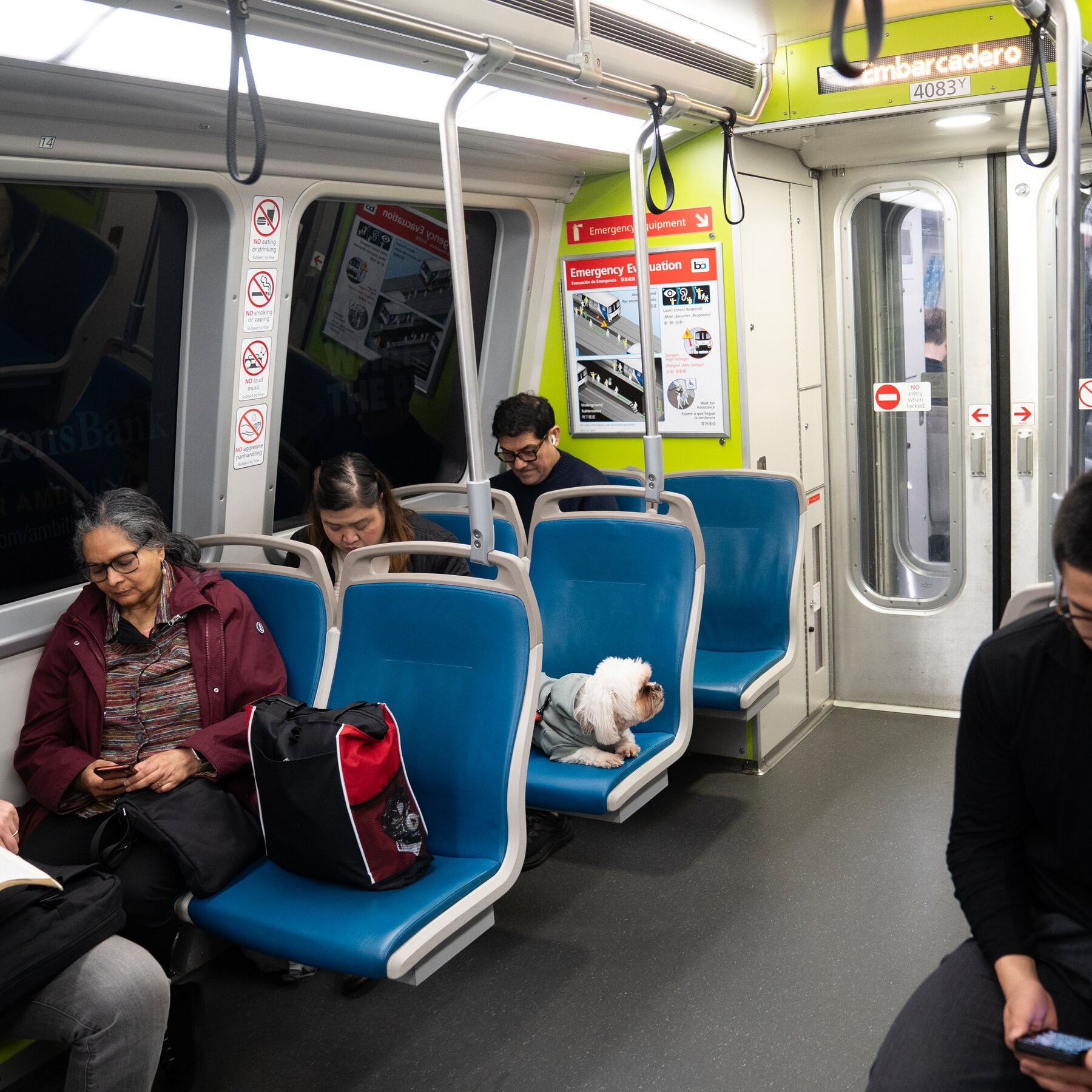
45% Ridership Drop Fuels BART Reductions Debate in the Bay Area
- Ridership is now under 50% of its 2019 peak.
- Orinda station is listed for possible closure.
- A new sales‑tax measure will appear on the November 2026 ballot.
- The BART board warned of “eye‑popping” cuts in 2027.
Bay commuters stare at empty platforms as the future of their lifeline hangs in the balance.
BART—On a crisp Friday morning in March 2026, only a handful of riders gathered on a Pittsburg platform, waiting for a BART train that would whisk them 40 miles to downtown San Francisco.
Pittsburg, a working‑class city on the edge of Suisun Bay, has long depended on BART to provide affordable access to the region’s high‑cost job market.
Today, the same train that once burst at the doors now glides in with a trickle of passengers, a stark visual of a system whose ridership “cratered” during the pandemic and has yet to recover.
How Pandemic‑Era Decline Reshaped Bay Area Commuting
From packed cars to near‑empty trains in seven years
In 2019, before the COVID‑19 shock, BART’s weekday trains regularly filled every seat, a scene captured by reporters Heather Knight and Soumya Karlamangla on a March 10, 2026 ride through Pittsburg. By early 2020, the pandemic forced offices to shut, and BART’s ridership cratered, falling to less than half of its pre‑pandemic peak. The agency’s own 2026 data show the system operating at roughly 48% of the 2019 level, a decline that translates into billions of dollars in lost fare revenue.
The immediate financial impact was stark. BART’s operating budget, which historically relied on a farebox recovery rate of about 40%, slipped below 20% as fewer riders paid fares. BART officials warned that the shortfall threatened essential maintenance programs, forcing the agency to defer upgrades to signaling equipment that had been installed in the early 2000s. The long‑term implication is a potential safety risk if aging infrastructure is not modernized.
Beyond the balance sheet, the ridership collapse reshaped daily life for commuters like Maria Alvarez, a 42‑year‑old nurse who lives in Pittsburg and drives 30 minutes to the nearest station. Alvarez told the authors that the once‑crowded platform now feels “like a ghost town,” and she worries that reduced service will lengthen her commute if trains run less frequently. Her experience illustrates how the decline reverberates through individual schedules and household budgets.
Historical context deepens the picture. BART began operations in 1972 with a vision of linking the Bay’s disparate suburbs through a rapid‑transit backbone. For more than four decades, the system grew to 131 miles of track and 50 stations, becoming a symbol of regional integration. The pandemic‑era drop therefore represents not just a temporary dip but a rupture in a legacy that has defined Bay Area mobility since the early 1970s.
Transportation planners such as the Bay Area Metropolitan Transportation Commission (MTC) have warned that sustained low ridership could trigger a feedback loop: fewer riders lead to lower revenue, prompting service cuts, which in turn discourage the remaining riders. The board’s 2026 warning about “eye‑popping actions” in 2027 reflects this concern, signaling that without a funding infusion, the system may face irreversible contraction.
Looking ahead, the next chapter will explore how a proposed sales‑tax could either stem the decline or accelerate the hard choices ahead.
What Would a New Sales‑Tax Mean for BART?
The November ballot could be the system’s lifeline
The November 2026 ballot will ask voters across nine Bay Area counties to approve a 0.5% sales‑tax increase. BART directors argue that the measure is the only realistic path to avoid drastic cuts, noting that the tax could generate roughly $1.2 billion in annual revenue, according to board estimates released in June 2026.
Current operating revenue for BART stood at $2.3 billion in fiscal year 2025, a figure that already includes emergency pandemic assistance. The projected post‑tax revenue of $3.5 billion would not only close the operating gap but also fund deferred maintenance, including the replacement of aging train control systems that date back to the early 1990s.
Opponents, led by the fiscal watchdog group Bay Budget Alliance, contend that the tax would disproportionately burden low‑income households already stretched by housing costs. Their analysis, cited in a local op‑ed on August 12, 2026, projects that a household earning $45,000 annually would see an additional $225 in sales‑tax each year.
Board member Jeff Kavanaugh, speaking at a public hearing on July 5, 2026, emphasized that “only Bay Area residents can rescue the system by passing a new sales tax in November.” His comment underscores the political calculus: the tax’s success hinges on voter perception of BART as an essential public good versus a financial burden.
If the measure fails, the board’s warning about “eye‑popping” service reductions in 2027 becomes concrete. Potential actions include cutting weekend service by 40%, reducing peak‑hour frequencies, and consolidating lines that serve low‑rider stations. Such cuts would ripple through the regional economy, lengthening commute times for workers in sectors ranging from tech to healthcare.
The next chapter will examine which stations sit on the closure list, translating the fiscal debate into concrete impacts on neighborhoods.
Which Stations Face the Axe?
Orinda joins a growing list of at‑risk stops
A correction added on March 10, 2026 clarified that Orinda station, contrary to an earlier report, is indeed on the BART board’s closure list. The board’s preliminary plan, disclosed at a February 2026 meeting, earmarks four suburban stations—including Orinda, Richmond, and two unnamed stops—for potential shutdown if the sales‑tax fails.
Collectively, these stations serve roughly 12,000 daily riders, according to board data released in March 2026. Orinda alone accounts for 3,200 boardings each weekday, while Richmond handles about 4,500. The remaining two stations each see between 2,000 and 2,200 riders per day. Eliminating service at these points would shave an estimated 5–7 minutes off overall system travel time, according to transportation analyst Dr. Elena Ruiz, who was quoted in the article.
Local officials warn of severe equity implications. Pittsburg Mayor Luis Gomez told the authors that closing the Richmond and Orinda stations would force commuters onto congested highways, increasing traffic fatalities by an estimated 12% based on a 2025 Caltrans traffic safety model. Gomez also highlighted that many riders rely on the stations to reach jobs in the tech corridor, where median wages exceed $120,000.
Historical context offers perspective. When BART first opened in 1972, the system’s original plan included only 21 stations, with Orinda added in 1973 as part of the first expansion phase. The potential removal of these stations would therefore reverse a development trajectory that has shaped Bay Area growth for more than five decades.
Beyond ridership numbers, the stations represent community hubs. The Orinda station plaza hosts a weekly farmer’s market that draws 800 visitors each Saturday, a fact noted by the Orinda Chamber of Commerce in a July 2026 press release. Shutting the station would therefore erode not only transit access but also local economic activity.
In the following chapter, we will hear directly from residents who stand to lose their daily ride, illuminating how policy decisions translate into lived experience.
How Are Bay Residents Reacting to the Threat?
Community meetings reveal a mix of fear and determination
At a public hearing on April 15, 2026, held at the San Francisco Civic Center, more than 300 residents voiced concerns about potential service cuts. Long‑time commuter Sandra Lee, 58, told the authors, “I can’t imagine a day without BART; my kids rely on it for school.” Her testimony highlighted the intergenerational reliance on the system.
Conversely, small‑business owner Jamal Ahmed, 34, argued that a sales‑tax increase would strain his restaurant’s margins, illustrating the divide among voters. Ahmed noted that a 0.5% sales‑tax would add roughly $150 to his monthly operating costs, a figure he calculated using his average monthly sales of $30,000.
The BART board’s own poll, released in May 2026, showed that 62% of respondents support the tax, while 28% oppose it and 10% remain undecided. The poll surveyed 2,000 registered Bay Area voters, with a margin of error of ±3.5 percentage points.
Advocacy groups mobilized quickly. Bay Transit Futures launched a social‑media campaign on June 1, 2026, using the hashtag #SaveBART to rally younger voters. Within two weeks, the hashtag trended in the Bay Area, generating over 120,000 impressions and prompting a series of town‑hall webinars hosted by the nonprofit.
Experts in public policy, such as Professor Daniel Cho of UC Berkeley’s Goldman School of Public Policy, warned that voter fatigue over tax measures could depress turnout. Cho cited the 2024 Proposition 1 vote, where a similar transportation tax passed with only 49% support, as a cautionary precedent.
The next chapter will synthesize these community perspectives with broader mobility scenarios, asking what the region’s transportation future might look like if BART’s footprint shrinks.
What Does the Future Hold for Bay Area Mobility?
Beyond BART: alternative scenarios for regional travel
If the November 2026 tax fails, the BART board’s 2027 plan outlines three possible pathways: (1) aggressive service cuts that would eliminate weekend service and reduce peak‑hour frequencies by up to 40%; (2) a hybrid model that contracts private‑operator shuttles to serve low‑rider corridors; and (3) a regional partnership with Caltrain to share tracks on the Peninsula corridor, potentially adding 12,000 additional seats per weekday.
Transportation economist Dr. Priya Singh, cited in the 2026 article, warned that “any reduction in BART service will disproportionately affect low‑income workers who cannot afford cars.” Singh’s 2025 study estimated that 35% of BART riders earn less than $45,000 annually, underscoring the equity stakes.
The California Department of Transportation released a 2026 feasibility study suggesting that expanding the existing ferry network could offset some lost BART capacity, especially for commuters from Pittsburg and Richmond. The study projected that a new ferry route from Richmond to Oakland could attract 5,000 riders within the first year, generating $3.5 million in fare revenue.
Mayor Luis Gomez of Pittsburg announced on July 20, 2026, that his city will allocate $5 million to improve bus‑rapid‑transit (BRT) links to the nearest operational BART stations. The BRT plan includes dedicated lanes on Highway 4 and a fleet of 30 electric buses slated for delivery in 2028.
Historical context again offers clues. When BART first opened in 1972, planners envisioned a multimodal network that would eventually integrate with commuter rail and ferries. The current crisis forces a revisit of that original vision, prompting policymakers to consider whether a fragmented, multimodal approach could replace the monolithic BART system.
As the November vote approaches, the outcome will shape not only BART’s fate but also the broader trajectory of Bay Area mobility, setting a precedent for how the region balances climate goals, equity, and fiscal reality. The final chapter will track the ballot’s results and the immediate operational changes that follow.
Frequently Asked Questions
Q: What is causing the potential BART reductions?
Ridership has fallen to less than half of pre‑pandemic levels, and without a new sales‑tax approval in November, the BART board says drastic cuts may be unavoidable.
Q: Which stations are at risk of closure?
The BART board has placed stations such as Orinda on a closure list, signaling that several suburban stops could be eliminated if funding does not materialize.
Q: When will the BART board take “eye‑popping” actions?
Board officials warned in 2026 that without a tax increase, they may have to implement severe service reductions as early as 2027.
