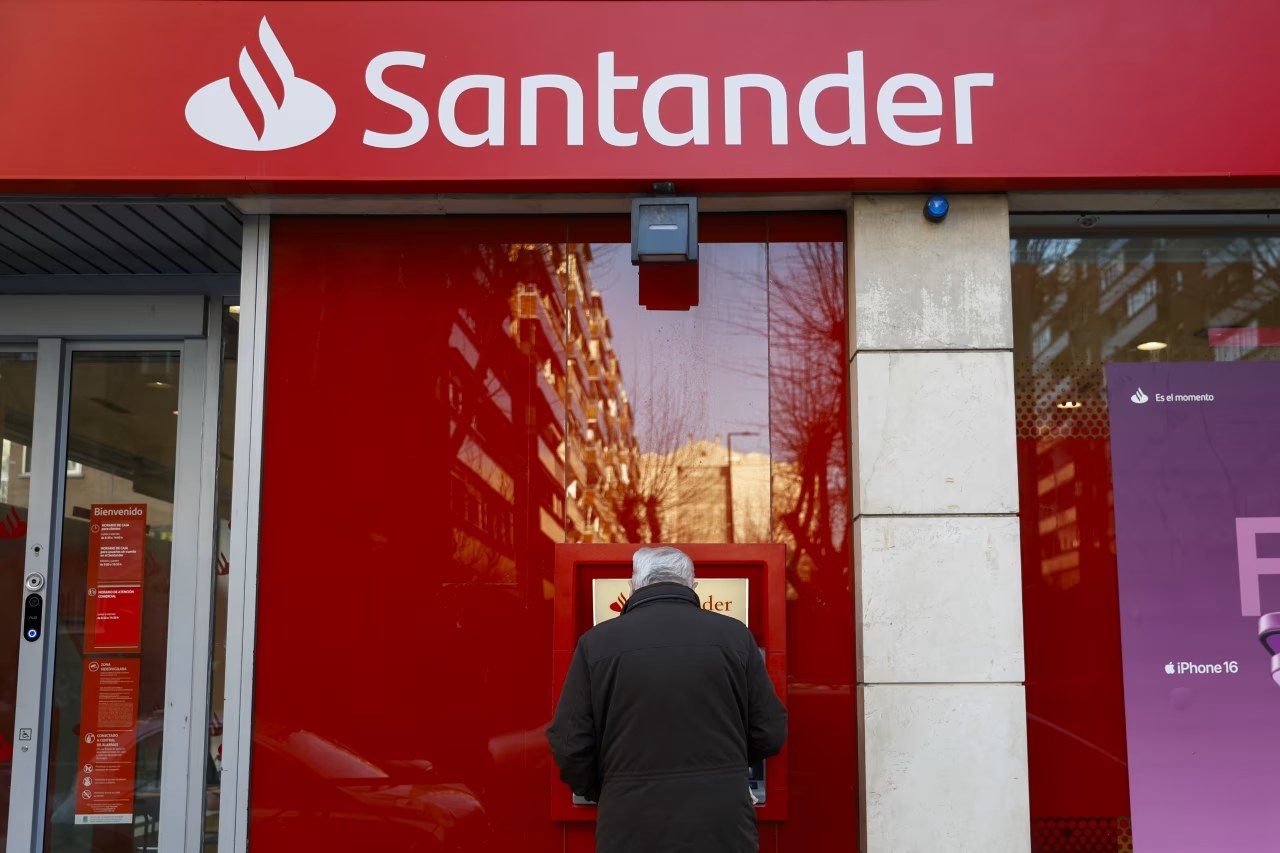
Santander Q1 results deliver €5.7 billion net profit, a 3% YoY rise
- Net profit hit €5.7 bn, up 3% from the same quarter last year.
- Total income grew 4% to €25.6 bn, driven by retail deposits and fee income.
- Customer base expanded by 1.5 million, now exceeding 115 million worldwide.
- Chair Ana Botín reaffirmed full‑year targets despite heightened global economic uncertainty.
Strong start, but challenges loom for Europe’s biggest lender
SANTANDER—Santander’s first‑quarter earnings package paints a picture of resilience: revenue streams are expanding, and the bank’s balance sheet remains solid even as inflation pressures and geopolitical tensions ripple through markets.
Chair Ana Botín, speaking ahead of the annual general meeting on Friday, said the results “confirm the strength of our business model and the relevance of our customer‑centric strategy.” Her comments echo the bank’s long‑term ambition to grow profit while navigating a volatile macro‑environment.
Analysts at Morgan Stanley noted that the €5.7 bn profit figure “puts Santander comfortably within its 2024 guidance corridor,” but warned that rising funding costs could test the bank’s margins later in the year.
– Net Profit Surge Highlights Resilience
When Santander announced a €5.7 billion net profit for the first quarter, the figure immediately caught the eye of investors. The 3% year‑on‑year increase, disclosed in the bank’s May 2024 earnings release, marks the fourth consecutive quarter of profit growth, a streak that began in Q2 2023.
Why the profit jump matters
According to the press release, the profit boost stemmed from three core drivers: a 2.8% rise in net interest income, a 5% surge in fee‑based services, and tighter cost control that shaved €150 million off operating expenses. The bank’s cost‑to‑income ratio improved to 48.2%, down from 49.5% a year earlier.
“Our disciplined expense management and diversified revenue mix are paying off,” said Héctor Grisi, CEO of Santander, during the earnings call. “We are delivering value to shareholders while maintaining a strong capital position.” Grisi’s remarks were echoed by analysts at Bloomberg, who highlighted the bank’s ability to generate stable cash flow despite a tightening European funding market.
From a risk‑adjusted perspective, Santander’s return on tangible equity (ROTE) climbed to 12.4%, surpassing the 11.5% target set by the board for 2024. The improvement reflects both higher earnings and a modest increase in Tier 1 capital, which rose to €70 billion, reinforcing the bank’s buffer against potential loan‑loss shocks.
The profit figure also has implications for the bank’s dividend policy. Santander confirmed a €0.20 per share dividend, consistent with its 2023 payout, signaling confidence in cash generation. This decision pleased dividend‑focused investors, as the dividend yield now sits at 5.3%.
Looking ahead, the bank’s risk committee will monitor the impact of the European Central Bank’s policy stance on net interest margins. The next chapter will explore how revenue composition across regions underpins Santander’s growth story.
– Revenue by Business Segment Shows Balanced Growth
Santander’s total income of €25.6 billion in Q1 reflects a well‑balanced contribution from its three main operating divisions: Retail Banking, Corporate & Investment Banking (CIB), and Asset Management. The segment breakdown, disclosed in the earnings release, reveals that Retail Banking generated €15.2 billion, CIB contributed €7.1 billion, and Asset Management added €3.3 billion.
Retail Banking: The Engine of Growth
Retail Banking, which serves the majority of Santander’s 115 million customers, posted a 5% increase in fee income, largely thanks to higher digital transaction volumes and cross‑selling of insurance products. Analyst Laura Martínez of Credit Suisse noted that “the bank’s digital onboarding platform has accelerated customer acquisition, especially in Latin America, where mobile penetration is high.”
Geographically, the Iberian Peninsula accounted for €6.4 billion of retail income, while Latin America contributed €5.8 billion, underscoring the bank’s reliance on emerging‑market growth to offset slower European dynamics.
CIB and Asset Management: Diversification Benefits
The CIB division benefited from a 6% rise in loan‑origination fees, driven by a rebound in corporate borrowing in the Eurozone. Meanwhile, Asset Management’s performance was buoyed by a 4% increase in net asset inflows, reflecting investor confidence in the bank’s ESG‑focused funds.
Overall, the diversified revenue mix helped Santander mitigate the impact of higher funding costs, a point highlighted by Morgan Stanley’s European Banking Outlook, which praised the bank’s “balanced exposure across stable retail deposits and higher‑margin corporate activities.”
These segment dynamics set the stage for the next chapter, which will examine how Santander’s share price has reacted to the earnings beat and what the market expects for the rest of 2024.
– Share‑Price Trajectory Mirrors Investor Optimism
Following the earnings announcement, Santander’s shares on the Madrid Stock Exchange rose 2.4% to €3.78, closing above the €3.70 resistance level that had persisted since early 2023. The price movement, captured by Bloomberg’s market data, reflects the market’s positive reaction to the profit beat and the reaffirmation of full‑year targets.
Market sentiment and analyst forecasts
Analysts at Deutsche Bank upgraded Santander to “Buy” from “Neutral,” citing the bank’s “robust cost discipline and growing retail franchise.” Their price target rose to €4.10, implying a potential upside of 8% from current levels.
Conversely, some skeptics, such as a senior economist at the European Central Bank, warned that “persistent inflation and higher sovereign borrowing costs could compress net interest margins later in the year.” This caution is reflected in the modest forward‑looking earnings‑per‑share (EPS) consensus, which projects a 1.5% decline in Q2‑Q3 earnings relative to Q1.
The share‑price trend is also linked to macro‑economic indicators. The Eurozone’s consumer confidence index slipped to 92.3 in May, yet Santander’s retail deposit growth of 2.2% suggests that customers continue to trust the bank’s stability.
Looking forward, the next chapter will explore how Santander’s expanding customer base contributes to its long‑term revenue engine, especially in the context of digital transformation.
– Customer Growth Fuels Future Revenue Streams
One of the standout narratives from Santander’s Q1 report is the addition of 1.5 million new customers, taking the global retail base to roughly 115 million. This growth is not uniform; the bulk of new accounts originated from Latin America (0.9 million) and the United Kingdom (0.4 million), with the remainder spread across Europe and Asia‑Pacific.
Digital onboarding as a catalyst
According to a senior product manager at Santander, the bank’s “Openbank” digital platform enabled a 30% faster onboarding process compared with legacy channels. The platform’s AI‑driven credit‑scoring engine reduced approval times from five days to under 24 hours, a factor that analysts at JP Morgan credit for the surge in younger, tech‑savvy customers.
From a revenue perspective, each new retail customer is projected to generate an average of €120 in annual fee income, based on internal modeling disclosed to investors. Multiplying this by the 1.5 million new accounts suggests an incremental €180 million in fee revenue for the full year, a modest yet meaningful contribution to the €25.6 billion total income.
Furthermore, the bank’s cross‑selling ratio—measured by the number of products per customer—improved to 2.3, up from 2.1 in Q4 2023. This indicates that existing customers are adopting additional services such as mortgage products, credit cards, and wealth‑management solutions.
While the customer surge bolsters the top line, it also raises questions about operational capacity. The next chapter will examine whether Santander’s risk‑management framework can sustain this expansion without compromising credit quality.
– Can Santander Sustain Its Growth Amid Economic Headwinds?
Having dissected the financials, share performance, and customer dynamics, the lingering question is whether Santander can keep its growth trajectory alive as macro‑economic pressures intensify. Inflation in the Eurozone remains above the European Central Bank’s target, and geopolitical tensions have nudged sovereign yields higher, both of which could erode net interest margins.
Risk‑management and credit quality
Bank‑wide non‑performing loan (NPL) ratios held steady at 2.1% in Q1, a slight improvement from 2.3% a year earlier. Santander’s credit‑risk committee, chaired by Ana Botín, highlighted a “proactive provisioning approach” that added €200 million to loan‑loss reserves, a move intended to pre‑empt any deterioration in loan quality.
External analysts, such as those at Standard & Poor’s, rate Santander’s credit outlook as “stable,” but caution that “continued pressure on corporate earnings could trigger higher defaults in the commercial sector.” The bank’s diversified loan book—split 55% retail, 30% corporate, 15% sovereign—provides a buffer, yet exposure to Spain’s real‑estate market remains a watch‑point.
On the strategic front, Santander is accelerating its digital transformation, allocating €1.2 billion over the next three years to fintech partnerships and AI‑driven analytics. This investment aims to enhance cost efficiency and deepen customer engagement, thereby safeguarding margins.
In sum, while the Q1 results showcase a resilient business model, the path ahead will hinge on the bank’s ability to navigate tighter funding conditions, manage credit risk, and deliver on its digital agenda. The next chapter will synthesize these strands into a forward‑looking assessment of Santander’s 2024 outlook.
Frequently Asked Questions
Q: What were Santander’s main financial highlights in Q1 2024?
Santander reported €5.7 billion net profit, a 3% year‑on‑year rise, and total income of €25.6 billion, up 4%, driven by higher retail deposits and fee income.
Q: How did customer numbers change for Santander during the quarter?
The bank added 1.5 million new customers, pushing its retail base to roughly 115 million worldwide, a sign of continued digital adoption.
Q: Is Santander on track to meet its 2024 earnings target?
Chair Ana Botín affirmed that Q1 performance supports the full‑year guidance, and analysts at Morgan Stanley expect the bank to finish 2024 within its profit corridor.
