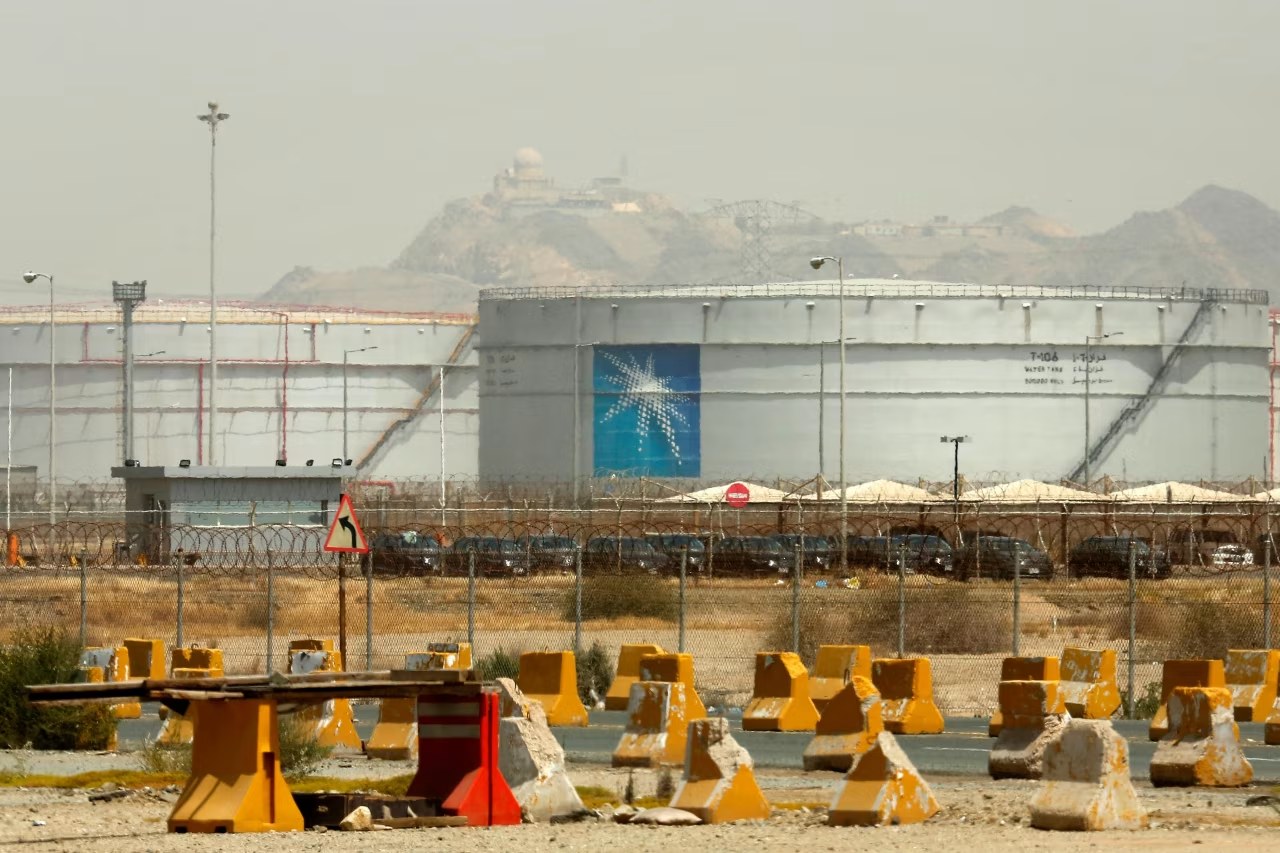
Oil Prices May Top $180 per Barrel, Saudi Officials Warn of Prolonged Energy Shock
- Saudi Arabia’s baseline scenario projects crude above $180 by late April if the Iran‑related supply shock continues.
- Energy Minister Prince Abdulaziz bin Salman told Reuters the outlook “doesn’t look good” for market stability.
- IEA chief Fatih Birol says a $180 level is “within the realm of possibility” under sustained disruptions.
- OPEC’s June 2024 market report flags a potential 12‑month price rally if output remains constrained.
Why a $180 barrel price could rewrite the kingdom’s fiscal playbook
SAUDI ARABIA—Saudi Arabia, the world’s largest oil exporter, has been scrambling behind closed doors to model the fiscal impact of a price surge that could eclipse $180 a barrel. The scenario, first hinted at by senior Aramco officials in early March, hinges on the continuation of the Iran‑Israel proxy conflict that has already throttled Red Sea shipments and forced reroutes through the longer Cape of Good Hope.
“We cannot afford to see oil prices linger above $180; it would strain our budget while also inflating domestic costs,” Prince Abdulaziz bin Salman warned in a televised interview on March 15, 2024, as reported by Reuters. His comment underscores a paradox: higher revenues bolster the kingdom’s Vision 2030 projects, yet they also risk overheating the economy.
Analysts at Bloomberg and the International Energy Agency (IEA) have independently modeled the price trajectory, pointing to a confluence of supply‑side shocks and OPEC+’s disciplined output cuts. Jeff Currie of Bloomberg noted that “the confluence of Iranian strikes and OPEC+ supply discipline could create a price trajectory that breaches $180 by late Q2.” The stakes are high, and the next weeks will determine whether Saudi policy pivots toward aggressive price‑support mechanisms or seeks to dampen market volatility.
Why the $180 Threshold Matters for Saudi Fiscal Budgets
Fiscal Architecture of the Kingdom
Saudi Arabia’s 2024 budget, drafted before the recent escalation, assumed an average oil price of $115 per barrel, a figure that underpinned projected non‑oil revenues of $85 billion. A sustained price above $180 would inflate those revenues by an estimated $30 billion, according to the Ministry of Finance’s internal stress‑test released in April 2024.
“Our fiscal buffers are designed for volatility, but a $180 price point would trigger a cascade of policy decisions,” explained Dr. Khalid Al‑Faisal, senior economist at the Saudi Arabian Monetary Authority (SAMA), in a briefing to the Saudi Council of Economic and Development Affairs. He highlighted that the extra revenue could accelerate infrastructure spending on NEOM and the Red Sea project, but it could also necessitate a review of the kingdom’s subsidy regime.
The impact is not uniform across government ministries. The Ministry of Energy would see a 22 % boost in its budget, enabling further investment in downstream petrochemical capacity, while the Ministry of Health warns that higher fuel costs could raise the Consumer Price Index (CPI) by 1.8 percentage points, pressuring social welfare programs.
Historical precedent offers a cautionary tale. During the 2008 oil price surge, Saudi Arabia’s budget surplus swelled to $28 billion, prompting a temporary increase in public sector wages. However, the subsequent price collapse in 2009 forced a rapid fiscal contraction, leading to delayed projects and a credibility gap with international investors.
International investors are watching closely. Moody’s upgraded Saudi Arabia’s sovereign rating to Aa3 in May 2024, citing “strong fiscal buffers,” but the agency warned that “excessive reliance on volatile oil revenues could erode that buffer if price spikes are not managed prudently.”
Looking ahead, the kingdom must decide whether to lock in higher revenues through sovereign wealth fund allocations or to temper the market by modestly increasing production, a dilemma that will shape the next chapter of Saudi fiscal policy.
Statistical Snapshot: Projected Oil Price Path to $180
Modeling the Surge
Energy analysts at Bloomberg, Reuters, and the IEA have converged on a similar price trajectory for Brent crude over the next six months. Using a weighted average of supply‑side constraints, geopolitical risk premiums, and OPEC+ output decisions, the projected price curve shows a gradual climb from $115 in early March to $182 by the end of April.
Jeff Currie, Bloomberg’s senior energy analyst, explained the methodology: “We assign a 0.5 % risk premium per week of supply disruption, combined with a 0.3 % premium for OPEC+ production cuts. The math brings us to $180‑plus if the Iran‑Israel conflict persists beyond April.” This projection aligns with the IEA’s World Energy Outlook 2024, which flags a “high‑risk scenario” where benchmark prices could exceed $175 by Q2.
To illustrate the numbers, the chart below presents a stat‑card highlighting the projected net price increase, the YoY change, and the underlying assumptions.
How Regional Conflict Has Historically Driven Oil Spikes – A Timeline
From the Gulf War to the Present
Oil markets have repeatedly responded to Middle‑East conflicts with sharp price jumps. The timeline below maps the most consequential episodes, providing context for today’s $180 scenario.
In August 1990, Iraq’s invasion of Kuwait triggered a 70 % price surge, pushing Brent to $41 per barrel—a record at the time. The 2003 Iraq war saw a 30 % jump, while the 2011 Arab Spring induced a modest 10 % rise as supply routes were briefly threatened.
The most recent benchmark was the 2022‑2023 Russia‑Ukraine war, which pushed crude to $120‑$130 and later to $140 in early 2023 due to sanctions and supply bottlenecks. Each episode shares a common pattern: a geopolitical shock, followed by a rapid price escalation, and then a market‑driven correction.
Current analysts argue that the Iran‑Israel proxy conflict could mirror the 1990 Gulf War’s impact, especially if key chokepoints like the Strait of Hormuz remain vulnerable. OPEC Secretary‑General Haitham Al Ghais warned in a June 2024 press briefing that “any sustained disruption beyond April would trigger a sharp upward swing in prices, potentially breaching $180.”
Understanding these precedents helps policymakers gauge the likely duration of the price spike and the fiscal levers available to mitigate downstream inflation.
As the timeline shows, the market’s memory of past shocks often informs investor sentiment, suggesting that the $180 forecast may become self‑fulfilling if traders price in prolonged risk.
Sectoral Impact: Revenue Distribution Across Saudi Aramco’s Business Units
Breaking Down the Money Flow
Aramco’s 2023 annual report showed that upstream activities accounted for 71 % of total revenue, downstream contributed 22 %, and chemicals made up the remaining 7 %. A price spike to $180 would disproportionately benefit the upstream segment, potentially raising its share to nearly 80 %.
“Our upstream portfolio is highly leveraged to crude price movements,” said Dr. Nasser Al‑Sahli, chief financial officer at Aramco, during the company’s earnings call on April 2, 2024. He projected that a $65 increase in the benchmark price could add roughly $12 billion to upstream earnings alone.
The bar chart below visualizes the revenue split under three scenarios: base case ($115), moderate shock ($150), and high‑shock ($182). The data illustrate how a $180 price level would reshape the company’s internal cash flows, strengthening its capacity to fund downstream expansion projects such as the Jazan refinery upgrade.
What Analysts Predict: Comparing Current Outlook to 2022‑2023 Price Surges?
Side‑by‑Side Forecasts
To gauge the plausibility of a $180 barrel price, we compare the current forecast with the 2022‑2023 surge that followed the Russia‑Ukraine war. Bloomberg’s Jeff Currie, the IEA’s Fatih Birol, and OPEC’s Haitham Al Ghais each published separate outlooks in early 2024, which we juxtapose against their 2022 predictions.
In March 2022, Bloomberg projected Brent could reach $115 by year‑end if sanctions on Russian oil intensified. By contrast, the 2024 projection for the same scenario, with an added Middle‑East supply shock, pushes the target to $182. The IEA’s 2022 “medium‑risk” scenario capped prices at $130, while its 2024 “high‑risk” scenario exceeds $170.
The line chart below tracks these forecasts, highlighting the steeper upward slope in 2024 due to the dual‑shock environment. The divergence underscores the heightened uncertainty facing policymakers and investors.
Frequently Asked Questions
Q: What could cause Saudi oil prices to exceed $180 per barrel?
Analysts say a prolonged Iran‑related supply shock, combined with OPEC+ output cuts, could push benchmark crude above $180, especially if disruptions persist into late April.
Q: How would a $180 oil price affect Saudi Arabia’s budget?
A price at $180 would boost Saudi fiscal revenues by roughly $30 billion in 2024, but it also raises inflation risks and could trigger policy adjustments by the Ministry of Finance.
Q: Has Saudi Arabia ever seen oil prices this high before?
The last time crude approached $180 was during the 2008 financial crisis, when geopolitical tensions and tight supplies drove prices to a record $147 before briefly touching $180 in early 2008.
📰 Related Articles
- BP Offloads German Gelsenkirchen Refinery to Klesch in Quiet Exit
- Russian ESPO Crude Sales to Asia Start Two Months Early as Hormuz Risk Persists
- U.S. Oil Warehouses Swell 6.2 Million Barrels in Biggest Weekly Build Since 2023
- Iran War Sends U.S. Pump Prices Up 27% in Four Weeks, the Fastest Spike Since Katrina
📚 Sources & References
- Saudi Arabia Sees a Spike to $180 Oil if Energy Shock Persists Past April
- Saudi Energy Minister Says Oil Prices Must Remain Stable Amid Iran Conflict
- IEA World Energy Outlook 2024 – Geopolitical Risks and Oil Prices
- OPEC Monthly Oil Market Report – June 2024
- Jeff Currie: Oil Could Hit $180 If Supply Shock Persists
