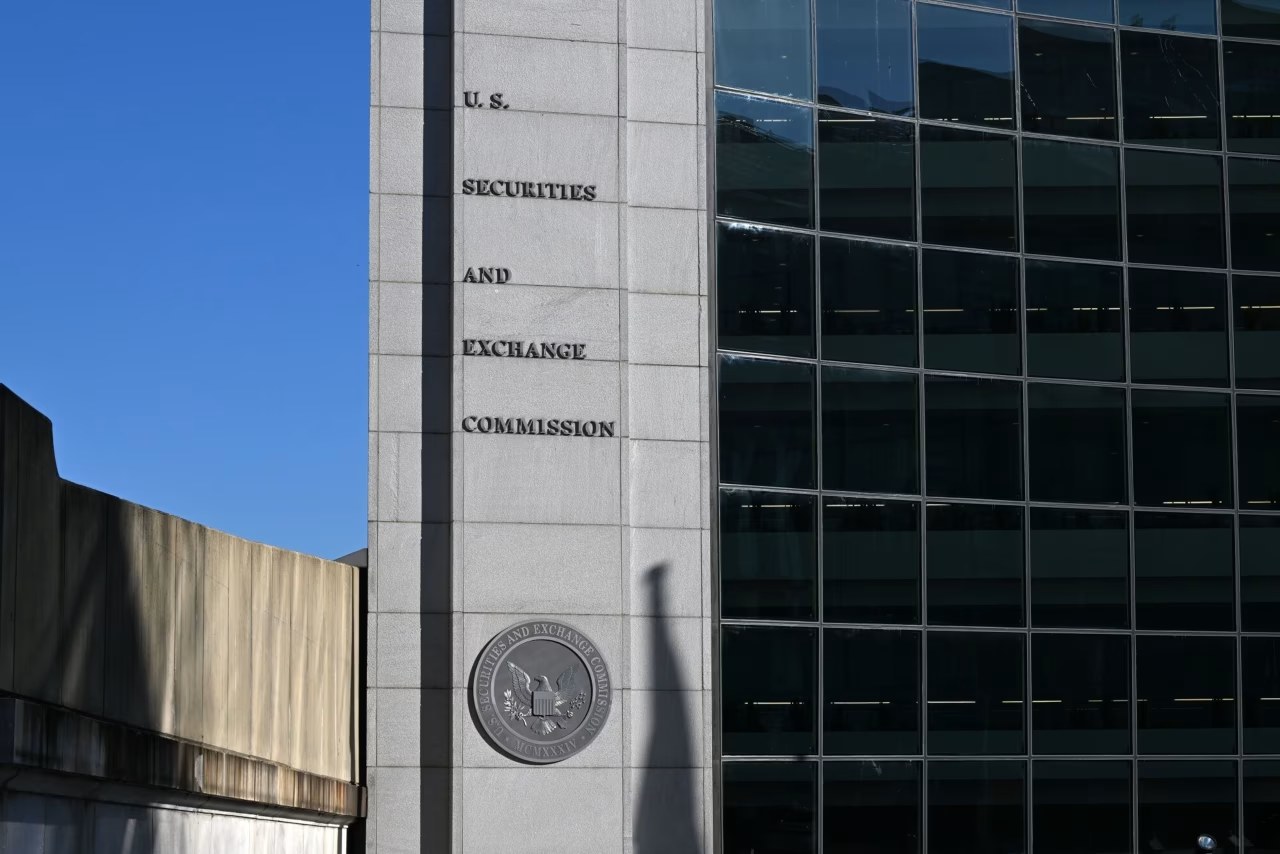
SEC May Propose Ending Quarterly Reporting Requirement as Early as Next Month
- The SEC could publish its proposal as early as next month.
- Companies would be allowed to report earnings twice a year instead of every three months.
- Proponents argue the change could help stem the decline of U.S. public companies.
- Investor groups warn that less frequent reporting may diminish market transparency.
- The quarterly reporting system has been in place for more than half a century.
Why the timing matters for Wall Street and Main Street alike
QUARTERLY REPORTING—The Securities and Exchange Commission is poised to shake up a practice that has defined corporate disclosure for more than 50 years. Sources close to the agency say a formal rule change could land on the docket as soon as next month, giving companies the option to file earnings statements semiannually rather than every quarter.
Advocates, ranging from small‑cap CEOs to academic economists, contend that the current cadence forces firms to allocate disproportionate resources to short‑term reporting, a burden that may be driving the steady erosion of U.S. public companies. Opponents – chiefly institutional investors and proxy‑voting groups – argue that quarterly data are a cornerstone of market transparency and that diluting the frequency could impair price discovery.
The debate arrives at a moment when the United States hosts roughly half the number of publicly listed firms it did in the late 1990s, a trend that regulators have linked to escalating compliance costs and the rise of private‑equity ownership. The outcome of the SEC’s proposal could therefore reshape the very architecture of American capital markets.
Historical Roots of the Quarterly Reporting Requirement
Quarterly reporting was codified in the wake of the 1933 Securities Act, a legislative response to the Great Depression’s market excesses. The SEC’s first Form 10‑Q, introduced in 1970, mandated that publicly traded firms disclose earnings, balance‑sheet items, and management discussion every three months. At the time, the goal was to provide investors with timely information to curb speculation.
From the New Deal to the Digital Age
Over the ensuing decades, the quarterly cadence became entrenched. A 1995 study by the Financial Accounting Standards Board (FASB) found that investors relied on 10‑Q filings for roughly 60 % of their short‑term trading decisions. Yet, as Professor John Graham of Duke University noted in a 2022 Journal of Accounting Research paper, “the original intent of frequent disclosure – to protect investors – is increasingly outweighed by the administrative drag it places on firms, especially smaller ones.” Graham’s analysis, which surveyed 1,200 firms, estimated that compliance alone cost the average mid‑cap company about $3 million per year.
SEC Chair Gary Gensler has echoed this sentiment. In remarks at a 2021 investor forum, Gensler said, “Quarterly reporting imposes significant costs on smaller companies and can encourage a short‑term mindset that is not in the long‑run interest of shareholders.” The chair’s comments were part of a broader push to modernize disclosure, including the recent adoption of the “interactive data” format for filings.
Nevertheless, the quarterly system has its defenders. The Institutional Investors Association (IIA) released a 2023 position paper stating, “Timely quarterly data remain essential for assessing earnings quality, detecting fraud, and maintaining market confidence.” The IIA’s survey of 150 institutional investors found that 78 % would view a shift to semiannual reporting as a downgrade in transparency.
Thus, the historical backdrop is one of competing priorities: the original consumer‑protection motive versus the modern cost‑benefit calculus. Understanding this tension is key to evaluating the SEC’s upcoming proposal, which could rewrite a half‑century‑old rulebook.
As the SEC prepares its formal notice, the next chapter will examine the concrete financial implications that the agency itself has quantified.
Cost Savings Highlighted by the SEC’s Stat Card
The SEC’s internal analysis, released in a staff memorandum last year, projects that moving to a semiannual reporting regime could shave roughly $1.2 billion off the aggregate compliance costs borne by U.S. public companies each year. That figure stems from a model that aggregates direct filing expenses, legal counsel fees, and the opportunity cost of management time spent preparing quarterly decks.
Breaking Down the $1.2 B Figure
According to the memorandum, large cap firms (market cap > $10 B) would see an average reduction of $4 million per company, while mid‑caps would save about $2 million each. Small caps, which often lack dedicated investor‑relations teams, could experience savings up to $1 million per firm. The SEC also noted that the reduction in filing frequency could lower the incidence of “earnings‑management” tactics, a side effect that some scholars argue improves the quality of reported earnings.
Professor Graham’s earlier work supports this view: his 2022 study found a statistically significant correlation between reporting frequency and the magnitude of discretionary accruals, suggesting that firms with more frequent reports are more prone to earnings manipulation. By cutting the number of reporting events in half, the SEC hopes to reduce these incentives.
Investor groups remain skeptical, however. A 2023 PwC survey of institutional investors revealed that 45 % would view the cost savings as insufficient justification for a loss of transparency, while 35 % supported the change, citing the financial relief for smaller firms as a major upside.
The projected $1.2 billion savings, therefore, sits at the heart of the policy trade‑off: a tangible fiscal benefit against a perceived erosion of market oversight. The next chapter visualizes how these savings compare to historical trends in public‑company counts.
Public Company Count by Year: A Bar Chart Perspective
The United States has witnessed a steady decline in the number of publicly listed firms over the past three decades. In 1998, roughly 8,200 companies were listed on major exchanges; by 2023 that figure had fallen to about 4,300, a contraction of nearly 48 %. This trend aligns with the rise of private‑equity ownership, increased regulatory burdens, and the growing appeal of staying private.
Why the Decline Matters for Quarterly Reporting
Fewer public companies mean that each remaining firm carries a larger share of the market’s informational load. As Professor Graham notes, “When the pool of listed firms shrinks, the importance of each quarterly filing rises, magnifying the impact of any reporting error.” Conversely, supporters of semiannual reporting argue that a smaller universe of public firms could better absorb a reduced disclosure cadence without sacrificing overall market transparency.
A 2023 analysis by Statista, which tracks exchange listings, attributes 30 % of the decline to heightened compliance costs, 25 % to strategic decisions to go private, and the remainder to consolidation and mergers. The SEC’s cost‑savings estimate of $1.2 billion, therefore, could address a sizable portion of the compliance‑cost driver.
Investor sentiment, captured in the PwC 2023 survey, remains divided. While 45 % of institutional investors fear that less frequent reporting will obscure early warning signs, 35 % see the potential for a healthier, more sustainable public‑company ecosystem if filing costs are reduced.
By visualizing the trajectory of public‑company counts, the bar chart below underscores the structural pressures that have fueled calls for reform. The next chapter will probe how different stakeholder groups weigh these pressures against the desire for transparency.
Will Semiannual Reporting Boost the Shrinking Public‑Company Base?
At the core of the SEC’s proposal lies a strategic bet: that easing the reporting burden will make the public‑company model more attractive, especially to emerging tech firms that currently favor private financing. Proponents point to the “cost‑of‑compliance” narrative, arguing that a $1.2 billion annual savings could translate into lower capital‑raising costs and higher valuations for smaller issuers.
Stakeholder Sentiment in Numbers
The PwC 2023 survey provides a snapshot of how the market perceives this trade‑off. When asked about a shift to semiannual reporting, 45 % of institutional investors expressed opposition, citing concerns over reduced transparency. By contrast, 35 % of corporate executives welcomed the change, emphasizing the financial relief and the ability to focus on long‑term strategy. The remaining 20 % were neutral or undecided, often indicating a need for more data before forming an opinion.
Academic research lends nuance to these preferences. A 2021 paper by Harvard Business School’s Michael Jensen argued that “reducing the frequency of mandatory disclosures can mitigate short‑termism, encouraging management to invest in R&D and long‑term projects.” Yet, a 2022 study from the CFA Institute warned that “investors who rely on quarterly metrics for performance benchmarking may experience higher volatility in stock prices when information is released less often.”
Investor groups, such as the IIA, have formally responded to the SEC’s draft, filing comments that stress the need for “robust interim disclosures” if the quarterly rule is softened. Their recommendation mirrors a compromise model: retain quarterly 8‑K filings for material events while allowing semiannual 10‑Q submissions for routine earnings.
The donut chart below captures this split, illustrating that while a sizable minority sees cost savings as a catalyst for revitalizing the public market, a larger share remains wary of the transparency trade‑off. The final chapter will trace the regulatory milestones that have brought this debate to the present day.
Timeline of Major Reporting‑Frequency Debates
The conversation about how often companies should disclose financial results is not new. Over the past nine decades, the SEC has periodically revisited the cadence of reporting, often in response to market shocks or technological change.
Key Milestones
1934 – The SEC is created in the aftermath of the 1929 crash, establishing the foundational framework for securities disclosure. The same year, the Securities Exchange Act mandates periodic reporting, laying the groundwork for future quarterly rules.
1970 – The SEC adopts Form 10‑Q, formalizing the three‑month reporting schedule that would become industry standard. This move was driven by the desire to provide investors with more timely data during a period of rapid market expansion.
2002 – In the wake of the Enron scandal, the Sarbanes‑Oxley Act tightens internal controls but leaves the quarterly reporting requirement untouched, reinforcing its perceived importance for market integrity.
2021 – SEC Chair Gary Gensler publicly acknowledges the cost burden of quarterly filings, hinting at the need for flexibility. His remarks at the Investor Forum sparked renewed scholarly interest in alternative reporting frequencies.
2024 – The current proposal, expected to be published as early as next month, would finally give companies the option to file semiannually, marking the most significant shift in disclosure policy since 1970.
This timeline illustrates that the SEC’s willingness to adjust reporting frequency has ebbed and flowed with broader economic forces. As the agency prepares its formal rule change, the next steps will involve a public comment period, followed by a potential final rule that could reshape the landscape of American capital markets for the first time in half a century.
Frequently Asked Questions
Q: What would the SEC’s new proposal change about earnings reports?
The proposal would let publicly traded companies file earnings results twice a year instead of every three months, eliminating the mandatory quarterly reporting requirement.
Q: Why do some experts support less‑frequent reporting?
Proponents say semiannual filing could lower compliance costs, reduce short‑term pressure on executives, and help reverse the decline in the number of U.S. public companies.
Q: How might investors react to a shift away from quarterly reports?
Investor groups warn that fewer disclosures could diminish market transparency, making it harder to spot problems early and potentially increasing volatility.
📰 Related Articles
📚 Sources & References
- SEC Preps Proposal to Nix Quarterly Reporting Requirement
- SEC Chair Gary Gensler Remarks at Investor Forum, 2021
- Graham, John & Harvey, Craig. The Cost of Quarterly Reporting, Journal of Accounting Research, 2022
- PwC Survey of Corporate Executives and Institutional Investors on Reporting Frequency, 2023
- Number of Publicly Listed Companies in the United States, Statista
- SEC Staff Memorandum on Compliance Cost Estimates, 2022
