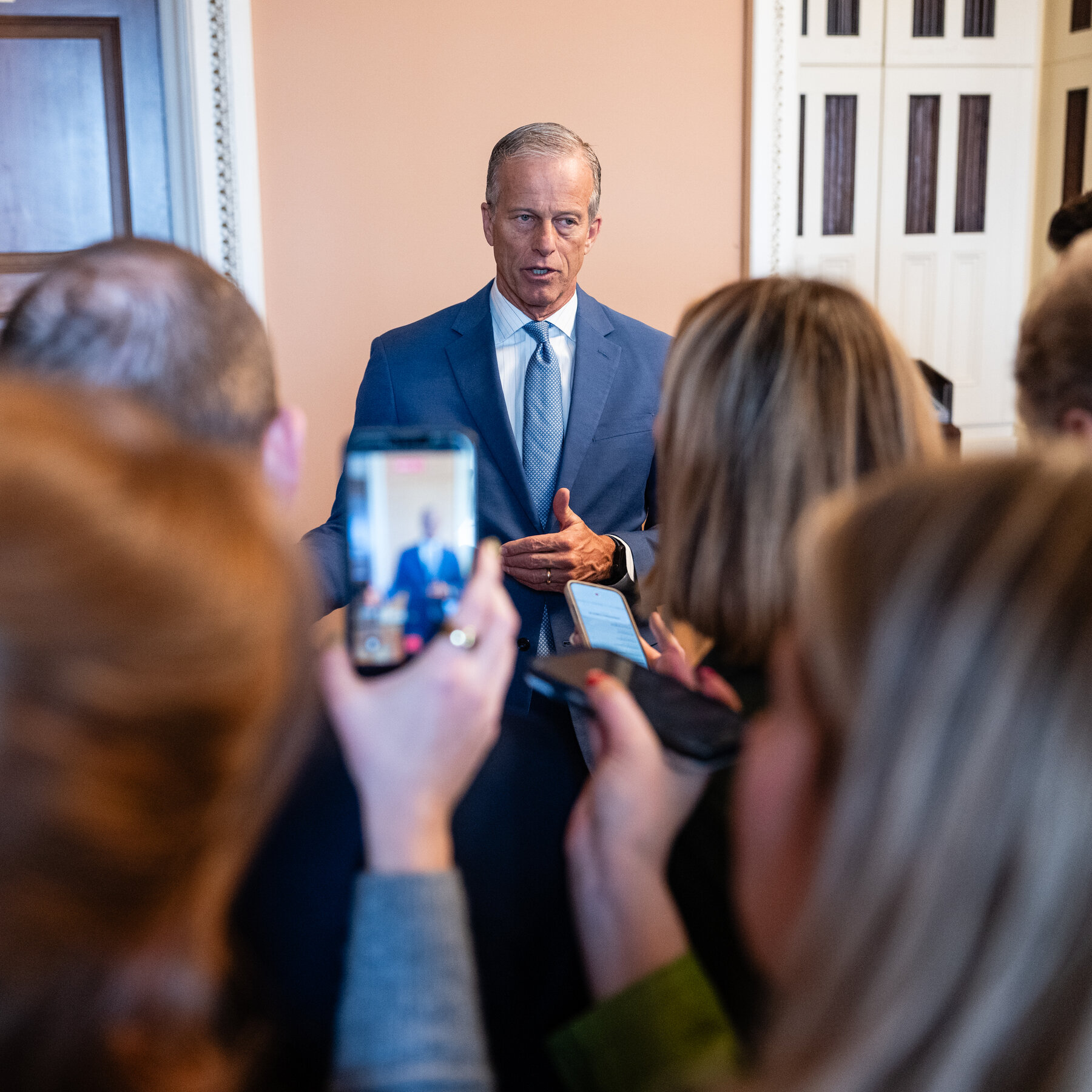
U.S. SENATE—The U.S. Senate is on the precipice of a potentially historic showdown over the implementation of stricter voter identification laws, as Republican lawmakers face intense pressure from both their own party and President Trump to force a ‘talking filibuster’ that could grind the legislative body to a halt.
The Strategic Calculation of Senate G.O.P. Leadership
Introduction to the Filibuster Mechanism
The U.S. Senate’s filibuster rule, which requires a 60-vote majority to advance most legislation, has long been a tool for the minority party to exert influence over the legislative process. However, the ‘talking filibuster,’ where senators must continuously speak on the floor to delay a vote, has been less commonly used in recent years. The prospect of reviving this old-school tactic for the voter I.D. bill has sparked both enthusiasm and trepidation among Senate Republicans.
Pressure from the President and Colleagues
President Trump and several Republican senators have been vocal in their support for the voter I.D. bill, arguing that it is essential for maintaining the integrity of the electoral process. This pressure from within their own party, combined with the vocal support of the President, has placed reluctant Republicans in a difficult position. On one hand, they face the potential wrath of their constituents and the possibility of being seen as weak on an issue that resonates with the party’s base. On the other hand, they are acutely aware of the risks of engaging in a ‘talking filibuster,’ which could lead to a prolonged and unproductive stalemate in the Senate without guaranteeing the success of the bill.
Rationale Behind the Reluctance
Some Republicans are hesitant to embark on a ‘talking filibuster’ for several strategic and practical reasons. Firstly, there is a clear understanding that such a maneuver might not ultimately succeed in passing the voter I.D. bill, given the requirement for 60 votes in the Senate and the unified opposition from Democrats. Secondly, the process could severely hamper the Senate’s ability to conduct other business, potentially alienating moderate voters and hurting Republican candidates in upcoming elections. Lastly, the spectacle of a ‘talking filibuster’ might not resonate well with the broader public, especially if it is perceived as an obstructionist tactic rather than a principled stand on voter integrity.
Implications of a Prolonged Filibuster
Economic and Legislative Consequences
A prolonged ‘talking filibuster’ over the voter I.D. bill could have far-reaching implications for the Senate’s legislative agenda and the economy at large. The paralysis of the Senate could delay or prevent the passage of critical bills, including those related to budget appropriations, national security, and economic stimulus, potentially destabilizing financial markets and undermining business confidence.
Societal Impact and Public Perception
Beyond the immediate legislative and economic effects, a ‘talking filibuster’ could also have profound societal implications and influence public perception of the political process. The intense media scrutiny and partisan rhetoric surrounding such an event could further polarize the electorate, reinforcing existing divisions and potentially diminishing trust in democratic institutions. Moreover, the focus on voter I.D. laws, which are already contentious and often racially charged, could exacerbate tensions and spark protests, affecting community relations and social cohesion.
The Role of President Trump and Party Politics
President Trump’s Advocacy
President Trump’s vocal support for the voter I.D. bill and his encouragement of Senate Republicans to engage in a ‘talking filibuster’ reflect his broader strategy to galvanize his base and push forward with his legislative agenda, despite the potential for significant political backlash. The President’s involvement underscores the highly partisan nature of the issue and the extent to which voter I.D. laws have become a litmus test for conservative credentials.
Internal Party Dynamics
The pressure from President Trump and conservative senators on their more moderate colleagues to support a ‘talking filibuster’ highlights the internal party dynamics at play. This issue has the potential to expose rifts within the Republican Party, pitting those who are adamant about pushing forward with the bill against those who are more cautious and concerned about the potential repercussions. The outcome of this internal struggle will not only influence the fate of the voter I.D. bill but also reflect on the party’s ability to unite behind a common agenda and its willingness to adopt confrontational tactics to achieve its goals.
Conclusion: The Uncertain Fate of the Voter I.D. Bill
Strategic Calculations and Potential Outcomes
As the Senate G.O.P. weighs the pros and cons of forcing a ‘talking filibuster’ over the voter I.D. bill, they must consider not only the immediate legislative implications but also the long-term strategic and political consequences. The decision will reflect on the party’s priorities, its approach to governance, and its relationship with its base and the broader electorate. Whether the tactic succeeds in passing the bill or merely serves as a symbolic gesture, the repercussions will be far-reaching, influencing the political landscape leading into the next election cycle.
