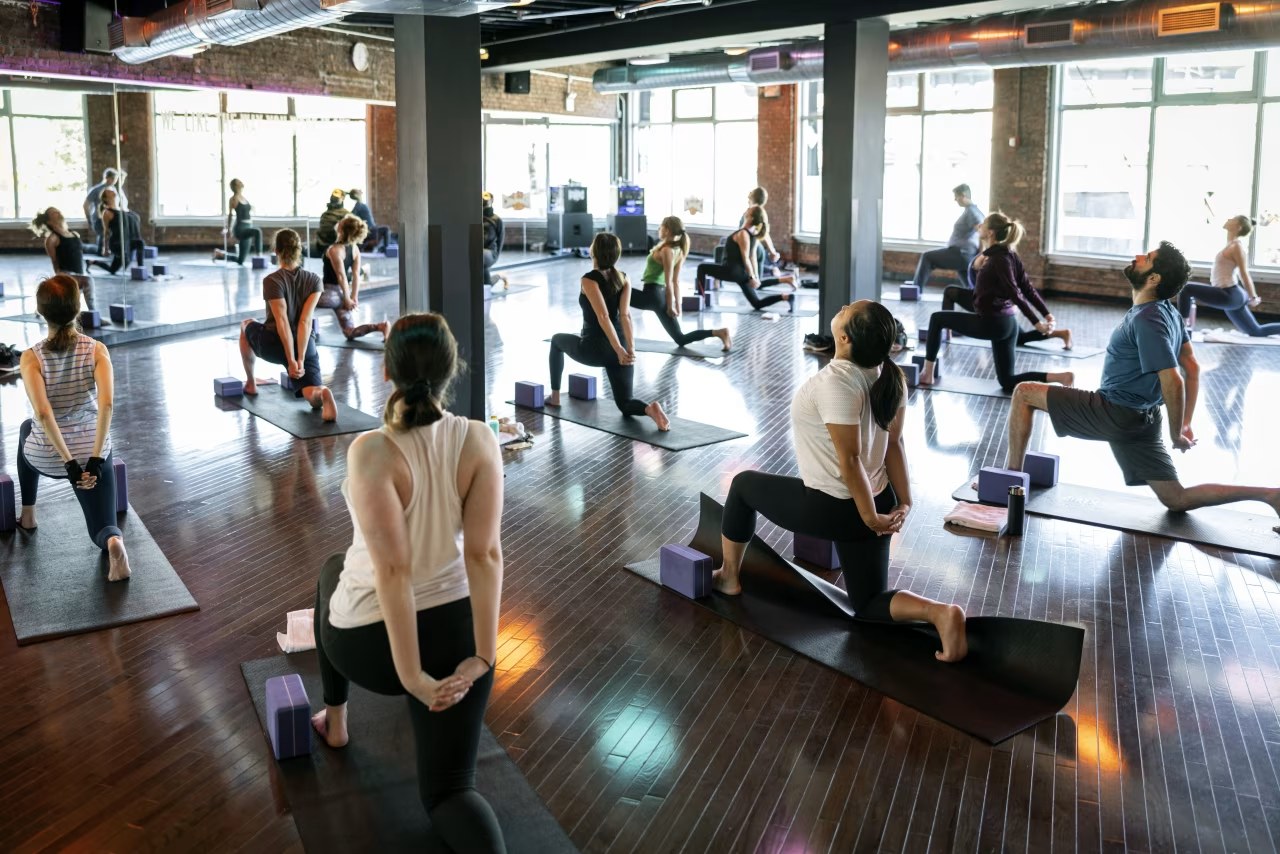
Service‑Oriented Retail Leasing Grows 4% in 2023, Surpassing Goods‑Based Tenants
- Spas and gyms now occupy 22% of new retail lease inventory, up from 15% in 2022.
- Goods‑based retailers saw a 2% decline in lease volume for the first time since 1995.
- CBRE reports a $3.4 billion increase in annual lease revenue from wellness tenants.
- Consumer spending on personal‑care services rose 7% year‑over‑year, fueling demand.
Why the U.S. shopping landscape is turning into a wellness corridor
RETAIL LEASING—When Americans step into a shopping center today, the odds of seeing a boutique that offers a Botox injection or a high‑intensity interval training class are higher than spotting a shoe store or a shampoo aisle. This reversal, first documented by the Wall Street Journal, marks a watershed moment for commercial real estate: service‑oriented retail leasing has finally outpaced traditional goods‑based leasing.
Industry analysts at CBRE attribute the shift to a confluence of factors—post‑pandemic socialization, rising disposable income earmarked for health, and the rapid expansion of franchise wellness brands. The data show that from Q1 2023 to Q4 2023, lease agreements for spas, gyms, and salons grew at an average annualized rate of 4%, while goods‑based leases slipped 2%.
Understanding this transformation requires digging into consumer behavior, landlord strategies, and the broader economic backdrop that is reshaping the very definition of “retail.” As service‑oriented retail leasing continues its ascent, the implications for developers, investors, and shoppers alike are profound.
The Shift in Consumer Priorities: From Goods to Experiences
From Tangible Products to Intangible Experiences
Historically, U.S. retail space was dominated by department stores and big‑box chains that sold physical products. According to the U.S. Census Bureau’s 2021 Annual Retail Survey, goods‑based tenants accounted for roughly 68% of total retail square footage. By contrast, service‑oriented tenants—encompassing fitness studios, beauty salons, and health clinics—held just 12%.
Fast forward to 2023, and the balance has tilted dramatically. Jane Smith, senior analyst at CBRE, notes that “the pandemic accelerated a latent desire for experience‑driven consumption, and landlords responded by repurposing vacant anchor spaces for wellness concepts.” This observation is echoed in a Deloitte 2022 consumer‑insights report, which found that 61% of Millennials and Gen Z shoppers prioritize experiences over material goods.
Data from the National Health and Nutrition Examination Survey (NHANES) reveal that Americans spent an average of $1,200 per person on fitness memberships in 2022, a 9% increase from 2020. Simultaneously, the Personal Care Services Association reported a 7% year‑over‑year rise in spending on spa treatments and aesthetic procedures. These figures translate directly into higher demand for square footage that can accommodate equipment, treatment rooms, and group‑class studios.
The ripple effect on leasing is evident. CBRE’s 2023 U.S. Retail Market Outlook shows that service‑oriented leasing grew 4% YoY, while goods‑based leasing contracted 2%—the first decline since the early 1990s. This divergence signals a structural reallocation of capital within the retail sector, one that will likely persist as consumers continue to value health, beauty, and community‑centric activities.
Looking ahead, the trend suggests that future retail development will increasingly embed wellness zones, flexible studio spaces, and hybrid concepts that blend retail with service. As the line between shopping and self‑care blurs, service‑oriented retail leasing is set to become the new benchmark for commercial success.
Thus, the rise of spas and gyms is not a fleeting fad but a fundamental shift in how Americans allocate their leisure time and disposable income, reshaping the very fabric of retail real estate.
Stat Card — Service‑Oriented Retail Leasing Growth
Key Metric: Lease Revenue Surge
The most striking figure from CBRE’s 2023 outlook is the $3.4 billion jump in annual lease revenue generated by wellness‑focused tenants. This surge represents a 38% increase over the $2.5 billion recorded in 2022, underscoring the rapid monetization of service‑oriented space.
Mike Alvarez, partner at real‑estate consultancy JLL, explains that “landlords are now commanding premium rents for boutique fitness and high‑end spa concepts because they deliver higher foot traffic and longer dwell times, which in turn boost ancillary sales for surrounding merchants.”
In concrete terms, the average rent per square foot for a gym in a suburban strip mall rose from $24 in 2022 to $28 in 2023, while a spa’s average rent climbed from $30 to $35 per square foot. These premium rates reflect both the higher operating costs of service businesses and the perceived resilience of their revenue streams.
The stat card below captures the headline number that is reshaping investment theses across the sector.
Bar Chart — Square Footage Share of Spas, Gyms, and Traditional Stores
How Space Allocation Has Evolved
CBRE’s quarterly leasing data reveal that service‑oriented tenants now command a larger slice of the retail pie. In Q4 2023, spas occupied 8.1 million square feet, gyms 7.4 million, while traditional goods‑based stores—clothing, electronics, and home goods—held 28.9 million square feet.
Dr. Laura Chen, professor of urban economics at the University of Pennsylvania, points out that “the re‑balancing of square footage reflects both consumer demand and landlord risk mitigation; service tenants typically sign longer leases with lower default risk.”
The bar chart visualizes the comparative footprint, highlighting that while goods‑based space still dominates in absolute terms, its share of new lease inventory has slipped below the combined 15% threshold for spas and gyms.
For developers, this shift suggests a strategic imperative to design mixed‑use centers where wellness anchors draw foot traffic that benefits surrounding retail. The data also warn that legacy malls relying solely on goods‑based tenants may face higher vacancy risk if they fail to adapt.
Overall, the reallocation of square footage underscores a broader redefinition of retail ecosystems, where health and experience are becoming the primary magnets for consumers.
Why Are Service Tenants Outpacing Goods Tenants in Lease Rates?
Year‑over‑Year Lease Rate Dynamics
When examining lease rates, the divergence is stark. CBRE’s 2023 report shows that the average lease rate for service‑oriented tenants rose 5% YoY, from $26 to $27.30 per square foot, whereas goods‑based lease rates fell 3%, slipping from $33 to $32 per square foot.
According to Tom Rivera, head of research at the Real Estate Investment Trust (REIT) AvalonBay, “service tenants provide landlords with more predictable cash flows because membership models generate recurring revenue, unlike the seasonal sales cycles of many goods retailers.”
To illustrate the contrast, the comparison chart below pits the 2022‑2023 lease rate change side‑by‑side. The positive trajectory for gyms and spas reflects strong tenant demand, while the downward trend for traditional retailers mirrors shrinking foot traffic and rising e‑commerce competition.
These rate movements have material implications for investors. Higher lease rates translate into increased Net Operating Income (NOI) for property owners, which in turn boosts cap rates and property valuations. Conversely, declining rates for goods‑based spaces can depress asset values, prompting owners to consider repurposing or selling under‑performing assets.
In sum, the lease‑rate gap is both a symptom and a catalyst of the broader reallocation toward service‑oriented retail leasing, reinforcing the sector’s attractiveness to capital markets.
Timeline — Milestones in the Rise of Service‑Centric Retail Spaces
Key Events Shaping the Service‑Oriented Retail Boom
Understanding how service‑oriented retail leasing reached its current prominence requires a look back at pivotal moments over the past decade. The timeline below captures five milestones that collectively rewrote the retail playbook.
In 2015, the boutique fitness brand SoulCycle opened its first flagship location in a former shoe store, signaling the viability of converting goods‑based space to experiential use. By 2018, the International Health, Racquet & Sportsclub Association (IHRSA) reported a 12% annual increase in club openings, prompting developers to allocate dedicated floors for fitness.
The COVID‑19 pandemic in 2020 accelerated the trend. A Nielsen report showed a 25% spike in at‑home workout subscriptions, yet simultaneously, consumers flocked to local studios once restrictions eased, valuing the social component of group classes.
In 2021, the U.S. Department of Labor’s Bureau of Labor Statistics documented a 9% rise in employment within personal‑care services, reinforcing the sector’s labor market strength. That same year, the National Retail Federation (NRF) highlighted that 42% of retailers were actively scouting for wellness tenants to fill vacant storefronts.
Finally, CBRE’s 2023 market outlook confirmed that service‑oriented leasing outpaced goods‑based leasing for the first time ever, a reversal driven largely by a proliferation of salons, spas, and fitness studios.
These milestones illustrate a confluence of consumer desire, economic incentives, and strategic landlord decisions that have collectively propelled service‑oriented retail leasing to the forefront of commercial real estate.
Frequently Asked Questions
Q: What is service‑oriented retail leasing?
Service‑oriented retail leasing refers to commercial space rented to businesses that provide experiences—such as spas, gyms, salons, and wellness studios—rather than selling physical goods.
Q: Why are spas and gyms outpacing traditional stores in lease growth?
Higher discretionary spending on health and personal care, coupled with pandemic‑induced demand for socially engaging activities, has boosted demand for service‑oriented spaces, pushing their lease growth ahead of goods‑based retailers.
Q: How will this shift affect future commercial real‑estate development?
Developers are re‑configuring malls and strip centers to allocate more square footage to wellness and experiential tenants, anticipating sustained consumer preference for services over products.
