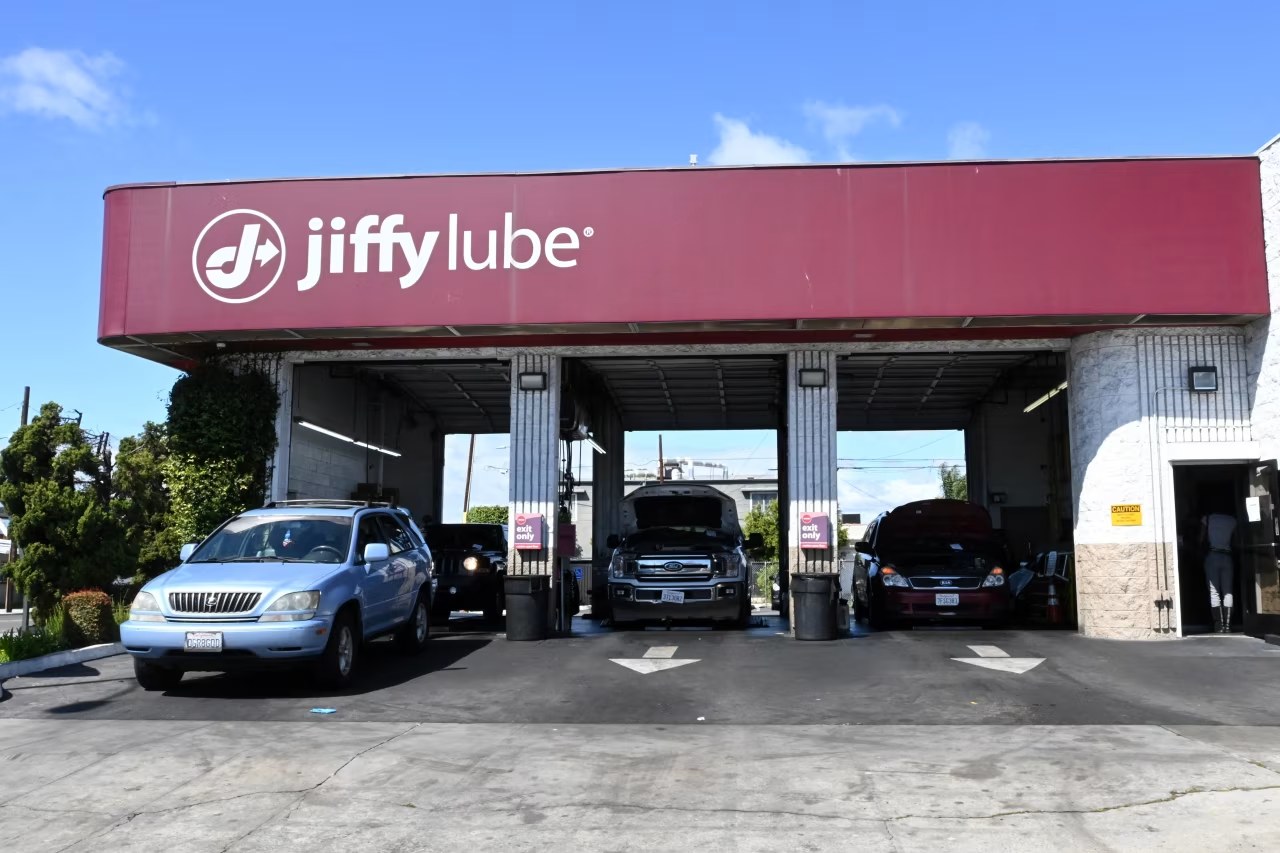
Shell Offloads Jiffy Lube for $1.3 Billion in Non-Core Retail Exit
- Shell will receive $1.3 billion in cash for Jiffy Lube International and Premium Velocity, equal to 11× trailing EBITDA.
- Jiffy Lube’s 2,000 U.S. franchises generate only 6.5 % of Shell’s total lubricant volume in North America.
- Monomoy Capital Partners, a mid-market PE firm, adds its largest platform since its 2015 buyout of Cloyes Gear & Products.
- Shell retains Pennzoil, Quaker State and Rotella brands, focusing capital on upstream oil, LNG and low-carbon hydrogen.
The sale frees capital for Shell’s energy-transition push while giving Monomoy a recession-resilient auto-maintenance network.
SHELL—Royal Dutch Shell plc has agreed to sell Jiffy Lube International and sister chain Premium Velocity Auto to Monomoy Capital Partners for $1.3 billion, marking the London-based super-major’s largest retail divestiture since its 2021 exit from Pennsylvania refining.
The deal, announced Tuesday, severs Shell’s direct ownership of the 2,000-plus Jiffy Lube service centers across North America, a network that contributes just 6.5 % of Shell’s lubricant volumes in the United States and Canada yet ties up management bandwidth and capital.
Shell said proceeds will be redeployed “into opportunities that generate higher returns,” shorthand for deep-water oil, LNG expansions and nascent hydrogen and carbon-capture projects that now dominate the company’s $24 billion annual capex envelope.
Jiffy Lube’s Diminishing Role Inside Shell’s Portfolio
Jiffy Lube’s footprint looks sizable—2,002 franchised stores at year-end 2023—but measured against Shell’s 3.3 billion litres of annual lubricant sales in North America, the quick-lube banner accounts for barely 215 million litres, or 6.5 %, according to company filings.
That mismatch has nagged at Shell executives since the 2002 acquisition of Pennzoil-Quaker State, when Jiffy Lube came bundled as a downstream distribution channel. Two decades later, the capital tied up in franchise support, real-estate leases and national advertising no longer competes with drilling prospects in Brazil’s pre-salt blocks or LNG trains in Qatar’s North Field East.
Franchise economics vs. upstream returns
Internal rate-of-return models reviewed by investors last autumn showed Jiffy Lube generating mid-teens returns on invested capital, while Shell’s integrated gas division posts IRRs above 25 % even at $60 Brent. “We are monetizing an asset that is not central,” Shell downstream director Huibert Vigeveno told analysts on a Tuesday call.
The exit also removes regulatory exposure: California’s pending rule to phase out internal-combustion passenger vehicles by 2035 threatens quick-lube volumes. Shell estimates same-store oil-change frequency could fall 30 % in the state within five years, shaving $45 million off annual EBITDA.
By shedding Jiffy Lube now, Shell crystallizes a 11× EBITDA multiple before that cliff materializes, bankers say. Monomoy, for its part, bets that EVs still need brakes, tires and cabin filters, extending cash flow visibility beyond 2040.
Monomoy Capital’s Playbook: Buy, Fix, Grow
Monomoy Capital Partners, founded in 2004 by former Goldman Sachs partners, manages $3.5 billion across four funds and specializes in carve-outs of non-core divisions from corporate parents. Its 2015 buyout of Cloyes Gear & Products from HUSCO International turned a regional timing-chain supplier into a national leader with 22 % EBITDA margins.
For Jiffy Lube, Monomoy sees similar upside: fragmented ownership, under-optimized pricing and a recession-resilient service mix. “Cars are aging, not vanishing,” said Monomoy managing director David Treadwell on a media call. The average U.S. passenger vehicle is 12.5 years old, the oldest on record, according to S&P Global Mobility.
Franchisee tension and turnaround levers
About 92 % of Jiffy Lube outlets are franchised; the remainder are company-operated test beds. Franchisees have chafed at mandatory image upgrades costing $180,000 per site. Monomoy plans to soften capex requirements in exchange for higher royalty fees, a model it deployed at sandwich chain Subway, where unit remodels fell 40 % while royalties rose 150 basis points.
Monomoy will also cross-sell Premium Velocity’s 120 corporate stores—concentrated in Texas and Florida—into the Jiffy Lube network, re-bannering them to capture national ad fund efficiencies. Bankers estimate the combo could lift system-wide same-store sales 4–5 % within 24 months.
Exit options loom in five to seven years: either an IPO of a 2,200-plus-unit chain or a sale to strategic buyers such as Valvoline Instant Oil Change or private-equity rival Roark Capital, which owns rival Take 5 Oil Change.
What Shell Keeps: Pennzoil, Quaker State and Rotella Brands
While Jiffy Lube signs will disappear from Shell’s balance sheet, the oil major retains every trademark that actually flows through the stores: Pennzoil, Quaker State, Rotella, Shell Helix and Pennzoil Platinum. Those brands command 18 % of the U.S. passenger-car motor-oil market by volume, worth $2.4 billion in annual retail sales, according to NielsenIQ.
Shell will continue to supply Jiffy Lube under a 10-year preferred-vendor agreement, ensuring volume continuity. “We remain the lubricants supplier of choice,” said Shell Americas president Gretchen Watkins, emphasizing that divesting retail does not equal abandoning distribution.
Brand licensing windfall
The agreement obliges Monomoy to purchase a minimum 60 % of its motor-oil volume from Shell, stepping down to 45 % by year eight. In return, Shell will rebate 2 % of invoice value as marketing support, preserving shelf space against rival Valvoline and Mobil 1.
Shell also pockets royalty income: Monomoy will pay 0.75 % of gross Jiffy Lube sales to license co-branded signage featuring the Shell pecten logo. Analysts estimate this yields roughly $25 million per year at current system revenues—low-risk cash flow with no capex.
Retaining brands allows Shell to redirect promotional dollars toward big-box retailers such as Walmart and Amazon, where synthetic-oil growth is outpacing the do-it-for-me channel by 9 % annually.
Will More Oil Majors Exit Retail Auto Services?
Shell’s exit raises a broader question: are oil majors structurally unsuited to running quick-lube chains? BP sold its 1,100-store Castrol Rapid Oil Change network to private equity in 2019; ExxonMobil has quietly franchised its 900-store Mobil 1 Lube Express since 2020; Chevron exited the business entirely in 2012.
The common denominator: razor-thin retail margins that pale next to upstream barrels. A typical Jiffy Lube outlet nets $275,000 EBITDA on $1.4 million revenue—about 19 %—while a single Permian well can generate $6 million in present value at $70 WTI, according to Rystad Energy.
Capital-allocation arbitrage
Investors reward oil majors for capital discipline. Shell’s share price rose 3 % on the Jiffy Lube news, trimming its 12-month decline to 11 %. Analysts at Bernstein calculate that redeploying the $1.3 billion into share buybacks would add 2 % to 2025 EPS at strip prices.
Environmental, social and governance (ESG) pressures also play a role. Quick-lube operations generate Scope-1 emissions from idling cars and solvent cleaning, liabilities that super-majors want off their books before 2030 net-zero targets.
Watch for TotalEnergies next: the French major still owns 450 quick-lube centers in Europe under the Norauto banner, a business that bankers say could fetch €800 million in a carve-out.
What the $1.3 Billion Means for Shell’s Balance Sheet
Shell will book an after-tax gain of roughly $900 million on the sale, equating to 2.5 % of 2023 net income, and plans to apply proceeds to debt reduction and buybacks. Net debt stood at $43.5 billion at March 31, down from $48.3 billion a year earlier; management targets $40 billion by year-end.
The deal values Jiffy Lube at 11× trailing EBITDA of $118 million, a premium to recent auto-retail multiples of 8–9×, according to Jefferies. Shell’s CFO Sinead Gorman told investors the valuation “exceeded our internal hurdle by 150 basis points.”
Capex re-allocation toward low carbon
Shell has earmarked $4 billion annually for renewables and energy solutions through 2025. Applying the Jiffy Lube windfall could fund a 200-MW green-hydrogen electrolyzer in Rotterdam or 1,000 new EV fast-charging hubs across Europe, both of which carry double-digit IRRs under EU subsidy schemes.
Credit-rating agencies welcomed the move: S&P revised Shell’s outlook to “positive,” citing improved cash-flow diversification. Bond spreads tightened 8 basis points on the news, saving an estimated $15 million in annual interest expense.
Still, some shareholders want more. Activist investor Elliott Management, which holds a $1 billion stake, urged Shell to hive off the entire Pennzoil-Quaker State division, arguing lubricants are “non-strategic” in a decarbonizing world. For now, management is holding the brand portfolio—but has not ruled out further divestitures.
Frequently Asked Questions
Q: Why is Shell selling Jiffy Lube?
Shell is selling Jiffy Lube because the 2,000-plus franchise network contributes only 6.5 % of its total U.S. and Canada lubricant volumes, making it a non-core retail asset. The $1.3 billion proceeds will be redeployed into higher-return upstream and low-carbon projects.
Q: What exactly is included in the $1.3 billion deal?
The transaction transfers the Jiffy Lube brand trademark, franchise agreements for roughly 2,000 U.S. outlets, and the smaller Premium Velocity quick-lube chain. Shell keeps ownership of Pennzoil, Quaker State, Rotella and other lubricant brands.
Q: Who is Monomoy Capital Partners?
Monomoy is a New York-based private-equity firm with $3.5 billion in assets under management that specializes in mid-market carve-outs. Past deals include auto-parts maker Cloyes and equipment servicer Mobile Mini.
