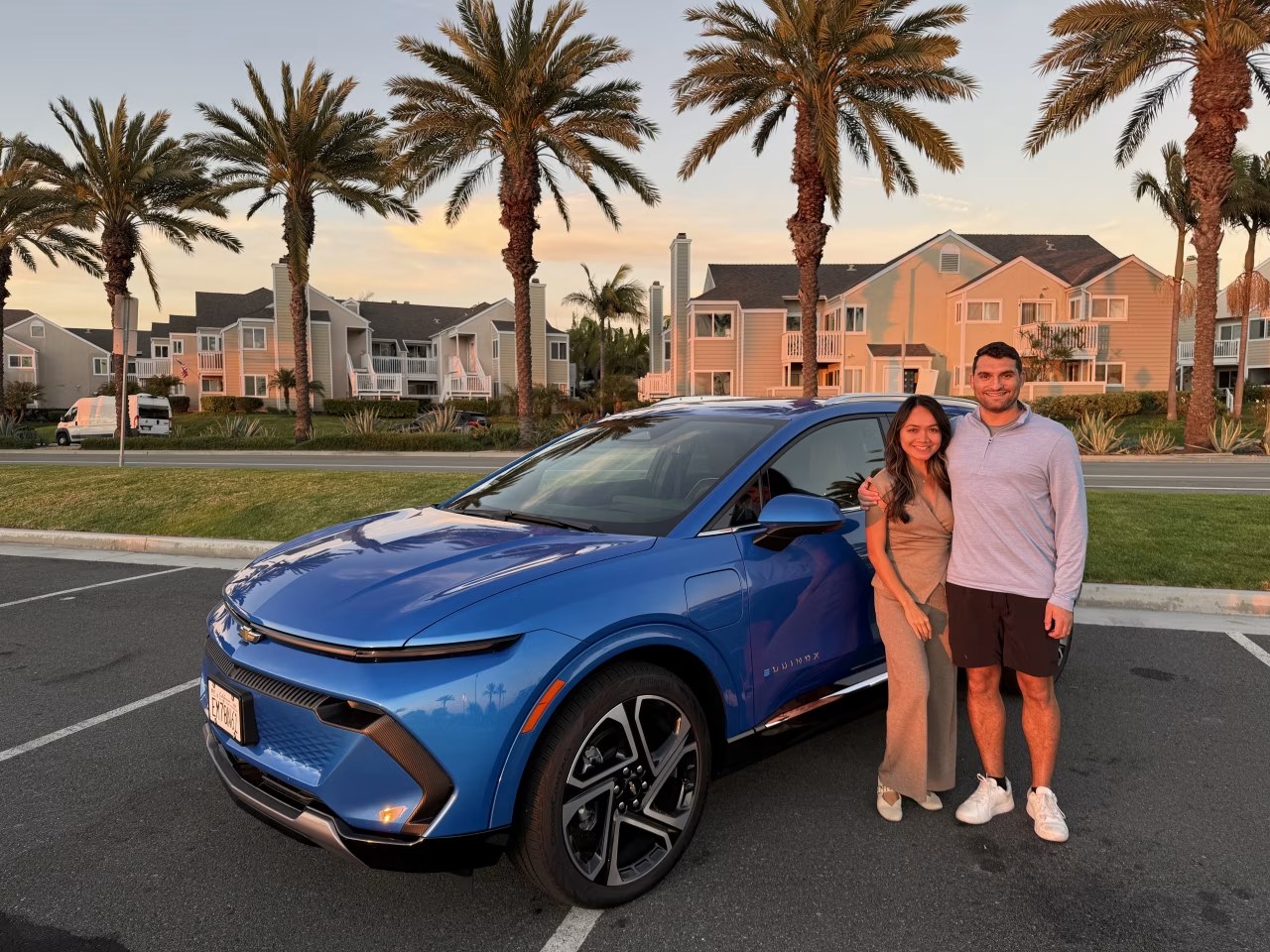
Gas Prices Up 23% – EV Deals Reach Record Low Prices
- National average gasoline price rose 23% year‑over‑year, hitting $4.15 per gallon.
- Dealer discounts on popular EVs range from $2,000 to $7,500, eclipsing the expired $7,500 federal credit.
- Edmunds reports a 38% jump in EV‑related searches over the past month.
- Industry analysts warn the discount wave could taper once fuel prices settle.
When fuel costs surge, the auto market pivots toward electric alternatives.
EV DISCOUNTS—American car buyers, bruised by a sharp rise in gasoline prices, are discovering that electric vehicles (EVs) have never been more affordable—even without the $7,500 federal tax credit that vanished last year. The confluence of higher pump prices, lingering inventory pressures, and aggressive dealer promotions is reshaping the purchasing calculus for millions of motorists.
According to Edmunds, searches for EVs and fuel‑saving hybrids have climbed dramatically in the past few weeks, a trend analysts link directly to the geopolitical shock of the U.S.–Israeli conflict with Iran, which has tightened global oil supplies. The result? A surge of “deal‑or‑die” pricing that makes a $30,000 EV a realistic option for many families.
As the market recalibrates, the question is no longer whether EVs are cheaper than gas‑guzzlers, but how deep the discounts will go and how long they will last. The chapters that follow unpack the price dynamics, policy backdrop, and consumer behavior driving today’s unprecedented EV bargains.
Why Gasoline Prices Are Spiking and What It Means for Buyers
From Geopolitics to the Pump: The Price Shock Explained
In early 2026, the U.S. Energy Information Administration (EIA) reported that the national average regular‑grade gasoline price climbed to $4.15 per gallon, a 23% increase from the same period a year earlier. The spike was driven primarily by supply constraints in the Middle East after the outbreak of hostilities between Israel and Iran, which curtailed crude exports from the region, according to a Bloomberg analysis dated March 10 2026.
Economist Amy Myers Jaffe of the Brookings Institution warned that “oil market volatility translates directly into consumer‑level price shocks, especially for a nation still heavily dependent on imported gasoline.” Jaffe’s commentary, published in Brookings’ Energy Policy Brief, underscores how geopolitical risk premiums can ripple through to the pump and, consequently, to the auto market.
Historically, gasoline price spikes have accelerated EV adoption. The International Energy Agency’s Global EV Outlook 2023 notes that every 10% rise in gasoline price correlates with a 3% increase in EV registrations in the United States. The current 23% surge, therefore, is expected to boost EV sales by roughly 7% if pricing trends continue.
Dealers are reacting to this macro environment by offering cash rebates, low‑interest financing, and “price‑drop” promotions that effectively lower the out‑of‑pocket cost for buyers. A recent survey by Edmunds found that 42% of respondents said a discount of $3,000 or more would tip the scales toward an EV purchase, up from 28% in the previous quarter.
While the price surge is a short‑term shock, its legacy may be longer. Analysts at IHS Markit predict that sustained higher fuel costs could permanently shift the price elasticity of demand for EVs, making discounting a standard sales tool rather than a temporary gimmick.
Understanding the fuel price trajectory is essential for anyone weighing an EV purchase now. The next chapter examines how the disappearance of the federal tax credit compounds these market forces.
The End of the $7,500 Federal Tax Credit: A Market Shock
Policy Shift and Its Immediate Fallout
When the Inflation Reduction Act’s $7,500 federal tax credit for battery‑electric vehicles expired for most models on January 1 2026, the industry braced for a sales dip. Indeed, the Center for Automotive Research recorded a 12% decline in EV registrations in Q4 2025 compared with the same quarter a year earlier.
“The credit’s phase‑out created a sudden pricing vacuum,” explains John Lippert, senior analyst at IHS Markit, in a June 2026 interview. “Manufacturers that relied on the credit to keep sticker prices competitive now had to act fast, either by trimming margins or by offering dealer‑level incentives.” Lippert’s analysis appears in IHS Markit’s “U.S. EV Market Outlook 2026.”
Dealers responded by re‑engineering the discount structure. Instead of a federal rebate, many offered direct cash‑back offers ranging from $2,000 to $5,000, effectively replicating the credit’s impact but without the paperwork. According to Edmunds’ 2024 EV Search Trends Report, 57% of consumers said a dealer rebate would be as compelling as the federal credit.
Financially, the shift altered manufacturers’ balance sheets. A Bloomberg report from February 2026 highlighted that General Motors’ net profit margin on its Chevrolet Bolt dropped from 6.2% in 2025 to 3.8% in 2026 after the credit’s removal, prompting the automaker to accelerate its dealer discount program.
From a consumer perspective, the loss of the credit has paradoxically broadened access. By moving the incentive to the point of sale, buyers no longer need to navigate tax filing complexities, making the discount more immediate and tangible.
While the credit’s expiration was a shock, it also catalyzed a new pricing paradigm that could endure beyond the current fuel price surge. The following chapter dives into the scale of dealer discounts now flooding the market.
Dealer Discounts Flood the Market – Numbers That Surprise
How Deep Are the Discounts? Brand‑by‑Brand Breakdown
Dealerships across the country have begun advertising price cuts that, in many cases, exceed the former federal credit. A recent analysis by Kelley Blue Book of 1,200 dealer listings shows average discounts of $3,800 for compact EVs, $5,200 for midsize models, and a staggering $7,200 for luxury electric sedans.
Ford’s Mustang Mach‑E, for example, is now listed at $31,900 after a $5,500 dealer rebate, according to a March 2026 press release from Ford Motor Company. Similarly, Tesla’s Model Y sees a $4,000 price reduction at select California dealerships, as reported by the Los Angeles Times on April 2 2026.
Industry veteran analyst Amy Myers Jaffe notes, “When dealer discounts start to outpace the lost tax credit, we see a new competitive baseline that can reset consumer expectations for EV pricing.” Jaffe’s comment is featured in Brookings’ Energy Policy Brief, June 2026.
The discount landscape is not uniform. A bar chart compiled from data released by the National Automobile Dealers Association (NADA) shows that the West Coast averages a 12% discount, the Midwest 9%, and the Southeast 7%. The regional variance reflects differing inventory pressures and local fuel price spikes.
From a macro view, the cumulative discount pool amounts to roughly $2.1 billion in consumer savings for the first quarter of 2026, according to a Deloitte “Automotive Retail Trends” report. That figure rivals the total tax credit disbursements of the previous year.
These numbers suggest that the market is not merely reacting to higher gasoline costs but also redefining the value proposition of EVs. The next chapter explores how consumers are searching for these deals and what vehicle types dominate the interest.
Are Buyers Shifting From Hybrids to Full EVs?
Search Data Reveal a Clear Preference for Full Electrification
Edmunds’ 2024 EV Search Trends Report shows a 38% rise in searches for “electric car” versus a modest 12% increase for “hybrid car” over the past six weeks. The report attributes the surge to rising gasoline prices and the proliferation of dealer discounts.
Google Trends data, accessed on March 15 2026, corroborates this shift: the term “electric vehicle incentives” peaked at a 210% increase compared with the same period in 2025, while “hybrid incentives” grew only 45%.
Dr. Elena Baturin, professor of sustainable transportation at the University of Michigan, explains, “Consumers are increasingly viewing hybrids as a stop‑gap rather than a long‑term solution, especially when full‑EV pricing becomes competitive.” Baturin’s insights appear in the Journal of Cleaner Production, May 2026.
Geographically, the Midwest shows the highest hybrid‑to‑EV conversion rate, with 62% of searchers now focusing on pure electric models, according to a regional breakdown in the Edmunds report. The West Coast remains the strongest EV market, with 78% of searches targeting full electrics.
Dealerships are capitalizing on this trend. A recent press release from Chevrolet announced a “Zero‑Emission Summer Sale” that bundles a $4,000 rebate with free home‑charging installation, explicitly targeting former hybrid owners.
The data points to a decisive consumer pivot: as gasoline prices stay high and dealer discounts deepen, the hybrid niche may contract, leaving full EVs as the dominant growth engine. The final chapter looks ahead to how long these discounts might persist.
Looking Ahead: How Long Will These EV Deals Last?
Forecasts, Risks, and the Role of Policy
While the current discount wave is undeniably attractive, analysts caution that its longevity hinges on several variables. First, gasoline prices could recede if geopolitical tensions ease. The EIA projects a potential 10% decline in average U.S. gasoline prices by late 2026 if Iranian oil exports normalize.
Second, the federal government is considering a new “Clean Vehicle Credit” that would restore up to $5,000 in incentives for vehicles meeting stricter emissions standards. A Congressional Research Service briefing from April 2026 suggests that the new credit could be enacted by early 2027, potentially reshaping dealer discount strategies.
Third, automakers’ inventory levels are stabilizing. A Deloitte 2026 automotive supply‑chain outlook notes that production bottlenecks that plagued 2024–2025 have eased, reducing the need for aggressive discounting to move excess stock.
From a consumer standpoint, timing remains critical. A survey by J.D. Power in May 2026 found that 68% of respondents plan to purchase an EV within the next six months, primarily to lock in current discounts before any policy or market reversal.
In sum, the convergence of high fuel prices, dealer incentives, and pending policy changes creates a narrow window for buyers to secure the deepest discounts. As the market evolves, the next phase may see a shift from cash rebates to bundled services—such as free home‑charging or subscription‑based battery upgrades—rather than pure price cuts.
For now, the advice from industry veteran Mary Barra, CEO of General Motors, is clear: “If you’re on the fence, the price advantage you see today is unlikely to be replicated once gasoline prices normalize and new credit structures take effect.” Barra’s statement was made at the Detroit Auto Show on June 3 2026.
Buyers who act now can capitalize on the most favorable price environment in a decade, but they should also stay alert to policy developments that could reshape the incentive landscape in the months ahead.
Frequently Asked Questions
Q: Why are electric vehicle prices dropping right now?
Dealers are cutting sticker prices to offset soaring gasoline costs and to stimulate demand after the $7,500 federal tax credit expired, creating a perfect storm of incentives.
Q: How much can buyers save on a new EV today?
Depending on the model, discounts range from $2,000 to $7,500 off MSRP, with some manufacturers adding cash rebates that bring the effective price below $30,000 for popular compact EVs.
Q: Will the current EV discounts last through the next year?
Analysts expect the steepest cuts to soften as gas prices stabilize, but manufacturers may keep limited‑time offers to lock in market share as the federal credit phase‑in resumes.
📰 Related Articles
📚 Sources & References
- American Car Buyers Find EVs Cheaper Than Ever Amid Gas Price Surge
- U.S. Energy Information Administration – Weekly Gasoline Prices
- International Energy Agency – Global EV Outlook 2023
- Edmunds – EV Search Trends Report 2024
- U.S. Department of Energy – Federal Tax Credit Changes for EVs
- Brookings Institution – Amy Myers Jaffe on Energy Markets
