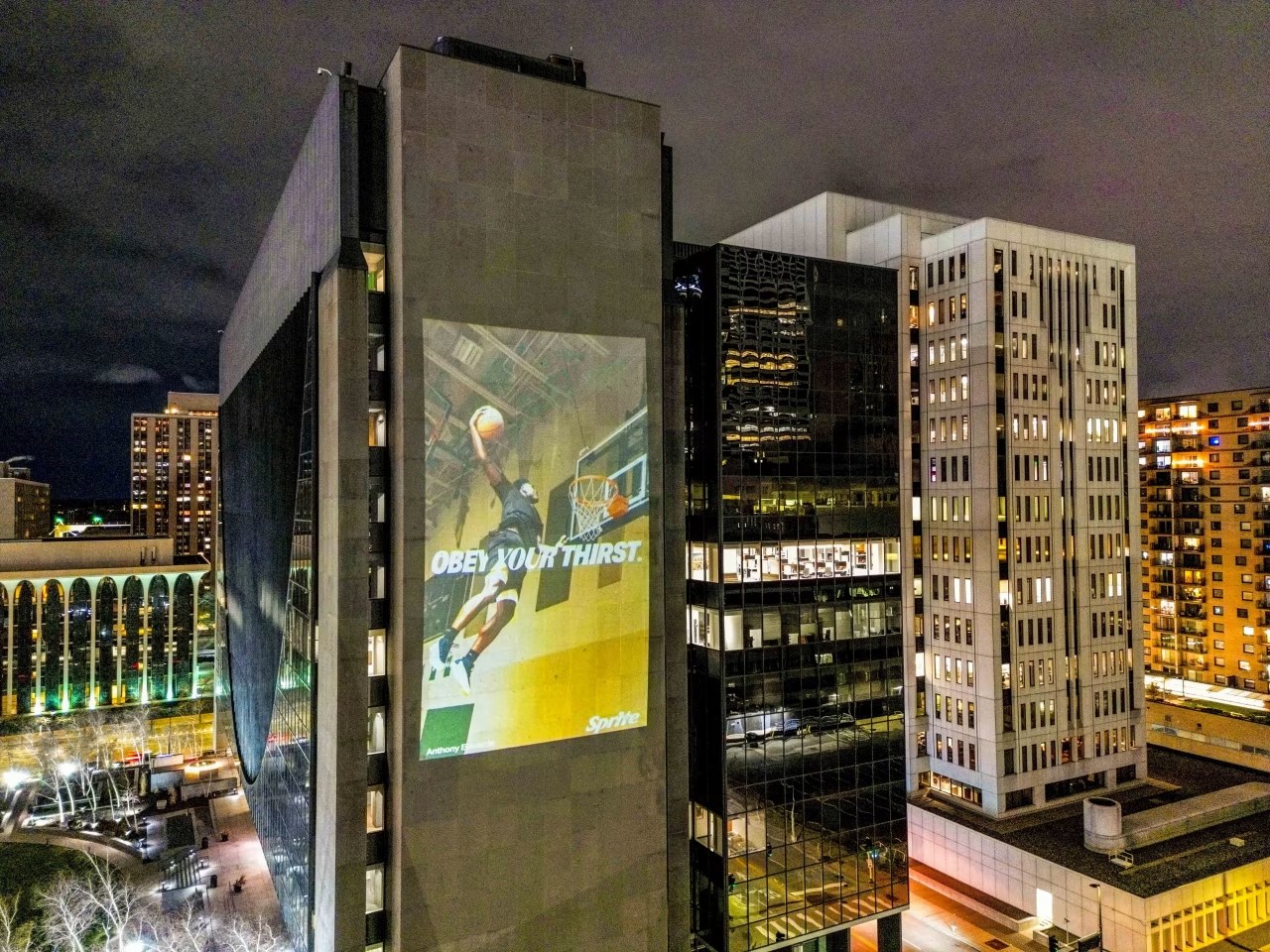
After 11 Years, Sprite Reclaims NBA Sponsorship From PepsiCo’s Starry
- Coca-Cola’s Sprite is once again the NBA’s official soft drink, ending PepsiCo’s 11-year control of the league’s citrus-soda rights.
- The reversal comes one year after PepsiCo replaced Sierra Mist with Starry, a Gen Z-focused lemon-lime brand.
- Sprite will revive its 1990s ‘Obey Your Thirst’ creative platform across national TV spots, arena signage, and social content.
- Industry analysts value the multi-year pact at an estimated $75 million to $100 million annually.
The soda wars return to center court
SPRITE—The National Basketball Association on Tuesday handed Coca-Cola Co. one of the most coveted pieces of marketing real estate in North American sports: the league’s official soft-drink sponsorship, a platform PepsiCo has controlled since 2013.
The decision restores Sprite—Coca-Cola’s second-largest U.S. brand by volume—to courtside prominence after an 11-year absence and deals a setback to PepsiCo’s fledgling Starry, which debuted only 16 months ago.
Terms were not disclosed, but people familiar with sports-rights negotiations say comparable beverage deals average $75 million to $100 million per year when media, pouring rights, and experiential activations are bundled. Sprite plans to relaunch its 1990s-era “Obey Your Thirst” tagline inside NBA arenas beginning with the 2024-25 season.
How Sprite Lost—and Won Back—the NBA
In 2013 Coca-Cola allowed its NBA partnership to lapse, ceding the stage to PepsiCo, which had already begun phasing out its lemon-lime Slice brand in favor of Sierra Mist. PepsiCo executives saw the NBA’s young, multicultural audience as the perfect vehicle to close the gap with Sprite, which at the time commanded roughly 6 % of the U.S. soda market compared with Sierra Mist’s 1 %, according to Beverage Digest.
PepsiCo’s first move was to rename the league’s “official soft drink” designation “Mountain Dew and Sierra Mist,” betting that Mountain Dew’s higher caffeine content would resonate with fans. When Sierra Mist failed to gain share, PepsiCo pivoted, killing the brand in January 2023 and replacing it with Starry, a brighter, more citrus-forward formulation supported by TikTok creators and rapper Ice Spice.
Coca-Cola spent the intervening years deepening relationships elsewhere, becoming the official beverage of Major League Baseball in 2017 and striking a global alliance with the esports giant Riot Games in 2021. Yet the NBA remained the “white whale,” said Duane Stanford, executive editor of Beverage Digest. “Basketball’s demographics skew younger and more international than any major U.S. sport. If you want Gen Z trial, the NBA is the fastest route.”
Sprite’s internal sales data showed household penetration among 18- to 24-year-olds slipping 1.3 percentage points between 2020 and 2023, according to a person who has reviewed the numbers. Reclaiming the NBA was viewed inside Coca-Cola as the “single biggest lever” to reverse that slide, the person added.
The new pact gives Sprite category-exclusive advertising inventory during national game telecasts, digital highlights, and the league’s 29 U.S. arenas plus Toronto’s Scotiabank Arena. Pouring rights rotate by venue, but Sprite will control center-court digital signage and the mid-third of baseline LED bands—positions that Nielsen Sports values at roughly 1.4 billion brand impressions per regular season.
What Starry’s Demotion Means for PepsiCo
PepsiCo launched Starry in February 2023 with a Super Bowl spot and a mission to “kill Sprite,” in the words of one company memo revealed during a recent trademark lawsuit. The NBA platform was central to that ambition; executives budgeted an estimated $45 million in first-year media around the league and All-Star weekend alone, according to Kantar Media.
Losing the sponsorship less than 18 months later leaves Starry without its highest-profile cultural real estate. “Starry is now in the same bucket as every other non-sponsored brand fighting for attention,” said Amy Puliafito, senior vice-president of sports consultancy Navigate. “They can still buy ads, but they no longer get the hero shots of players sipping the product on the bench.”
PepsiCo can pivot. The company retains the halftime show for the NBA All-Star Game through its Mountain Dew brand and continues as the official beverage of the NFL, a deal that runs through 2027 and commands north of $2 billion over ten years. But the NBA loss is symbolic: citrus soda is the fastest-growing flavored-carbonated segment, up 4.2 % in NielsenIQ-measured outlets last year while colas fell 1.8 %.
Internal PepsiCo documents reviewed by The Wall Street Journal show Starry’s retail-dollar sales rose 11 % to $625 million in 2023, but still trail Sprite’s $5.1 billion by more than eight to one. Without NBA exposure, analysts at Stifel forecast Starry’s growth rate will be cut roughly in half, costing the brand 60 to 70 basis points of share in the lemon-lime segment.
PepsiCo said in a statement it will “double down on our broader beverage portfolio” and pointed to new campaigns for Gatorade and Mountain Dew in basketball settings. The company declined to make executives available for interviews.
Why the NBA Commands Nine-Figure Beverage Deals
The NBA has quietly become the most valuable U.S. sports property for beverage marketers, even eclipsing the NFL on a cost-per-thousand-impressions basis, according to Navigate’s 2024 Sports Marketing Index. The league’s social channels generate 1.7 billion video impressions per week, and 45 % of its domestic viewers are under 34, a higher share than the NFL (34 %), MLB (28 %), or NHL (31 %).
Global reach also matters. NBA programming is broadcast in 215 countries and 47 languages, giving marketers like Coca-Cola a canvas to promote not just Sprite but also Sprite Zero, Dasani water, and Simply juices in a single integrated buy. “Basketball is the only sport that is simultaneously local, national and global every single night,” said Michael Neuman, EVP of Scout Sports & Entertainment.
Asset packages now extend beyond pouring rights. Sprite will receive jersey-patch eligibility for the NBA’s in-season tournament beginning in 2024-25, virtual 3-point-line graphics on the league’s Amazon Prime Video games, and first-look access to highlight footage for TikTok ads within 15 minutes of the final buzzer. Those digital extras were not available in 2013, the last time Sprite held the deal.
Teams also benefit. The Los Angeles Lakers, Golden State Warriors and New York Knicks each command mid-seven-figure annual fees from beverage category exclusives inside their arenas, per sponsorship consultancy IEG. When Coca-Cola reclaims league rights, those local deals roll up under the parent contract, giving Sprite more than 1,200 pouring stations and 3,600 retail points of sale across North America.
Still, the price is steep. Sports-business publication Sportico estimates Coca-Cola will spend close to $1 billion over the life of the contract when activation, athlete endorsements and international media are tallied. “You don’t do this deal unless you believe you can move cases in the tens of millions,” said beverage analyst Bonnie Herzog of Wells Fargo Securities.
Can ‘Obey Your Thirst’ 3.0 Win Gen Z?
Sprite’s relaunch of “Obey Your Thirst” debuted in March 2024 with ads starring Anthony Edwards, Trae Young and rapper J. Cole. The campaign leans on 1990s nostalgia—original ads featured Grant Hill and hip-hop duo A Tribe Called Quest—but updates the creative for TikTok, where Sprite has 2.4 million followers and average engagement rates of 8.3 %, double Coca-Cola’s flagship account.
Early returns are promising. Kantar reports Sprite’s household penetration among Gen Z adults rose 0.7 percentage points in the eight weeks following the campaign’s launch, the brand’s fastest acceleration since 2019. “The equity is still there,” said Matt Kleinschmit, CEO of consumer-insights firm Reach. “Thirst signals authenticity, and authenticity is currency with young consumers.”
Yet the competitive set has expanded beyond soda. Energy drinks Prime and Ghost claim 17 % combined share of the 12- to 24-year-old cold-beverage occasion, while flavored seltzers such as Sparkling Ice and Coca-Cola’s own Topo Chico squeeze shelf space. Sprite’s answer is flavor proliferation: in 2024 the brand released Sprite Cherry, Sprite Ginger and a limited Sprite x Hot Cheeto flavor that sold out on Snapchat’s in-app store in 22 minutes.
Experts warn nostalgia only travels so far. “You can’t rerun 1996 in 2024 and expect the same pop-culture resonance,” said University of Southern California sports-marketing professor David Carter. “The NBA deal gives Sprite the stage; now it needs fresh dialogue.” Coca-Cola executives say the league rights will be paired with micro-influencer content on Twitch, Discord and Fortnite Creative Mode maps where players can virtually “pour” Sprite to restore stamina.
The brand will also resurrect grassroots basketball. Starting in October, Sprite will underwrite 3-on-3 tournaments in 16 cities whose winning teams receive All-Star Weekend tickets and a chance to appear in a national ad. Internal projections show the combination of NBA media, athlete endorsements and experiential spend could lift Sprite’s U.S. volume 2 % to 3 % in 2025, equivalent to roughly 30 million incremental cases.
What’s Next in the Soda Wars?
The NBA switch is the latest salvo in a broader battle for refrigerator share. Coca-Cola now holds official league deals with MLB, the NBA and ESPN’s collegiate properties, while PepsiCo retains the NFL and NHL. That split mirrors channel trends: PepsiCo dominates convenience stores, where fountain dispensers carry twice as many Pepsi handles as Coke, while Coca-Cola leads in food-service outlets such as fast-casual restaurants and movie theaters.
Next battlegrounds are overseas. The NBA has 11 offices in Asia-Pacific and will stage two preseason games in Hong Kong and Jakarta in October 2024. Coca-Cola has already activated Mandarin-language Sprite ads featuring Taiwanese-Canadian star Jeremy Lin, and company insiders say a similar playbook is being drafted for the Philippines, the league’s third-largest social-media market after the U.S. and China.
Pricing will also intensify. Retail scanner data from IRI show average per-case pricing for lemon-lime sodas has fallen 4 % year-over-year as both brands lean on promotions. Wells Fargo’s Herzog predicts Sprite’s NBA megaphone will allow Coca-Cola to ease off discounting in 2025, adding 30 to 40 basis points of operating margin in North America.
Meanwhile, PepsiCo is expected to redirect NBA dollars into college football playoffs and the 2026 FIFA World Cup, where it holds pouring rights in stadiums across North America. “The war isn’t over; the fronts just shift,” said Neuman. “Today it’s basketball. Tomorrow it’s soccer, cricket or esports.” For now,Sprite’s return to the NBA represents a rare instance where the original disruptor becomes the comeback story—an outcome even veteran beverage executives did not forecast a year ago.
Frequently Asked Questions
Q: How long was Sprite away from the NBA?
Sprite’s NBA sponsorship lapsed 11 years ago when PepsiCo wrested the deal; the brand returned as league-wide partner in 2024, regaining courtside visibility and pouring rights.
Q: What replaced Sprite during the 11-year gap?
PepsiCo first shifted NBA rights to its Sierra Mist brand, then rebranded that product as Starry in 2023 to appeal to Gen Z, only to lose the league deal one season later.
Q: Why is NBA soda sponsorship valuable?
The NBA delivers 1.7 billion social-media impressions per week and a U.S. audience that is 45 % under 34; soft-drink giants pay nine-figure sums for pouring rights, jersey patches, and star-driven ads.
