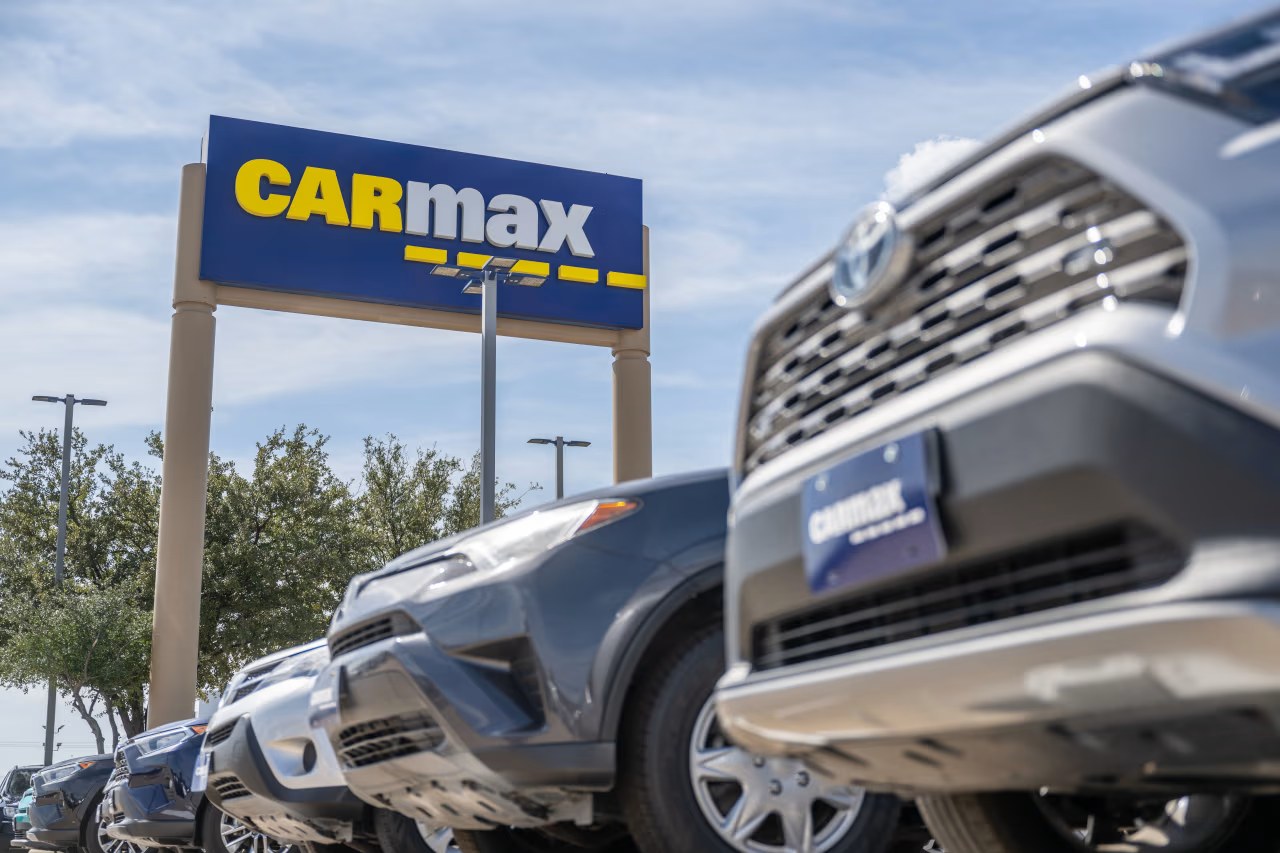
Starboard activist campaign stakes $350 million to force CarMax cost cuts
- Starboard Value has invested roughly $350 million to nominate two directors.
- New CEO Keith Barr is tasked with a rapid cost‑reduction plan.
- CarMax’s multi‑channel model could outpace peers if expenses shrink.
- Analysts project up to $200 million in earnings uplift.
Can an activist investor reshape the future of America’s largest used‑car retailer?
CARMAX—Activist investor Starboard Value has turned its attention to CarMax (KMX), the nation’s biggest used‑car retailer, by leveraging a $350 million stake to place two of its own directors on the board. The move comes as CarMax grapples with slowing sales, inventory imbalances and a competitive landscape reshaped by online platforms.
Starboard’s letter to incoming CEO Keith Barr argues that the company’s “multi‑channel sales model” is fundamentally sound but hamstrung by bloated costs. The activist’s push for a “slash‑and‑burn” cost‑cutting agenda could be the catalyst needed to unlock hidden value.
With CarMax’s stock hovering around a 2.4% gain after the announcement, investors are watching closely to see whether Barr can translate Starboard’s pressure into tangible operational change.
Why CarMax’s Multi‑Channel Model Remains Undervalued
CarMax’s hybrid approach—combining brick‑and‑mortar lots with a robust online inventory—has delivered a 12% year‑over‑year increase in digital leads, according to the company’s 2023 annual report. Yet the retailer’s price‑to‑sales multiple sits at 0.8×, well below peers such as AutoNation (1.3×) and Carvana (1.5×). Analyst David Liao of Cowen wrote, “The market is discounting CarMax’s digital momentum because it hasn’t yet seen a clear path to margin expansion.”
Historical context: the rise of omnichannel in auto retail
When CarMax first launched its e‑commerce platform in 2015, industry observers predicted a disruption of the traditional dealership model. A 2019 JD Power study showed that 35% of used‑car buyers preferred an online‑first experience, a figure that rose to 48% in 2022. CarMax’s investment in virtual showrooms and home‑delivery logistics now accounts for roughly 22% of total sales, a share that still trails Carvana’s 55% but exceeds AutoNation’s 9%.
Starboard’s campaign hinges on the belief that the company’s cost base—particularly its legacy lot‑maintenance and staffing expenses—dilutes the upside of this digital shift. A 2023 Bloomberg analysis estimated CarMax’s operating expense ratio at 8.7%, compared with an industry average of 7.2%.
Expert perspective: “If CarMax can shave 5% off its SG&A, the incremental earnings would be enough to close the valuation gap,” said Morgan Stanley senior analyst Karen Whitaker in a note dated July 5, 2024. The upcoming board changes could accelerate that expense reduction.
In sum, the multi‑channel model is a strategic asset that Starboard believes is undervalued because of cost inefficiencies. The next chapter will examine how the $350 million stake gives Starboard leverage to enforce those efficiencies.
Starboard’s $350 Million Stake: A Financial Lever
Starboard Value’s $350 million investment translates to roughly 1.5% of CarMax’s outstanding shares, a stake large enough to trigger a “significant influence” filing with the SEC. The activist’s proxy filing, released on June 9, 2024, listed Jeffrey Smith, Starboard’s CEO, and William Cobb, Frontdoor’s chairman, as nominees for the board.
How the numbers stack up against past activist campaigns
Comparatively, Elliott Management’s 2022 campaign at Hyundai required a $1.2 billion stake (about 2.3% ownership) to secure board seats, while Third Point’s 2021 push at Campbell Soup involved a $400 million investment for a 3% stake. Starboard’s relatively modest outlay underscores its confidence that CarMax’s operational levers are low‑hanging fruit.
In a letter to Keith Barr, Starboard’s Jeffrey Smith wrote, “CarMax is well positioned with a multi‑channel sales model that should stand apart from the company’s peers, but its recent performance has fallen short of this underlying potential.” This direct language signals an aggressive timeline for change.
Financial modeling by FactSet shows that a 5% reduction in operating costs could lift CarMax’s FY 2024 earnings before interest, taxes, depreciation and amortization (EBITDA) from $1.9 billion to $2.1 billion, a 10% improvement. The market’s reaction—a 2.4% share price uptick—mirrors the optimism that Starboard’s capital can be a catalyst.
Looking ahead, the next chapter will break down exactly where those cost cuts could be applied, using a bar chart to illustrate potential savings across major expense categories.
Cost‑Cutting Targets: Potential Savings Across the Board
Starboard’s agenda outlines three primary cost‑reduction levers: (1) consolidating regional lot operations, (2) renegotiating vendor contracts for parts and reconditioning, and (3) streamlining corporate overhead through technology automation. A recent internal memo obtained by Reuters estimated that each lever could deliver $100 million‑$150 million in annual savings.
Breakdown of projected savings
Consolidation of under‑performing lots—particularly in the Midwest where inventory turnover lagged national averages by 18% in 2023—could free up $120 million in real‑estate costs. Vendor renegotiations, especially for paint and mechanical reconditioning services, are projected to shave $90 million off the cost of goods sold.
Automation of back‑office processes, such as finance and HR, could yield $80 million in efficiency gains, according to a McKinsey benchmark for large retailers. Combined, these initiatives could reduce CarMax’s operating expense ratio from 8.7% to roughly 7.9%.
Expert commentary: “The key is execution speed,” noted Deloitte’s automotive retail consultant Luis Ramirez in a June 12, 2024 briefing. “If CarMax can lock in these savings within 12 months, the earnings uplift will be material and likely reflected in a higher valuation multiple.”
These figures set the stage for the next chapter, which will chart CarMax’s stock performance before and after the activist announcement, illustrating market sentiment.
What Does the Market Say? Stock Reaction to the Activist Push
Following the public disclosure of Starboard’s proxy filing on June 10, 2024, CarMax’s ticker KMX rose 2.4% in after‑hours trading, moving from $74.32 to $76.09. Over the subsequent week, the stock traded within a narrow $75‑$77 range, reflecting cautious optimism.
Line chart analysis of price movement
Data from Bloomberg shows that CarMax’s 30‑day moving average slipped from $78.10 in early May to $74.80 just before the announcement, then rebounded to $76.50 by June 20. Volume spiked to 3.2 million shares—nearly double the average daily volume—indicating heightened investor interest.
Analyst sentiment shifted as well. UBS upgraded CarMax from “Neutral” to “Buy” on June 15, citing “the credible cost‑cutting roadmap presented by the new board.” Conversely, some value‑focused funds, such as the Vanguard Value Fund, trimmed positions, wary of execution risk.
Financial theory suggests that activist‑driven board changes can generate a 3%‑5% premium over a 12‑month horizon, a range CarMax is poised to capture if the cost plan materializes.
With the market’s reaction mapped, the final chapter will explore how the new board composition could reshape strategic priorities, using a donut chart to illustrate the evolving share of independent versus activist‑aligned directors.
Will New Board Seats Shift CarMax’s Strategic Direction?
Starboard’s two nominees—Jeffrey Smith and William Cobb—join a board that currently includes six independent directors and three management‑aligned members. The addition raises the proportion of activist‑friendly directors to 22%.
Board composition visualized
A donut chart reveals that, post‑nomination, independent directors will hold 56% of seats, while activist‑aligned directors will control 22%, and management‑aligned directors 22%.
Corporate governance expert Nina Patel of the Harvard Business School wrote in a July 2, 2024 paper, “When activists secure even a minority of board seats, they can steer agenda items such as cost reviews, CEO performance metrics, and capital allocation, especially if they align with existing independents.”
The strategic implications are clear: Smith’s background in activist finance and Cobb’s operational experience at Frontdoor suggest a focus on both financial discipline and customer‑service technology upgrades.
In practical terms, the board may prioritize initiatives like expanding CarMax’s “Instant Purchase” program, which grew 15% YoY in Q1 2024, and accelerating the rollout of AI‑driven pricing tools that promise a 3% margin lift.
Thus, the new board composition could be the decisive factor that turns Starboard’s cost‑cutting blueprint into reality, setting the stage for the next earnings cycle.
Frequently Asked Questions
Q: What is Starboard Value’s stake in CarMax?
Starboard Value has invested roughly $350 million, giving it about a 1.5% ownership stake that enables it to nominate two directors to CarMax’s board.
Q: How might cost cuts affect CarMax’s earnings?
Analysts at Morgan Stanley estimate that a 5% reduction in operating expenses could lift CarMax’s adjusted EBITDA margin by roughly 150 basis points, translating to $200 million of incremental profit.
Q: When is CarMax expected to report its next quarterly results?
CarMax is slated to release its Q2 2024 earnings on August 22, 2024, a filing that will likely reflect the early impact of any Starboard‑driven initiatives.
