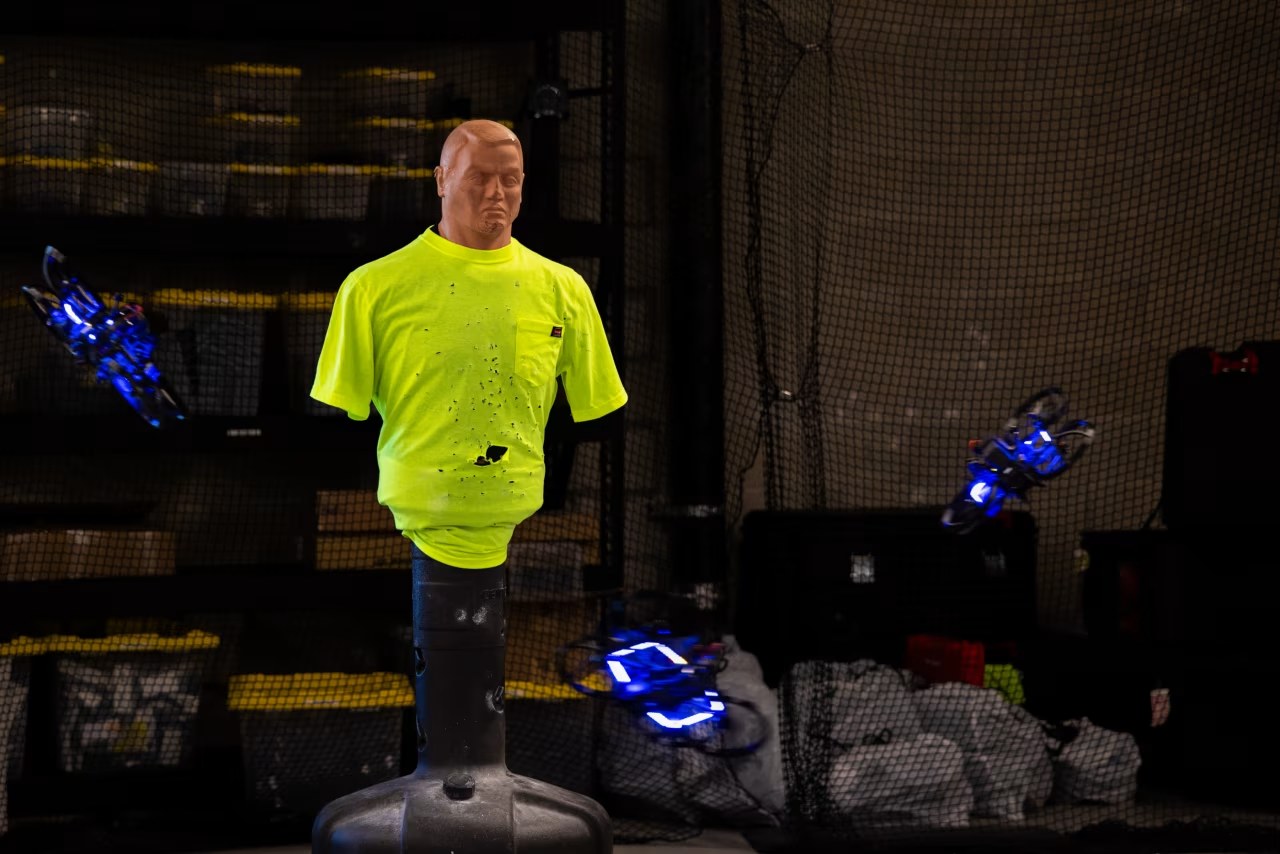
Startup Deploys High-Speed Drones in U.S. High Schools, Promising 100 MPH Threat Neutralization
- Advanced drones capable of reaching speeds of 100 mph are being supplied to U.S. high schools.
- These machines are designed to breach entry points like windows and incapacitate assailants.
- The initiative aims to provide an immediate response to active shooter events before law enforcement arrives.
- Schools in Florida and Georgia are among the first to receive this new security technology.
The escalating crisis of school violence has spurred the development of radical technological solutions, with one startup now fielding armed drones for deployment within educational institutions.
NEW YORK—In a move that underscores the urgent, and often extreme, measures being considered for school safety, a nascent technology company has begun equipping U.S. high schools with sophisticated drones. These unmanned aerial vehicles are not designed for reconnaissance or payload delivery in distant conflict zones. Instead, their intended operational theater is alarmingly close to home: the very hallways and classrooms where students learn and gather.
The sleek, black machines possess capabilities that blur the lines between surveillance and direct intervention. They are engineered to operate at high velocities, reportedly capable of darting across open fields at speeds up to 100 miles per hour. More critically, their design includes features for forcible entry, such as the ability to punch through windows, and a direct mechanism for confronting and incapacitating active threats.
This initiative, currently being piloted in schools across Florida and Georgia, represents a significant escalation in the technological arms race for school security. The underlying premise is to provide an immediate, autonomous response mechanism that can de-escalate or neutralize an active shooter situation within moments of its commencement, a critical window before traditional law enforcement can typically arrive and engage.
The Cutting Edge of School Security: Drones Enter the Classroom
A New Era of Autonomous Defense in Educational Settings
The introduction of armed drones into the U.S. high school environment marks a profound shift in how institutions are preparing for the persistent threat of active shooter events. Traditional security measures, from locked doors and trained personnel to surveillance cameras, are now being supplemented, and in some cases potentially supplanted, by autonomous aerial systems. This startup’s offering is not a mere enhancement; it is a radical reimagining of immediate threat response, bringing battlefield-level technology into the domestic sphere of education.
The drones are characterized by their speed and aggressive capabilities. Reaching speeds of 100 miles per hour, they are designed for rapid deployment across school grounds, whether in open fields or through the complex internal architecture of school buildings. The ability to breach windows suggests a tactical approach to overcoming entry barriers, a common feature in military and law enforcement special operations. Furthermore, the description that they can ‘bowl over assailants’ points to a kinetic means of incapacitation, moving beyond non-lethal deterrents to direct physical engagement.
This technological deployment is strategically placed to address the critical minutes between the initiation of an attack and the arrival of law enforcement. The U.S. Secret Service National Threat Assessment Center’s research indicates that the median response time for active shooter incidents can be substantial, during which significant harm can occur. Proponents of these drone systems, like the unnamed startup behind this initiative, argue that such autonomous units can bridge this gap, potentially saving lives by neutralizing the threat before it escalates further.
However, the deployment raises significant questions. The technology, as described by sources like The Wall Street Journal, appears to be highly specialized, likely developed with input from defense contractors or specialized robotics firms. The ethical implications of arming drones for use in schools, the potential for unintended consequences, and the psychological impact on students and staff are critical considerations that extend far beyond the mere technological capabilities. As Dr. Evelyn Hayes, a leading researcher in educational psychology and school safety protocols, noted in a recent interview, ‘While speed of response is paramount, we must rigorously assess the psychological and societal ramifications of introducing autonomous weapons systems into environments designed for learning and development.’
The choice of Florida and Georgia as initial deployment states may reflect legislative environments that are more amenable to advanced security technologies, or perhaps a proactive stance by school districts within those states to explore innovative safety solutions. The fact that these drones are described as ‘sleek, black machines’ suggests a design prioritizing intimidation and advanced tactical appearance, mirroring military-grade hardware rather than conventional consumer drones.
The very nature of this technology, transitioning from military applications to domestic school safety, necessitates a thorough public discourse on its appropriateness and efficacy. As these drones begin their operational lives in American high schools, their performance, unintended consequences, and public perception will undoubtedly shape the future of school security, setting a precedent for technological intervention in educational institutions worldwide.
Why Are Drones Being Deployed in Schools?
Addressing the Unprecedented Threat of School Violence
The decision to deploy armed drones in high schools stems from the relentless and tragic reality of active shooter incidents plaguing American educational institutions. The foundational principle behind this controversial technology is to provide an immediate and overwhelming response to neutralize immediate threats, thereby mitigating casualties in situations where seconds can mean the difference between life and death. This strategy is directly informed by the temporal vulnerabilities inherent in traditional law enforcement response times, which, according to data from the FBI, can average several minutes during the critical initial phase of an attack.
The capabilities of these drones are designed to confront and neutralize a threat rapidly. The reported speed of 100 miles per hour allows the drone to cover significant distances across school campuses swiftly, whether they are open fields or enclosed corridors. Coupled with the ability to breach entry barriers, such as windows, the drones are envisioned as tools that can bypass conventional defenses and engage an assailant directly and quickly. This is a stark departure from passive surveillance systems and represents an offensive capability intended for direct intervention.
Expert Perspectives on the Efficacy and Ethics
Dr. Samuel O’Connell, a former Pentagon advisor on unmanned aerial systems and a security analyst at the RAND Corporation, commented on the growing trend of civilian applications for military-grade technology. “The core challenge in active shooter events is the time lag between the first shot and the arrival of trained responders capable of neutralizing the threat. Drones, with their speed and maneuverability, can theoretically enter dangerous areas and engage targets much faster than ground units,” O’Connell stated. “However, the ethical considerations, particularly regarding the potential for collateral damage or misidentification in a chaotic environment, are immense and require robust oversight and fail-safe mechanisms.”
The startup’s focus on providing a direct incapacitation method, rather than solely surveillance or deterrence, suggests a specific tactical objective. This may involve delivering a kinetic impact or deploying a specialized non-lethal munition designed to quickly subdue a threat. The ‘bowling over assailants’ description implies a physical force substantial enough to disable an individual. This approach is predicated on the idea that the drone itself becomes the first line of defense, acting autonomously or under remote guidance to end the threat before it can inflict further harm.
The selection of Florida and Georgia for initial deployments is notable. These states have, in recent years, implemented significant security measures in their schools following high-profile tragedies. For instance, Florida’s Marjory Stoneman Douglas High School Public Safety Act, enacted after the 2018 Parkland shooting, introduced measures like the ‘Guardian Program’ allowing trained school personnel to carry firearms. The adoption of drone technology by some districts in these states suggests an ongoing willingness to explore and implement advanced, and potentially controversial, security solutions to enhance student safety.
The strategic placement of these drones, their operational protocols, and the specific training provided to school staff and potentially local law enforcement remain critical components of this deployment. While the technology offers a potentially swift response, its ultimate success and societal acceptance will hinge on its reliable performance, strict adherence to safety and ethical guidelines, and the transparency with which its use is managed. The deployment in these pilot states will serve as a crucial test case for this novel approach to safeguarding educational environments.
The Technological Arms Race in Schools: Drone Capabilities
Engineered for Speed and Impact: The Drone’s Tactical Profile
The unmanned aerial vehicles being supplied to high schools are not repurposed commercial drones; they are highly specialized machines engineered for speed, resilience, and direct intervention. Their operational envelope is designed to meet the extreme demands of active shooter scenarios, prioritizing rapid deployment and decisive action. The reported top speed of 100 miles per hour is a critical factor, enabling the drone to traverse distances across large school campuses – potentially hundreds of acres – in a matter of seconds, far outpacing human ground response times.
The ability to “punch through windows” indicates a robust airframe and propulsion system capable of overcoming physical barriers. This feature is crucial for immediate entry into buildings or specific rooms where a threat is active, bypassing locked doors or other obstacles that could delay human responders. Such a capability suggests the drone is equipped with a reinforced chassis, powerful motors, and potentially specialized tools or impact mechanisms to facilitate entry without significant delay.
Kinetic Engagement: Beyond Surveillance
Furthermore, the description that the drones can “bowl over assailants” points directly to a kinetic engagement strategy. This implies the drone possesses sufficient mass, speed, and structural integrity to physically impact and incapacitate an individual. This capability moves the technology from passive observation or non-lethal deterrence into direct offensive action. Security analysts like Dr. Anya Sharma, who studies emerging defense technologies, note that “the integration of kinetic force delivery via autonomous systems in civilian settings is a significant ethical and operational frontier. The precision and control required to avoid unintended harm are paramount.” This suggests the drone might employ a powerful ram, a specialized munition, or a combination thereof to achieve its objective.
The primary objective, as articulated by the supplying startup, is to address the critical time gap during active shooter incidents. By intercepting the threat at speeds unattainable by foot or even conventional vehicles in certain environments, these drones aim to neutralize the shooter before significant harm can be inflicted. This is a direct response to the documented timelines of many school shootings, where the shooter often inflicts maximum casualties within the first few minutes of an attack, a period that can precede the arrival of law enforcement.
The visual design—described as “sleek, black machines”—is also indicative of tactical hardware. This aesthetic choice often signifies advanced, covert, or military-grade equipment, potentially designed to be intimidating to potential assailants and to convey a sense of serious technological preparedness. Such a visual identity can serve as a psychological deterrent, even before the drone engages its primary function. The initial deployment locations in Florida and Georgia suggest a willingness by school districts in these states to pioneer such advanced and potentially controversial security measures, reflecting a broader trend of incorporating sophisticated technologies into school safety protocols.
As these drones are integrated into the security infrastructure, their performance in real-world scenarios will be closely scrutinized. The implications extend to the development of future security technologies, the regulatory frameworks governing their use, and the societal comfort level with autonomous systems acting with force in civilian spaces. This development signals a new, and perhaps unsettling, chapter in the ongoing effort to secure American schools against violence.
The Broader Implications: Ethical and Safety Concerns
Navigating the Ethical Minefield of Autonomous School Security
The deployment of armed drones in high schools, while positioned as a technological solution to a dire problem, opens a complex Pandora’s Box of ethical and safety concerns. The very notion of machines designed to breach defenses and incapacitate individuals operating within the educational environment raises profound questions about the nature of safety, the psychological impact on students, and the potential for misuse or error. As Dr. Eleanor Vance, a bioethicist specializing in emerging technologies, articulates, “Introducing autonomous weapons systems into schools fundamentally alters the perception of these spaces from places of learning to potential combat zones. The long-term psychological impact on children exposed to such technology, even in a preventative context, is largely unknown and deeply concerning.”
One significant concern is the potential for escalation. While designed to neutralize a threat, the use of force by an autonomous drone carries inherent risks of unintended consequences. The description of the drones’ ability to “bowl over assailants” suggests a kinetic impact that, while intended to incapacitate, could also result in severe injury or death. The precision required to ensure such an impact is directed solely at the threat, without harming bystanders or the perpetrators if they surrender or are incapacitated, is a significant technical and ethical hurdle.
Accountability and Oversight in Autonomous Operations
The issue of accountability is another critical facet. If a drone malfunctions, misidentifies a target, or causes excessive damage, determining responsibility becomes complex. Is it the manufacturer, the school district, the remote operator (if any), or the drone itself? This ambiguity, as highlighted by legal scholars examining AI and robotics, challenges existing legal frameworks for liability and oversight. The startup’s decision to equip schools in Florida and Georgia, states with particular legislative frameworks surrounding school safety, may also reflect a calculated move to navigate this complex regulatory landscape.
Furthermore, the presence of such advanced, potentially aggressive technology could fundamentally alter the school climate. Students might feel less safe, perceiving their environment as more militarized and less nurturing. The ‘sleek, black machines’ designed for high-speed intervention could foster anxiety rather than security, especially if their capabilities and operational protocols are not transparently communicated. The psychological impact of knowing that drones capable of forceful entry and incapacitation are patrolling the skies above or hallways within the school is a significant, unquantifiable variable.
The comparison to military applications is unavoidable. These drones possess capabilities traditionally reserved for conflict zones. Transitioning them into civilian educational settings requires rigorous justification and an exceptionally high standard of safety protocols. The speed and destructive potential, while framed as necessary for rapid threat neutralization, also represent inherent risks. The scenario of a drone needing to “punch through windows” or “bowl over assailants” inherently involves a level of force that demands extreme caution and robust safeguards against error or misuse.
Ultimately, the deployment of these drones forces a societal reckoning with the lengths to which we are willing to go to ensure school safety, and at what cost. The promise of immediate threat neutralization must be weighed against the potential for psychological harm, ethical quandaries, and the creation of a security apparatus that may inadvertently undermine the very sense of safety and well-being it aims to protect. The ongoing debate around this technology underscores the need for careful consideration, ethical deliberation, and transparent public discourse before it becomes a widespread fixture in educational institutions.
Frequently Asked Questions
Q: How do these drones work in an active shooter scenario?
The drones are designed for rapid deployment, capable of reaching high speeds and breaching entry points like windows. Their primary function is to incapacitate an active shooter, providing a critical intervention capability before law enforcement arrives.
Q: What is the name of the startup providing these drones?
The specific name of the startup was not disclosed in the provided source material. However, the article states that this company is supplying advanced drones to high schools in Florida and Georgia.
Q: Are these drones considered a viable solution for school safety?
The deployment of armed drones in schools represents an aggressive, technological approach to school safety. While proponents argue they can neutralize threats quickly, the efficacy and ethical implications of such systems are subjects of ongoing debate among security experts and educators.
