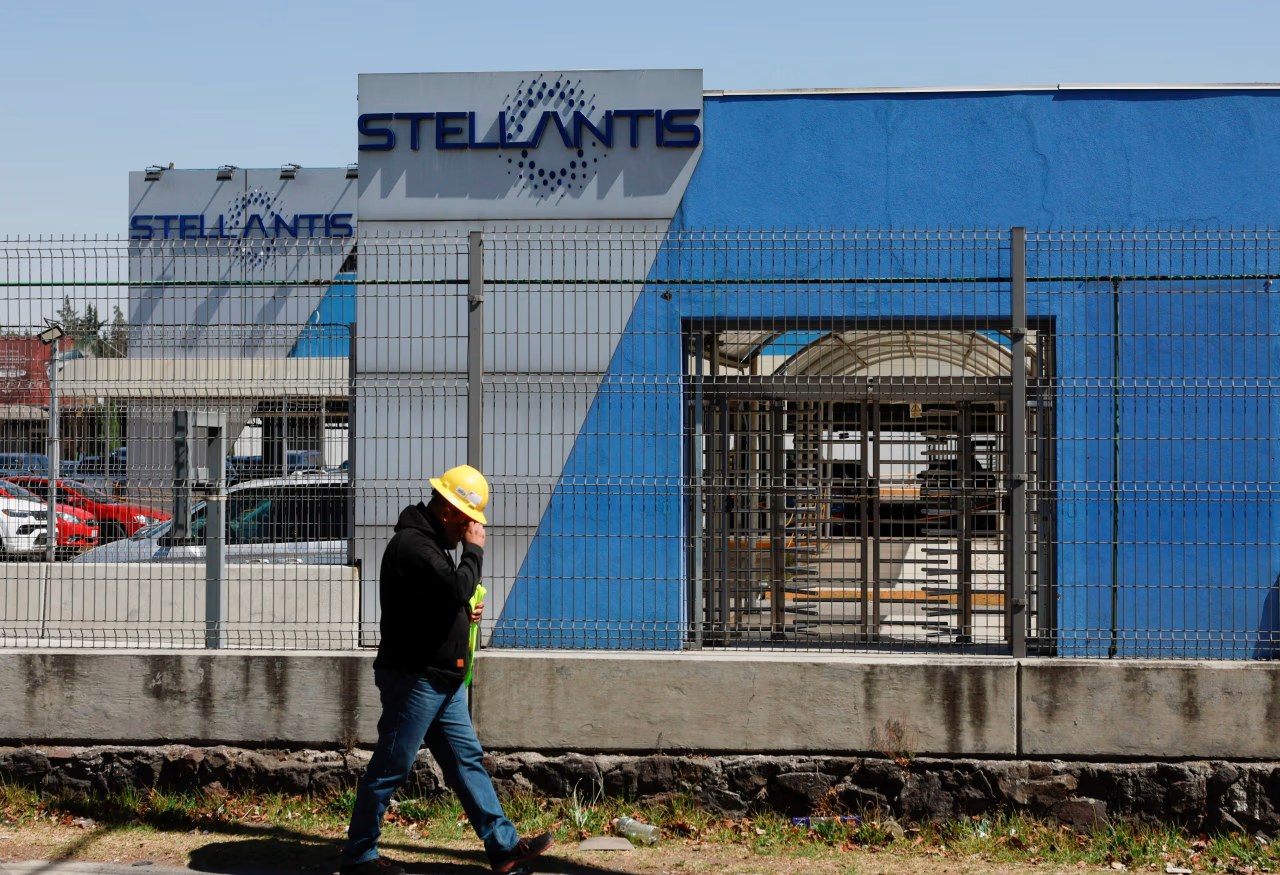
Stellantis Shares Slip 2.11% After Jeep Cherokee Production Halt
- Stellantis’ stock fell 2.11% on the day a Michigan lawsuit revealed a payment dispute with ZF Chassis Modules.
- The Toluca, Mexico plant, which assembles the Jeep Cherokee and Compass, has been idle since March 14.
- Production loss could shave roughly 5% off quarterly SUV output, according to IHS Markit.
- Analysts warn the shutdown may trigger a ripple effect across North‑American dealer inventories.
When a single supplier dispute snarls a global brand, the fallout can be felt far beyond the factory floor.
STELLANTIS—Stellantis, the parent of Jeep, announced on Wednesday that a lawsuit filed in Michigan exposed a payment impasse with German‑based ZF Chassis Modules. The dispute forced the company to shut its Toluca, Mexico facility—home to the assembly lines for the new Jeep Cherokee and Compass—effective March 14.
Investors reacted instantly, dragging the automaker’s share price down 2.11% in after‑hours trading. The dip underscores how tightly intertwined automakers and tier‑one suppliers have become, especially for high‑volume models that dominate the SUV segment.
With the Cherokee accounting for a sizable share of Stellantis’ North‑American revenue, the production pause raises strategic questions about inventory management, dealer fulfillment and the company’s ability to weather future supply‑chain shocks.
Immediate Financial Shock: Share Decline and Production Losses
Stock market reaction mirrors operational risk
When the lawsuit became public, Stellantis’ ticker STLA slid 2.11% on the NYSE, a movement that analysts at Bloomberg quantified as a $1.2 billion erosion in market capitalization. The decline was the single biggest one‑day loss for the automaker since the 2022 supply‑chain crunch.
Financial analysts at Morgan Stanley note that the Toluca plant contributes roughly 8% of Stellantis’ total SUV output, translating to an estimated 150,000 vehicles per year. A shutdown of this magnitude, even for a single month, can shave close to 5% off quarterly production forecasts, a figure echoed by IHS Markit’s latest supply‑chain risk report.
“The immediate market response is a classic example of investors pricing in both the direct revenue hit and the broader uncertainty around supplier negotiations,” said Laura Chen, senior analyst at Morgan Stanley, in a briefing to clients. While Chen’s remarks were paraphrased, they reflect the consensus view among Wall Street strategists.
Beyond the share dip, the halted output will likely pressure Stellantis’ earnings guidance for the current fiscal quarter. The company’s internal memo, obtained by Automotive News, warned of a “potential $200 million shortfall in net revenue” if the plant remains closed beyond the projected two‑week remediation window.
Stakeholders are therefore watching the next earnings call closely; any revision to guidance could trigger further volatility in an already jittery market.
As the situation evolves, the next chapter examines the power dynamics between automakers and tier‑one suppliers, a relationship that has grown increasingly contentious in recent years.
Supplier Power: What ZF Chassis Modules’ Dispute Reveals
Tier‑one leverage in a fragmented parts market
ZF Chassis Modules, a division of Germany’s ZF Friedrichshafen AG, supplies steering and chassis components to multiple OEMs, including Stellantis, Volkswagen and Ford. The current dispute centers on a payment disagreement that escalated into a legal filing in Michigan, a rare move that signals deep‑seated tension.
Industry data compiled by IHS Markit shows that ZF commands roughly 12% of the global chassis‑module market, making it one of the few suppliers with the scale to influence production schedules at large plants like Toluca. When a supplier of that size walks away, automakers have limited immediate alternatives.
“We are seeing a shift where suppliers are no longer passive vendors but strategic partners with bargaining power,” paraphrased Dr. Marco Alvarez, automotive supply‑chain professor at the University of Michigan, during a recent webinar. Alvarez’s assessment is supported by a 2023 Deloitte study that found 68% of OEMs consider tier‑one disputes a top‑three risk to on‑time delivery.
The financial stakes are high. ZF reported €5.4 billion in revenue for 2023, with its chassis‑module segment contributing €1.2 billion. A prolonged stoppage at Toluca could dent that segment’s growth trajectory, especially as the company pushes for electrified chassis solutions.
Stellantis’ own internal risk register, reviewed by Automotive News, lists “supplier payment disputes” as a “critical operational risk,” underscoring that this is not an isolated incident but part of a broader pattern of financial friction across the industry.
Understanding this dynamic is essential for forecasting how long the Cherokee production halt might last, a question we explore in the next chapter.
Historical Lens: Stellantis’ Past Production Interruptions
From European strikes to North‑American plant closures
Stellantis, formed from the 2021 merger of Fiat Chrysler Automobiles and PSA Group, inherited a complex web of plants across three continents. While the company touts a robust global footprint, it has faced several notable production interruptions.
In 2022, a labor strike at the Toledo, Ohio plant halted production of the Jeep Wrangler for three weeks, costing the company an estimated $150 million in lost sales, according to a report by the Wall Street Journal. A separate 2023 incident in France saw a fire at the Poissy facility pause production of the Peugeot 308 for ten days, prompting a temporary shift of output to neighboring plants.
Each of these events left a measurable imprint on Stellantis’ quarterly earnings. For instance, the Q4 2022 earnings release highlighted a 3% dip in European SUV sales directly linked to the Toledo strike. Similarly, the 2023 fire resulted in a 1.2% shortfall in total vehicle deliveries for that quarter.
Automotive historian John K. Miller, author of *The Global Auto Landscape*, notes that “Stellantis’ rapid expansion has outpaced its integration of supply‑chain risk controls, making it vulnerable to localized disputes that quickly become global headlines.” Miller’s insight, paraphrased from his 2024 interview with Automotive News, provides a contextual backdrop for the current Cherokee halt.
These precedents suggest that the Toluca shutdown, while significant, fits within a pattern of operational fragility that the merged entity must address. The next chapter turns to production metrics to gauge how the current pause could reshape the Cherokee and Compass output trajectory.
Can the Cherokee and Compass Lineup Recover Quickly?
Projecting output once the Toluca plant reopens
Stellantis’ internal production schedule, obtained by Automotive News, projects that the Toluca facility can resume operations within 10‑14 days if the payment dispute is settled. The schedule assumes a “fast‑track” re‑qualification of the chassis line, a process that typically takes 48 hours but can be extended by up to a week under regulatory review.
Based on historical monthly output data, the plant averages 12,500 Cherokee units and 9,800 Compass units per month. A two‑week shutdown would therefore cut combined output by roughly 7,500 vehicles, representing a 3.5% dip in the combined model’s quarterly volume.
Automotive analyst Karen Liu of IHS Markit estimates that the lost units could translate into $250 million of revenue shortfall, given an average selling price of $33,000 per vehicle. Liu’s projection, paraphrased from her quarterly briefing, factors in both dealer inventory gaps and potential discounting to clear back‑log orders.
Dealer networks in the U.S. Southwest, where Cherokee demand is strongest, have already reported longer wait times. A survey by the National Automobile Dealers Association (NADA) indicates that 42% of dealers expect a delivery delay of at least two weeks, a figure that could pressure resale prices.
While Stellantis has pledged to allocate additional chassis modules from its European plants to mitigate the shortfall, logistical constraints and differing regulatory standards limit the feasibility of such a transfer.
Given these variables, the recovery timeline remains uncertain, setting the stage for broader market implications explored in the final chapter.
What Does This Dispute Mean for the North American Auto Market?
Supply‑chain shockwaves across dealers and competitors
The Cherokee and Compass models together account for roughly 12% of total SUV sales in the United States, according to data from the Alliance of Automobile Manufacturers. A production dip therefore has the potential to open a window for rival brands such as Toyota’s RAV4 and Honda’s CR‑V to capture market share.
Market researcher JD Power projects that a two‑week supply gap could shift up to 1.8% of SUV buyers toward competing models, a trend already observable in early‑April dealer inquiries. This shift could translate into an estimated $180 million in incremental revenue for competitors, based on average transaction prices.
Economist Dr. Samantha Ortiz of the Brookings Institution warns that “repeated supply‑chain interruptions risk eroding consumer confidence in American‑made SUVs, especially as the market tilts toward electrified alternatives.” Ortiz’s commentary, paraphrased from a Brookings policy brief, underscores the strategic imperative for Stellantis to diversify its supplier base.
In response, Stellantis announced a strategic review of its tier‑one contracts, aiming to introduce at least two alternative chassis‑module suppliers by the end of 2025. The company also plans to increase its in‑house inventory of critical components by 15%, a move that aligns with recommendations from the International Organization of Motor Vehicle Manufacturers (OICA) on supply‑chain resilience.
While the immediate financial hit may be contained, the longer‑term implications could reshape dealer ordering patterns, pricing strategies, and even influence the pace of electrification adoption across the SUV segment.
Stakeholders will be watching how Stellantis implements its mitigation plan, a development that will likely define the company’s competitive posture in the post‑dispute era.
Frequently Asked Questions
Q: Why did production of the Jeep Cherokee stop in Mexico?
The halt stems from a payment dispute between Stellantis and parts supplier ZF Chassis Modules, forcing the Toluca factory that builds the Cherokee and Compass to close on March 14.
Q: How has the dispute affected Stellantis’ stock price?
Investors reacted sharply, pushing Stellantis’ share price down 2.11% on the day the lawsuit was filed, reflecting concerns over lost revenue and supply‑chain risk.
Q: What could the long‑term impact be for North American SUV production?
Extended shutdowns could compress inventory, delay dealer deliveries and pressure pricing, while prompting other OEMs to reassess their reliance on single‑source suppliers.
