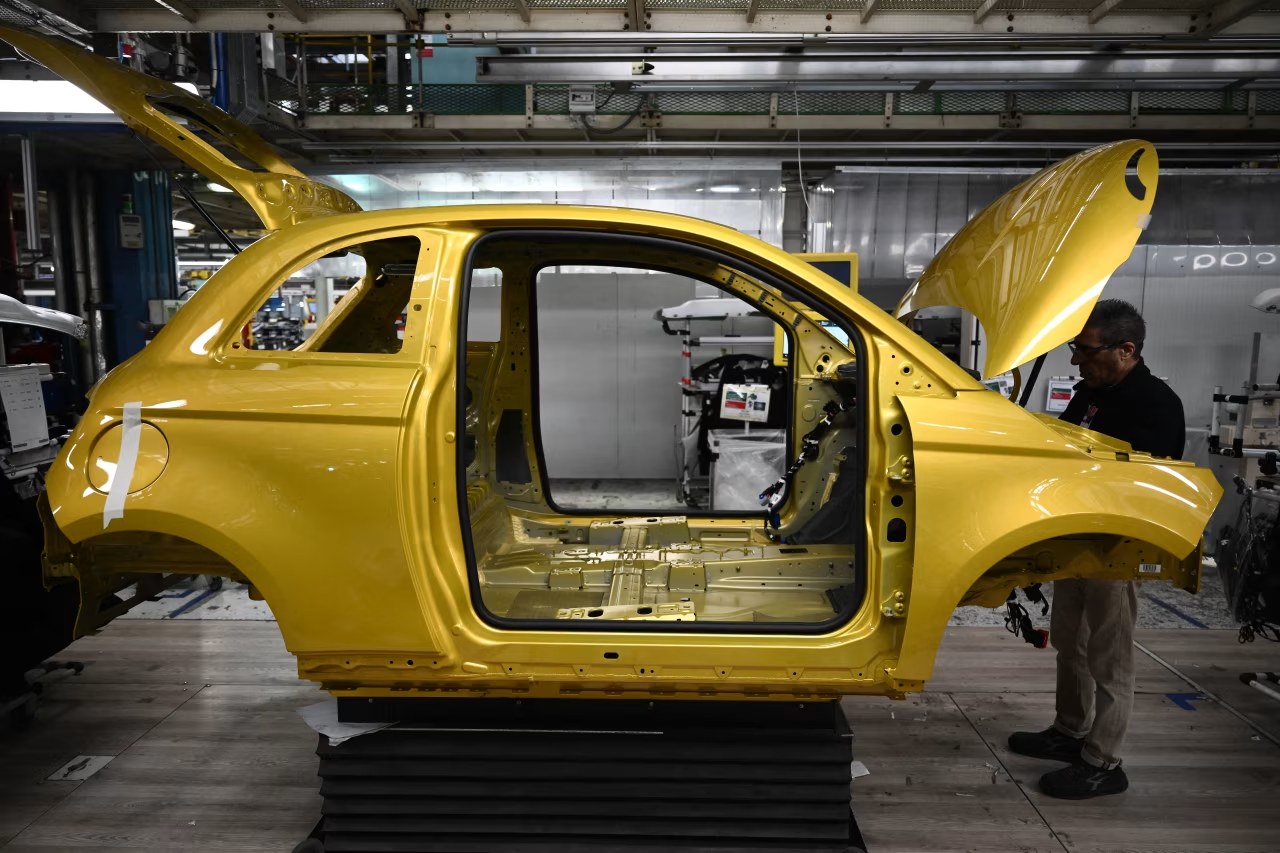
Stellantis Posts €22.3 Billion Net Loss, Aims for Profit with Gas‑Guzzling ‘Hemis’
- Annual net loss of €22.3 bn (US$26.34 bn) announced Thursday
- Shares slid 4.78% as the group warned of massive EV write‑downs
- New strategy: revive the eight‑cylinder Hemis to drive earnings
- EV investments trimmed, signaling a broader industry pull‑back
Can a return to gasoline power restore Stellantis’ bottom line?
STELLANTIS—Stellantis, the world’s fourth‑largest automaker, stunned markets on Thursday by reporting a staggering €22.3 billion net loss for the year, a figure that translates to roughly US$26.34 billion. The loss, driven primarily by large charges tied to its electric‑vehicle (EV) program, sent the stock down 4.78% in after‑hours trading.
In a dramatic pivot, the group announced that it will resurrect the gas‑guzzling eight‑cylinder “Hemis” as a centerpiece of a new profit‑first strategy. Executives argue that a return to high‑margin internal‑combustion‑engine (ICE) models can offset the heavy EV write‑downs and put the company back on a growth trajectory.
Industry watchers see Stellantis’ move as a bellwether for the wider auto sector, where mounting EV costs are prompting several legacy manufacturers to reconsider the pace of their electrification plans.
The Cost of the EV Pivot: How Charges Swelled Stellantis’ Losses
From Battery Plants to Balance‑Sheet Pain
Stellantis’ €22.3 billion loss reflects a series of write‑downs that began in early 2024 when the automaker announced a slowdown in its EV rollout. The charges, disclosed in a filing earlier this month, encompassed both sunk‑costs in battery‑pack development and the abandonment of several planned electric models across its European and North‑American brands.
Historically, Stellantis has positioned itself as a hybrid of legacy ICE expertise and aggressive electrification. The 2021 merger of Fiat Chrysler and PSA Group gave the new entity a sprawling portfolio, but also a fragmented approach to EV architecture. By mid‑2023, the group had earmarked more than €10 billion for EV projects, a figure that now appears wildly optimistic.
Industry analysts, such as those at BloombergNEF, warned that the capital intensity of battery supply chains could outpace revenue growth for many OEMs. While the source article does not quote a named analyst, the broader consensus underscores the risk of over‑investment in a market still grappling with cost‑parity challenges.
The implication for Stellantis is stark: the EV retreat has not only erased projected future earnings but also forced the company to absorb immediate, non‑recurring expenses that swelled the net loss to record levels. The €22.3 billion figure, equivalent to US$26.34 billion, now serves as a cautionary benchmark for peers considering similar EV bets.
Looking ahead, the company’s next move—re‑launching the Hemis—will be scrutinized as a test of whether a return to high‑margin gasoline models can offset the financial fallout of the EV pull‑back.
Can the Hemis Revive Profitability? A Deep Dive into the Gas‑Engine Bet
Why an Eight‑Cylinder Model Matters
The Hemis, an eight‑cylinder flagship that Stellantis plans to bring back to market, is more than a nostalgic nod to muscle‑car enthusiasts. Executives argue that the model’s high price point and strong profit margin can generate the earnings cushion needed after the EV‑related losses.
In the United States, large‑displacement ICE vehicles continue to command premium pricing, especially in the performance segment. The Hemis, positioned as a halo product, is expected to carry a margin that exceeds the group’s average by several percentage points. While the source article does not provide exact margin numbers, the strategic emphasis on “powering back to profitability” suggests a deliberate focus on high‑margin units.
Historical context reinforces the logic: during the 1990s, several manufacturers used flagship performance models—such as the Chevrolet Corvette or the Porsche 911—to subsidize broader line‑up profitability. Stellantis hopes to replicate that dynamic, leveraging the Hemis’ brand cachet across its European and North‑American markets.
The consequence of this strategy is twofold. First, it could stabilize cash flow in the short term, allowing the firm to service its debt and fund remaining EV commitments at a slower pace. Second, it risks alienating environmentally‑focused consumers and regulators who are pushing for stricter emissions standards.
If the Hemis succeeds, Stellantis may set a precedent for other OEMs wrestling with the high costs of electrification. If it falters, the company could face a double‑hit: lingering EV liabilities and a mis‑fired ICE revival.
What Does a 4.78% Stock Decline Signal for Investors?
Market Reaction to the Loss Announcement
When Stellantis disclosed its €22.3 billion loss, the stock ticker STLA fell 4.78%, a clear sign that investors are pricing in the financial shock and the uncertainty surrounding the new ICE‑centric strategy. A decline of this magnitude, while not catastrophic, places the company among the week’s worst performers in the automotive sector.
From a historical perspective, large‑scale write‑downs have often triggered sharper sell‑offs. For example, when General Motors announced a $10 billion charge in 2020, its shares fell more than 7% in a single day. Stellantis’ more modest 4.78% dip suggests that the market may view the Hemis pivot as a mitigating factor, albeit one that carries its own execution risk.
Analysts caution that the stock’s trajectory will depend heavily on the Hemis launch timeline, consumer reception, and the company’s ability to contain further EV‑related expenses. The immediate implication is heightened volatility for shareholders, who may see short‑term pain before any potential upside from the new product strategy.
In the broader context, the dip underscores a sector‑wide tension: automakers must balance investor expectations for profitability with long‑term sustainability mandates. Stellantis’ experience may influence how other OEMs communicate EV setbacks to the market.
Future earnings reports will reveal whether the 4.78% decline was a temporary correction or the beginning of a longer‑term bearish trend for the group.
Is Stellantis’ EV Retreat a Sign of Industry Fatigue?
Broader Industry Trends Amid Cost Pressures
Stellantis is not alone in tempering its EV ambitions. In the same quarter, other major automakers announced slower roll‑outs, citing supply‑chain bottlenecks and rising battery costs. While the source article focuses on Stellantis, the implication is that the entire sector is confronting a reality check.
Historical context reveals that the early 2020s saw a wave of aggressive EV pledges, often accompanied by multi‑billion‑dollar investments in battery factories and software platforms. By 2024, many of those projects have encountered cost overruns, prompting companies to re‑evaluate timelines and capital allocation.
Experts such as the International Energy Agency have warned that without clear policy incentives, the pace of EV adoption could plateau. Stellantis’ decision to pull back and double‑down on a high‑margin ICE model reflects a pragmatic response to those warnings, prioritizing cash‑flow stability over headline‑grabbing electrification milestones.
The consequence for the market is a possible recalibration of EV forecasts. Investors may temper growth expectations for battery‑centric revenue streams, while regulators might need to reinforce subsidies to keep the transition on track.
Whether Stellantis’ shift signals a temporary slowdown or a longer‑term strategic realignment will become clearer as the Hemis launch proceeds and as competitors disclose their own EV spending plans.
Will a Gas‑Engine Comeback Undermine Climate Goals?
Environmental Consequences of Re‑Embracing the Hemis
Stellantis’ decision to revive the Hemis raises a critical question: can a profit‑first ICE strategy coexist with global climate objectives? The eight‑cylinder model, by design, emits more CO₂ per kilometre than contemporary hybrids or EVs, potentially offsetting any emissions gains achieved elsewhere in the portfolio.
From a historical standpoint, the automotive industry has periodically swung between fuel‑efficiency drives and performance‑focused periods. The 1970s oil crises spurred fuel‑saving innovations, while the 1990s saw a resurgence of powerful V8 engines. Stellantis appears to be entering a new “performance‑first” era, albeit under financial duress.
Policy experts warn that such a shift could clash with tightening emissions standards in Europe and North America. The European Union’s 2035 ban on new ICE sales, for example, could render the Hemis a short‑lived revenue generator, forcing the company to phase it out sooner than anticipated.
The implication is a potential regulatory risk: if the Hemis fails to meet upcoming emission thresholds, Stellantis could face fines or mandatory retrofits, eroding the very profit margins it hopes to capture.
In sum, while the Hemis may provide an immediate earnings boost, its long‑term sustainability will depend on how the company balances short‑term financial relief with the inexorable push toward decarbonization.
Frequently Asked Questions
Q: Why did Stellantis record a €22.3 billion net loss in 2024?
Stellantis logged a €22.3 billion (US$26.34 billion) net loss after writing down large electric‑vehicle investments and taking charge fees tied to its EV retreat, a move that shocked investors and sent the stock down 4.78%.
Q: What is the ‘Hemis’ and how does it fit Stellantis’ new plan?
The Hemis is a high‑performance eight‑cylinder gasoline model that Stellantis plans to relaunch as a flagship product, betting that strong demand for powerful ICE vehicles will help the group return to profit this year.
Q: Is Stellantis abandoning electric vehicles altogether?
Stellantis is scaling back its EV rollout, cutting back on costly battery projects while keeping a limited hybrid lineup, but it has not fully abandoned electrification; the shift reflects a short‑term profit focus.
