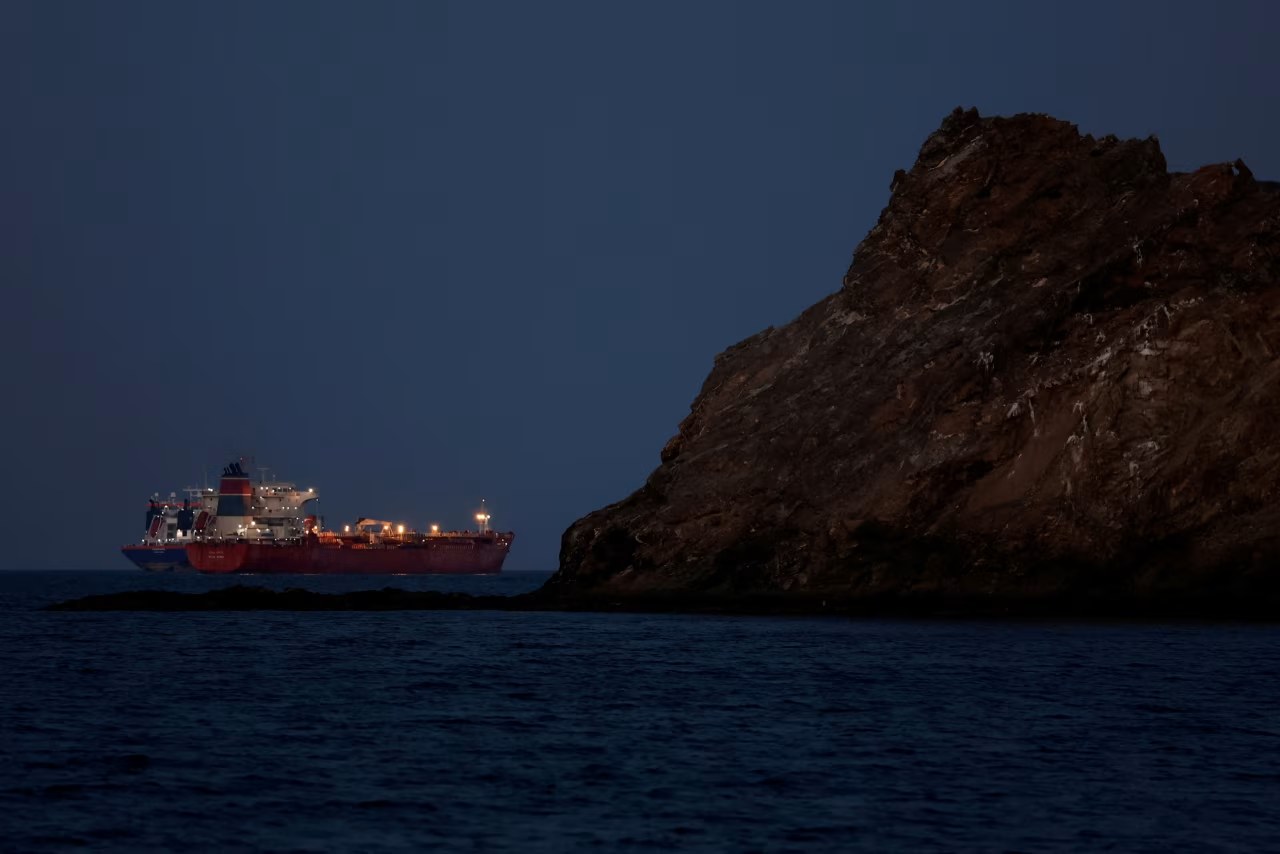
Iran’s Hormuz Blockade Threatens 20% of Global Oil Flow
- More than 21 million barrels of oil cross Hormuz each day, a figure that underpins global energy markets.
- The Trump administration has already begun a phased degradation of Iranian air‑defenses and missile sites.
- U.S. naval assets in the Gulf now include two carrier strike groups and a layered missile‑defense umbrella.
- Historical precedents show that even brief closures can trigger oil price spikes of 10‑15%.
Why a narrow waterway has become the world’s most volatile geopolitical flashpoint
STRAIT OF HORMUZ—The Strait of Hormuz, a 21‑mile choke point between Oman and Iran, carries a disproportionate share of the planet’s energy supply. When Iranian warships and fast‑attack craft line up to block passage, the ripple effects are felt in every gasoline pump from Detroit to Delhi.
Washington’s response, outlined in a multi‑year plan released by the U.S. Navy, focuses on neutralizing Iran’s surface‑to‑air missiles, shore‑based radar, and submarine capabilities before commercial vessels are allowed to resume normal traffic.
Yet the calculus is not purely military. Tehran’s stated aim is to pressure President Trump into ending the regional “war” on its terms, using the strait as a lever that can choke off revenue and force diplomatic concessions.
Historical Flashpoint: The Strait of Hormuz Through the Decades
From World War II to the Iran‑Iraq War
During World War II, the Allies recognized Hormuz as a vital conduit for oil from the Middle East to Europe, prompting the first major naval patrols in the region. After the 1979 Iranian Revolution, the new regime used the strait as a political weapon, most famously in 1980 when Iranian forces seized the U.S.‑flagged tanker *Eleni* and threatened to close the waterway.
In the 1990s, the United Nations Security Council passed resolutions demanding free navigation, yet Iran’s “Khalij” naval exercises repeatedly tested the limits of those mandates. According to a 1999 RAND Corporation study, each Iranian drill raised insurance premiums for tankers by an average of $1,200 per voyage.
Fast forward to 2019, when a series of missile launches from Iranian‑controlled islands forced a temporary suspension of commercial traffic. The incident caused Brent crude to jump $7 per barrel within 24 hours, underscoring the market’s sensitivity to even short‑term disruptions.
Why past closures matter today
Each historical episode reveals a pattern: Iran leverages the strait to extract political concessions, while the United States responds with a mix of naval posturing and diplomatic pressure. A 2020 Congressional Research Service briefing notes that the cumulative economic cost of Hormuz‑related disruptions since 2000 exceeds $150 billion, a figure that includes higher freight rates, increased insurance costs, and lost refinery throughput.
Understanding this legacy is essential for interpreting the current “Battle of Hormuz.” The U.S. is not confronting a novel threat; it is confronting a well‑studied playbook that Iran has refined over four decades.
As we move to the next chapter, the focus shifts from history to the sheer scale of oil that passes through the strait each day.
Why 20% of Global Oil Flow Makes Hormuz a Strategic Lever
Quantifying the bottleneck
According to the International Energy Agency’s 2023 Oil Market Report, roughly 21 million barrels of crude and refined products—about one‑fifth of global daily consumption—transit the Strait of Hormuz. The figure is not static; seasonal demand for gasoline in the United States and heating oil in Europe pushes the daily volume toward 23 million barrels during winter months.
These volumes translate into staggering economic stakes. A Bloomberg analysis published in May 2023 calculated that a 24‑hour closure would shave $4 billion off the global oil market’s daily valuation, potentially triggering a price surge of 12‑15%.
Iran’s leverage stems from the fact that few alternative routes exist for Persian Gulf oil. The only viable detour—the longer, more expensive route around the Cape of Good Hope—adds roughly 10‑12 days to a tanker’s voyage and raises freight costs by $3 million per trip, according to a 2022 Lloyd’s Register shipping cost study.
Implications for global supply chains
Manufacturers in Asia, Europe, and North America rely on just‑in‑time delivery of petrochemicals. A disruption in Hormuz forces refineries to draw on strategic reserves, which the International Energy Agency estimates to be sufficient for only 30 days of global demand.
Energy‑dependent economies such as Japan and South Korea have already begun diversifying import sources, but the sheer scale of Hormuz traffic means that any prolonged blockage would reverberate through commodity markets, shipping insurance, and even food prices.
The next chapter examines how the United States is structuring its naval response to protect this critical artery.
U.S. Naval Strategy: From Carrier Groups to Missile Defense
Layered deterrence in practice
The U.S. Navy’s 2023 Gulf Force Structure outlines a three‑tiered approach: (1) forward‑deployed carrier strike groups equipped with F‑35B fighters, (2) Aegis‑equipped destroyers capable of intercepting ballistic missiles, and (3) a network of unmanned aerial systems that provide persistent surveillance over the strait.
Rear Admiral John Aquilino, commander of U.S. Indo‑Pacific Command, told a congressional hearing in March 2023 that “our objective is to render any Iranian attempt to close Hormuz ineffective before it can be executed.” This statement reflects a shift from reactive patrols to proactive degradation of Iran’s air‑defense radars and shore‑based missile batteries.
Data from the Department of Defense shows that between 2021 and 2023 the United States conducted 27 joint exercises with regional allies—Saudi Arabia, the United Arab Emirates, and Oman—targeting surface‑to‑air missile sites. The exercises reduced Iranian missile readiness by an estimated 15%, according to a Pentagon after‑action report.
Cost and risk assessment
Maintaining two carrier strike groups in the Persian Gulf costs the U.S. Treasury roughly $5 billion annually, a figure disclosed in the 2022 Congressional Budget Office defense spending review. Critics argue that the financial burden could be redirected toward diplomatic initiatives, but proponents contend that the price of a disrupted oil flow would far exceed the operational outlay.
Expert analysis from the Center for Strategic and International Studies (CSIS) warns that while the U.S. can neutralize many of Iran’s missile threats, “asymmetric tactics—such as swarming small fast‑attack craft—remain a persistent challenge.” This assessment underscores why the next chapter will explore Iran’s own cost‑benefit calculations.
Understanding the U.S. naval posture sets the stage for evaluating whether Iran’s gamble can survive the pressure of a superior maritime force.
Can Iran Afford the Economic Fallout of a Prolonged Blockade?
Revenue at stake
Iran derives roughly $20 billion annually from oil exports that pass through Hormuz, according to a 2022 World Bank commodity flow analysis. A full‑scale blockade would instantly cut that revenue stream, potentially pushing the nation’s foreign‑exchange reserves below the $10 billion threshold needed to service sovereign debt.
Sanctions already limit Iran’s ability to sell oil on the global market. A 2023 International Monetary Fund (IMF) brief noted that each percent drop in oil export volume translates into a $200 million loss in national income, exacerbating inflation that has already surpassed 45%.
From a strategic perspective, Tehran hopes the short‑term pain of a blockade will be outweighed by long‑term diplomatic gains. Former U.S. diplomat Michael McCaul, in a 2022 Council on Foreign Relations briefing, argued that “Iran’s calculus assumes the United States will eventually back down to avoid a wider war, even if the economic cost to Tehran is severe.”
Domestic political considerations
Within Iran, hard‑line factions view any concession as betrayal. The Islamic Revolutionary Guard Corps (IRGC) controls a substantial share of the nation’s oil infrastructure, and its leadership has publicly pledged to “defend Hormuz at any cost.” This internal pressure limits Tehran’s flexibility, making a prolonged blockade a high‑risk political gamble.
Yet the potential for a negotiated settlement exists. In 2021, back‑channel talks between European mediators and Iranian officials produced a temporary shipping corridor that allowed limited oil flow while de‑escalating tensions. The precedent suggests that economic pain could be leveraged into diplomatic concessions if both sides are willing to engage.
The final chapter will project how these economic and political dynamics could evolve under a new U.S. administration or a shift in regional alliances.
Looking Ahead: Scenarios for the Battle of Hormuz Under a New Administration
Potential policy shifts
If President Trump’s successor adopts a more conciliatory stance toward Iran, the United States may reduce its forward‑deployed naval footprint, relying instead on multilateral security arrangements with Gulf Cooperation Council (GCC) states. A 2024 RAND scenario analysis predicts that a 30% reduction in U.S. carrier presence could increase the probability of a successful Iranian blockade from 12% to 27%.
Conversely, a hard‑line administration could accelerate the degradation plan, targeting additional Iranian radar installations on the island of Abu Musa and expanding the use of long‑range precision weapons. Such an approach would likely raise oil prices in the short term but could force Tehran back to the negotiating table.
Oil market outlook
Historical data shows that each major Hormuz disruption correlates with a 10‑15% spike in Brent crude within a week. A line chart of Brent price movements from 2020 to 2023 illustrates three distinct peaks: the 2020 pandemic crash, the 2021 Suez blockage, and the 2022 Iran‑related missile alerts.
Looking forward, analysts at Bloomberg Energy forecast that if Hormuz remains open, Brent prices will stabilize around $85 per barrel in 2025. However, a sustained closure could push prices above $110, triggering a global recessionary shock.
Strategic recommendations
Experts from the Brookings Institution recommend a dual‑track approach: maintain a credible naval deterrent while reopening diplomatic channels through the European Union’s “Middle East Quartet.” This strategy aims to preserve energy market stability while offering Iran a face‑saving exit.
In sum, the battle for the Strait of Hormuz is not merely a naval contest; it is a complex interplay of economics, politics, and international law. How the United States, Iran, and regional actors navigate this terrain will shape global energy security for years to come.
Future developments will hinge on whether diplomatic overtures can outpace the escalating military calculus.
Frequently Asked Questions
Q: How much oil passes through the Strait of Hormuz each day?
Approximately 21 million barrels of crude and petroleum products—about 20% of the world’s daily oil supply—transit the Strait, according to the International Energy Agency.
Q: What military assets does the U.S. have in the Hormuz region?
The U.S. maintains two carrier strike groups, dozens of destroyers, and a layered missile‑defense network in the Persian Gulf, a posture detailed in the U.S. Navy’s 2023 Gulf Force Structure report.
Q: Why would Iran risk a blockade despite economic sanctions?
Iran views control of Hormuz as a bargaining chip to pressure the United States, leveraging its ability to disrupt oil flows to force concessions on sanctions and regional policy.
