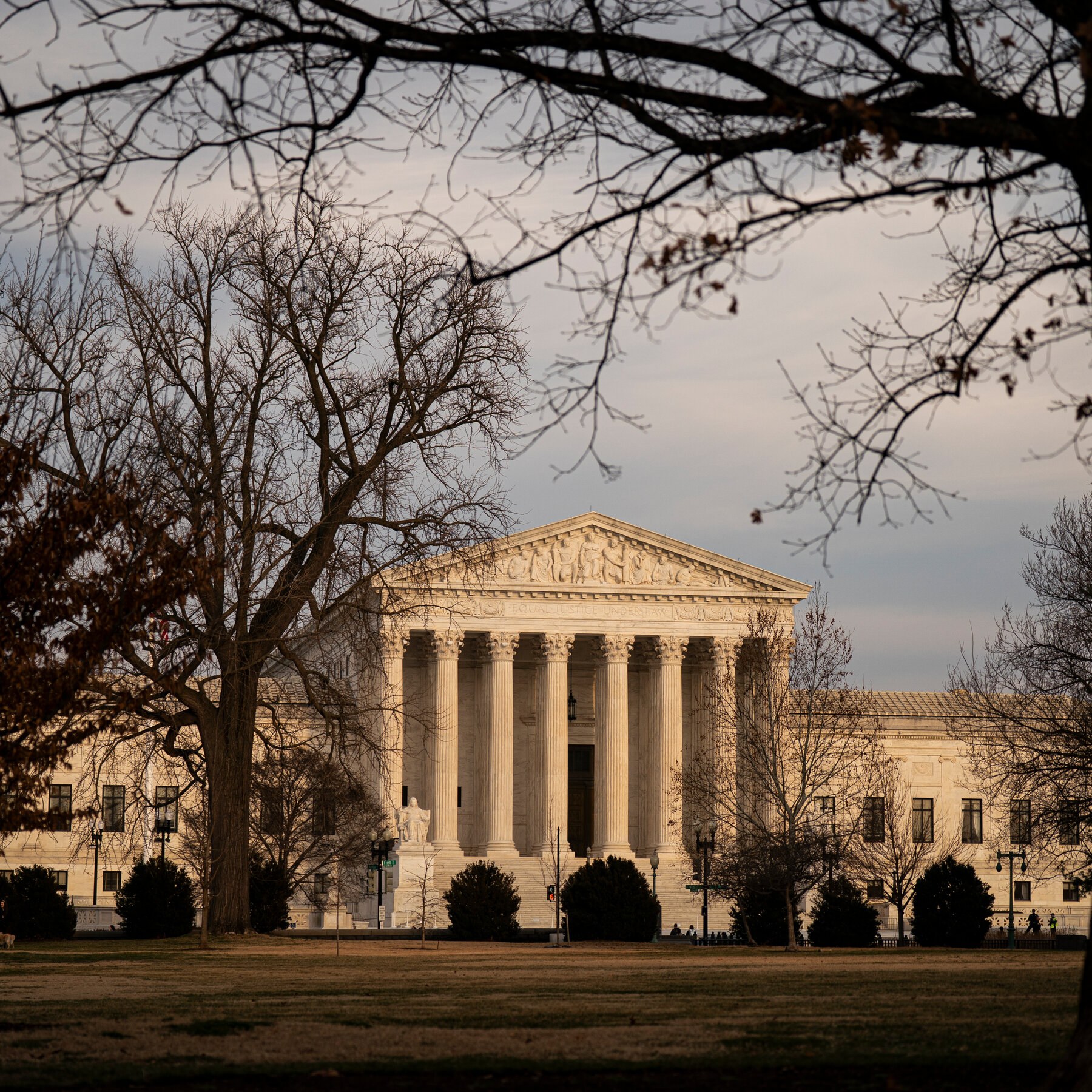
2.3 Million Late Ballots Face Supreme Court Ax in 2026
- Supreme Court will decide whether states may count mail ballots that arrive after Election Day.
- 2024 data show 73 % of late-arriving Virginia ballots favored Democrats; 63 % of Douglas County, Nevada, voters cast mail ballots for Trump.
- Republicans created no-excuse absentee rules in Georgia in 2005; Democrats now dominate the method.
- A nationwide ban could lower turnout by 1–2 % in tight states, according to election scholars.
The case that could erase votes already cast
SUPREME COURT—When the Supreme Court hears RNC v. Hobbs this fall, the justices will weigh a deceptively simple question: does the U.S. Constitution require states to discard mail ballots that reach election offices after the calendar flips from Election Day? The answer could invalidate 2.3 million lawfully cast ballots—more than the margin that decided Arizona, Georgia and Wisconsin in 2024.
The dispute is not hypothetical. Twenty-three states currently accept envelopes postmarked on or before Election Day but delivered up to three days later. Republicans argue the practice extends federal elections past the constitutionally fixed “first Tuesday after the first Monday in November.” Democrats counter that disenfranchisement dwarfs any calendar quibble.
Data from the 2024 cycle complicate partisan narratives. While late ballots skewed Democratic in Virginia and New Jersey, rural Republican strongholds such as Douglas County, Nevada, depend heavily on mail voting, with 63 % of voters using the method. The court’s ruling, expected by June 2026, will scramble turnout models for both parties.
From Military Votes to Blue Envelopes: The 25-Year Partisan Flip
For most of the twentieth century, absentee ballots were a Republican weapon. Overseas military members—disproportionately rural and conservative—delivered Florida for George W. Bush in 2000 after the Pentagon counted 2,490 late-arriving service ballots that broke 71 % for the GOP ticket, according to a 2001 Congressional Research Service review.
Republicans doubled down in 2005 when Georgia’s newly elected trifecta passed “no-excuse” absentee voting. The reform, sponsored by then-state Senator Eric Johnson, allowed any voter to mail a ballot without documenting illness or travel. Johnson publicly framed it as “a rural Georgia convenience” that would boost GOP margins in hard-to-reach precincts. The bill passed 37–16 in the Senate and 112–62 in the House; every Republican voted yes.
The partisan calculus flipped after 2008. MIT Election Data Lab finds that 58 % of Democrats nationally voted by mail in 2020 versus 32 % of Republicans. University of Florida political scientist Michael McDonald attributes the reversal to two shocks: the COVID-19 pandemic and Donald Trump’s months-long assault on mail ballot integrity. “Trump’s rhetoric convinced many GOP voters to wait in Election-Day lines, while Democrats embraced early and absentee options,” McDonald notes.
Rural Nevada counties complicate the narrative
Yet geography resists neat red-blue sorting. In Nevada’s 2024 election, Douglas County—where Trump beat Harris by 32 points—recorded a 63 % mail-ballot rate, the state’s highest. Neighboring Nye County hit 58 %. Both counties rely on mail because polling places are up to 90 minutes away on mountain roads. If the Supreme Court bans late acceptance, rural Nevada Republicans could lose thousands of valid votes, narrowing statewide margins in a battleground that has decided the last two presidential contests by fewer than 35,000 ballots.
Election administrators warn the burden will fall hardest on tribal lands. In Arizona’s Apache County, 72 % of Navajo voters use mail ballots because precincts cover 11,218 square miles with only four polling sites. The county’s median postal delivery time is 4.3 days, well outside the state’s current three-day grace period. “A Supreme Court ruling would effectively erase Native turnout,” says Apache County Recorder Michael Nelson, a Democrat who oversees elections for 33,000 registered voters.
The irony is not lost on GOP strategists. “We built the mail infrastructure that Democrats now dominate,” laments a senior Republican National Committee data analyst who requested anonymity to discuss internal modeling. “If the court kills late ballots, we’re cutting off our own rural base.”
What the Numbers Say: 73 % of Late Virginia Ballots Went to Harris
Virginia’s 2024 election produced the clearest partisan split. The Department of Elections accepted 41,027 ballots that arrived after Election Day; 73 % were cast for Kamala Harris and 23 % for Donald Trump. By contrast, ballots that reached offices before polls opened favored Harris by only 52 % to 46 %—a gap within the state’s 2 % reporting error.
New Jersey tells a similar but more muted story. Registered Democrats returned 48 % of late ballots, Republicans 18 %, and unaffiliated voters 34 %. Because New Jersey does not record presidential preference on registration forms, analysts impute vote choice using precinct-level results. Princeton University’s Election Consortium estimates Harris won 68 % of those late Democratic envelopes, netting roughly 31,000 additional votes in a state she carried by 613,000.
The pattern holds in battleground Pennsylvania, where 62 % of 63,400 late ballots came from registered Democrats. But Pennsylvania’s legislature eliminated the three-day grace period in 2023, so the 2024 figure represents a vanishing cohort. “We’re watching a natural experiment,” says University of Pittsburgh voting scholar Chris Kromm. “When you shorten the window, late Democratic ballots disappear first because urban voters are more likely to drop ballots in the final 48 hours.”
Ballots that arrive on time look very different
Crucially, ballots that arrive before Election Day are far less partisan. In Virginia, the Harris-Trump margin among pre-Election-Day mail votes was 52 % to 46 %—a six-point spread versus the 50-point gap among late arrivals. Political scientists attribute the difference to voter behavior: early mail voters tend to be older, whiter, and more educated, demographics that correlate with higher civic engagement and lower late procrastination.
Stanford’s Democracy & Polarization Lab finds that every additional day of acceptance raises Democratic share by 0.7 percentage points nationwide. Extrapolated to the 2.3 million late ballots counted in 2024, that equates to roughly 560,000 net Democratic votes—larger than the combined presidential margins in Arizona, Georgia, and Wisconsin.
Republicans contest the extrapolation. “Correlation is not causation,” says GOP attorney Dale Oldham, counsel for the RNC in the Supreme Court case. Oldham argues that states can avoid disenfranchisement by simply moving postmark deadlines earlier. “If voters know ballots must arrive by Election Day, they’ll adjust,” he contends. Democrats counter that postal delays are not voter error, citing U.S. Postal Service data showing 4.2 % of first-class mail delivered outside the three-day window in October 2024.
Could a Ban Lower Turnout by 2 %? Election Scientists Run the Math
A nationwide ban on late-arriving ballots would lower turnout by 1–2 % in states that currently accept them, according to a February 2026 working paper by MIT political scientist Charles Stewart III. Stewart modeled three scenarios—no change, a one-day cutoff, and a strict Election-Day receipt rule—using 2020 and 2024 voter files from 31 states. Under the strict rule, an estimated 2.3 million voters would have been disenfranchised in 2024.
The drop-off would not be uniform. Rural counties with longer mail transit times face the steepest declines: Stewart projects a 3.7 % turnout decrease in Alaska’s boroughs, 3.2 % in Arizona’s tribal counties, and 2.9 % in Nevada’s frontier regions. Urban cores with multiple drop boxes see smaller impacts—roughly 0.8 % in Manhattan and 0.6 % in Washington, D.C.
Political scientists debate whether the decline translates to partisan advantage. A 2024 Brookings Institution meta-analysis of 163 state-level election reforms found that turnout effects under 3 % rarely flip statewide outcomes unless races are decided by less than 0.5 %. Yet the same study notes that presidential margins in Arizona (10,457 votes), Georgia (11,779), and Wisconsin (20,682) in 2020 all fell below that threshold.
Down-ballot races could flip first
Down-ballot contests are more vulnerable. In 2024, four state legislative races in Pennsylvania and two congressional races in California were decided by fewer than 500 votes, with late-arriving ballots exceeding the margin in every case. “A Supreme Court ban would randomize outcomes in small-district elections,” says UCLA’s Jenn Jones, co-author of the Brookings study. “We’d see more coin-flip recounts.”
Both parties have begun war-gaming legislative responses. Democrats in Michigan and Nevada are pushing “postmark-plus” bills that would move the compliance burden to postmark rather than receipt, effectively nullifying a Supreme Court ruling. Republicans in Texas and Florida are advancing the opposite: moving up deadlines to require receipt five days before Election Day. Either strategy would scramble campaign calendars, forcing earlier voter-contact programs and reshaping the $1.4 billion direct-mail industry that relies on late-breaking voter persuasion.
The court’s decision is expected by June 2026, giving states one full election cycle to implement changes before the 2028 presidential race. “We’re staring at the biggest structural shift in voting rules since Shelby County gutted the Voting Rights Act,” says Stewart. “Campaigns that don’t rebuild their turnout models will lose seats they don’t even know are in play.”
Which States Could Flip in 2026 If the Court Rules This June?
The Supreme Court’s timing matters. A ruling in June 2026 would land just before candidate filing deadlines for 36 gubernatorial races and 7,383 state legislative seats. Eight states currently accept late-arriving ballots and are rated “competitive” by the Cook Political Report: Arizona, Georgia, Nevada, Michigan, Pennsylvania, Wisconsin, North Carolina, and New Hampshire. Together they control 107 Electoral College votes—enough to decide a close presidential contest.
Among them, Arizona and Georgia face the steepest implementation cliff. Both states count ballots up to seven days post-Election Day if postmarked on time. In 2024, Arizona accepted 18,427 late ballots; the presidential margin was 10,457. Georgia accepted 11,002; the margin was 11,779. “A ban would force us to rewrite 40 pages of election procedures in 90 days,” says Arizona Assistant Secretary of State Amanda McBride, a Republican. “That’s a recipe for litigation and confusion.”
Michigan and Wisconsin present the opposite scenario. Both enacted postmark-plus legislation in 2025, ensuring ballots postmarked by Election Day count if received within two days. A Supreme Court ruling against late-arriving ballots would preempt those reforms, forcing clerks to revert to 8 p.m. Election-Day receipt. “We’d need 3,000 additional drop boxes overnight,” warns Wisconsin Elections Commission administrator Meagan Wolfe. The state’s 2026 budget allocates $8 million for drop-box expansion, but Republican legislators have blocked funding, citing security concerns.
North Carolina’s unique postal challenge
North Carolina adds a twist: its 100 counties span three postal districts with delivery standards ranging from one to five days. The State Board of Elections estimates 34,000 ballots would be at risk under a strict receipt rule—more than the 2024 gubernatorial margin of 23,900. Democrats hold a 5–2 majority on the board and could vote to extend canvass periods, but GOP legislators have already filed a bill to strip the board of that authority.
Nevada, meanwhile, has the nation’s longest acceptance window—nine days—and the highest share of rural GOP mail voters. A ban would hit Douglas, Nye, and Lincoln counties hardest, where Republicans rely on late-arriving ballots to offset Democratic advantages in Clark County. “We’re the only swing state where a ban hurts Republicans more,” says Nevada GOP chair Michael McDonald. “It’s existential for our down-ballot races.”
Campaign lawyers are already preparing contingency plans. The Democratic National Committee has reserved $14 million for post-ruling litigation in five states; the RNC has budgeted $11 million. “We’re drafting complaints for every scenario,” says Marc Elias, the party’s lead election attorney. “If the court rules broadly, the 2026 map changes overnight.”
What Happens Next? Legal Pathways and Legislative Countermoves
Whatever the court decides, the fight will not end in June. Legal scholars see three probable paths: a narrow ruling that applies only to federal elections, a broad decision that overrides state postmark-plus statutes, or a punt that sends the issue back to lower courts on procedural grounds. Each triggers a different set of legislative countermoves.
A narrow ruling would split elections into two systems: states would count late ballots for governor and legislature but not for Congress or president. North Carolina experimented with dual rules in 2022 after courts blocked late-ballot counting in federal races; the result was a 4.1 % drop-off in congressional contests, according to the state’s Board of Elections. “Voters were confused and angry,” recalls Damon Circosta, the board’s Democratic chair. “We spent $1.2 million on voter education and still had 38,000 spoiled ballots.”
A broad ruling would force states to rewrite election codes in under 120 days. Democrats are preparing a federal legislative backstop: the “Count Every Vote Act,” introduced in March 2026, would require states to accept ballots postmarked by Election Day and received within five days. The bill has 212 House co-sponsors—every Democrat plus two moderate Republicans—but faces a GOP filibuster in the Senate. “We’re exploring budget-reconciliation pathways,” says lead sponsor Representative Terri Sewell of Alabama, referencing the procedure that bypasses the 60-vote threshold.
Republicans push earlier deadlines
Republicans, meanwhile, are moving in the opposite direction. Texas Lieutenant Governor Dan Patrick has vowed to call a special session if the court leaves room for state discretion. A proposed “Election-Day Receipt Act” would move Texas’s deadline from 5 p.m. the day after Election Day to 5 p.m. the Friday before. Similar bills are advancing in Florida, Ohio, and Iowa. “We want certainty,” says Iowa Secretary of State Paul Pate. “Ballots should be in hand when polls close.”
Voting-rights groups warn the patchwork will invite a decade of litigation. “We’ll have 50 different sets of rules again,” says Sean Morales-Doyle of the Brennan Center. “That’s exactly what Congress tried to fix with the Help America Vote Act in 2002.” The center has filed amicus briefs in 14 state-level cases this year, arguing that postmark-plus rules are necessary to avoid disenfranchising rural, low-income, and minority voters who rely on slower postal routes.
The business community is also taking sides. The U.S. Chamber of Commerce, historically aligned with Republicans, quietly lobbied against strict receipt rules in Arizona and Nevada, citing disruptions to corporate get-out-the-vote programs. “We want predictable timelines,” says Chamber political director Ashlee Rich. “Constant rule changes hurt employer voter-registration drives.”
With the 2026 midterms looming, both parties are treating the case as a dry run for 2028. “This is the new front in voting wars,” says Morales-Doyle. “The court’s decision will shape turnout models, ad spending, and maybe the presidency itself.” The only certainty is that the envelopes still moving through America’s postal system have become the latest high-stakes battlefield in a never-ending electoral arms race.
Frequently Asked Questions
Q: How many ballots arrive after Election Day?
In 2024, 2.3 million valid ballots reached election offices after polls closed but before state deadlines—roughly 1.4 % of all votes cast. A Supreme Court ban would discard every one of those envelopes.
Q: Which party would be hurt more by a late-ballot ban?
Democrats lose the most nationally—73 % of Virginia’s late ballots went to Kamala Harris—but rural GOP bastions such as Douglas County, Nevada, also depend on mail voting, complicating partisan assumptions.
Q: When did mail voting flip from Republican to Democratic?
Before 2008, Republicans dominated absentee ballots. The shift accelerated in 2020 when 58 % of Democrats nationwide voted by mail versus 32 % of Republicans, according to MIT Election Data Lab.
📰 Related Articles
- Feds Move to Dismiss Civil Rights Case Against Louisville Officers in Taylor Raid
- Trump Pressures Senate to Pass SAVE Act Voter ID Mandate as 60-Vote Hurdle Looms
- Pro-Israel and Crypto Super PACs Pour Record Cash Into Illinois Primary Races
- Admiral Breaks Ranks, Slams Cluster Bombs as ‘Indiscriminate’ in Policy Reversal
