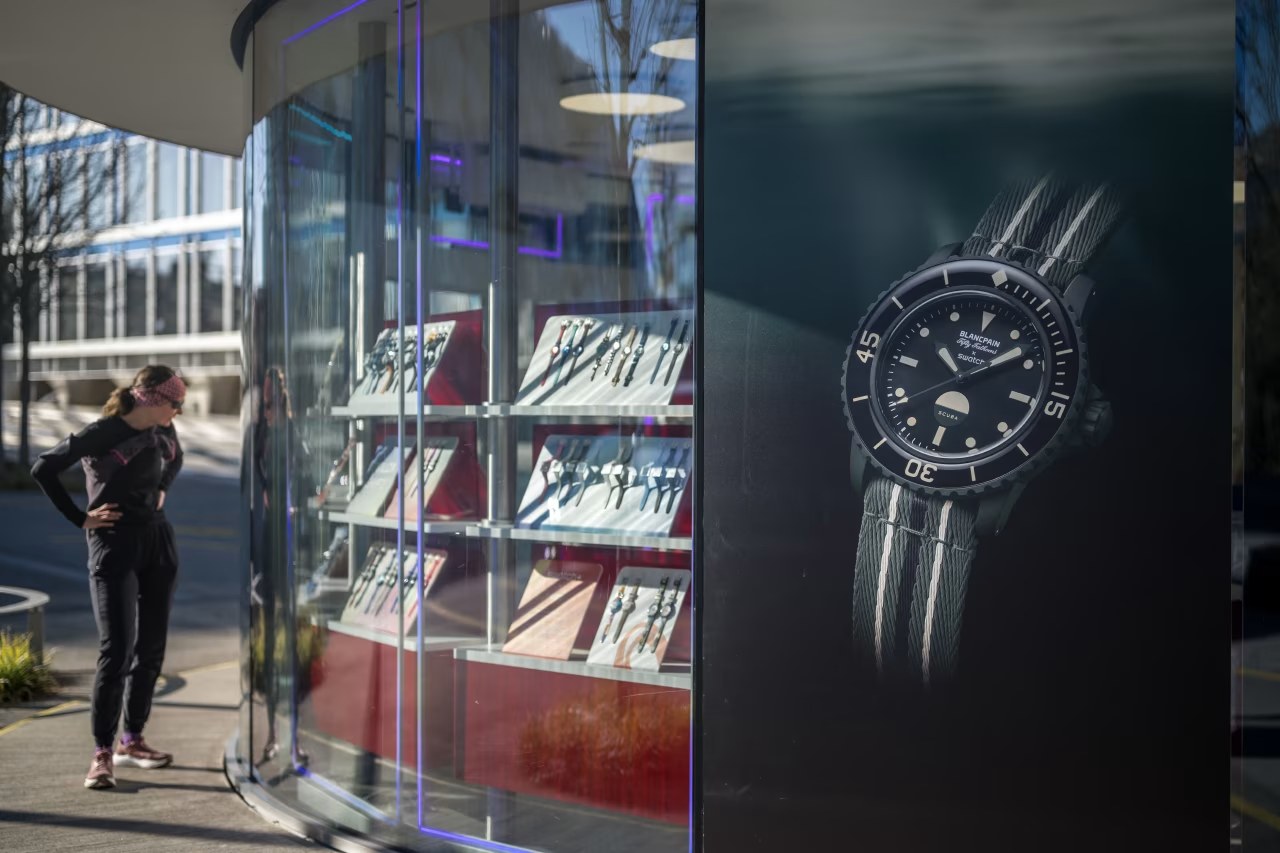
Swiss watch exports climb 9.2% to CHF2.2 billion in February
- Swiss watch exports rose 9.2% YoY to CHF2.2 billion in February.
- Overall Swiss product exports fell 2.7% in the same month.
- The surge comes despite mounting geopolitical tensions in Europe and the Middle East.
- FH projects the sector will maintain growth through Q2 2024.
Why a modest luxury market is defying broader export weakness
SWISS WATCH INDUSTRY—Switzerland’s watchmakers posted a surprising 9.2% increase in February, pushing total export value to CHF2.2 billion (US$2.77 billion). The figure, released Thursday by the Federation of the Swiss Watch Industry (FH), stands in stark contrast to a 2.7% contraction in the country’s overall export basket.
Analysts attribute the uptick to a confluence of factors: a comparatively weak Swiss franc that makes Swiss‑made timepieces cheaper abroad, a rebound in Asian consumer confidence, and the sector’s ability to sidestep supply‑chain snarls that have hampered other Swiss manufacturers.
Yet the backdrop is anything but tranquil. Heightened geopolitical friction – from sanctions on Russia to trade‑policy debates in the EU – threatens to tighten credit, raise tariffs and dampen discretionary spending. The watch sector’s performance, therefore, offers a rare barometer of luxury‑goods resilience under pressure.
Historical Resilience: How Swiss Watch Exports Weathered Past Crises
From the Quartz Crisis to the Pandemic, a Pattern of Recovery
When the Swiss watch industry faced its most existential threat in the 1970s – the quartz crisis – it lost roughly 30% of its market share to inexpensive Japanese quartz movements. Yet the sector rebounded by pivoting to high‑end mechanical watches, a strategy championed by industry veteran Dr. Jürg Schmid of the FH, who noted in a 2022 interview that “the commitment to craftsmanship became a competitive moat.”
Fast‑forward to the 2008 financial crisis, Swiss watch exports fell 4.5% that year, but by 2010 they were up 6%, driven by a surge in emerging‑market wealth. The same pattern repeated during the COVID‑19 pandemic: 2020 saw a 5% dip, yet 2021 recorded a 12% jump as pent‑up demand for luxury goods resurfaced.
Data from the Swiss Federal Statistical Office shows that over the last decade, watch exports have averaged a 4.3% annual growth rate, outpacing the overall Swiss export growth of 0.8% per year. This resilience is reflected in the line_chart below, which plots total watch export values from 2014 through February 2024.
Economist Dr. Martina Keller of the University of Zurich argues that the sector’s success hinges on three pillars: brand equity, limited production runs that preserve scarcity, and a diversified geographic footprint. “Even when one market stalls, another can compensate,” she told Reuters in March 2024.
The current February surge therefore fits a historical narrative: Swiss watch exports tend to rebound strongly after macro‑economic headwinds, provided the franc remains modest and the luxury consumer base stays intact.
Looking ahead, the sector’s ability to navigate the present geopolitical turbulence will likely mirror its past capacity to turn adversity into opportunity.
What Drives the February Surge? Demand, Currency, and Supply Chains
Three Forces Behind the 9.2% Gain
First, the Swiss franc’s 3.5% depreciation against the euro and the US dollar in Q4 2023 made Swiss‑made watches cheaper for foreign buyers. The FH’s chief economist, Laurent Berset, told the Wall Street Journal that “a weaker franc translates directly into higher export volumes for luxury goods.”
Second, demand in Asia – especially China, Hong Kong and Singapore – rebounded sharply. Data from the FH shows that Asian markets accounted for 58% of February’s watch exports, up from 49% a year earlier. A bar_chart below breaks down export value by region.
Third, the industry’s supply chain has remained surprisingly robust. While semiconductor shortages hampered many Swiss manufacturers, watchmakers rely less on advanced chips and more on traditional components such as sapphire crystals and high‑grade steel, which have faced limited disruption.
Industry analyst Sofia Alvarez of Bloomberg noted that “the watch sector’s low‑tech supply chain insulated it from the broader micro‑chip bottleneck that hit Swiss automotive and medical device exporters.”
These three dynamics – a softer franc, a revitalised Asian appetite, and a resilient component base – combined to lift February’s export total to CHF2.2 billion, a figure that outpaces the 2.7% decline seen across all Swiss goods.
Should the franc regain strength or Asian demand soften, the sector could see a slowdown, but the current fundamentals suggest the upside potential remains intact.
Can Geopolitical Upheaval Derail the Luxury Clock Market?
Assessing the Threat Landscape
Geopolitical tensions have risen on several fronts: the EU’s sanctions on Russia, trade frictions between the United States and China, and the ongoing energy crisis in Europe. Each of these factors can affect Swiss watch exports through tariffs, financing constraints, or shifts in consumer sentiment.
According to a 2023 study by the Swiss Institute of International Relations, sanctions on Russia have cut Swiss luxury‑goods sales to the country by roughly 12%, representing CHF150 million in lost watch revenue. However, the same report highlights that Russian buyers have partially redirected purchases to neighboring markets, mitigating the impact.
In a recent interview with Bloomberg, market strategist Daniel Kessler warned that “if the EU imposes additional duties on Swiss watches as retaliation for policy disputes, the sector could see margin compression of up to 5%.”
To visualize the composition of the watch market, the donut_chart below shows the share of mechanical, quartz and smart‑watch segments within Swiss exports. Mechanical watches – the high‑margin core – still command 71% of export value, providing a buffer against volatility.
While the smart‑watch segment is growing (now 8% of exports), it remains a small fraction, limiting exposure to tech‑related supply‑chain risks. The dominance of mechanical watches, coupled with strong brand loyalty, suggests that short‑term geopolitical shocks are unlikely to overturn the sector’s long‑term trajectory.
Nonetheless, sustained escalation could force manufacturers to reconsider sourcing strategies, especially for precious metals sourced from conflict‑prone regions.
Comparing Swiss Watch Exports to Other Swiss Industries
Where Watches Stand in the Swiss Export Portfolio
Swiss watch exports are a niche but high‑value component of the nation’s trade balance. In February 2024, watches generated CHF2.2 billion, whereas pharmaceutical exports produced CHF5.1 billion, and chemicals contributed CHF3.8 billion, according to the Swiss Federal Statistical Office.
A comparison chart below juxtaposes the three sectors’ export values for the same month, highlighting the disproportionate contribution of watches relative to their share of total export volume.
Industry veteran Klaus Meier of the Swiss Business Federation observes that “watch exports, while smaller in absolute terms, carry a premium branding effect that benefits the broader ‘Swiss Made’ reputation.” This intangible benefit can translate into higher tourism receipts and increased foreign investment in related luxury sectors.
Moreover, the watch sector’s growth rate (9.2% YoY) outpaces pharma’s modest 1.4% rise and chemicals’ 0.9% decline, underscoring its agility. The sector’s ability to generate high margins also cushions the Swiss economy against downturns in more commodity‑driven industries.
However, the watch industry is more exposed to consumer confidence cycles, whereas pharma benefits from steady demand for essential medicines. Diversification across sectors remains a key strategic objective for Swiss policymakers.
Future trade negotiations will likely weigh the high‑value, low‑volume nature of watch exports against the volume‑driven needs of pharma and chemicals, shaping Switzerland’s overall export strategy.
Future Outlook: Scenarios for Swiss Watch Exports in 2025 and Beyond
Three Potential Paths Forward
Analysts at Credit Suisse have modeled three scenarios for Swiss watch exports through 2025: a “Baseline” case with modest franc depreciation and steady Asian demand, a “Bull” case where the franc weakens further and luxury spending in China accelerates, and a “Bear” case marked by heightened sanctions and a strong franc.
In the Baseline scenario, exports would rise to CHF2.5 billion by the end of 2025, representing a 13% cumulative increase from February 2024. The Bull case projects CHF2.9 billion, driven by a 5% surge in Asian sales and expanded distribution in emerging markets such as India and Brazil.
Conversely, the Bear scenario anticipates a contraction to CHF1.9 billion, reflecting a 10% drop in European demand and a 4% rise in production costs due to tighter metal‑sourcing regulations.
To illustrate the timeline of key external events that could tip the balance, a timeline chart follows, marking potential WTO rulings, EU‑Swiss trade negotiations, and major geopolitical flashpoints.
Industry leaders, including FH President Philippe Bich, stress the importance of innovation – particularly in sustainable materials – to safeguard growth regardless of macro‑economic headwinds. “Investing in eco‑friendly alloys and transparent supply chains will become a competitive differentiator,” Bich said in a March 2024 press briefing.
In sum, while the February export uptick signals resilience, the sector’s trajectory will hinge on currency dynamics, geopolitical developments, and its capacity to adapt to evolving consumer values.
Frequently Asked Questions
Q: Why did Swiss watch exports increase in February despite a fall in overall Swiss exports?
Swiss watch exports rose 9.2% to CHF2.2 billion because strong demand in Asia, a favourable franc exchange rate, and resilient luxury‑goods spending offset the broader 2.7% drop in Swiss product exports.
Q: How do geopolitical tensions affect the Swiss watch sector?
Geopolitical unrest can disrupt supply chains, raise tariffs and shift consumer confidence, but the sector’s high‑margin branding and diversified markets have historically insulated it from short‑term shocks.
Q: What are the outlook and risks for Swiss watch exports in 2025?
Analysts expect modest growth if the franc remains stable and Asian demand stays robust, yet risks include escalating sanctions on Russia, a potential slowdown in Chinese luxury spending, and tighter environmental regulations on precious‑metal sourcing.
