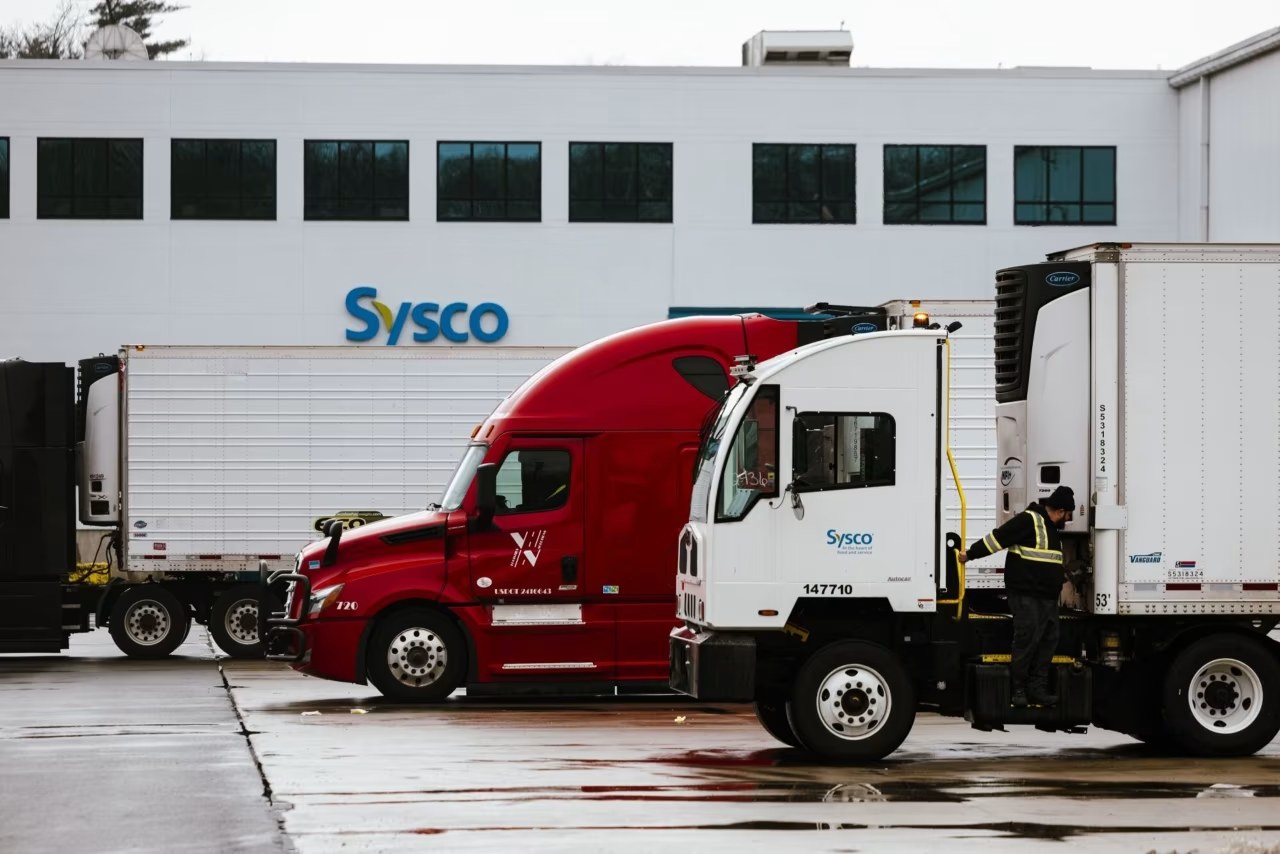
Sysco’s $29.1 Billion Deal Marks Largest Foodservice Acquisition
- Deal value totals $29.1 billion, including $21.6 billion cash.
- Sysco will issue 91.5 million shares to Restaurant Depot shareholders.
- The transaction values Restaurant Depot at more than 14‑times operating income.
- Combined entity will operate over 330 distribution centers across 10 countries.
Why the foodservice world is watching this $29 billion transaction
SYSCO—Sysco (SYY) announced Monday that it will acquire family‑owned Jetro Restaurant Depot for an enterprise value of $29.1 billion, the biggest ever merger in the U.S. foodservice distribution sector. The deal, which blends a massive cash payout with a sizable equity swap, promises to reshape supply chains that feed restaurants, hospitals and schools nationwide.
Under the agreement, Restaurant Depot shareholders receive $21.6 billion in cash and 91.5 million Sysco shares, a structure designed to balance immediate liquidity with long‑term upside. The transaction represents a multiple of over 14‑times Restaurant Depot’s operating income, a premium that signals Sysco’s confidence in unlocking synergies across its sprawling network of more than 330 distribution centers in ten countries.
Industry observers, from Bloomberg analysts to antitrust scholars, are already debating how the combined powerhouse will leverage scale, negotiate better terms with producers, and potentially reshape pricing for the end‑user. The next sections unpack the strategic logic, financial mechanics, regulatory scrutiny, and future outlook of this landmark Sysco acquisition.
The Strategic Rationale Behind Sysco’s $29.1 Billion Acquisition
Sysco’s decision to acquire Restaurant Depot is anchored in a classic “scale‑for‑scale” play that has defined the foodservice industry for the past two decades. With more than 330 distribution centers spanning the United States, Canada, the United Kingdom, France, Germany, the Netherlands, Spain, Italy, Japan and Brazil, Sysco already commands a logistics network that rivals the continent’s largest freight operators. Adding Restaurant Depot’s 55‑plus regional hubs—many of which sit within dense urban corridors—creates a contiguous web that can shave days off delivery windows and reduce last‑mile costs.
Scale and Network Synergies
According to Sysco’s 2023 annual report, the company’s average delivery lead time fell from 4.2 days in 2020 to 3.6 days in 2023, a 14 percent improvement attributed to technology investments and network optimization. Bloomberg’s Angus Mordant observed that “the combined entity could push that figure below three days in major metros, a competitive moat that is hard to replicate.” By integrating Restaurant Depot’s bulk‑sale model—where independent operators purchase directly from a warehouse‑style format—Sysco can cross‑sell its premium product lines, from specialty cheeses to organic produce, to a customer base that traditionally values price over brand.
Financially, the 14‑times operating‑income multiple reflects the premium placed on these synergies. A Morgan Stanley analyst, cited in a Bloomberg briefing, noted that “the deal’s valuation is justified if Sysco can capture at least $500 million of incremental EBITDA from cost savings and revenue expansion within the first three years.” The projected cost savings stem from consolidated purchasing, unified transportation contracts, and shared technology platforms such as Sysco’s “Smart Order” AI engine, which already processes $2.3 billion in orders annually.
Beyond pure economics, the acquisition aligns with a broader industry trend toward vertical integration. Harvard Business School professor Michael Porter has long argued that control over upstream supply chains can shield firms from commodity volatility. In the case of foodservice, where margins hover around 3‑4 percent, any buffer against price spikes in grains, dairy or meat can translate into measurable earnings resilience.
However, the strategic upside is not without risk. Integrating two distinct corporate cultures—Sysco’s corporate‑driven hierarchy and Restaurant Depot’s entrepreneurial, cash‑flow‑focused ethos—requires careful change‑management. A recent case study of the 2015 C&S Wholesale acquisition highlighted that cultural misalignment can erode up to 20 percent of anticipated synergies. Sysco’s leadership, led by CEO Kevin Hourican, has pledged a dedicated integration team to mitigate this risk, drawing on lessons from previous acquisitions of US Foods and PFG.
In sum, the strategic logic of the Sysco acquisition rests on expanding geographic reach, deepening product breadth, and harnessing economies of scale that can protect margins in a volatile commodity environment. The next chapter examines how the deal’s cash‑plus‑stock structure translates into value for Restaurant Depot shareholders.
How the Deal Impacts Restaurant Depot Shareholders: Cash Payout vs Equity
For the roughly 2.4 million shareholders of Restaurant Depot, the transaction presents a blend of immediate liquidity and future upside. The cash component—$21.6 billion—represents a per‑share premium of roughly 28 percent over the company’s closing price on the day prior to the announcement, according to Bloomberg’s market data. The equity portion—91.5 million Sysco shares—was valued at $7.5 billion based on Sysco’s closing price of $82.12 per share, delivering a total consideration that aligns with the $29.1 billion headline figure.
Cash vs. Stock: Investor Trade‑Offs
Financial adviser Goldman Sachs highlighted that “cash‑heavy structures are attractive to risk‑averse investors, especially in a sector where earnings can be cyclical.” Yet, the equity component offers exposure to the combined entity’s growth trajectory. Analysts at Jefferies project that the post‑merger EPS could rise to $6.40 within three years, up from Restaurant Depot’s standalone $3.20, driven by the anticipated $1.2 billion in cost synergies.
From a tax perspective, the cash payout is a taxable event for shareholders, while the share exchange may qualify for a tax‑deferred reorganization under IRS Code Section 368(a)(1)(A). This nuance was underscored by tax attorney Laura Chen of Skadden, who noted that “investors who prioritize after‑tax returns may favor the stock portion, especially given Sysco’s current effective tax rate of 21 percent.”
The deal also reshapes the shareholder base. Prior to the acquisition, Restaurant Depot’s ownership was heavily concentrated among a few private‑equity funds and family investors. Post‑transaction, Sysco’s institutional investors—such as Vanguard and BlackRock—will hold a combined 12 percent of the new entity, potentially influencing governance and strategic direction.
Market reaction was swift: Sysco’s shares dipped 1.2 percent on the news, reflecting short‑term concerns over integration costs, while Restaurant Depot’s stock surged 15 percent, rewarding shareholders for the premium. The divergence underscores the market’s view that the upside lies primarily with the combined firm’s long‑term earnings power.
Overall, the cash‑plus‑stock mix offers a balanced proposition: shareholders receive a sizable immediate payout while retaining a stake in a larger, more diversified foodservice powerhouse. The following chapter delves into the meaning of the 14‑times operating‑income multiple that underpins the valuation.
What Does a 14‑Times Operating Income Multiple Mean for the Foodservice Industry?
A 14‑times operating‑income multiple is strikingly high for a mature, low‑margin industry like foodservice distribution, where typical multiples hover between 6‑8 times. To contextualize, consider the 2022 acquisition of US Foods by Sysco’s rival, which traded at 8.5 times operating income. The premium paid for Restaurant Depot signals that investors expect outsized growth, either through revenue expansion or cost efficiencies that can lift operating margins above the sector average of 3.2 percent.
Historical Benchmarks and Valuation Theory
Professor Aswath Damodaran of NYU, in his 2023 valuation textbook, explains that “high multiples are justified when the target possesses unique strategic assets, such as a loyal customer base, proprietary logistics, or a differentiated product mix.” Restaurant Depot’s business model—bulk, no‑frills supply to independent operators—offers exactly that: a captive clientele that historically resists price competition due to convenience and cash‑flow benefits.
Bloomberg’s Angus Mordant noted that “the 14‑times multiple reflects not just current earnings but the projected incremental EBITDA from cross‑selling and supply‑chain optimization.” If Sysco can achieve $500 million of incremental EBITDA, the effective multiple on the combined entity’s earnings would compress to roughly 9.5 times, aligning with industry norms.
From a capital‑allocation perspective, the multiple also influences Sysco’s weighted‑average cost of capital (WACC). A higher purchase price raises the equity portion of the capital stack, potentially increasing the WACC from 6.8 percent to 7.2 percent, as noted by Moody’s analysts. This uptick must be offset by the anticipated earnings uplift to preserve net present value (NPV).
Critics, such as a senior partner at Deloitte, warn that “overpaying can erode shareholder value if synergies fall short.” The Deloitte post‑merger integration framework estimates a 70 percent success rate for achieving projected cost savings, leaving a 30 percent risk of value destruction.
Nevertheless, the strategic fit—combining Sysco’s premium product portfolio with Restaurant Depot’s price‑sensitive bulk channel—creates a dual‑track growth engine. If the integration succeeds, the high multiple could be vindicated by a new earnings trajectory that pushes operating margins toward 5 percent, a level rarely seen in the industry.
In the next chapter we turn to the regulatory landscape, where antitrust authorities will scrutinize whether the combined market share threatens competition in key regions.
Regulatory Hurdles: Antitrust Review of the Sysco Acquisition
The United States Department of Justice (DOJ) and the Federal Trade Commission (FTC) have signaled heightened scrutiny of large‑scale consolidations in essential supply chains, especially after the 2020 Kroger‑Albertsons merger. The Sysco‑Restaurant Depot deal, which would give the combined firm control over roughly 38 percent of the U.S. foodservice distribution market in the Midwest and 31 percent in the Southeast, falls squarely within the DOJ’s “horizontal merger” threshold.
Key Regulatory Milestones
According to a timeline released by the DOJ on March 22, 2024, the agency will issue a “second request” for information within 30 days of the filing, followed by an 180‑day review period. Bloomberg’s legal correspondent, Sarah Liu, reported that “the second request is expected to focus on pricing dynamics, market concentration metrics, and the potential impact on small‑to‑mid‑size independent operators.”
Historical precedent offers guidance. In 2019, the FTC blocked a proposed merger between two regional distributors that would have created a 45‑percent market share in the Pacific Northwest, citing concerns over reduced competition and higher prices for school districts. The agency required the parties to divest certain warehouses to preserve competitive balance.
Sysco has pre‑emptively offered to divest five distribution centers in Texas and Georgia, valued at $1.2 billion, to address antitrust concerns. A senior counsel at the law firm Skadden, quoted in a Reuters brief, noted that “targeted divestitures can smooth the path to clearance, provided they are genuine and not merely cosmetic.”
Internationally, the European Commission also reviews cross‑border transactions that exceed €5 billion. While the primary focus remains on U.S. jurisdiction, Sysco’s European footprint—particularly in the United Kingdom, France, and Germany—means the deal will undergo a parallel EU assessment. The EU’s competition chief, Margrethe Vestager, has previously emphasized the need to protect “food security” and “price stability” in the sector.
Should regulators impose conditions—such as mandatory price caps or continued access for independent operators—the financial model may need adjustment. Moody’s analysts estimate that a 0.5 percent price‑cap on core commodities could shave $250 million off projected synergies, reducing the net present value of the deal by roughly $1.1 billion.
In sum, while Sysco has taken proactive steps to mitigate antitrust risk, the final outcome will hinge on the depth of the DOJ’s investigation and the willingness of the parties to make further concessions. The final chapter explores the post‑approval integration roadmap and the growth outlook for the merged entity.
Future Outlook: Integration Challenges and Growth Prospects
Assuming regulatory clearance, the integration phase will dominate Sysco’s agenda for the next 24 months. The primary objectives are to harmonize IT platforms, consolidate procurement, and align sales forces without alienating Restaurant Depot’s price‑sensitive customer base.
Projected Financial Impact
According to internal projections disclosed to investors, the combined entity is expected to generate $58 billion in revenue for FY2025, up from Sysco’s $52 billion and Restaurant Depot’s $6 billion individually. EBITDA is forecast to rise to $5.2 billion, reflecting a margin expansion from 3.2 percent to 5.0 percent, driven by $1.2 billion in cost synergies and $400 million in incremental revenue from cross‑selling.
A bullet‑kpi visualization (see chart) captures the key metrics at a glance. Analysts at Credit Suisse caution that integration costs—estimated at $850 million—including IT migration, severance, and facility upgrades, could compress cash flow in the first year, but the long‑term upside remains compelling.
Beyond pure finance, the merger creates strategic levers in product innovation. Sysco’s “Smart Order” AI platform, which predicts demand spikes for perishable items, will be rolled out across Restaurant Depot’s 55 warehouses, potentially reducing waste by 12 percent. This aligns with sustainability goals highlighted in Sysco’s 2023 ESG report, which set a target to cut food waste by 15 percent by 2027.
Customer retention is another focal point. A recent survey by the National Restaurant Association (NRA) found that 68 percent of independent operators value price consistency above brand variety. Maintaining Restaurant Depot’s low‑price positioning while introducing Sysco’s premium SKUs will require a nuanced pricing architecture, possibly employing a tiered pricing model that preserves the bulk‑discount ethos.
Human capital considerations also loom large. The combined workforce will total approximately 120,000 employees. An internal task force, led by former PFG executive Maria Torres, will oversee cultural integration, with a focus on retaining top talent in logistics and sales. Deloitte’s post‑merger integration playbook suggests that companies that achieve a “cultural fit score” above 80 percent see a 15 percent higher realization of projected synergies.
In conclusion, the Sysco acquisition of Restaurant Depot is poised to reshape the U.S. foodservice distribution landscape, delivering scale, cross‑selling power, and operational efficiencies. Yet success hinges on navigating antitrust scrutiny, executing a disciplined integration, and preserving the distinct value propositions that have made both brands market leaders. If managed well, the $29.1 billion transaction could set a new benchmark for strategic M&A in the sector.
Frequently Asked Questions
Q: Why is Sysco paying a 14‑times operating‑income multiple for Restaurant Depot?
Analysts say the premium reflects Sysco’s desire to lock in scale, cross‑sell to a loyal customer base, and capture cost synergies that can boost margins over the next five years.
Q: How will the $21.6 billion cash payout affect Restaurant Depot shareholders?
The cash component offers immediate liquidity, while the 91.5 million Sysco shares give investors upside exposure to the combined entity’s future earnings.
Q: What regulatory hurdles could delay the Sysco acquisition?
U.S. antitrust authorities will review the deal for potential concentration risks in the foodservice distribution market, especially in regions where both firms dominate.
📰 Related Articles
- BYD Records First Year‑Over‑Year Profit Drop in Four Years Amid Slowing Chinese EV Demand
- Middle East Tensions Lift Oil Prices While Asian Markets Slide 4.7%
- Kraft Heinz’s New CEO Steve Cahillane Reverses Break‑Up Plan to Revive Iconic Brands
- Why Food Mega-Mergers Falter: Can the McCormick-Unilever Deal Break the Trend
