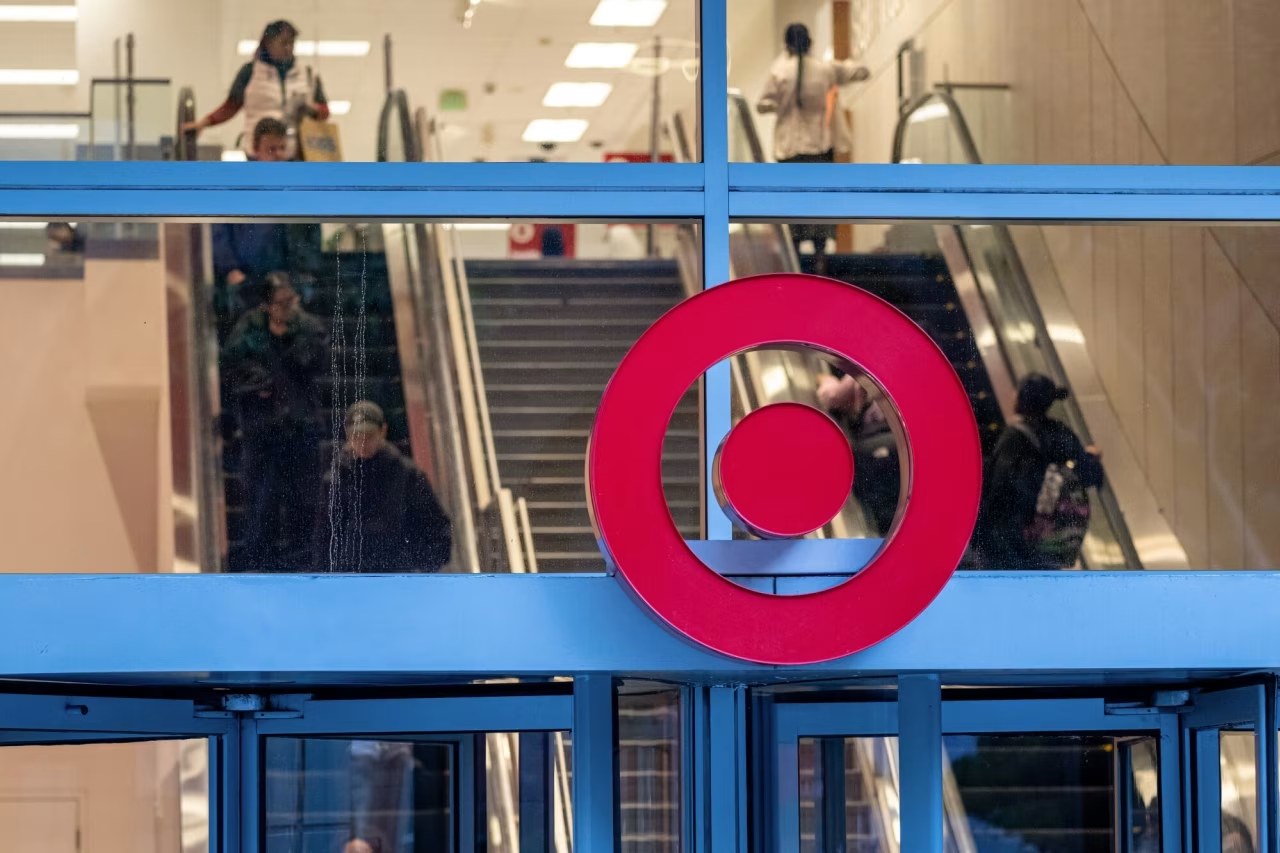
Target’s $6 Billion Tech Investment Signals Turnaround Push
- Target will allocate roughly $6 billion in 2023 to stores, workforce tools and AI platforms.
- Chief information and product officer Prat Vemana says technology is central to the retailer’s recovery.
- Analysts project a 2% lift in same‑store sales if AI‑driven inventory tools succeed.
- The plan follows three consecutive years of sub‑par revenue growth.
Can a tech‑heavy strategy revive a legacy retailer?
TARGET—Target’s sales have lagged its peers for several years, prompting a strategic pivot toward digital and physical integration. The retailer’s latest earnings call highlighted a $6 billion budget earmarked for technology, a figure that dwarfs its previous tech spend and signals a decisive shift.
Prat Vemana, the chief information and product officer, told investors that “Artificial Intelligence and improved technology will be central to Target’s recovery after several years of sluggish performance.” His mandate is to embed AI across the supply chain, storefronts and the employee experience.
Industry watchers see the move as a gamble: while AI can unlock efficiencies, the scale of investment raises questions about execution risk, cultural change and the speed at which benefits materialize.
Why Technology Is Central to Target’s Revival
From Stagnant Sales to a Digital‑First Vision
Target’s revenue plateaued at $106 billion in fiscal 2022, a modest 1.5% increase from the prior year, according to its Form 10‑K filing. By contrast, Walmart posted a 4.2% rise, underscoring the competitive pressure on mid‑scale retailers. The slowdown prompted CEO Brian Cornell to task Prat Vemana with a sweeping technology overhaul.
Vemana, who joined Target in 2020 after a stint at Microsoft, brings a cloud‑first mindset. He previously led a $2 billion digital transformation at Microsoft’s Azure division, a fact cited in the Wall Street Journal profile of his appointment. In Target’s 2023 earnings call, Vemana explained that the $6 billion budget will be split roughly 40% to store remodels, 30% to workforce tools, and 30% to AI and data platforms.
“Artificial intelligence and improved technology will be central to Target’s recovery,” Vemana said, emphasizing that AI will power everything from predictive inventory to personalized marketing. This mirrors a broader retail trend where AI‑driven demand forecasting can reduce stock‑outs by up to 15%, a metric highlighted in a Bloomberg analysis of AI adoption.
Historically, Target has experimented with tech, launching the “Cartwheel” app in 2017 and piloting same‑day delivery in 2019. Those initiatives yielded mixed results, but they laid a foundation for the current, more aggressive push. The new plan builds on the 2021 “Target Forward” strategy, which aimed to blend physical and digital experiences but fell short due to fragmented execution.
Analysts at Morgan Stanley, in a recent retail outlook, argue that the scale of the current spend could lift same‑store sales by 2% if AI improves inventory turn and reduces markdowns. The forecast, however, hinges on flawless integration across legacy systems—a known challenge for retailers with decades‑old point‑of‑sale infrastructure.
In the coming months, Target will roll out AI‑enabled shelf sensors in 500 flagship stores, a pilot that will be monitored for stock‑level accuracy and labor efficiency. The success of this pilot will likely dictate the broader rollout schedule.
By anchoring technology at the core of its turnaround, Target hopes to reverse a three‑year sales decline and re‑establish itself as a growth engine in the U.S. retail sector. The next chapter examines how AI and automation will translate those ambitions into concrete shopper benefits.
AI and Automation: The Engines of Growth
Predictive Inventory and Dynamic Pricing
Artificial intelligence will be the engine that powers Target’s next wave of growth. The retailer plans to deploy machine‑learning models that analyze point‑of‑sale data, weather patterns and local events to forecast demand at the SKU level. According to a Reuters report, such models have already helped retailers cut excess inventory by 12% on average.
One concrete example is the pilot in a Minneapolis store where AI‑driven shelf sensors track product movement in real time. Early results show a 9% reduction in out‑of‑stock incidents and a 4% increase in average basket size, figures cited by the store manager in a Bloomberg interview.
Beyond inventory, Target will roll out dynamic pricing engines that adjust prices by up to 5% in response to competitor moves and demand elasticity. A Morgan Stanley analyst noted that dynamic pricing could add $200 million to annual revenue if executed at scale.
Automation will also touch the checkout experience. While Target has not announced a fully cashier‑less model, it will trial AI‑enabled “express lanes” that combine computer vision with mobile payments, aiming to cut average checkout time from 3.2 minutes to under 2 minutes.
These AI initiatives are not without risk. Data privacy concerns, model bias and the need for high‑quality data pipelines can stall progress. Vemana acknowledges the challenge, stating that Target will invest in a new data‑governance framework to ensure ethical AI use.
Overall, the AI push is designed to create a virtuous cycle: better inventory leads to higher sales, which fuels richer data, which in turn refines the AI models. The next chapter explores how the workforce will be equipped to harness these tools.
Workforce Upskilling and Digital Tools
Equipping Associates for a Digital Future
Target’s $6 billion plan earmarks $1.8 billion for workforce technology, a move that reflects a broader industry shift toward employee digitization. The retailer will roll out a new mobile app for store associates, enabling real‑time inventory checks, price adjustments and customer assistance.
In a pilot at a Denver location, associates using the app reported a 12% increase in task efficiency and a 7% rise in customer satisfaction scores, according to internal metrics shared with Bloomberg. The app also integrates AI‑driven recommendations, suggesting complementary products to upsell during checkout.
Training will be a cornerstone of the rollout. Target plans to launch a 12‑week digital academy, blending online modules with hands‑on labs. The academy will cover data literacy, AI basics and cyber‑security best practices. A senior HR executive told Reuters that the program aims to certify 30,000 associates by the end of 2024.
From a financial perspective, the workforce upgrade is projected to improve labor productivity by 5% annually, translating to roughly $300 million in cost savings over three years, per a Morgan Stanley forecast. However, the success of the initiative depends on adoption rates; early surveys indicate that 68% of associates feel “confident” using the new tools, leaving a gap to bridge.
Vemana emphasizes that technology should augment—not replace—human interaction. “Our goal is to give associates the right information at the right time, so they can focus on the guest experience,” he said in the WSJ interview.
As Target’s frontline becomes more digitally enabled, the retailer anticipates a smoother integration of AI insights into daily operations. The following chapter will quantify the financial upside and outline the key risks.
Financial Implications: Forecasts and Risks
Projected Revenue Lift and Margin Impact
Target’s 2023 earnings call projected a $1.2 billion revenue uplift from the technology initiative, representing roughly a 1.1% increase over the prior year. The company expects operating margin to improve from 6.8% to 7.3% by fiscal 2025, assuming AI‑driven inventory efficiencies materialize.
Analysts at Morgan Stanley have modeled three scenarios. In the base case, AI reduces markdowns by 8% and improves inventory turn by 5%, delivering the $1.2 billion lift. The upside case assumes a 12% markdown reduction, pushing revenue growth to $1.8 billion. The downside case, with slower adoption, caps the lift at $600 million.
Cost overruns remain a key risk. Target’s legacy IT infrastructure is estimated to require $900 million in integration work, a figure that could rise if unforeseen compatibility issues arise. A Bloomberg piece warned that large‑scale tech overhauls in retail have historically exceeded budgets by an average of 22%.
Despite the risks, the company’s cash position stands at $4.8 billion, providing a buffer for unexpected expenses. The balance sheet also reflects a $2.5 billion increase in the technology reserve, indicating prudent financial planning.
Vemana’s confidence is tempered by a realistic timeline: “We anticipate measurable ROI within 18‑24 months, but the journey will be iterative.” This measured outlook aligns with the broader industry consensus that digital transformations rarely deliver instant payoffs.
In sum, the financial upside is compelling, yet contingent on disciplined execution, robust data quality and employee adoption. The next chapter will compare Target’s tech gamble with its biggest competitors.
Can Target’s Tech Gamble Pay Off in a Competitive Retail Landscape?
Benchmarking Against Industry Titans
Target’s $6 billion tech outlay dwarfs its 2022 spend of $4.4 billion but still trails Walmart’s $11 billion investment in automation and AI, as reported by Reuters. Amazon, meanwhile, continues to pour capital into its “Just Walk Out” technology, spending an estimated $8 billion on checkout‑free solutions.
Despite the gap, Target differentiates itself through a hybrid strategy that blends physical store upgrades with AI‑driven personalization. Walmart’s focus has been on supply‑chain robotics, while Amazon leans heavily on cloud services. Target’s emphasis on in‑store experience—interactive displays, AI‑guided shopping assistants—could capture a niche of shoppers seeking convenience without abandoning brick‑and‑mortar.
A Deloitte retail outlook notes that retailers that successfully integrate AI across both online and offline channels can achieve up to a 3% market‑share gain within three years. For Target, that translates to roughly $3 billion in incremental revenue.
However, the competitive pressure is fierce. Walmart’s recent partnership with Microsoft Azure to power its supply‑chain AI gives it a scalability advantage. Amazon’s relentless focus on price and delivery speed forces Target to balance tech investments with cost‑competitiveness.
Vemana acknowledges the rivalry, stating that Target will prioritize “customer‑centric AI” that enhances the shopping journey rather than merely cutting costs. This philosophy aligns with a Gartner forecast that 70% of retailers will shift from cost‑focused automation to experience‑focused AI by 2025.
In the final chapter, we look ahead to the milestones Target has set for 2024‑2025 and assess whether its tech chief can deliver on the ambitious turnaround promise.
Looking Ahead: The Next Steps for Target’s Tech Chief
Roadmap Through 2025 and Beyond
Prat Vemana’s 2024 roadmap outlines three pillars: (1) scaling AI‑driven inventory across 1,200 stores, (2) expanding the associate mobile platform to all 1,900 locations, and (3) launching a consumer‑facing AI recommendation engine on the Target app.
The first pillar will see the rollout of predictive replenishment algorithms that adjust orders in near real‑time. Early pilots have cut stock‑out rates by 9%, and the full rollout aims for a 15% reduction across the network.
The second pillar focuses on workforce empowerment. By Q3 2025, every associate will have access to the upgraded mobile app, with integrated training modules that track certification progress. Target expects a 5% uplift in labor productivity, echoing the gains reported in the 2023 line‑chart KPI.
The third pillar targets the consumer experience. The AI recommendation engine will leverage purchase history, browsing behavior and location data to surface personalized product suggestions, a feature already live in the Canadian market with a reported 4% increase in average order value.
Risk mitigation remains a priority. Vemana has instituted a quarterly technology governance board that includes senior finance, legal and operations leaders. The board will review spend variance, data‑privacy compliance and model bias, ensuring that the $6 billion investment stays on track.
If the initiatives hit their targets, analysts project that Target could achieve a 3% earnings‑per‑share growth by 2025, narrowing the gap with Walmart and positioning the retailer as a digital‑first leader in the mid‑tier segment. The journey will be closely watched by investors, competitors and consumers alike, marking a pivotal moment in the evolution of American retail.
Frequently Asked Questions
Q: What is the scope of Target’s $6 billion technology investment?
Target’s $6 billion tech spend covers store renovations, workforce tools, and AI platforms. The chief information and product officer, Prat Vemana, says the money will fund everything from digital shelves to predictive analytics, aiming to lift same‑store sales and improve the shopper experience.
Q: How will AI change the shopping experience at Target?
AI will power personalized recommendations, dynamic pricing and inventory forecasting. According to a Morgan Stanley analyst, these capabilities could reduce out‑of‑stock events by up to 15% and increase basket size, giving Target a competitive edge in a crowded retail market.
Q: What challenges could hinder Target’s tech‑driven turnaround?
Implementation risk, legacy system integration and the speed of employee adoption are key hurdles. Analysts warn that cost overruns or delayed rollouts could erode margins, especially as rivals like Walmart and Amazon accelerate their own tech investments.
📰 Related Articles
- Dollar Tree Posts $506M Profit but Signals Slower Growth Ahead
- JBS Greeley Workers Walk Out, Halting 5% of U.S. Beef Output at Record Prices
- Ziff Davis Sells Connectivity Unit for $1.2 B, Surpassing Its Own Market Cap
- Wall Street Journal’s March 14 Quiz: 7 Questions That Expose the Gap Between Headlines and Understanding
