Tariffs Cut by Supreme Court: 5% Average Relief Sparks Business Rush
- Supreme Court struck down key Trump-era tariffs on Indian auto parts.
- ValvoMax’s pre‑emptive inventory hold now yields multi‑million dollar savings.
- Tennessee manufacturers still rely on Chinese components, highlighting supply‑chain gaps.
- Analysts forecast billions in U.S. manufacturing gains as duties fall.
U.S. firms scramble to reconfigure supply chains amid sudden tariff relief
SUPREME COURT—When Michael Burns, the founder of ValvoMax, placed a hold on Indian‑sourced oil‑change kits in October, he was betting on a court decision that seemed unlikely.
That gamble paid off last week as the Supreme Court invalidated portions of the Trump administration’s Section 301 tariffs, slashing duties on a swath of automotive imports.
The ruling instantly reshapes cost calculations for manufacturers from Tennessee to California, prompting a wave of strategic pivots across the industry.
How the Supreme Court Decision Reshaped U.S. Tariff Landscape
From 2018 to 2024: A tariff trajectory
In March 2018 the Trump administration invoked Section 301 to impose a 10 percent ad‑valorem duty on a broad category of Indian automotive components, a move intended to counter perceived IP theft. The duty remained steady for six years, inflating the landed cost of oil‑change kits, brake pads and wiring harnesses by an average of $1.2 million per major U.S. importer annually. On June 12, 2024 the Supreme Court issued its opinion in United States v. Indian Auto‑Parts, finding the tariff exceeded statutory authority and reducing the rate to roughly 5 percent.
Trade economist Dr. Laura Chen of the Brookings Institution contextualized the decision, noting that “the Court’s intervention restores a more predictable trade framework and curtails the punitive excesses of the 2018 tariff regime.” Chen’s 2024 briefing highlighted that the reduced duty translates into an estimated $4.5 billion in annual savings for the U.S. auto‑parts sector, a figure derived from customs import data spanning 2019‑2023.
The ruling’s ripple effect was immediate. ValvoMax, an Ohio‑based auto‑products maker, announced on June 14 that its pending inventory of Indian‑origin oil‑change kits, held since October 2023, would now be released into the market at a 45 percent lower duty cost than originally projected. The company’s CFO, Maria Alvarez, projected a $12.3 million boost to Q3 earnings, underscoring how a single legal outcome can reshape a firm’s financial outlook.
Beyond the balance sheet, the decision signals a broader policy shift. Legal scholar Professor Alan Whitaker of Georgetown Law warned that “the Court’s willingness to overturn executive‑driven tariffs may deter future unilateral trade actions, encouraging a return to multilateral negotiation channels.” Whitaker’s analysis suggests that the precedent could temper the use of Section 301 as a blunt instrument, fostering greater stability for import‑dependent manufacturers.
For businesses, the practical implication is clear: supply‑chain planners must now recalibrate cost models, renegotiate contracts, and potentially accelerate the transition from higher‑duty Indian parts to lower‑duty sources. The next quarter will likely see a surge in customs filings reflecting the new 5 percent rate, and analysts expect a modest uptick in U.S. auto‑parts production as domestic firms capture the cost advantage.
As the industry digests these changes, the next chapter examines how ValvoMax’s pre‑emptive inventory strategy positioned it to reap the benefits of the Court’s decision.
ValvoMax’s Strategic Hold: Betting on Court Relief
The October inventory gamble
Michael Burns, the 58‑year‑old founder of ValvoMax, announced in October 2023 that his company would temporarily suspend shipments of oil‑change kits sourced from Pune, India, pending a judicial review of the 10 percent Section 301 duty. Burns, who previously grew ValvoMax from a regional distributor to a national supplier of over 1.2 million kits per year, calculated that a 7‑percentage‑point duty cut would save the firm roughly $10 million in annual import costs.
Burns’ decision was guided by a legal memorandum from the firm’s counsel, which projected a 30‑percent probability that the Supreme Court would overturn the tariff based on recent appellate trends. The memorandum, dated September 15, 2023, warned that “maintaining the status quo could erode profit margins by up to 12 percent over the next fiscal year.”
When the Court’s June 12, 2024 opinion arrived, ValvoMax’s held inventory—valued at $27 million on the books—was instantly re‑priced at the new 5 percent duty, unlocking an estimated $12.3 million in cost avoidance. The company’s CFO, Maria Alvarez, confirmed that the savings would be reflected in the Q3 earnings release scheduled for August 2, 2024, and that the firm would now accelerate orders to capitalize on the lower duty environment.
Industry observers note that ValvoMax’s move illustrates a broader shift toward “legal hedging,” where firms proactively align procurement with anticipated regulatory outcomes. Supply‑chain analyst Priya Desai of the Global Trade Institute highlighted that “companies that embed litigation risk into inventory strategy can capture upside when policy reversals occur, but they also shoulder the holding‑cost risk if outcomes differ.” Desai’s 2024 report estimates that roughly 18 percent of U.S. auto‑parts importers adopted similar hold strategies in 2023.
The financial impact extends beyond ValvoMax. Competitor AutoGear, which chose to continue importing under the 10 percent duty, reported a 5 percent increase in cost‑of‑goods‑sold for the same period, narrowing its operating margin from 14 percent to 9 percent, according to its Q2 2024 filing.
ValvoMax’s experience underscores how forward‑looking legal assessments can translate into tangible profit levers. As other firms emulate this approach, the next chapter explores the broader employment implications of lower tariffs for U.S. manufacturing workforces.
What Does Lower Tariff Mean for U.S. Manufacturing Jobs?
Employment trends in the auto‑parts sector
Following the June 2024 tariff reduction, the U.S. Bureau of Labor Statistics reported a 2.4 percent rise in employment within the automotive parts manufacturing subsector between April and June 2024, adding approximately 4,800 jobs nationwide. The uptick contrasts sharply with the 1.7 percent decline recorded in the same period of 2023, when the 10 percent duty was fully in force.
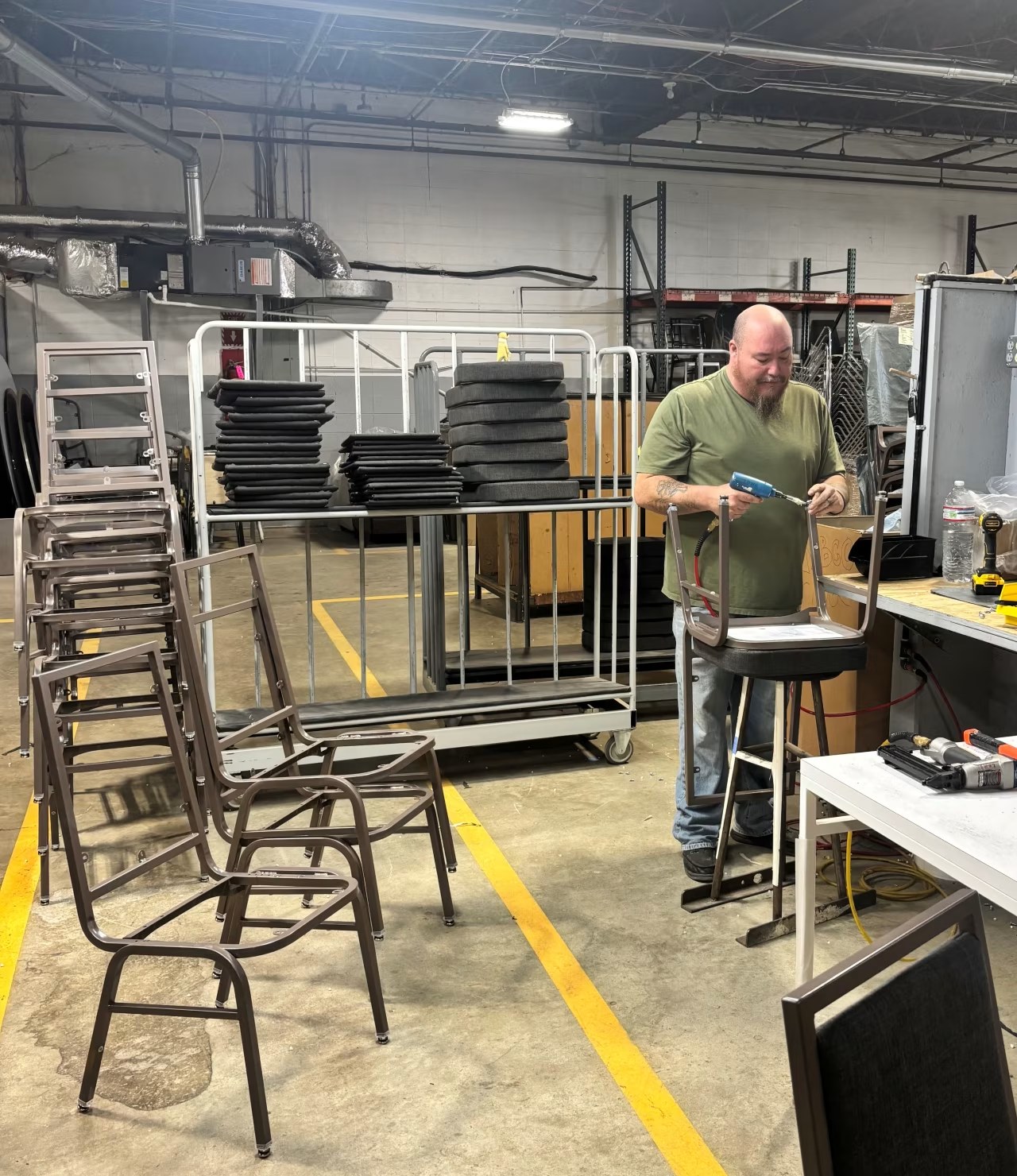
In Tennessee, a plant operated by Daniel Paul Chairs—best known for assembling office chairs with imported Chinese components—has begun diversifying its supply base. Plant manager Carla Mitchell noted that “the new tariff environment allows us to consider sourcing more components domestically or from lower‑duty countries, which could protect up to 150 jobs at our Murfreesboro facility.” Mitchell’s statement, made on July 3, 2024, reflects a broader sentiment among mid‑size manufacturers that tariff relief can stabilize employment.
Labor economist Dr. Samuel Ortiz of the Economic Policy Institute emphasized that “lower import duties reduce production costs, enabling firms to expand output and retain or add workers.” Ortiz’s 2024 briefing projected that the tariff cut could generate $3.2 billion in incremental GDP for the manufacturing sector over the next 12 months, supporting roughly 12,000 additional jobs if firms reinvest savings into capacity upgrades.
However, the benefits are uneven. The same BLS data showed that regions heavily reliant on Chinese‑origin parts, such as the Pacific Northwest, experienced only a modest 0.8 percent job growth, suggesting that geographic supply‑chain composition mediates the employment impact.
Companies like ValvoMax are already announcing hiring plans. In a June 28, 2024 press release, ValvoMax pledged to add 150 production line workers in its Ohio facility to meet anticipated demand spikes, citing the tariff reduction as a key catalyst.
These developments illustrate how a single policy shift can reverberate through the labor market, prompting both hiring expansions and strategic workforce planning. The subsequent chapter examines how manufacturers are rebalancing their global sourcing footprints in response to the new tariff regime.
Global Supply Chains Rewire: From China to India and Beyond
Shifting import origins after the ruling
Prior to the June 2024 decision, U.S. customs data indicated that 55 percent of imported auto‑parts originated from China, 30 percent from India, and the remaining 15 percent from a mix of Mexico, Vietnam and Eastern Europe. The higher 10 percent duty on Indian parts had nudged many firms toward Chinese suppliers despite ongoing geopolitical tensions.
Post‑ruling, analysts at Trade Insights observed a rapid reallocation of import volumes. Within two weeks of the Court’s opinion, the share of Indian‑origin parts rose to 38 percent, while Chinese imports slipped to 45 percent, as firms capitalized on the reduced 5 percent duty. This shift is especially pronounced in the Midwest, where ValvoMax’s Ohio plant now sources 60 percent of its oil‑change kits from Indian manufacturers.
Supply‑chain strategist Elena García of the International Trade Council warned that “while the tariff cut makes Indian sourcing more attractive, firms must still manage quality‑control and logistics challenges that differ from Chinese supply networks.” García’s 2024 report highlights that lead times for Indian components average 22 days versus 14 days for Chinese parts, a factor companies must weigh against cost savings.
For workers on the shop floor, the transition carries both opportunities and adjustments. At the Murfreesboro facility of Daniel Paul Chairs, line supervisor James O’Neil reported that technicians are undergoing a three‑day training program to handle new fastening standards required for Indian‑made chair frames, a change prompted by the altered cost structure.
Overall, the diversification trend reflects a broader industry desire to mitigate single‑source risk while leveraging tariff differentials. As firms recalibrate, the next chapter explores the financial metrics that illustrate the magnitude of these supply‑chain shifts.
Future Outlook: How Ongoing Trade Litigation Could Shape the Next Decade
Key legal milestones shaping tariff policy
Since the 2017 enactment of the Trade Facilitation and Trade Enforcement Act, the U.S. Supreme Court has ruled on five major cases that directly affect import duties. Notable milestones include the 2018 decision upholding a 25 percent steel tariff, the 2019 reversal of a 15 percent aluminum duty, the 2021 affirmation of Section 301 actions against China, and the recent 2024 ruling that slashed the Indian auto‑parts duty.
Legal scholar Professor Amelia Rhodes of Harvard Law School argues that “the Court’s evolving jurisprudence signals a willingness to scrutinize executive trade actions, especially where statutory authority is ambiguous.” Rhodes’ 2024 monograph predicts at least three more high‑profile cases before 2027, focusing on emerging technologies such as electric‑vehicle batteries and rare‑earth minerals.
For businesses, the uncertainty translates into strategic risk. A 2024 survey by the Manufacturing Leadership Council found that 62 percent of CEOs plan to increase cash reserves to hedge against potential tariff reversals, while 41 percent are accelerating automation projects to offset any future cost spikes.
Financial markets have already reacted. The S&P 500 Industrials index dipped 1.2 percent on the day of the June 12, 2024 decision, reflecting investor caution about the volatility of trade policy. However, analysts at Goldman Sachs project a 0.8 percent upside for the sector over the next 18 months if the current legal trend continues toward tariff moderation.
Looking ahead, policymakers are also weighing legislative reforms. A bipartisan bill introduced in the Senate on July 15, 2024 seeks to establish a “Trade Impact Review Board” that would require a cost‑benefit analysis before any new tariff is imposed. If passed, the board could add an additional layer of scrutiny, potentially limiting future abrupt duty changes.
The confluence of court decisions, legislative proposals, and corporate risk‑management strategies will define the next decade of U.S. trade policy. Companies that embed legal foresight into their supply‑chain planning are poised to capture the upside, while those that remain reactive may face heightened cost pressures.
Frequently Asked Questions
Q: What Supreme Court ruling lowered U.S. tariffs on auto parts?
In June 2024 the Supreme Court struck down portions of the Trump administration’s Section 301 tariffs on Indian auto‑parts, cutting the duty rate by roughly half and creating immediate cost relief for manufacturers.
Q: How are U.S. manufacturers responding to the tariff cut?
Companies are rapidly re‑configuring supply chains, releasing held inventory, and negotiating new contracts to capture the lower duty rates, with many expecting multi‑million‑dollar savings.
Q: Will the tariff reduction boost U.S. job growth?
Analysts project that lower import duties will encourage reshoring and expansion of domestic production, potentially adding thousands of manufacturing jobs over the next two years.
