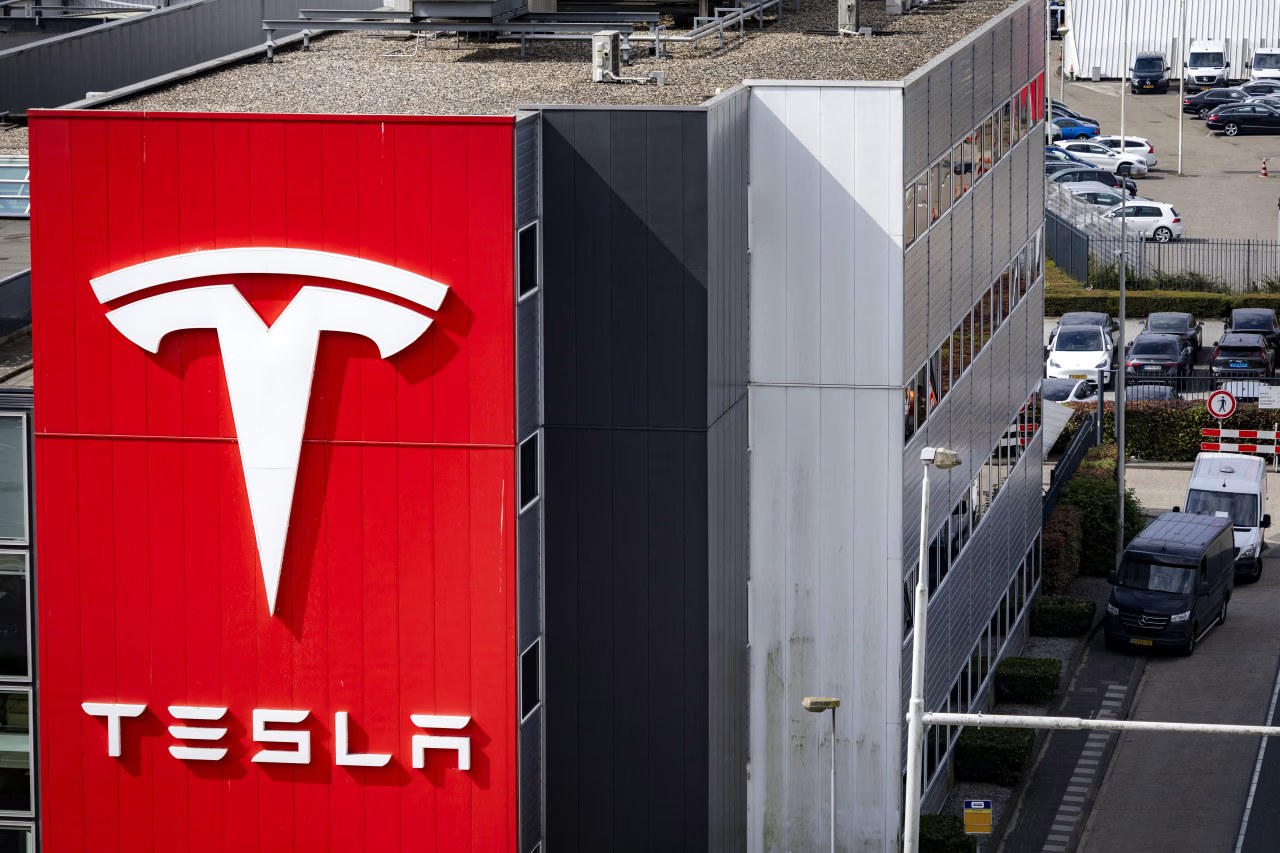
Tesla Registrations Surge 29% in EU, Halting 13-Month Slide
- February EU-only Tesla deliveries rose 29% year-over-year, the first gain since January 2023.
- Broader European region registrations hit 17,664 units, up almost 12%.
- ACEA data show Model Y leading the rebound as Chinese rival BYD doubles its own volume.
- Analysts warn Tesla’s pricing strategy and aging line-up face intensifying competition ahead.
The numbers end Tesla’s longest European retreat since 2019—and set up a pivotal spring for Elon Musk’s EV pioneer.
TESLA—Tesla Inc. has snapped a year-long losing streak in Europe, posting a 29% jump in European Union registrations during February and a near 12% rise across the wider continent, according to fresh data from the European Automobile Manufacturers’ Association (ACEA). The rebound, Tesla’s first since January 2023, lifts February deliveries to 17,664 cars across 31 markets and offers Elon Musk’s company an early signal that aggressive price cuts and inventory clearances are finally stirring demand.
The turnaround is more than symbolic. ACEA figures show Tesla shed roughly 40,000 European sales last year as supply-chain snarls, high interest rates and a wave of cheaper Chinese electric vehicles eroded its once-dominant position. February’s gain does not erase those losses, but it ends a psychological skid that had investors questioning whether the world’s most valuable automaker had lost its growth engine in the world’s second-largest EV arena.
“Any positive comp after 13 negative months is meaningful,” says Matthias Schmidt, an independent auto analyst who tracks EU registration data. “The question now is sustainability—can Tesla hold the line without endless price reductions?”
Inside the Numbers: How Tesla Stopped the Bleeding
Tesla’s European resurgence is anchored in two intertwined metrics. ACEA’s February tally of 17,664 new registrations across the EU, U.K., EFTA and micro-states marks a 11.9% year-over-year uptick, the first since the 14.8% gain recorded in January 2023. Drill down to the 27-nation EU bloc and the acceleration jumps to 29%, outpacing the overall EU passenger-EV market’s 9% growth and signaling that Tesla outperformed the sector for the first time in 14 months.
The driver is overwhelmingly the Model Y. Industry estimates compiled by Schmidt Automotive show the compact SUV accounted for roughly 70% of Tesla’s European volume last year, with the Model 3 sedan contributing most of the remainder. February’s registration mix mirrors that ratio, according to national ministry data from Norway, the Netherlands and France, where Model Y alone captured 12% of all EV sales. “Model Y has become the default EV for families trading out of premium SUVs,” Felipe Munoz, global automotive analyst at JATO Dynamics, tells WardsAuto. “Its 2023 facelift and successive price cuts kept it relevant even as newer rivals hit showrooms.”
Price remains the lever. Tesla trimmed Model Y list prices by €3,000–€5,000 in Germany, France and Belgium between December and February, mirroring U.S. markdowns that helped the brand clear a glut of inventory built up during the 2023 production surge at the Berlin-Brandenburg Gigafactory. The plant, which produced 235,000 cars in 2023, now ships roughly 60% of its output to EU customers, up from 45% a year ago, according to factory statistics released by the state of Brandenburg.
Yet the gain is relative. Tesla’s European EV market share still languishes around 17%, down from 22% at the end of 2022, as BYD, MG and NIO collectively added 180,000 registrations over the same 12-month span. “Tesla is climbing out of a hole it dug itself,” says Timm Degen, senior researcher at Ferdinand Dudenhöffer’s CAR Center. “One month does not reverse structural share loss.”
Charting Tesla’s 13-month retreat and February rebound
A line-chart tracing ACEA’s monthly Tesla registrations from January 2023 through February 2024 shows a relentless slide that bottomed out at 11,400 units last October before a gradual climb that culminated in February’s 17,664-unit figure. The trend line underscores both the depth of last year’s slump and the fragile nature of the current recovery.
Forward-looking indicators add caution. Tesla’s European order backlog, estimated by research firm Dataforce at 28 days of supply in January, narrowed to 22 days in February—still above the 15-day threshold most automakers regard as healthy, but moving in the right direction. “Tesla has bought itself breathing room,” says Munoz. “Whether it can turn that into consistent share gains depends on product cadence and pricing discipline.”
BYD and the Chinese Onslaught: Why Tesla’s Margin for Error Is Gone
If Tesla’s February rebound offered relief, Chinese rival BYD served notice that the fight for Europe is only intensifying. Registrations of BYD passenger cars in the EU more than doubled in February to 6,700 units, lifting the Shenzhen-based company’s European EV share to 7.4% from 4.2% a year earlier, according to Dataforce. The gain came on the back of a €1,000-€2,000 price hike across BYD’s Dolphin and Atto 3 models—an indication that BYD is confident it can command higher prices while still undercutting Tesla by 10-15% on comparable trim levels.
“BYD’s battery cost advantage is structural,” says Dr. Wolf-Dieter Hoppen, professor of automotive economics at the University of Muenster. “Even with 21% EU import tariffs, their cost per kilowatt-hour is 30% below most European incumbents.” Hoppen’s research, published in February, estimates BYD’s European break-even point at 450,000 annual sales—roughly triple its current volume—thanks to scale economies in lithium-iron-phosphate (LFP) cells and vertical integration that stretches from mining to dealerships.
Stellantis, Renault and Volvo are feeling equal pressure. Combined European registrations of the Peugeot e-208, Renault Megane E-Tech and Volvo EX30 fell 8% in February even as the overall EV market rose 9%, according to ACEA. Analysts attribute the slide to consumers waiting for refreshed models due later this year, but also to aggressive pricing by both Tesla and BYD that forced incumbents to defend margins rather than chase volume.
Tesla’s response so far is a classic pincer: keep Model Y priced within €2,000 of BYD’s Seal U SUV while preparing a refreshed “Juniper” Model Y for European deliveries in Q1 2025. leaked images from supplier networks show revised front-end styling and an upgraded interior that mirrors the recently launched Model 3 Highland. “The product cadence is critical,” says JATO’s Munoz. “Without visible differentiation, Tesla risks becoming just another premium EV in a sea of cheaper Chinese alternatives.”
Market-share bar chart: Tesla vs BYD across Europe
A bar chart comparing February 2024 EV market share in the EU shows Tesla at 17%, BYD at 7.4%, SAIC’s MG at 5.1%, Geely’s Volvo at 4.8% and Stellantis’ Peugeot at 4.3%. The visualization captures how Chinese brands collectively control more than 20% of Europe’s battery-electric segment, up from 13% a year ago. “The tipping point has passed,” says Dudenhöffer. “Chinese OEMs no longer compete on price alone—they compete on design, software and perceived quality.”
What remains unclear is profitability. BYD does not break out European margins, but company filings show its overseas auto segment posted a 3.2% operating margin in 2023, far below Tesla’s 9.6% automotive gross margin. “BYD can afford a European price war far longer than Tesla can afford margin erosion,” warns Hoppen. “Musk needs fresh product, not fresh price cuts, to stabilize share.”
Is Berlin-Brandenburg Tesla’s Secret Weapon or Its Achilles’ Heel?
Tesla’s European pricing flexibility hinges on output from its only European plant, the 740-acre Berlin-Brandenburg Gigafactory. State economics ministry data show the facility produced 23,800 cars in February, a monthly record that lifted annualized capacity to 287,000 units—still shy of the 500,000-unit nameplate target Tesla outlined at the 2022 opening, but enough to cover roughly 55% of Tesla’s European sales. The rest arrives by ship from Shanghai and, increasingly, from Austin-built Cybertrucks reserved for U.S. customers.
That mix gives Tesla an unusual cost advantage. Bernstein Research calculates that cars built in Grünheide enjoy a €3,200 logistics cost saving versus Shanghai imports, plus eligibility for €2,000 German EV incentives that apply only to locally produced vehicles. Combined with lower labor costs than legacy German plants—Tesla pays €38 an hour including benefits versus €52 at Volkswagen—the Berlin factory can deliver Model Y SUVs to German customers at a landed cost 12% below imported Teslas, according to a February note from UBS Evidence Lab.
Yet ramp-up challenges persist. Tesla planned to hit 10,000 units per week by the end of 2023; current output hovers around 6,000. Labor turnover at the plant runs 9% annually, above the 6% German auto average, and local officials say 1,300 additional skilled workers are needed to reach full capacity. “Tesla underestimated training time for German standards,” says Ulrike Höfken, Brandenburg’s former environment minister. “Every week under capacity costs them 1,500 units they have to import from Shanghai at higher cost.”
Expansion is on hold. Tesla withdrew a 2023 application to raise capacity to one million units after local protests over water usage. A revised environmental impact study is due in June; approvals could take 12–18 months. In the meantime, Tesla is reconfiguring the existing paint shop to handle two additional colors and preparing a 4680-cell battery line that management says will cut Model Y cost per unit by €2,500 once fully operational in 2025.
Capacity vs output KPI snapshot
A bullet-KPI grid comparing Berlin-Brandenburg’s current metrics: weekly output 6,000 vs 10,000 target; annualized capacity 287,000 vs 500,000 nameplate; workforce 8,000 vs 12,000 required for full run-rate; and local content share 60% vs 80% long-term goal. The visualization underscores how much headroom remains—and how Tesla’s European cost edge depends on closing the gap.
“Berlin is Tesla’s margin shock absorber,” says Daniel Roeska, senior auto analyst at Bernstein. “If they can’t scale it, they’ll be forced to keep importing from Shanghai at razor-thin margins or raise prices and cede share to BYD.” With EU anti-subsidy probes into Chinese EVs looming, domestic production may prove decisive in maintaining price parity without eroding profit.
What a Sustained Recovery Means for Tesla’s Global Valuation
Tesla’s market capitalization added $26 billion on the first trading day after ACEA released February data, a one-day gain of 7.4% that reflected relief more than exuberance. At 58× forward earnings, Tesla still trades at a 4× premium to legacy automakers and a 2× premium to rival EV pure-plays such as BYD and Lucid, according to S&P Capital IQ. Sustaining that multiple depends on proving Europe is no longer a drag.
“Europe is the swing region for Tesla’s 2024 delivery guidance,” says Joseph Spak, RBC Capital Markets auto analyst. “Management has penciled in 300,000 European units, implying 25% growth after a 13% decline last year.” Spak’s model shows every 10,000-unit deviation from plan moves Tesla’s annual earnings per share by $0.06, or $190 million in operating profit given current pricing discipline.
Price cuts complicate the math. Model Y long-range prices in Germany have fallen 22% since January 2023 to €44,990, erasing gross profit per unit by an estimated €1,800, according to UBS. Yet the same analysts note that Berlin-built Model Ys carry a 19% gross margin—still 400 basis points above VW’s ID.4—leaving room for further tactical reductions if Chinese rivals escalate discounting.
Investor attention now turns to March and April order intake. European leasing companies, which absorb roughly 42% of Tesla’s fleet sales, typically sign annual contracts in Q1. Dataforce says Tesla has already secured 48,000 fleet orders for 2024, up 18% versus last year, but at average selling prices 6% lower. “Volume is recovering, but mix is deteriorating,” says RBC’s Spak. “That’s the trade-off Tesla investors need to monitor.”
Forward valuation scenario table
A three-scenario table outlines Tesla’s 2024 European revenue at varying ASPs and volumes: bear case 240,000 units at €42,000 ASP yields €10.1 billion; base case 300,000 units at €44,000 equals €13.2 billion; bull case 350,000 units at €46,000 generates €16.1 billion. The range illustrates how sensitive Tesla’s top-line—and by extension its premium valuation—is to sustaining the February momentum.
“Tesla’s multiple assumes flawless execution,” says Pierre Ferragu, managing partner at New Street Research. “If Europe surprises again on the upside, the stock could rerate toward 70× earnings. If not, expect compression back to 40×.” With Cybertruck still absent from European roads and the next-gen platform delayed to 2026, Model Y volume in Europe is effectively Tesla’s valuation hinge for the next 18 months.
Can Tesla Hold the Line Through 2025?
Tesla’s February rebound buys time, not certainty. Management guides for 2.3 million global deliveries in 2024, implying a 20% jump that hinges on Europe adding 60,000 incremental units after a year of decline. Achieving that target will depend on three levers: the Model Y refresh due in Q1 2025, continued Berlin-Brandenburg ramp-up, and fending off a second wave of Chinese entrants including Leapmotor and Xpeng.
The Model Y Juniper—internally codenamed “Juniper”—is already in pilot production in Texas and will reach European showrooms by March 2025, according to supplier memos viewed by the Wall Street Journal. Changes include slimmer headlights, new alloy designs and, crucially, an upgraded 15.4-inch center display with AMD Ryzen graphics. More important for margins, the refresh is expected to reactivate Tesla’s order pipeline without the need for further price cuts, historically worth 8-10% volume bumps, according to JATO data from previous Model 3 and S launches.
Competition will only intensify. BYD plans to launch its Seal U DM-i plug-in hybrid in Europe this summer, targeting 50,000 annual units at a €35,000 price point—€10,000 below Tesla’s entry Model Y. SAIC’s MG brand will import the Cyberster roadster and a facelifted MG4, while Leapmotor has partnered with Stellantis to build the T03 city car in Poland, dodging import tariffs. “By 2026 every major Chinese OEM will have local European assembly,” says UBS analyst Patrick Hummel. “Tariff shields disappear and pure cost competition begins.”
Meanwhile, Tesla’s own product cadence is slowing. The next-gen platform, once slated for 2025, is now penciled in for 2026 at the earliest, meaning Model Y will face mid-cycle competition from an entirely new VW ID. family as well as Renault’s Twingo successor, both targeting €25,000 base prices. “Tesla will need to stretch the Model Y lifecycle an extra 18 months beyond plan,” says RBC’s Spak. “That’s a tall order in the fastest-moving segment of the market.”
Timeline: Tesla’s European catalysts and competitive threats
A timeline visualization plots key milestones: June 2024—Berlin factory 4680 battery line pilot; September 2024—EU decision on Chinese EV tariffs; March 2025—Model Y Juniper launch; July 2025—VW ID.2 entry at €25,000; 2026—Tesla next-gen platform and potential €20,000 model. The sequence highlights how narrow Tesla’s window is to entrench share before a flood of low-cost competition arrives.
“Tesla’s brand equity is still strong, but it’s perishable,” says Schmidt. “If February’s momentum fades into spring, investors will question whether 2024 guidance is achievable.” For now, one month of growth has restored hope; sustaining it through 2025 will determine whether Tesla re-establishes Europe as a growth engine—or cedes the continent to faster-moving rivals.
Frequently Asked Questions
Q: How many Teslas were registered in Europe in February?
17,664 Teslas were registered across the EU, U.K., Iceland, Liechtenstein, Norway and Switzerland, a 12% rise year-on-year according to ACEA.
Q: Which Tesla model is driving the rebound?
Industry analysts and registration data show the Model Y compact SUV remains Tesla’s volume engine in Europe, outselling all other single EV models in 2023.
Q: How long was Tesla’s sales slump in Europe?
ACEA monthly data confirm Tesla had not posted a year-over-year registration gain since January 2023, making February’s rise the first increase in 13 months.
Q: Is Tesla still losing share to Chinese rivals?
Yes. While Tesla’s EU-only sales leapt 29%, BYD’s registrations more than doubled in the same period, trimming Tesla’s European EV share to roughly 17%.
📰 Related Articles
- Protein-Bar Brand David Claps Back at TikTok’s ‘Mean Girls’ Jabs Over Label Lawsuit
- China’s Morality Campaign Threatens Global Wine Trade, New Losses Emerge
- Robin Zeng Warns U.S. EV Industry Faces Collapse Without China’s Battery Giant
- Estée Lauder Pursues Puig Merger to Forge Worldwide Beauty Powerhouse
