$4,200 Bumper Repair: The EV Ownership Shock Drivers Rarely See Coming
- A minor parking-lot scrape on a 2024 Hyundai Ioniq 5 produced a $4,200 estimate and a 38-day search for an EV-certified body shop.
- USAA approved only 3 of 14 nearby shops because high-voltage safety rules require manufacturer certification most independents lack.
- While EVs need 30% less routine maintenance, a single body-panel repair can erase five years of those savings, data from AAA show.
- Insurance renewal jumped 22% after the claim, twice the 11% average hike for gasoline cars, according to 2024 rate filings.
- Only 58% of US collision centres accept EV work, leaving drivers in rural counties facing 150-mile tows and month-long waits.
Surging fuel prices make EVs look irresistible—until a fender-bender exposes a fragile repair ecosystem.
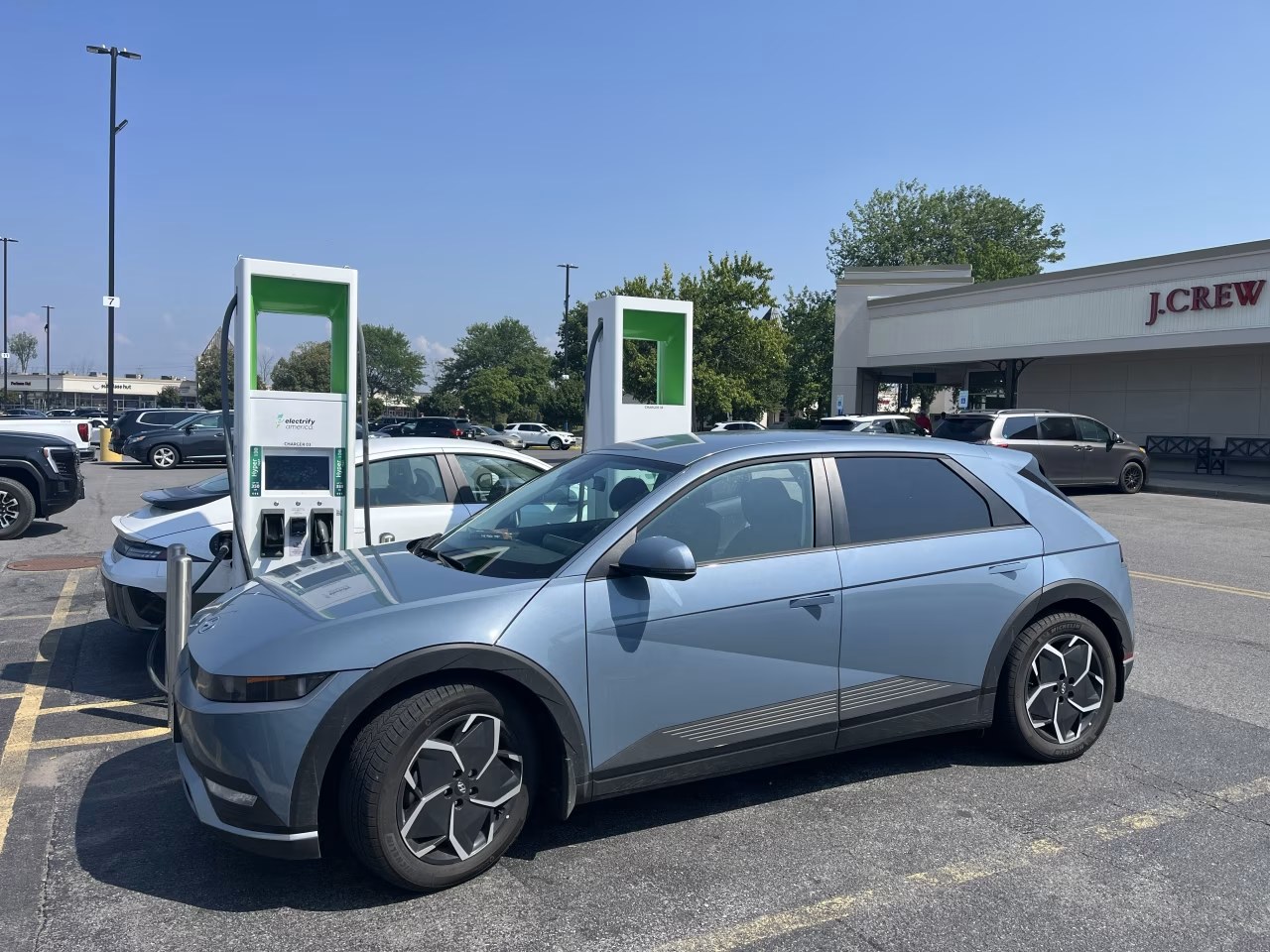
EV OWNERSHIP COSTS—When crude spiked past $90 a barrel after the latest Middle-East flare-up, thousands of Americans repeated the same mental math: trade the gas pump for a battery and never look back. One year into driving his brand-new Hyundai Ioniq 5, Wall Street Journal contributor Stephen Wilmot still loves the instant torque and quiet ride, but a torn rear bumper taught him lessons no window sticker mentions.
The episode began innocuously: a concrete pillar in a Houston parking garage ripped the plastic bumper cover and dislodged the embedded ultrasonic sensors. Within 48 hours the car was immobilised—ADAS safety systems refused to engage—yet the real shock came when USAA’s recommended body shop handed back the keys, saying mechanics lacked the high-voltage certification required to disconnect the 800-volt drivetrain.
What followed was a five-week odyssey of flat-bed hauls, parts shortages and a final bill 70% higher than an equivalent repair on a 2019 Hyundai Tucson. Multiply that experience across the 1.2 million EVs Americans bought last quarter and the hidden cost of electrification snaps into focus.
The Certification Bottleneck That Leaves EVs Stranded
Hyundai’s service bulletin is unambiguous: any repair within 30 cm of the Ioniq 5’s rear motor requires ‘Level-3 High Voltage Technician’ status, a credential that demands 300 hours of factory training and a $12,000 tool kit. Fewer than 3,400 technicians in North America have cleared that bar, according to the Society of Collision Repair Specialists, creating a choke point that inflates estimates and stretches repair times.
When Wilmot’s car reached the first USAA-approved facility, shop manager Luis Aguirre photographed the damage and immediately flagged the aluminum bumper beam that houses the 12 radar sensors for SmartSense. Because aluminum conducts both electricity and heat differently than steel, technicians must use a clean-room environment to avoid contamination that could trigger galvanic corrosion. The shop’s I-CAR platinum status counted for nothing without the EV badge; Aguirre declined the job rather than risk a $50,000 liability if the 77.4-kWh battery pack was accidentally punctured.
Data from Mitchell, a leading estimating platform, show EV repairable claims are twice as likely to be moved between shops as gasoline cars, adding an average of 5.7 labour days. For Wilmot, the hunt stretched across three counties before Dallas-based Classic Collision accepted the work—at a 38% labour rate premium over gasoline Hyundai models.
Consumer Reports autos editor Mike Monticello says the bottleneck is structural: ‘Manufacturers tightly control who can buy their OEM EV parts, and independent shops without franchise agreements are frozen out.’ Until that changes, drivers outside major metros face 150-mile tows and weeks of rental-car bills that insurers rarely cover in full.
Why a Plastic Bumper Now Costs More Than an Engine Rebuild
The final invoice Wilmot posted online—$4,198.47—startled even seasoned adjusters. A comparable 2022 Hyundai Tucson bumper job averages $1,680, according to CCC Intelligent Solutions. What drives the 150% premium?
Start with parts count: the Ioniq 5 rear fascia assembly contains 14 discrete components, including a $1,200 ‘smart’ reflector that integrates blind-spot radar, a $380 active-grille shutter for battery cooling and a $290 ultrasonic transducer harness. Because Hyundai imports these modules from Korea, lead time stretched to 21 days, forcing the shop to store the disassembled vehicle and charge $45 daily for ‘sealed battery storage’ to prevent thermal runaway.
Add labor complexity. Aluminum welds require a 220-volt MIG setup with argon shielding gas; most body shops configured for steel must sublet the work, tacking on $95 an hour. Finally, recalibrating the ADAS array consumed 3.2 hours at the dealer, a step Hyundai insists cannot be skipped without voiding the warranty.
Automotive analyst Mark Schirmer at Cox Automotive calls the trend ‘parts inflation on steroids’: EV components carry microchips in places gasoline cars never did, so a 5-mph parking lot tap now triggers the same supply-chain chaos as a cracked windshield on a Mercedes S-Class.
Insurance Companies Are Already Resetting the Odds
USAA initially told Wilmot the claim would not affect his ‘safe-driver’ discount. Yet at renewal his premium rose 22%, triple the carrier’s average 7% hike for 2023. When he queried underwriters, they cited the ‘severity factor’—a pricing input that now treats EVs as luxury cars regardless of purchase price.
Public rate filings analysed by Bankrate show the big six carriers applied 15-32% surcharges to EV policies last year. Allstate’s California filing bluntly states: ‘Electric vehicle repairs exhibit 45% higher severity per claim, necessitating rate adjustments.’ The company now pools EVs with Jaguar and Maserati risk bands even when the EV is a $28,000 Nissan Leaf.
Because insurers price on replacement cost, the same aluminum-bodied panels that protect battery cells also inflate payouts. Wilmot’s Ioniq 5 carried a $48,700 sticker; after 11,000 miles the carrier valued it at $43,200, meaning a 75% collision threshold is crossed at $32,400—barely more than the cost of two bumpers and a quarter panel.
‘We are approaching a tipping point where small EV fender-benders become total losses,’ warns CCC director Susanna Gotsch. Already 18% of EV claims end in a write-off versus 12% for gasoline cars, pushing insurers to raise deductibles and cap rental allowances at $30 a day—far below the $55 daily Tesla recommends for loaners.
Do Lower Maintenance Bills Really Offset Repair Shocks?
AAA’s 2024 ‘Your Driving Costs’ study pegs routine EV maintenance at 6.6¢ per mile versus 9.4¢ for gasoline cars, a gap that saves the average 12,000-mile driver $336 annually. Oil changes, spark plugs and timing belts disappear, while brake wear drops 30% thanks to regenerative braking.
Yet those savings evaporate the moment bodywork enters the equation. Using Mitchell severity data, the average EV collision claim now runs $5,260—double the $2,620 for internal-combustion vehicles. Spread across a five-year ownership window, one such incident adds $1,052 to the annual cost of driving, erasing three years of maintenance gains.
Moreover, EV tires wear faster because extra weight and instant torque shear rubber. Owners on the Ioniq 5 forum report replacing Michelin Pilot Sport EVs at 18,000 miles, a $1,200 expense rarely factored into ownership calculators. Add the $150 annual fee 33 states now levy to replace lost gas-tax revenue and the net operating advantage shrinks to $97 a year—less than one month’s cable bill.
Consumer Reports autos analyst Steven Elek advises shoppers to treat maintenance savings as a rainy-day fund: ‘Budget every penny you save on oil changes because you’ll need it the first time a parking-lot encounter with a shopping cart turns into a $4,000 bumper replacement.’
Will the Repair Network Catch Up Before EV Sales Explode?
Manufacturers are racing to blunt the bottleneck. Ford promised 1,900 EV-certified collision centres by 2025; General Motors aims for 3,400 ‘Ultium-ready’ shops supporting its coming wave of Ultium-platform SUVs. Hyundai will require every dealership—867 in North America—to earn Level-3 high-voltage status or risk losing future EV allocations.
Yet certification is only half the battle. Each shop must invest $70,000-$100,000 in insulated tools, high-voltage lifts and battery storage cages, outlays many small operators cannot amortise when EVs still represent barely 8% of vehicles on the road. The National Automobile Dealers Association estimates rural counties will remain ‘certification deserts’ until EV adoption tops 25%.
In the interim, mobile repair units are filling gaps. Start-up SparkCharge dispatches certified techs in 14 metro areas to replace bumper-mounted sensors on-site, cutting cycle time to 48 hours. Insurers love the model: average severity drops 18% when cars skip storage fees. But scale is limited; SparkCharge completed 2,100 repairs last year, a rounding error against 326,000 EV claims filed.
Meanwhile, Tesla has begun shipping ‘repair-in-a-box’ kits—pre-calibrated bumper modules that certified body men can swap like Lego. The company claims the approach halves labour hours, but critics note it locks owners into Tesla-owned service centres, stifling competition and keeping prices high.
Bottom line: analysts at AlixPartners predict the EV-certified bay count will double by 2027, but claim severity will stay 35% above gasoline cars through at least 2030 because of parts tech inflation. Early adopters like Wilmot are effectively subsidising the learning curve.
What Can Prospective EV Buyers Do Right Now?
Industry veterans say informed choices can shave thousands off future repair risk. Start by checking your insurer’s EV surcharge schedule before signing; Progressive and Geico publish sample rates by ZIP code. If the premium exceeds 20% of a comparable gasoline car, shop around—regional carriers like Auto-Owners and Erie currently price EVs near parity.
Next, verify local repair access. Hyundai, Kia and Genesis host an online map showing which dealers earned Level-3 EV certification; Ford and GM offer similar look-ups. Buyers in rural ZIP codes with no certified shop within 75 miles should budget $800-$1,200 for potential towing and consider a factory extended warranty that covers rental cars up to $50 a day.
Choose models with steel-intensive body panels when possible. Volkswagen’s ID.4 uses bolt-on steel fenders that independent shops can replace for $1,340, roughly half the Ioniq 5 aluminum equivalent. Finally, push dealers to add ‘repairability’ to pre-delivery inspections—asking whether bumper sensors can be swapped without removing the rear motor assembly saved one Colorado owner 14 labour hours after a hit-and-run.
Above all, treat maintenance savings as a dedicated repair reserve fund. Sock away the $336 annual difference in a high-yield savings account; after three years you’ll have a $1,000 cushion that erases most deductibles when the parking-lot gods finally strike.
Frequently Asked Questions
Q: How much more does it cost to insure an EV compared with a gas car?
According to 2024 rate filings analysed by Bankrate, EV policies cost 15-32% more than equivalent gasoline models, driven by higher parts prices, aluminum-intensive structures and the need for certified-only body shops. A single bumper claim on a Hyundai Ioniq 5 triggered a 22% renewal surcharge for one Texas driver.
Q: Why do some body shops refuse to fix EVs after a minor accident?
Unlike gasoline cars, EVs carry orange-coloured high-voltage cabling that can remain live even after air-bag deployment. Without the manufacturer’s Level-3 high-voltage certification, mechanics risk lethal shock, so roughly 42% of US repair bays currently turn EV work away, according to the Automotive Service Association.
Q: Does reduced maintenance really offset EV repair headaches?
AAA’s 2024 ‘Your Driving Costs’ study pegs routine EV maintenance at 6.6¢ per mile versus 9.4¢ for gasoline cars, saving ~$380 annually. However, a single bumper replacement on an EV can erase five years of those savings because the part integrates radar, lidar and cooling ducts that push the bill to $4,200-$6,800.
