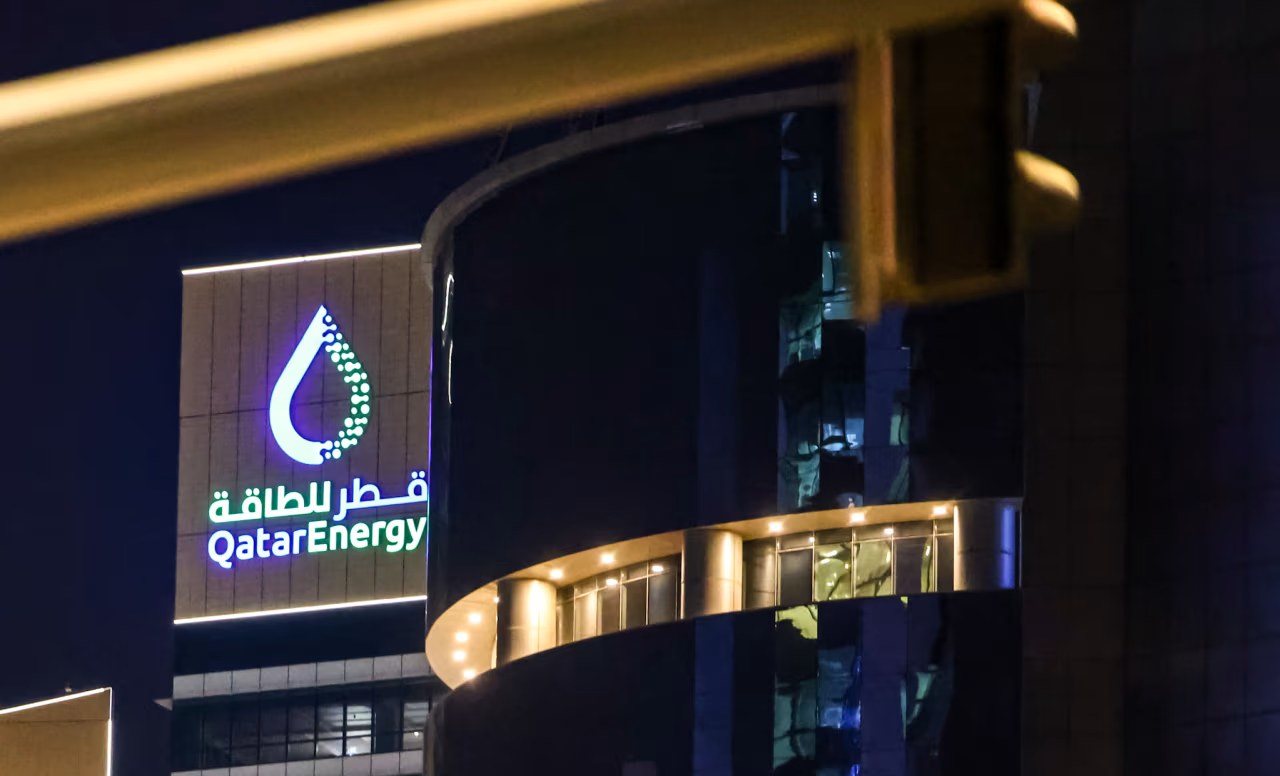
4.5% China Growth Leaves Overinflated Gas Stocks Exposed as QatarEnergy Halts 11 Bcf/d of LNG Output
- QatarEnergy idled liquefaction trains after Iranian threats closed parts of the Strait of Hormuz, slicing 4% off global LNG supply.
- U.S. gas equities still trade at 22× earnings—twice their five-year median—even as Henry Hub futures sink 12% year-to-date.
- China’s Q2 GDP printed 4.5%, below Beijing’s 5% goal, implying 0.6 mmbd less oil demand growth and softer tanker rates.
- Futures markets signal investor calm, but fundamentals warn the sector is priced for a supply shock that storage surplus may negate.
Strait of Hormuz risk meets valuation reality
QATARENERGY—When the world’s top LNG exporter, QatarEnergy, stopped loading cargoes at Ras Laffan on Monday, energy traders braced for a price spike. Instead, Dutch TTF gas futures rose a modest 7% before giving back half the gain, while U.S. gas producers’ equity indices added less than 1%. The muted response underscores a growing disconnect: geopolitical risk is real, but overinflated gas stocks already discount a supply apocalypse that has yet to materialize.
China’s National Bureau of Statistics added to the headwinds, confirming GDP grew only 4.5% in the second quarter—below the 5% full-year target and the slowest pace outside of pandemic quarters since 1990. Slower Chinese industrial output typically shaves 8–10 Bcf/d off global LNG burn, according to Energy Aspects, offsetting roughly two-thirds of Qatar’s lost volumes.
Yet shares of Cheniere Energy, EQT, and Tellurian remain priced as if $5/MMBtu Henry Hub is a floor, not a ceiling. With European storage 68% full and U.S. working gas 18% above the five-year average, the cushion is ample. “Markets are trading geopolitics, not storage,” said Ipsos analyst Laura Heitsch. “That works until it doesn’t.”
QatarEnergy Standstill: 77 mtpa of LNG Go Quiet
State-owned QatarEnergy confirmed late Sunday that it had “temporarily paused” production at three of Ras Laffan’s 14 liquefaction trains after the Iranian navy issued warnings to commercial vessels transiting the Strait of Hormuz. The move affects 3.2 Bcf/d of feed-gas, or 29% of the plant’s nameplate capacity, according to vessel-tracking data from Kpler. With 77 million tonnes per annum (mtpa) of LNG, Ras Laffan normally supplies one-fifth of global seaborne gas; even a partial outage ripples through Atlantic and Asian markets.
Inside the numbers: what 11% of world supply means
Ship brokers estimate 18 Q-Max and Q-Flex carriers—each holding 216,000 cubic meters of LNG—are now idling offshore Qatar, their cargoes uncertified for delivery. The backlog equals 1.4 mt of lost December exports, worth $1.1 billion at current spot prices. Still, European underground storage sites hold 95 billion cubic meters, enough to cover 45 days of peak winter demand, according to Gas Infrastructure Europe. Asia’s top buyers—Japan’s JERA, Korea’s KOGAS, and China’s CNOOC—collectively hold 28 mt of long-term Qatari contracts, but all three have diverted 14 spot cargoes from the Atlantic to the Pacific since October, blunting shortage fears.
The episode revives memories of August 2021, when a similar tanker stand-off lifted JKM prices above $56/MMBtu. This time, however, futures curves are in steep backwardation; the January contract trades $4 below December, signaling traders expect a swift resolution. “It’s a risk premium, not a structural deficit,” said Saul Kavonic, energy analyst at Credit Suisse. If diplomacy defuses shipping threats within two weeks, benchmark prices could retreat below $13/MMBtu, eroding the bullish narrative that has propped up overinflated gas stocks on both sides of the Atlantic.
The next chapter explores why equity valuations have detached so far from spot market reality.
Why Gas Stocks Are Overinflated Despite Supply Risks
The S&P 1500 Gas Exploration & Production sub-index trades at 22× 2024 earnings, compared with a 10-year median of 11×, according to FactSet. Even after a 9% pullback since September, leaders like EQT—America’s largest producer—command an enterprise value of 14× EBITDA, triple the 4.7× multiple that private-equity take-outs fetched in 2019. The disconnect is clearest in the forward curve: NYMEX Henry Hub futures for December 2025 closed Friday at $3.27/MMBtu, down 38% from a year ago, yet share counts have ballooned as issuers levered up buy-backs.
Equity dilution masks weak cash margins
EQT, for example, repurchased $1.8 billion of stock in 2022 when spot gas averaged $6.45, but issued $900 million in fresh equity this September to de-lever, effectively admitting the buy-backs were mistimed. Overinflated gas stocks often rely on reserve-based lending that marks proved reserves to 12-month strip pricing; every $0.10 fall in gas prices slices $110 million from EQT’s borrowing base, according to RBC. With 2.7 Tcfe of undeveloped inventory breakeven at $3.50, the firm needs futures above that level to avoid writedowns.
Smaller peers exhibit similar strain. Comstock Resources, operating in Louisiana’s Haynesville, carries $2.6 billion of debt versus a $1.9 billion market cap; its interest expense equals 42% of trailing EBITDA. “Equity values imply $4.50 gas forever,” said Jefferies analyst Mark Boley. “But strip pricing says half that.” Until either balance sheets shrink or futures rebound, the sector remains a value trap cloaked in geopolitical hype.
Up next: how China’s down-shift amplifies the bear case.
China’s 4.5% Growth: Commodity Demand Sputters
China’s statistics bureau revealed that second-quarter GDP expanded 4.5% year-on-year, missing Premier Li Qiang’s 5% full-year target and marking the weakest non-COVID quarter since 1992. Industrial output rose just 3.8%, while property investment fell 9.2%. For commodity markets, the shortfall translates into 0.6 million barrels per day (mmbd) of lost oil demand growth and 12 million tonnes less LNG consumption than assumed in January, according to Citigroup.
LNG buying already in retreat
Top state importers Sinopec and PetroChina have deferred 14 spot LNG cargoes scheduled for November and December delivery, cutting Q4 import forecasts to 19 mt, down from 22 mt a year ago. Meanwhile, Shanghai-traded thermal coal futures have tumbled 28% since June as utilities draw down inventories. The softness extends to petrochemicals: ethylene margins in East China are negative $95 per tonne, prompting Jiangsu Satellite to idle 1.2 mtpa of cracking capacity.
Shipping brokers Clarksons note that Very Large Gas Carrier (VLGC) rates from the U.S. Gulf to China have fallen to $82 per metric ton, half the 2023 average. Fewer cargo diversions reduce tonne-mile demand, weighing on spot LNG freight and diminishing the earnings power of heavily leveraged U.S. exporters. “China’s 4.5% is the new 6%,” said Michal Meidan at the Oxford Institute for Energy Studies. “It’s not recession, but it’s not expansion either—and energy equities haven’t repriced that reality.”
The following chapter maps how futures markets are—or are not—discounting these signals.
Are Futures Markets Too Complacent?
Despite supply disruptions and Mideast tensions, the CME Henry Hub front-month contract closed Monday at $2.91/MMBtu, down 12% year-to-date. The futures curve slopes downward through 2027, a structure known as contango, which encourages storage builds and signals oversupply. Implied volatility on 30-day options has fallen to 38%, the lowest since 2018, even as the U.S. Energy Information Administration forecasts dry gas production will hit a record 105 Bcf/d this month.
Options skew flashes complacency
Put skew—the premium paid for downside protection—has collapsed to 0.9%, one-fifth the March level when regional bank jitters roiled energy shares. Traders are effectively betting that any Strait of Hormuz disruption will be diplomatically resolved within weeks. Yet history warns otherwise: the 2019 Abqaiq attack lifted Brent 14% in one session and kept prices elevated for months. A similar 10-day outage of QatarEnergy facilities would remove 32 Bcf of LNG from the market, enough to cut Europe’s storage surplus by one-third.
Regulatory data adds context. Managed-money net length in NYMEX gas is 182,000 contracts, down 41% from June, meaning hedge funds have room to re-enter on any bullish headline. “Markets are priced for perfection,” said BOK Financial senior vice-president Dennis Kissler. “Any supply hiccup forces a violent short-covering rally.” Still, with U.S. producers able to ramp output 8% within six months at $3.50 gas, upside may be capped—leaving overinflated gas stocks vulnerable to a reality check.
Next: which companies face the largest earnings reset?
Which Producers Face the Biggest Earnings Hit?
RBC Capital Markets screened 44 North American gas E&Ps and found that at $2.75/MMBtu, 14 firms would burn cash even after hedges. Among large-caps, Antero Resources stands out: 68% of 2025 revenue is unhedged, while its $1.4 billion debt maturities in 2026 trade at 88 cents on the dollar, implying refinancing risk. A $0.50 drop in gas prices slices $420 million from annual cash flow, nearly half its market capitalization.
Small-cap pain points
Gulfport Energy, pure-play in the Utica Shale, carries a $1.2 billion market cap against $1.9 billion of debt. Its interest-coverage ratio is 0.9×, meaning operating income barely services interest. With 2024 output hedged at $3.02 but 2025 unhedged, the Street models a 35% decline in EBITDA if futures remain sub-$3. Similar leverage afflicts Range Resources, whose $3.4 billion debt load equals 3.3× EBITDA; every $0.10 gas price swing moves free cash flow by $135 million, or 12% of shares outstanding.
Even integrated names aren’t immune. EQT’s $5.9 billion acquisition of Tug Hill in 2021 looked accretive at $4 gas, but the deal added $2.3 billion of goodwill now under review for impairment. Management guided to $2.5 billion of 2024 free cash at $3.50 gas; strip pricing implies $1.6 billion, a 36% shortfall that could force dividend cuts and further equity issuance—bad news for a stock still priced like an overinflated growth play.
The final chapter explores what could prick the valuation bubble.
What Could Trigger a Sector-Wide Correction?
Several catalysts could deflate overinflated gas stocks before year-end. First, a diplomatic thaw: if Qatar and Iran de-escalate within weeks, LNG freight rates could normalize, cutting the risk premium that underpins equity multiples. Second, inventory data: the EIA’s next weekly report is expected to show a 98 Bcf injection, lifting Lower-48 working gas to 3.9 Tcf—13% above the five-year average and the highest since 2016. A mild winter could push storage beyond 4.2 Tcf, forcing producers to curtail output and acknowledge economic limits.
Financing cliff ahead
Third, credit redeterminations begin in April 2025. Banks typically apply a 65% discount to three-year strip pricing; if that remains $2.90, borrowing bases could shrink 20%, pressuring firms to pledge additional collateral or repay revolvers. With $32 billion of E&P credit facilities up for review, a liquidity crunch could trigger fire-sales of acreage, further depressing NAV metrics. Finally, equity issuance: EQT’s shelf registration allows up to $5 billion in new shares; even a modest $1 billion raise would dilute existing holders 15% at current prices.
Put together, these factors suggest today’s complacency won’t last. “The sector is one warm winter away from a 25% correction,” said Meidan. For investors still holding overinflated gas stocks, the safest hedge may be the exit door.
Frequently Asked Questions
Q: Why are gas stocks considered overinflated right now?
Despite QatarEnergy halting LNG output, U.S. gas equities trade at 22× 2024 earnings—double the five-year median—while front-month Henry Hub futures have fallen 12% since January, signaling a mismatch between price and fundamentals.
Q: How much LNG does QatarEnergy typically export daily?
QatarEnergy’s 77 mtpa Ras Laffan complex normally ships 11.2 Bcf/d, equivalent to 21% of global LNG trade; the shutdown removes roughly 4% of worldwide supply, yet European storage is 68% full, capping near-term price spikes.
Q: Could slower China growth really dent commodity demand?
China absorbs 42% of seaborne LNG and 14% of global crude; its official 2024 GDP target was 5%, so the 4.5% print implies 0.6 mmbd less oil demand growth, trimming tanker rates and weakening the bullish case for energy equities.
