TotalEnergies Surrenders Two Major U.S. Offshore Wind Leases Amid Trump Pressure
- French super-major TotalEnergies relinquished federal leases covering Carolina Long Bay and New York Bight.
- The exit follows White House efforts to curtail offshore wind development on environmental and economic grounds.
- Move strips up to 7 GW of future capacity from the U.S. pipeline, according to previous lease acreage estimates.
- Decision hands Trump administration a policy win and signals wider investor retreat from U.S. offshore wind.
Energy giants reassess America’s offshore wind gamble as politics shift
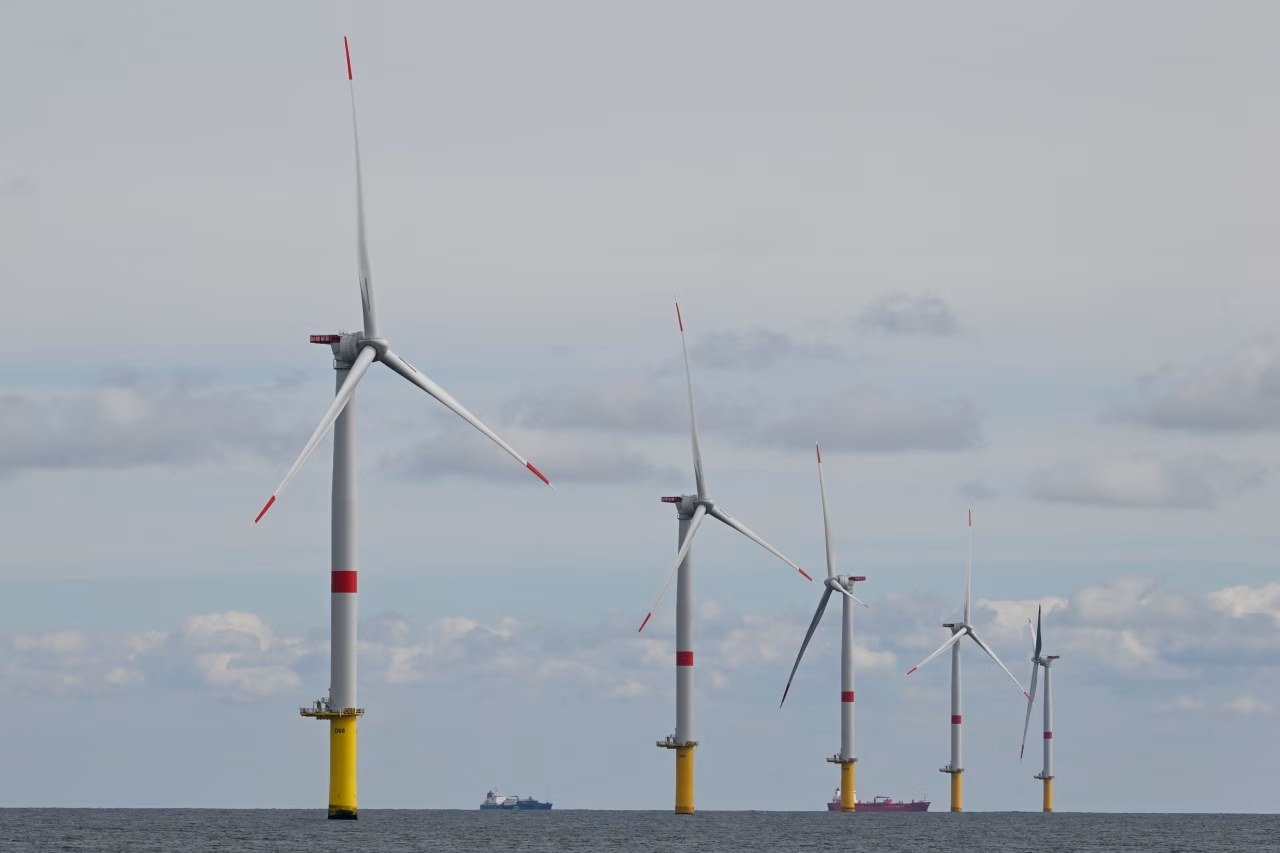
TOTALENERGIES—TotalEnergies on Monday formally walked away from developing any offshore wind projects in U.S. waters, surrendering prized federal lease areas off the Carolinas and New York-New Jersey coasts after months of mounting political headwinds from the Trump administration.
The Paris-based company, among the world’s ten largest publicly traded oil-and-gas groups by revenue, said it had reached agreements with the U.S. Department of the Interior to terminate its lease holdings in the Carolina Long Bay and New York Bight zones—two of the most auctioned offshore blocks on the East Coast. The retreat eliminates what analysts once projected could host turbines generating up to seven gigawatts of electricity, enough to power more than two million homes.
TotalEnergies’ exit marks the first time a European super-major has entirely abandoned the U.S. offshore wind sector, and it arrives as President Donald Trump intensifies criticism of wind energy, arguing turbines “kill birds” and “ruin landscapes.” The decision also underscores how quickly America’s once-booming offshore wind ambitions have cooled under a skeptical federal government.
From Ambition to Exit: TotalEnergies’ U.S. Offshore Wind Timeline
TotalEnergies entered U.S. offshore wind in 2017 when it paid USD 135 million at auction for a 110,000-acre tract in the New York Bight, betting the nation’s shallow Atlantic waters would mirror Europe’s rapid build-out. The company added Carolina Long Bay in 2022 after BOEM Lease Sale 8, spending another USD 48 million for 55,000 acres. Both leases committed TotalEnergies to development milestones and supply-chain investments totaling more than USD 300 million, according to company filings.
Trump pressure accelerates timeline
By late 2024, the administration had slowed federal permitting, citing national-security reviews and marine-mammal concerns. Interior Secretary Doug Burgum publicly questioned whether offshore wind “aligns with America’s energy dominance,” prompting TotalEnergies to freeze geophysical surveys. Analysts at Wood Mackenzie note that average time from lease award to final investment decision in U.S. offshore wind stretched to 11 years, double the North Sea average.
TotalEnergies’ board concluded the political risk premium was too high. “We are reallocating capital to markets with stable regulatory frameworks,” CEO Patrick Pouyanné told investors in February, citing the U.S. offshore wind segment as “no longer investible under current federal posture.” The company will redirect roughly USD 2 billion earmarked for U.S. turbines toward Scandinavian projects where seabed leases run 50 years and grid-connection costs are state-backed.
Industry historians compare the move to BP’s 1990s retreat from U.S. onshore renewables after the Clinton administration’s tax-credit lapse. “Capital flees when policy volatility exceeds technology risk,” says Columbia University energy policy professor Matthew H. Brown. TotalEnergies’ exit, he adds, “sets a precedent for other European utilities reconsidering America’s offshore market.”
The relinquishment becomes effective once BOEM signs the lease-termination agreements, expected this quarter. TotalEnergies will retain its 12.5 percent stake in the 132-MW Icebreaker Great Lakes pilot, but that project remains mired in state-level permitting disputes, leaving the company without a clear path to commercial scale in U.S. waters.
Looking ahead, analysts at Evercore ISI predict further “rationalization” of lease holders, forecasting at least three more exits among non-U.S. players before 2026.
What Did TotalEnergies Actually Surrender?
The New York Bight lease spanned 181 square kilometers roughly 14 miles south of Long Beach, New York, in water depths of 30–40 meters—ideal for 15-MW class turbines. Federal studies estimated a gross resource potential of 5.6 GW, enough to power 1.9 million homes. Carolina Long Bay covers 92 square kilometers 10 miles off Wilmington, North Carolina, with 2.5 GW potential. Combined, the zones represented about 4 percent of all federally issued commercial offshore wind leases.
Financial commitments forfeited
Under standard Outer Continental Shelf lease terms, TotalEnergies had paid USD 183 million in high-bid cash bonuses and faced annual rent escalators of USD 3 per acre. The company also posted an USD 42 million assurance bond to guarantee site-assessment activities. By surrendering, it forfeits both the bonuses and the sunk costs for site-characterization campaigns already completed, including 4,200 line-km of geophysical surveys and 12 environmental studies shared with BOEM.
Industry valuation house FTI Consulting estimates the present value of future cash flows from a 7-GW offshore wind portfolio at USD 14–16 billion under 2023 power-purchase agreement pricing. TotalEnergies’ exit therefore erases a potential USD 1.8–2 billion net-asset-value contribution to its balance sheet, equivalent to 4 percent of the group’s current market capitalization.
Competitors stand ready to absorb the acreage. BOEM can re-offer relinquished leases without waiting for scheduled auctions, and Norway’s Equinor has already signaled interest in redeploying idling installation vessels to any re-issued blocks. “The seabed doesn’t disappear; the resource is still there,” says Timothy Fox, vice-president at ClearView Energy Partners. “But the clock resets, adding five-plus years to first power.”
The surrender also frees TotalEnergies from USD 350 million in committed grid upgrades with PJM Interconnection and North Carolina Electric Membership Corp., obligations that will now shift to future leaseholders or state agencies.
With turbine prices falling 25 percent since 2023, analysts say the relinquished zones could fetch lower bonus bids if re-auctioned, reflecting higher cost-of-capital and a smaller pool of experienced developers.
Is Trump’s Anti-Wind Campaign Reshaping Energy Investment?
Since taking office, President Trump has issued executive orders mandating “bird-impact assessments” for every turbine, instructed the Navy to object to projects near training zones, and pressed BOEM to raise lease rents by 50 percent. While courts have blocked some measures, the cumulative signal has chilled capital markets: offshore wind bonds now trade 220 basis points above utility sector averages, up from 90 bps in 2022, according to S&P Global.
Policy levers and investor response
Interior’s Bureau of Land Management also delayed five Environmental Impact Statements scheduled for 2025, citing new “visual-resource” guidelines. The uncertainty has pushed levelized cost of energy (LCOE) estimates for U.S. offshore wind to USD 114 per MWh, 34 percent above European averages. “Capital is hypersensitive to regulatory drift,” notes Melissa Lott, director of research at Columbia University’s Center on Global Energy Policy. “Even a six-month delay can add USD 300 million to a 1-GW project.”
Insurance carriers are demanding higher premiums. Allianz Commercial now prices offshore wind builder’s-risk policies at 0.45 percent of insured value, up from 0.28 percent last year, attributing the jump to “regulatory and political volatility in the United States.”
TotalEnergies’ exit amplifies these headwinds. “It’s a bellwether,” says Daniel Tishman, vice-chair at Aecom. “When a cash-rich major pulls out, lenders re-price risk across the sector.” Already, Ørsted postponed final investment decision on its 2-GW Garden State project, and Avangrid asked Connecticut regulators to cancel power-purchase contracts for Park City Wind, citing “unfavorable federal policy trajectory.”
The administration’s stance also complicates state goals. New York aims for 9 GW by 2035; losing TotalEnergies’ 5.6 GW tract removes 60 percent of the planned pipeline. Governor Kathy Hochul has floated state-backed offtake agreements, but legislators balk at potential subsidies exceeding USD 200 million per year.
Yet some developers see opportunity. Private-equity firm Stonepeak Partners is raising a USD 3 billion “opportunistic” offshore wind fund betting that suppressed asset prices and eventual policy normalization will yield outsized returns. “We’re playing the cycle,” says partner Rebecca Karp. “Policy risk is real, but the resource is irreplaceable.”
Looking ahead, analysts at Raymond James predict a 30 percent contraction in U.S. installations through 2028 if current federal posture persists, trimming 18 GW of expected capacity and raising wholesale power prices in Northeast markets by USD 6–8 per MWh.
What Happens to the Abandoned Lease Areas Now?
BOEM can re-offer the surrendered leases through either a competitive or non-competitive process. Agency rules allow an “expedited” re-sale if the Interior Secretary determines national interest, skipping the typical 18-month scoping period. Sources at the Department say a re-auction is “likely” late 2025, but only after new visual-impact and whale-protection studies are appended to existing environmental assessments.
Who might bid next?
Equinor, already operating Empire Wind 1-2 off New York, has publicly hinted at expanding its 80,000-acre footprint. Shell, which exited the sector in 2023, is “watching but not committed,” according to a person familiar with strategy. U.S. utility NextEra Energy is circling Carolina Long Bay to pair with its onshore grid infrastructure, though executives want clarity on federal Investment Tax Credit eligibility first.
Chinese OEMs are technically barred by bipartisan Congressional restrictions, but minority stakes under 10 percent are still permissible, creating a potential loophole for supply-chain partnerships. Analysts caution that any hint of Chinese capital could trigger Committee on Foreign Investment in the United States (CFIUS) review, elongating timelines.
Bonus bids are expected to be 20–30 percent below 2022 levels, reflecting higher discount rates and fewer serious bidders. “The days of USD 1 million per megawatt of seabed are gone,” says Anthony Logan, offshore wind valuation lead at Wood Mackenzie. He projects USD 650,000–700,000 per MW if re-auctioned in 2025.
States may also intervene. North Carolina’s General Assembly is debating a bill to create a state-sponsored “offshore wind accelerator” that could pre-lease areas and sell turnkey sites to developers, socializing early-stage risk. A similar New York proposal would let the New York State Energy Research and Development Authority (NYSERDA) acquire leases and auction them once federal policy stabilizes.
Environmental NGOs are pushing for stronger mitigation terms. The National Wildlife Federation wants BOEM to embed a 25-year decommissioning bond and seasonal construction restrictions to protect the endangered North Atlantic right whale, conditions not present in the original TotalEnergies leases.
First power from any re-issued lease is unlikely before 2033, meaning the surrendered zones will remain idle seabed for at least eight years—an outcome that, for now, suits the Trump administration’s goal of slowing what the president calls “windmill sprawl.”
Global Ripple: Will Europe Benefit from TotalEnergies’ Pivot?
TotalEnergies has pledged to redeploy the USD 2 billion earmarked for U.S. turbines into “low-political-risk basins,” namely the North Sea, Baltic Sea, and Norwegian Sea. The company already holds a 40 percent stake in the 3.3-GW Dogger Bank South project in UK waters and is pre-qualified for Norway’s upcoming 1.5-GW Utsira Nord tender. Analysts at BNP Paribas estimate reallocating capital to these areas could lift TotalEnergies’ renewables EBITDA by 12 percent by 2028, assuming 70-80 percent capacity-factor wind and GBP 45 per MWh indexed CfDs.
Competitive landscape in Europe
Equinor, Ørsted, RWE, and Vattenfall dominate Northern European lease rounds, but recent auctions in Netherlands and Denmark saw record-low zero-subsidy bids, squeezing returns. TotalEnergies hopes to differentiate by pairing offshore wind with green hydrogen: its proposed 1-GW HyGreen Teesside project would use 500 MW of dedicated offshore generation to produce 60,000 tonnes of renewable hydrogen for UK steel and chemicals.
European supply-chain bottlenecks remain. Monopile manufacturers like EEW SPC currently run at 95 percent capacity through 2027, and Siemens Gamesa’s 15-MW turbine platform is sold out until 2029. TotalEnergies CFO Jean-Pierre Sbraire told investors the company is “willing to pre-pay for slot reservations” to secure hardware, a strategy few peers have embraced since the 2022 supply-chain crunch.
Currency hedging also favors Europe. With EUR/USD at 1.03, euro-denominated capex for North Sea projects is 12 percent cheaper than two years ago, partially offsetting higher steel prices. The company has locked in forward contracts at 1.05 through 2026, shielding 80 percent of planned turbine purchases.
Policy tailwinds add momentum. The EU’s revised Renewable Energy Directive raises the bloc’s 2030 target to 42.5 percent, while the UK’s Autumn Budget extended 75 percent first-year capital allowances through 2028. Analysts at Bernstein estimate these measures lift after-tax project returns 150–200 basis points versus U.S. assets under current policy.
Yet Europe is not immune to political risk. Norway’s governing coalition is debating a 40 percent resource-rent tax on wind projects, and local opposition in Scotland has delayed cabling permits. Still, executives view these hurdles as manageable compared with the “binary policy risk” in the United States, according to a TotalEnergies strategy memo reviewed by the Wall Street Journal.
Bottom line: reallocating capital to Europe tightens TotalEnergies’ renewables portfolio but should deliver more predictable cash flows, supporting its 2025-28 target of 25 TWh renewable generation and USD 4 billion EBITDA from renewables.
Frequently Asked Questions
Q: Why did TotalEnergies abandon its U.S. offshore wind leases?
The company formally relinquished its federal leases in Carolina Long Bay and New York Bight after the Trump administration tightened permitting and publicly opposed offshore wind expansion.
Q: Which specific projects did TotalEnergies cancel?
The French major walked away from its lease areas off the Carolinas (Carolina Long Bay) and the New York-New Jersey coast (New York Bight), two of the most auctioned U.S. offshore wind zones.
Q: How does this help Trump’s anti-wind agenda?
By surrendering the leases, TotalEnergies removes two multi-gigawatt projects from the pipeline, reducing future turbine installations and giving the administration evidence that its pressure campaign is reshaping investment decisions.
Q: Does TotalEnergies still operate renewables in the U.S.?
The company retains onshore solar and storage ventures, but its exit from offshore wind leaves it without a major U.S. marine renewable platform for the foreseeable future.
📰 Related Articles
- Shell’s Qatar Gas Plant Down for Year After Iranian Strike, Erasing Billions in LNG Profits
- Saudi Analysts Warn Crude Could Hit $180 If Mid-East Disruptions Extend Into Spring
- U.S. LNG Exporters Poised for Record Windfall as Middle East Strikes Cripple Qatar Supply
- Beyond the Gas Pump: How Petroleum Powers Everyday Products From Toys to Shampoo
