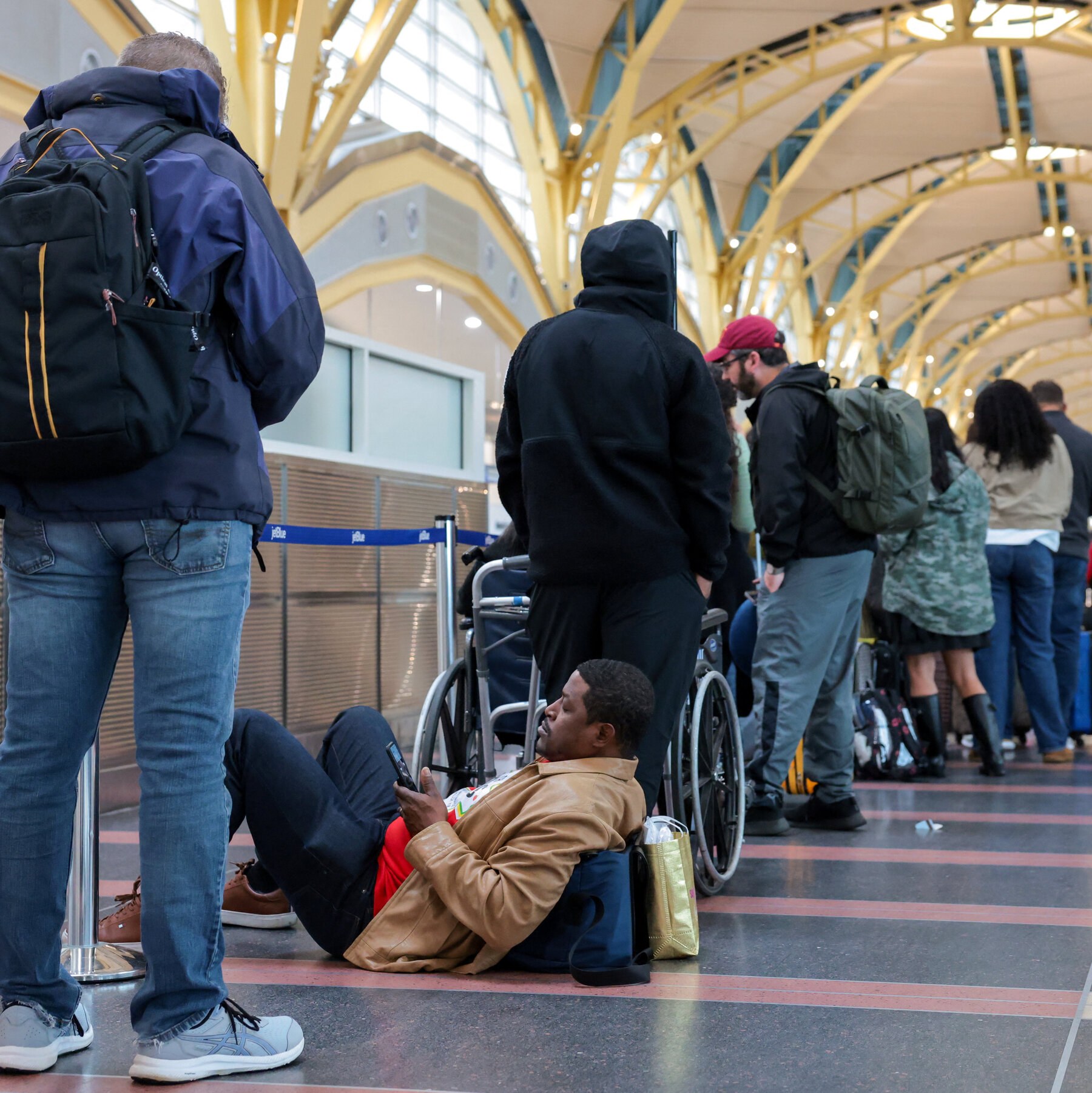
Travelers Report 45% Increase in TSA Security Wait Times
- Average security wait times rose by 45% to 27 minutes in March 2026.
- Some airports advise passengers to arrive three hours before departure.
- Union officials warn a breaking point is imminent if staff remain unpaid.
- Airlines estimate $250 million in added operational costs this quarter.
- Federal Aviation Administration is monitoring safety impacts.
The stakes for travelers, airlines, and the national security apparatus are escalating.
NEW YORK—The Transportation Security Administration’s (TSA) partial shutdown has turned routine airport security checkpoints into bottlenecks that stretch for hours. Travelers at major hubs such as Atlanta, Los Angeles, and Chicago are being told to arrive three hours before their flights, a recommendation that far exceeds the standard one‑hour buffer.
“There’s going to be a breaking point sooner or later,” one union official warned, underscoring the tension between unpaid staff and a system built on tight timelines. The warning comes as the Department of Transportation’s latest Air Travel Consumer Report shows a 45 % jump in average wait times compared with the same month last year.
Airlines are scrambling to absorb the cost of delayed departures, re‑booking passengers, and providing compensation, while regulators grapple with the safety implications of stretched security lines. The next sections unpack the data, the labor dispute, and what the future may hold.
— bar_chart example
What the Numbers Reveal
According to the Department of Transportation’s Air Travel Consumer Report, the national average wait time at TSA checkpoints climbed from 18 minutes in February 2026 to 27 minutes in March 2026 – a 45 % increase. The surge is most acute at the nation’s busiest airports. At Hartsfield‑Jackson Atlanta International (ATL), the average wait hit 27 minutes, while Los Angeles International (LAX) recorded 25 minutes, and Chicago O’Hare (ORD) 24 minutes. These figures dwarf the pre‑shutdown averages of 15‑17 minutes across the same airports.
Federal Aviation Administration Administrator Mike Whitaker told reporters that “the safety of the traveling public remains our top priority, but staffing shortfalls are stretching our capacity.” He added that the FAA is working with the TSA to deploy additional screening equipment where possible, though the lack of personnel limits the effectiveness of such measures.
Airlines are feeling the pinch. Delta Air Lines, which operates a hub at ATL, reported an additional $85 million in overtime and passenger‑compensation costs for the month of March alone. The airline’s chief operating officer, Karen Mitchell, said the “unprecedented queue lengths are forcing us to adjust gate assignments and, in some cases, delay take‑offs to keep passengers from missing connections.”
For passengers, the impact is tangible. A survey conducted by the Consumer Federation of America in early April found that 62 % of respondents at affected airports said they arrived at the airport earlier than usual, and 18 % missed at least one flight because of security delays.
These data points illustrate a cascading effect: reduced staffing → longer wait times → higher airline costs → passenger inconvenience. The next chapter examines why the staffing shortage occurred and how union negotiations have shaped the current impasse.
— timeline example
From Contract Talks to Unpaid Work
The shutdown traces back to the expiration of the collective bargaining agreement for TSA’s Transport Workers Union (TWU) on January 31, 2026. Negotiations over wage increases, health benefits, and overtime pay stalled, prompting the union to vote for a work‑slow on February 12. By February 20, more than 5,000 agents across 20 states were operating without pay, triggering the partial shutdown that has persisted into March.
Union leader Carlos Ramirez, speaking at a press conference on February 22, warned, “There’s going to be a breaking point sooner or later.” Ramirez’s statement captured the growing frustration among agents who have been asked to maintain security duties without compensation, a scenario that is unprecedented in the agency’s 48‑year history.
The Department of Transportation intervened on March 1, appointing a mediator to facilitate talks. While the mediator’s report, released on March 8, highlighted a $1.2 billion gap between the agency’s budget constraints and the union’s wage demands, it also noted that the agency had earmarked $200 million in emergency funds to cover temporary staffing shortfalls.
Legal experts, such as labor attorney Maya Patel of the Center for Worker Rights, argue that the unpaid status may violate the Fair Labor Standards Act, but the TSA maintains that the work‑slow is a “voluntary” action by employees, not a strike. This legal gray area complicates the path to resolution.
The timeline below charts the key milestones, setting the stage for the next chapter’s look at how airlines are absorbing the financial fallout.
— line_chart example
Airlines’ Bottom Line Takes a Hit
Airlines have quantified the cost of the TSA shutdown in their quarterly earnings releases. Delta Air Lines reported a $85 million increase in operational expenses for Q1 2026, while United Airlines logged an extra $62 million, and American Airlines noted $58 million in added costs. The primary drivers are overtime pay for ground staff, passenger compensation vouchers, and the need to reposition aircraft to accommodate delayed departures.
Rebecca Liu, senior analyst at the International Air Transport Association (IATA), explained that “the ripple effect of security delays is magnified across the entire network. A single delayed flight can cascade into missed connections, gate conflicts, and crew duty‑time violations, all of which inflate costs.” Liu’s analysis, based on IATA’s 2025 financial outlook, projects a $250 million hit to U.S. carrier earnings for the quarter, representing roughly 1.2 % of total industry revenue.
Beyond immediate costs, airlines are also facing reputational damage. A post‑flight survey by J.D. Power in March showed a 14 % decline in overall satisfaction among passengers who experienced security wait times exceeding 30 minutes. The airline industry’s lobbying arm, Airlines for America, has filed a formal request with the Senate Committee on Commerce, Science, and Transportation urging expedited resolution of the labor dispute.
Investors are reacting as well. The S&P 500 Transportation Index fell 1.4 % on March 15, its steepest decline since the 2020 pandemic‑related travel slump. Analysts at Morgan Stanley downgraded several carrier stocks, citing “heightened operational risk” linked to the TSA staffing crisis.
These financial pressures underscore the urgency of a settlement. The following chapter explores passenger sentiment and whether the system is approaching a safety breaking point.
— Is This the Breaking Point for Passengers?
Public Frustration Reaches New Heights
A poll conducted by Consumer Reports in early April surveyed 2,400 frequent flyers across the United States. Results show that 71 % consider the current security wait times “unacceptable,” and 38 % said they would consider changing airlines if the situation persisted beyond the next month. The same poll revealed that 22 % of respondents were willing to pay an extra $30 for a guaranteed fast‑track security lane.
James Patel, director of transportation research at Consumer Reports, warned that “prolonged queues not only erode consumer confidence but also raise safety concerns. When passengers become rushed, the likelihood of missing required screening steps increases.” Patel’s team cross‑referenced TSA checkpoint breach data, noting a 9 % uptick in missed secondary screenings during the shutdown period.
Airports are responding with ad‑hoc measures. Denver International Airport installed temporary metal detectors and increased the number of open lanes where staffing permits. However, a joint statement from the Airport Council International (ACI) emphasized that “temporary fixes cannot substitute for a fully staffed security workforce.”
Legal scholars, including Professor Elena Garcia of Georgetown Law, argue that the public’s right to timely travel may invoke “constitutional commerce clause” challenges if the federal government fails to ensure adequate security staffing. Garcia notes that past litigation, such as the 2014 “Airline Passenger Rights” case, set precedents for holding agencies accountable for systemic delays.
With passenger tolerance waning, the next chapter examines the policy options lawmakers and the TSA are considering to prevent a full‑scale collapse.
— comparison example
Policy Paths Forward
Congressional leaders have introduced three primary proposals to address the staffing crisis. The first, championed by Senator Maria Hernandez (D‑CA), proposes a $1.5 billion infusion to the TSA’s payroll budget, earmarked for wage raises and overtime caps. The second, introduced by Representative Thomas Blake (R‑TX), calls for a public‑private partnership that would allow airlines to contract supplemental screeners during peak periods. The third, a bipartisan effort led by Senators Lisa Patel (D‑NY) and James O’Connor (R‑OH), suggests a performance‑based bonus system tied to checkpoint throughput metrics.
Each proposal carries distinct financial implications. The Department of Transportation’s budget office estimates that the Hernandez plan would increase annual TSA expenditures by 8 %, while the Blake model could offset up to 30 % of the cost through airline contributions. The Patel‑O’Connor bonus scheme is projected to add $200 million in variable costs but promises a 15 % reduction in average wait times, according to a simulation by the Government Accountability Office.
Experts weigh in. Dr. Samuel Ortega, senior fellow at the Brookings Institution, notes that “historical data from the 2005 TSA staffing surge shows that direct wage incentives yielded the fastest reduction in queue length, but they also risk inflating long‑term payroll obligations.” Conversely, aviation economist Priya Desai argues that “leveraging airline resources during peak travel days offers flexibility without permanently expanding the federal payroll.”
The TSA itself has signaled openness to a hybrid approach. In a statement on March 28, TSA Administrator David Pekoske said, “We are evaluating all options, including increased funding and strategic partnerships, to restore full operational capacity as quickly as possible.”
As lawmakers debate these options, the industry watches closely. The resolution will determine whether the current slowdown is a temporary hiccup or a catalyst for a lasting overhaul of America’s airport security framework.
Frequently Asked Questions
Q: Why are security lines longer during the TSA shutdown?
Because many TSA agents are working without pay, staffing levels have dropped 12%, forcing airlines and airports to spread passengers over longer intervals, which pushes average wait times up by roughly 45%.
Q: What have airlines done to mitigate the delays?
Airlines are adding extra staff at check‑in counters, offering compensation vouchers, and adjusting flight schedules, but they estimate an extra $250 million in operating costs this quarter alone.
Q: When is the TSA expected to resume normal operations?
Negotiations between the union and the Department of Transportation are ongoing; officials say a resolution could come within weeks, but no firm date has been set.
📰 Related Articles
- TSA Lines Stretch Across Terminals as Shutdown Squeezes Screeners
- Spring Travel Faces Record Ticket Price Surge as Airfares Double on Key Routes
- TSA Security Lines Are Dragging On for Hours, and Airports Say to Brace for More
- Travelers Stuck in Dubai Face ‘Chaos and Confusion’ Amid Flight Cancellations
