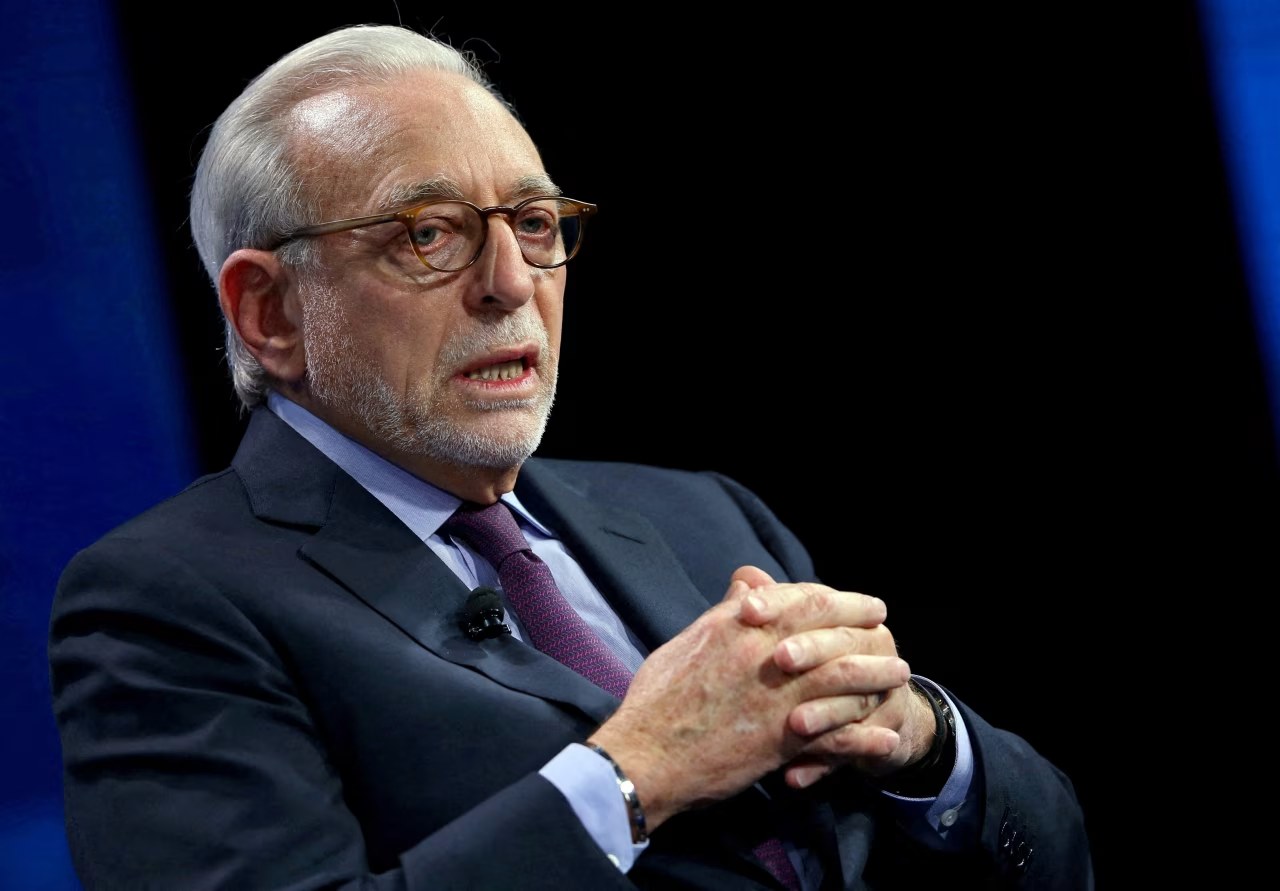
Trian and General Catalyst clinch Janus Henderson with $52-a-share cash after rival bows out
- Trian Fund Management and General Catalyst lifted their joint bid to $52 a share in cash, a $3 increase that values Janus Henderson at roughly $5.8 billion.
- Victory Capital withdrew from the auction on Tuesday, leaving the Trian-led group as the sole bidder.
- The revised offer translates to a premium of about 35% over Janus Henderson’s share price before takeover talks surfaced.
- Analysts expect Janus Henderson’s board to recommend the deal, clearing the path for shareholder and regulatory approvals within six months.
Asset-management M&A heats up as private capital chases steady fee streams
JANUS HENDERSON—Janus Henderson’s future ownership was settled in a final flurry on Tuesday when Victory Capital dropped its competing bid, allowing Trian Fund Management and General Catalyst to secure the Denver-London listed manager for $52 a share in cash. The $3 bump over their previous offer values the group at approximately $5.8 billion and caps a two-month auction that saw three separate proposals.
The outcome underscores how buyout groups are willing to pay top-dollar for managers with sticky institutional clients and diversified product shelves, even as volatile markets pressure near-term flows. Victory Capital’s exit removes the last hurdle before Janus Henderson directors formally recommend the transaction, according to people familiar with the board’s thinking.
Shareholders have until early next month to tender into the offer, after which the buyers intend to take the company private and delist it from the New York and London stock exchanges. The deal, if approved, would rank among the largest private-equity takeovers of a standalone asset manager since the financial crisis.
From $49 to $52: How Trian and General Catalyst Forced Victory Capital Out
The auction for Janus Henderson turned on a single $3 move. After Victory Capital submitted a counter-offer last week, Trian Fund Management and General Catalyst responded by raising their all-cash bid to $52 a share, according to people directly involved in the negotiations. Victory executives concluded that matching or exceeding that price would erode projected returns below their 20% internal hurdle, prompting Tuesday’s withdrawal.
Breaking down the $3 price jump
While $3 may sound modest, it adds roughly $330 million to the deal’s headline value. For Trian and General Catalyst, the sweetener is justified by Janus Henderson’s $420 billion in assets under management and a base of 2,300 institutional clients that generate predictable quarterly fees, said M&A analyst Sarah Kim at Coalition Greenwich. The buyers also see scope to cut overlapping public-company costs and to cross-sell private-market strategies to Janus’s predominantly traditional-equity clientele.
Victory Capital, by contrast, had already stretched its balance sheet to lodge the earlier bid. The Cleveland-based manager carries $2.7 billion in long-term debt and had planned to fund much of its offer through new borrowings, according to its most recent 10-K filing. Adding another $330 million in cash would have pushed Victory’s pro-forma leverage above 4× EBITDA, a red flag for both rating agencies and the company’s board.
The bidding sequence illustrates a classic private-equity discipline: raise the price just enough to make the rival’s arithmetic unworkable. Trian, founded by Nelson Peltz, has deployed the tactic in past deals such as the 2022 bid for Wendy’s, said M&A historian Dr. Erik Gordon at the University of Michigan. Victory’s retreat signals that financial buyers, not strategic acquirers, are now setting the ceiling for asset-manager valuations.
What Does a $5.8 Billion Valuation Mean for Janus Henderson Shareholders?
At $52 a share, Janus Henderson fetches roughly 15.4× trailing-twelve-month EBITDA and 2.3% of assets under management—metrics that sit at the upper end of recent manager buyouts. The premium is especially striking given the firm’s net outflows of $18 billion last year, yet analysts note that Janus Henderson’s 42% exposure to higher-fee actively managed equities and a burgeoning alternatives pipeline underpin the rich multiple.
Unpacking the headline numbers
Shareholders who bought the stock at the 2020 pandemic low of $14 have seen a 271% gain, outpacing both the S&P 500 and the S&P Asset Manager index over the same span. Even investors who entered at the start of takeover speculation in February—when the stock traded around $38—stand to capture a 37% arbitrage profit once the deal closes, according to Bloomberg data.
For Trian and General Catalyst, the valuation hinges on cost take-outs and asset growth rather than multiple expansion. Internal projections shown to prospective co-investors forecast $120 million in annual savings from eliminating duplicate public-company functions and consolidating real-estate footprints in London and Denver, said a person who reviewed the deck. The buyers also plan to seed new private-credit and secondaries funds, aiming to lift overall fee rates by 4 basis points within three years.
Yet the rich entry multiple leaves little room for error. ‘Paying above 15× EBITDA in a secularly challenged sector is courageous,’ warns Robert Lee, an analyst at KBW. ‘Outflows have to stabilise, and new product traction must be swift, or the IRR math unravels quickly.’
Why Private Equity Is Paying Top Dollar for Asset Managers in 2024
The Janus Henderson deal lands amid a wave of private-capital interest in asset managers, with $23 billion in announced buyouts globally so far this year—already double the 2023 total, according to PitchBook. Buyers are drawn to sticky, fee-based revenue that can withstand economic volatility, while sellers face pressure from rising compliance costs and the need to invest in technology.
Fee streams trump near-term outflows
‘Asset managers are essentially annuities if you pick the right niche,’ explains Andrea Auerbach, head of global private equity at Cambridge Associates. Even Janus Henderson, which posted net redemptions in seven of the last eight quarters, still generates $1.9 billion in annual base fees—cash that private owners can redeploy into higher-margin alternative products.
Regulatory tailwinds also help. The SEC’s recent overhaul of private-fund reporting requires managers to beef up infrastructure, a burden many public firms would rather offload to well-capitalised sponsors. Meanwhile, pension consultants are re-allocating to illiquid strategies, creating openings for owners willing to seed new funds.
The flip side is valuation discipline. GPs are modelling mid-teens IRRs by layering 60% leverage onto deals and banking on 3–5% annual fee growth—assumptions that look stretched if markets stall. ‘We’re advising clients to stress-test base cases with zero market beta,’ notes Auerbach.
What Happens to Janus Henderson Clients and Employees After the Buyout?
Management assured institutional clients on a Tuesday call that fund objectives, portfolio teams and performance benchmarks will remain unchanged for at least two years post-close, according to a consultant who listened in. Yet private-equity ownership inevitably brings cost scrutiny; Trian’s 2019 buyout of Legg Mason eliminated 11% of headcount within 18 months, a template analysts expect to be repeated.
Staff and strategy implications
Janus Henderson currently employs 2,100 people across 25 offices. Internal memos viewed by the WSJ outline a phased integration: first, consolidate middle-office functions in Denver; second, merge London trading desks; third, shift alternative-asset fundraising to a newly formed subsidiary. Executives forecast $120 million in annual savings, 40% of which stems from compensation reductions.
Investment teams are insulated for now. The buyers committed to retain named portfolio managers on products accounting for 70% of revenues, paying retention bonuses of 150–200% base salary, said a person involved in retention planning. Still, some star managers may bolt, lured by competing firms dangling autonomy and higher carried-interest upside.
For clients, the bigger unknown is product pricing. Consultants warn that fee waivers on institutional accounts—worth $85 million last year—could be rolled back once the company goes private. ‘Cost synergies often translate into higher effective fees for end investors,’ observes Neil Scarth, principal at Frost Consulting.
Could Regulators Still Block the Trian-General Catalyst Takeover?
Antitrust scrutiny is light; Janus Henderson controls less than 1% of the $120 trillion global asset-management market and overlaps minimally with Trian’s existing fund lines. The Committee on Foreign Investment in the U.S. (CFIUS) could review General Catalyst’s minority stake, but attorneys say the firm’s passive history and lack of sensitive data make intervention unlikely.
Regulatory timeline
Buyers filed Hart-Scott-Rodino notifications on Monday, starting a 30-day review window that is expected to end in early clearance. The UK Financial Conduct Authority has already been informally sounded out and raised no material objections, according to legal advisers.
More contentious could be pension-fund clients. The Colorado Public Employees’ Retirement Association, which accounts for $6 billion in Janus mandates, has requested a side letter guaranteeing no increase in management fees for five years. Similar demands from other public plans could shave projected revenue synergies by 20%, calculates industry lawyer John Mack.
Ultimately, lawyers put the probability of regulatory blocking below 10%, making shareholder approval the final hurdle. Management must secure a simple majority at an extraordinary meeting slated for next month, with proxy advisers ISS and Glass Lewis both expected to recommend acceptance.
Frequently Asked Questions
Q: What price did Trian and General Catalyst agree to pay for Janus Henderson?
The consortium raised its all-cash bid to $52 per share, up $3 from its earlier offer, valuing the asset manager at roughly $5.8 billion.
Q: Why did Victory Capital drop out of the Janus Henderson bidding?
Victory Capital withdrew on Tuesday after the competing group lifted its offer, concluding the auction had reached a price ceiling that no longer met its return targets.
Q: What happens next after Victory Capital’s withdrawal?
With only one bidder left, Janus Henderson’s board is expected to endorse the $52-a-share deal, sending it to shareholder and regulatory approval for a projected close within six months.
📰 Related Articles
- TransAlta Gains Analyst Upgrade as Alberta Power Prices Rebound
- Sinopec Claims Robust Oil Inventory Shields Production from Middle East Turmoil
- Oil Price Surge Still Leaves Global Demand Intact, Says Energy Secretary Wright
- Canadian Oil Stocks Hit 24× Valuations as Carney Replaces Trudeau Tone on Energy
