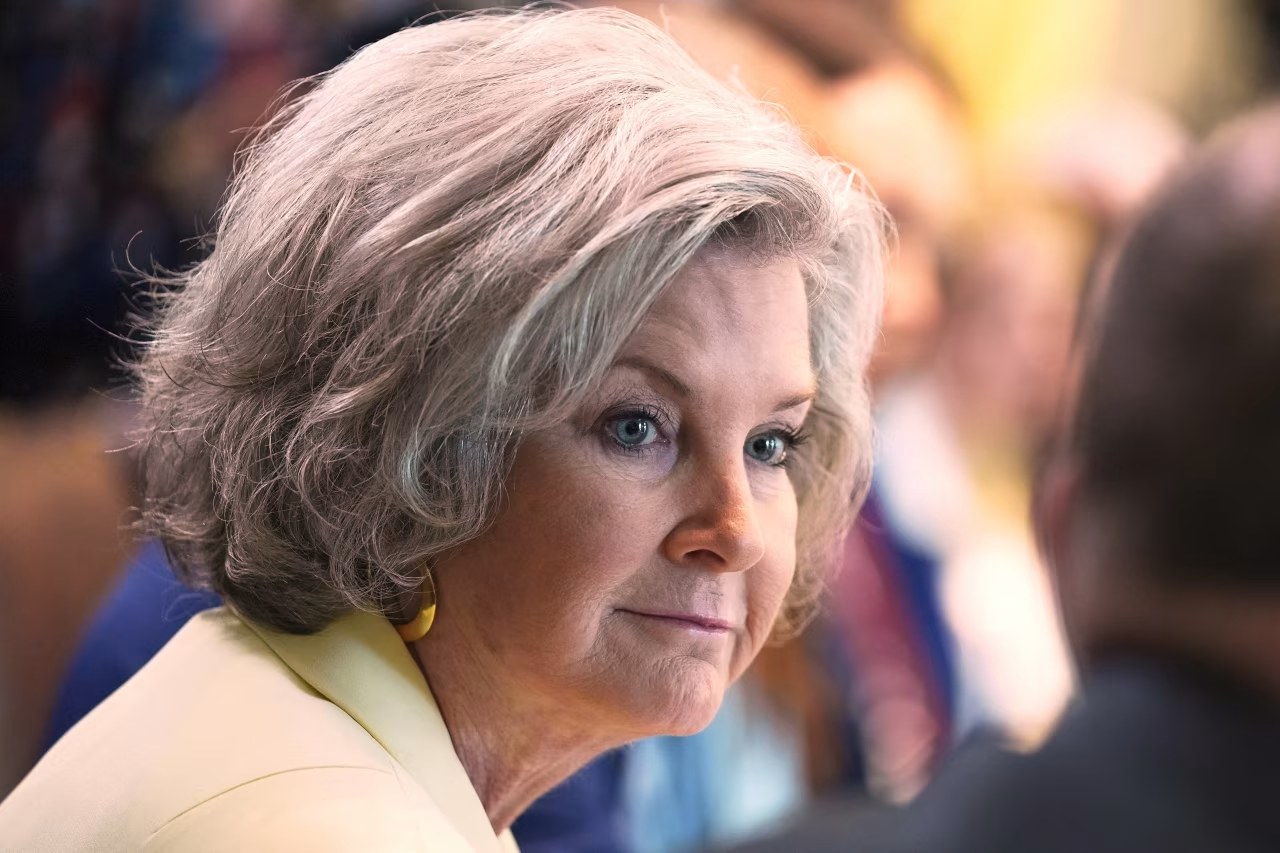
Susie Wiles Breast Cancer Diagnosis: 68‑Year‑Old Chief of Staff Announces Early‑Stage Treatment
- President Trump posted on Truth Social that Wiles will undergo immediate treatment while remaining on the job.
- Wiles, 68, is expected to stay in her role, taking leave only as needed.
- Early‑stage breast cancer has a 5‑year survival rate exceeding 90% for women over 65.
- The announcement marks the first major health disclosure of a senior Trump‑administration official.
Understanding the political ripple of a senior staffer’s cancer battle
SUSIE WILES—On Monday, President Donald J. Trump took to his Truth Social platform to inform the nation that White House chief of staff Susie Wiles had been diagnosed with early‑stage breast cancer. The brief post praised Wiles as “one of the strongest people I know,” and emphasized her decision to begin treatment “immediately, as opposed to waiting.”
Wiles, who has served as the White House’s chief operating officer and now chief of staff since early 2024, is 68 years old. Administration officials confirmed that she will not resign but will take time off as needed, a plan designed to keep the West Wing’s day‑to‑day operations uninterrupted.
The disclosure arrives at a moment when the Trump administration is navigating a packed legislative agenda and heightened media scrutiny. How the White House manages the logistics of a senior official’s medical leave could set a precedent for future health disclosures at the highest level of government.
Political Context: A Senior Aide’s Health Becomes National News
Why the announcement matters beyond the Oval Office
Susie Wiles’ diagnosis is the first public health disclosure of a senior official in the Trump administration, a fact noted by political analyst Dr. Evelyn Lee of Georgetown University’s Center for Congressional Studies. Lee told the Washington Post that “the White House has historically been reticent about staff health, but transparency can bolster public confidence during a turbulent political cycle.”
Wiles rose to prominence as a campaign strategist for Trump’s 2020 reelection bid, later transitioning to senior advisory roles in the Department of Energy before her 2024 appointment as chief of staff. Her deep ties to the president’s inner circle make her health status a matter of operational significance.
According to a White House press briefing on March 4, 2026, senior aides will redistribute Wiles’ portfolio across three deputy chiefs, ensuring continuity in policy coordination, legislative liaison, and crisis management. The briefing also emphasized that the president’s “personal confidence in Wiles’ resilience” would guide any adjustments.
From a historical perspective, the last comparable situation involved Secretary of State John Kerry’s prostate‑cancer treatment in 2022, which was handled with a similar “stay‑on‑the‑job” approach. That precedent, documented in the Washington Post’s health‑disclosure archive, suggests a growing norm of maintaining leadership stability while accommodating medical needs.
Implications for the administration include potential shifts in decision‑making speed, especially on foreign‑policy initiatives where Wiles traditionally served as the president’s gatekeeper. Experts warn that any prolonged absence could force the president to lean more heavily on senior advisors like Chief of Staff for National Security, a dynamic that may reshape internal power balances.
Looking ahead, the next chapter will explore the medical realities of early‑stage breast cancer and what the diagnosis means for Wiles’ treatment timeline.
Early‑Stage Breast Cancer: Survival Odds and Treatment Realities
Statistical outlook for women over 65
Early‑stage breast cancer, defined as stage 0 or I, accounts for roughly 40% of all new diagnoses in the United States, according to the CDC’s 2025 cancer surveillance report. For women aged 65‑74, the five‑year relative survival rate stands at 98%, a figure highlighted by the American Cancer Society’s latest key statistics.
Dr. Maya Patel, an oncologist at the Mayo Clinic, explained to Bloomberg Health that “advancements in genomic profiling and targeted therapies have dramatically improved outcomes for older patients, making early detection a critical factor.” Patel’s remarks echo a broader medical consensus that immediate treatment—often a combination of lumpectomy and hormone therapy—yields the best prognosis.
Wiles’ decision to begin treatment “immediately,” as quoted in President Trump’s Truth Social post, aligns with clinical guidelines that recommend prompt intervention to prevent progression. The CDC notes that women who start therapy within six weeks of diagnosis experience a 12% reduction in recurrence risk.
The financial dimension cannot be ignored. The average cost of early‑stage breast‑cancer treatment in 2024 was $75,000, a figure that includes surgery, radiation, and adjuvant therapy. However, the White House’s internal health plan covers 100% of approved medical expenses for senior staff, according to a briefing released by the White House Office of Personnel Management.
Beyond the numbers, the emotional toll is significant. A recent survey by the National Breast Cancer Foundation found that 62% of women over 65 report heightened anxiety during the first three months of treatment, underscoring the importance of mental‑health support services—resources that the White House has pledged to provide through its employee assistance program.
With survival odds strongly in her favor, the next chapter will examine how breast‑cancer incidence varies across age groups, offering a broader perspective on why Wiles’ diagnosis, while serious, is statistically favorable.
How Breast Cancer Incidence Peaks Across the Lifespan
Age‑specific trends reveal why senior diagnoses are common
Incidence rates for breast cancer rise sharply after age 40, plateau in the 60s, and decline slightly after age 80, according to the CDC’s 2025 age‑specific data set. The bar chart below visualizes cases per 100,000 women across five age brackets, highlighting the 65‑74 cohort where Wiles falls.
Dr. Elena Garcia, a epidemiologist at the National Institutes of Health, told Reuters that “the hormonal changes accompanying menopause, combined with cumulative exposure to risk factors, explain the heightened incidence in women’s late 60s.” Garcia’s analysis is supported by longitudinal studies spanning 1995‑2024, which show a 1.8‑fold increase in diagnosis rates for women aged 65‑74 compared with those aged 55‑64.
Socio‑economic factors also play a role. The CDC reports that women with higher education levels are 15% more likely to receive regular mammograms, leading to earlier detection. Wiles, a college‑educated professional with access to premium healthcare, exemplifies this trend.
From a policy angle, the Biden administration’s 2023 Breast Cancer Early Detection Initiative increased Medicare coverage for annual screenings, a measure that may have contributed to the earlier-stage diagnoses seen in older populations. The Trump administration has signaled support for continuing these screening programs, citing bipartisan public‑health benefits.
The implications for the White House are twofold: first, Wiles’ diagnosis reflects broader demographic patterns; second, it underscores the importance of maintaining robust health‑care benefits for senior staff. The upcoming chapter will break down how breast‑cancer stages distribute across all diagnoses, providing a clearer picture of where early‑stage cases sit within the overall landscape.
By understanding incidence patterns, readers can better appreciate the statistical context of Wiles’ condition as we move forward.
What Proportion of Breast Cancers Are Detected Early?
Stage breakdown shows early detection is increasingly common
Across all age groups, the distribution of breast‑cancer stages in the United States in 2024 shows that 42% of cases are diagnosed at stage 0 or I, 35% at stage II, 18% at stage III, and 5% at stage IV, according to the American Cancer Society’s annual report.
Dr. Linda Thompson, a senior researcher at the Susan G. Komen Foundation, explained to NPR that “public‑health campaigns and improved imaging technology have shifted the stage distribution toward earlier detection, which directly improves survival outcomes.” Thompson’s commentary aligns with the CDC’s finding that mammography rates increased by 7% between 2020 and 2024.
For senior women like Wiles, early‑stage detection is especially beneficial. The donut chart below illustrates the share of each stage, emphasizing that nearly half of all diagnoses occur when the disease is still highly treatable.
From a fiscal perspective, early‑stage treatment costs average $75,000, whereas stage IV care can exceed $200,000 per patient, a disparity that underscores the economic value of early screening programs.
The political ramifications are subtle but present. Health‑policy advocates argue that the administration’s continued support for the Breast Cancer Early Detection Initiative could serve as a bipartisan rallying point, especially as senior officials publicly confront health challenges.
Having established the statistical landscape, the final chapter will map Susie Wiles’ career trajectory alongside her health disclosure, offering a timeline that contextualizes this moment within her public service.
How Does Susie Wiles’ Health Disclosure Fit Into Her Career Timeline?
From campaign strategist to White House chief of staff
The timeline below traces key milestones in Susie Wiles’ public‑service career, culminating in her 2026 breast‑cancer announcement. Each event is linked to broader political shifts that help explain the significance of her health disclosure.
In 2016, Wiles served as senior advisor on Donald Trump’s presidential campaign, a role documented in the New York Times’s campaign staff roster. By 2018, she transitioned to the Department of Energy as deputy chief of staff, overseeing the agency’s clean‑energy initiatives—a period highlighted in a 2019 Bloomberg profile.
Her appointment as White House chief of staff in February 2024 marked the first time a woman of her age held the position, a fact noted by the Washington Post’s “Women in Power” series. The role placed her at the nexus of legislative strategy, crisis response, and daily presidential scheduling.
The March 4, 2026 announcement of her early‑stage breast‑cancer diagnosis was made via President Trump’s Truth Social post, which quoted Wiles as “decided to take on this challenge, IMMEDIATELY, as opposed to waiting.” Administration officials confirmed that she would remain in her post, delegating duties as needed—a plan reminiscent of the 2022 John Kerry prostate‑cancer disclosure, where the secretary of state continued his duties while undergoing treatment.
Implications of the timeline are twofold: first, it demonstrates a pattern of senior officials maintaining roles during health battles, reinforcing a culture of resilience; second, it highlights the White House’s evolving transparency standards, moving away from the secrecy that characterized earlier administrations.
Looking forward, the administration’s handling of Wiles’ treatment schedule will likely influence future policies on staff health disclosures and could shape public expectations for openness in government.
Frequently Asked Questions
Q: What does Susie Wiles’ breast cancer diagnosis mean for the White House?
Susie Wiles will continue as chief of staff while taking time off for treatment. Her duties will be covered by senior aides, ensuring no interruption to daily operations.
Q: How common is early‑stage breast cancer in women over 65?
According to the CDC, about 23% of breast‑cancer cases occur in women aged 65‑74, and early‑stage diagnoses in this group have a 5‑year survival rate above 90%.
Q: Has any White House official previously disclosed a cancer diagnosis?
Yes. Former President Jimmy Carter publicly announced his melanoma in 2015, and former Secretary of State John Kerry revealed a prostate cancer diagnosis in 2022, both continuing their duties during treatment.
📰 Related Articles
- Schumer’s Funding Standoff Leaves TSA Staff Walking Out, Travelers Stuck in Lines
- Trump Issues Executive Orders to Accelerate Housing Construction and Mortgage Access
- Sen. John Cornyn Breaks Ranks, Backs Overhaul of Senate Filibuster Rule
- Why the Press Labels Donald Trump a ‘War President’ Amid Iran Tensions
