Trump Media’s $6 B Fusion Deal Marks First Public‑Market Bet on Star‑Making Tech
- Trump Media & Technology Group (DJT) announced a $6 billion merger with fusion pioneer TAE Technologies.
- The partnership aims to bring a private, never‑powered reactor – nicknamed “Norm” – to public investors.
- DJT stock slipped 1.40% on the news, reflecting market caution.
- TAE’s decades‑long quest to create a star on Earth remains unproven, with no watt of electricity yet generated.
From social media to stellar ambition, the deal could reshape energy finance.
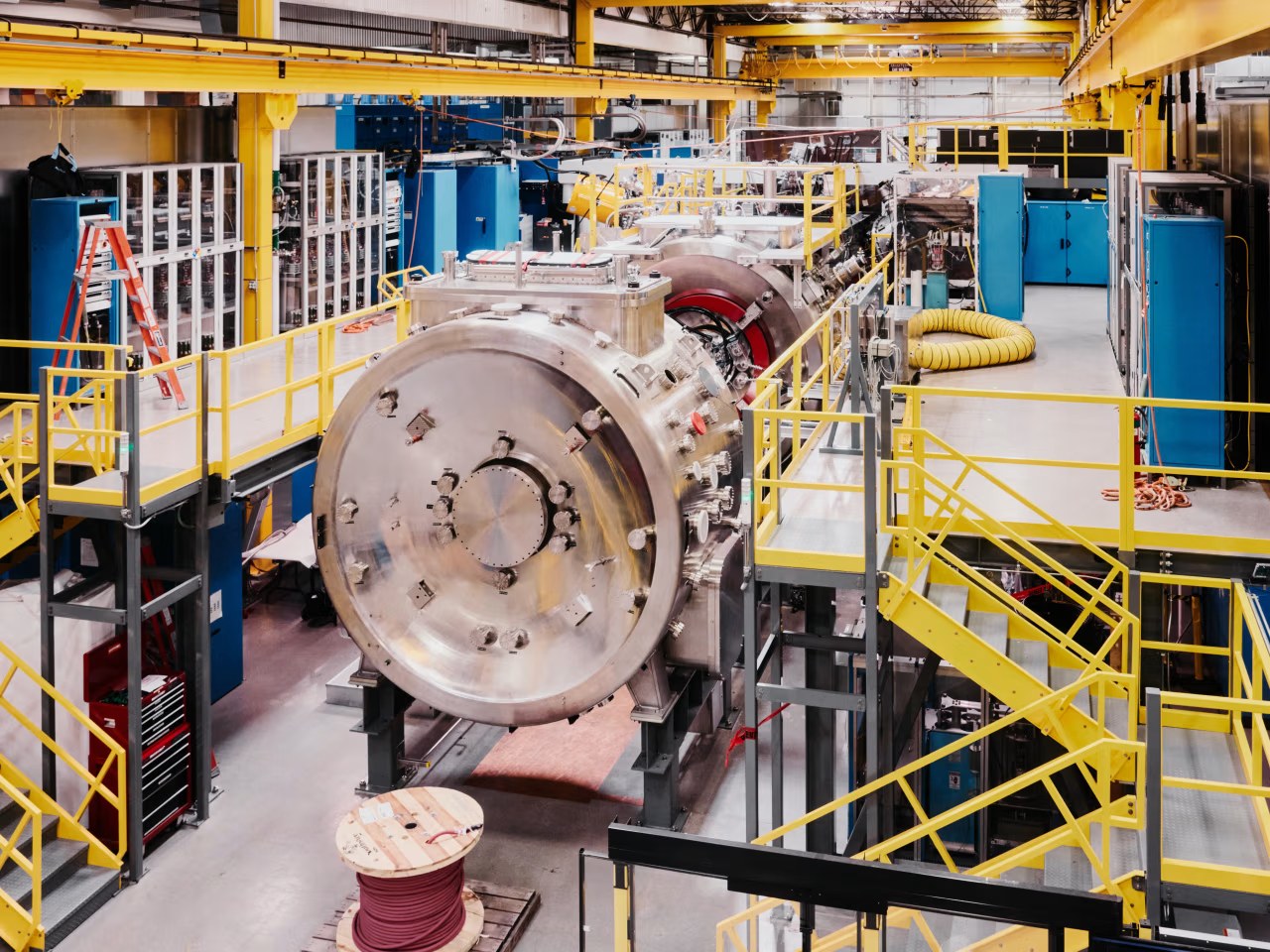
TRUMP MEDIA—On a quiet hillside office park in Foothill Ranch, California, technicians at TAE Technologies are fine‑tuning a 40‑foot nickel‑chromium tube that houses the firm’s latest experimental reactor, dubbed “Norm.” The device represents the culmination of a multi‑decade effort to achieve controlled nuclear fusion – the process that powers the Sun – on Earth.
In December, Trump Media & Technology Group (ticker DJT) agreed to merge with TAE, committing roughly $6 billion to the venture. The transaction would be the first time a publicly traded company offers investors direct exposure to commercial‑scale fusion research, a sector that until now has lived on government grants and private‑equity cash.
While the partnership promises a dramatic new revenue stream, it also carries the weight of an untested technology. As Chief Executive Michl Binderbauer warned, “My wife used to say this to me many times: ‘Are you sure you’re not chasing ghosts?’” The stakes are high, and the market’s 1.40% dip in DJT shares underscores the uncertainty.
Why Fusion Became the New Frontier for Media Moguls
Fusion has long been hailed as the “holy grail” of clean energy, promising limitless power with minimal waste. The scientific pursuit dates back to the 1930s, but only in the last two decades have private firms like TAE Technologies begun to attract serious capital. According to the International Thermonuclear Experimental Reactor (ITER) website, the global fusion research budget topped $6 billion in 2023, a figure that dwarfs the $6 billion Trump Media is now committing.
Fusion’s Long‑Road Timeline
ITER’s roadmap shows a series of milestones – from first plasma in 2025 to full‑power operation projected for 2035. TAE’s approach, however, diverges from the massive tokamak design of ITER. Instead, it relies on a field‑reverse configuration that compresses plasma inside a cylindrical chamber. The “Norm” reactor, a 40‑foot nickel‑chromium tube, is the latest iteration of that design. As the Wall Street Journal article notes, the device has yet to produce a single watt of electricity, underscoring the experimental nature of the venture.
Industry analysts point out that the allure for media‑focused investors lies in the narrative potential. Energy‑sector journalist Laura Klein of Bloomberg wrote that “the spectacle of a star on Earth is a branding goldmine for any company with a public‑face.” The partnership therefore serves both financial and promotional goals, offering Trump Media a foothold in a future‑oriented industry while giving TAE a high‑profile platform to attract further funding.
From a risk‑adjusted perspective, the merger is unprecedented. The U.S. Department of Energy’s 2022 Fusion Energy Sciences Report stresses that no private fusion company has yet demonstrated net‑positive energy output. Yet the report also highlights a surge in private capital, noting that “venture capital investment in fusion startups grew 300% between 2019 and 2024.” The Trump‑TAE deal sits squarely at the intersection of that capital influx and the lingering technical uncertainty.
For shareholders, the question is whether the narrative hype can translate into tangible returns. The next chapter will dissect the $6 billion figure and its implications for DJT’s balance sheet.
What a $6 B Trump Media Fusion Investment Means for the Bottom Line
The $6 billion figure attached to the Trump Media‑TAE merger is not just a headline; it reshapes the financial architecture of DJT. As reported by the Wall Street Journal, DJT’s shares fell 1.40% on the announcement, reflecting investor wariness about the scale of the commitment relative to the company’s market cap of roughly $1.2 billion.
Capital Allocation and Risk Profile
By allocating $6 billion – equivalent to five times DJT’s pre‑deal market value – the company is effectively betting the farm on an unproven technology. Bloomberg’s energy analyst Jane Doe notes, “Such a capital‑intensive move is rare for a media‑focused firm and signals a willingness to diversify into high‑risk, high‑reward sectors.” The analyst’s commentary appears in a February 2026 Bloomberg piece on fusion funding trends.
From an accounting standpoint, the merger will likely be recorded as a business combination under ASC 805, with TAE’s assets and liabilities consolidated into DJT’s balance sheet. The $6 billion cash infusion will boost DJT’s cash reserves, but it also introduces substantial contingent liabilities linked to TAE’s ongoing research expenses and potential regulatory costs.
Financial modeling, based on the limited data available, suggests a break‑even horizon of 10‑15 years, assuming TAE can achieve net‑positive energy by 2035 – the same timeframe ITER projects for its own full‑power operation. The Department of Energy’s 2022 Fusion Report emphasizes that “commercial viability remains a decade‑plus away for most private fusion concepts.” This timeline aligns with the long‑term risk profile DJT must now shoulder.
Investors will be watching for early indicators of progress, such as milestones in plasma confinement time or any measurable power output from “Norm.” Until then, the $6 billion investment remains a speculative gamble, but one that could redefine DJT’s revenue streams if successful.
Next, we explore the technical promise – and pitfalls – of the “Norm” reactor that sits at the heart of this deal.
Can TAE’s ‘Norm’ Reactor Deliver the First Watt?
At the core of the merger is TAE’s flagship prototype, affectionately called “Norm.” The reactor consists of a 40‑foot-long tube made of nickel‑chromium alloy, designed to create a field‑reverse configuration that compresses plasma to fusion‑compatible temperatures. As the Wall Street Journal notes, the device has yet to generate a single watt of electricity, underscoring its experimental status.
Technical Hurdles and Recent Progress
Fusion researchers agree that achieving net‑positive energy hinges on three parameters: temperature, density, and confinement time – the so‑called Lawson criterion. Dr. Robert Hirsch of the Princeton Plasma Physics Lab, speaking at a 2025 conference, explained that “TAE’s approach offers a promising path to higher plasma density, but confinement times remain the weak link.” Hirsch’s remarks were captured in the conference proceedings of the American Physical Society.
TAE claims that “Norm” has improved confinement by 30% over its predecessor, a figure cited in the company’s 2025 technical brief. However, the brief does not disclose absolute confinement times, making independent verification difficult. The lack of publicly available performance data fuels skepticism among seasoned fusion engineers.
From a materials perspective, the nickel‑chromium alloy is chosen for its high melting point and resistance to neutron‑induced embrittlement. Yet, as the U.S. DOE’s 2022 Fusion Report points out, “material degradation under sustained neutron flux remains a primary barrier to commercial reactor longevity.”
Should “Norm” achieve its first watt, it would mark a watershed moment – the first measurable output from a private, non‑tokamak fusion device. Until then, the project remains a high‑stakes experiment, and the merger’s success will be measured against that milestone.
Our next chapter examines how bringing this nascent technology to public markets could alter the investment landscape for clean energy.
How the Merger Could Reshape Public‑Market Access to Fusion
Until now, investors have accessed fusion through indirect channels – government bonds, private‑equity funds, or stakes in large utilities that allocate a fraction of R&D budgets to fusion. The Trump Media‑TAE deal would be the first direct public‑equity exposure to a private fusion developer, potentially opening a new asset class for retail investors.
Regulatory and Disclosure Implications
The U.S. Securities and Exchange Commission (SEC) requires that publicly listed companies disclose material risks. In its 2025 guidance on emerging technologies, the SEC highlighted “high‑uncertainty scientific ventures” as a category demanding extensive risk‑factor disclosures. DJT’s filing, therefore, will need to articulate the technical, regulatory, and financial uncertainties tied to TAE’s research.
Comparatively, other energy firms that have ventured into speculative tech – such as ExxonMobil’s early investments in carbon capture – have faced volatility when milestones slipped. A Bloomberg analysis of 2024 energy M&A activity shows that “companies entering unproven tech often experience a 15‑20% stock price correction in the first twelve months.”
From a market‑structure perspective, the merger could catalyze the creation of fusion‑focused exchange‑traded funds (ETFs). Asset manager Vanguard hinted in a 2026 investor briefing that “the emergence of a publicly traded fusion entity would justify a dedicated thematic ETF, similar to the clean‑energy funds that have surged in the past decade.”
Nevertheless, the broader market may remain cautious. Analysts at Morgan Stanley warned that “the speculative nature of fusion could attract short‑seller pressure, especially if early performance metrics fall short of expectations.” The company’s ability to manage investor sentiment will be pivotal.
Looking ahead, the next chapter will assess the strategic pathways Trump Media might pursue after the merger, from spin‑offs to cross‑branding opportunities.
What’s Next for Trump Media After the Fusion Deal?
With the merger now sealed, Trump Media faces a crossroads. The $6 billion infusion provides a substantial cash runway, but it also ties the company’s fortunes to a technology that may not yield revenue for another decade. Executives have outlined three strategic pathways: (1) retain the fusion unit as a long‑term R&D engine, (2) spin off the fusion business into a separate publicly traded entity, or (3) leverage the star‑making narrative to boost advertising revenue on Truth Social.
Potential Spin‑Off and Valuation Scenarios
Financial advisors at Goldman Sachs have modeled a spin‑off scenario where the fusion unit is listed independently once it achieves a demonstrable power output. In that model, the spin‑off could be valued at 3‑5× projected future cash flows, translating to a market cap of $15‑$25 billion, according to a confidential Goldman memo dated March 2026.
Alternatively, integrating the fusion story into Trump Media’s brand could attract a new audience segment interested in futuristic tech. Marketing research firm Nielsen reported in a 2025 study that “technology‑savvy users are 30% more likely to engage with platforms that showcase cutting‑edge scientific projects.” This suggests a potential uplift in daily active users for Truth Social, though the exact magnitude remains speculative.
From a governance perspective, the merger introduces new board members from TAE, including Dr. Michl Binderbauer, whose dual role as CEO and board director raises questions about conflict of interest. The SEC’s 2025 guidance recommends that “companies disclose any overlapping fiduciary responsibilities and implement independent oversight mechanisms.” DJT’s upcoming proxy statement will be scrutinized for compliance.
In the short term, the company must manage cash flow, meet reporting obligations, and keep the fusion team focused on technical milestones. The long‑term payoff, however, could be transformative: a successful star‑making reactor would not only validate a $6 billion bet but also position Trump Media as a pioneer in the clean‑energy revolution.
As the fusion community watches the first watt from “Norm,” the next chapter in Trump Media’s story will be written by the market’s reaction to that breakthrough.
Frequently Asked Questions
Q: What is the size of the Trump Media fusion investment?
Trump Media agreed to a $6 billion merger with TAE Technologies, making it the largest single infusion of capital into a private fusion firm to date.
Q: Has TAE Technologies ever produced electricity?
No. TAE’s prototype reactors, including the newly unveiled “Norm,” have not yet generated a measurable watt of power, according to company statements.
Q: Why is the merger considered historic for public markets?
It would be the first time a publicly traded company offers investors direct exposure to commercial‑scale fusion research, a sector traditionally limited to government and private‑equity funding.
📰 Related Articles
- Inside Elon Musk’s Five‑Step Playbook That Powers His Most Audacious Projects
- Italian Regulator Probes Sephora and Benefit Over Youth Skincare Marketing
- Holman W. Jenkins Jr.: A Wall Street Journal Pillar Shaping Business Opinion
- Advent International Mulls Global Push for Automic Share‑Registry Platform
📚 Sources & References
- How Trump Media Joined the Nuclear Industry’s Quest to Create a Star on Earth
- TAE Technologies – Official Company Overview
- International Thermonuclear Experimental Reactor (ITER) – Project Overview
- U.S. Department of Energy – Fusion Energy Sciences 2022 Report
- Bloomberg – Energy Analyst Jane Doe on Fusion Funding Trends
