Trump Pushes 24-Month Kennedy Center Shutdown in Bid to ‘Rip Out’ Failing Infrastructure
- President convened the full 44-member board at the White House hours before a scheduled closure vote.
- Renovation blueprint includes total HVAC replacement, new marble interiors and upgraded stage technology.
- Democratic attorneys general filed twin lawsuits arguing the board lacks legal power to shutter the federally chartered venue.
- Center staff warn a two-year dark period could eliminate 2,000 jobs and $180 million in regional economic activity.
With the performing-arts palace he calls ‘run-down’ at a crossroads, Trump wields political and purse strings to demand a sweeping rebuild.
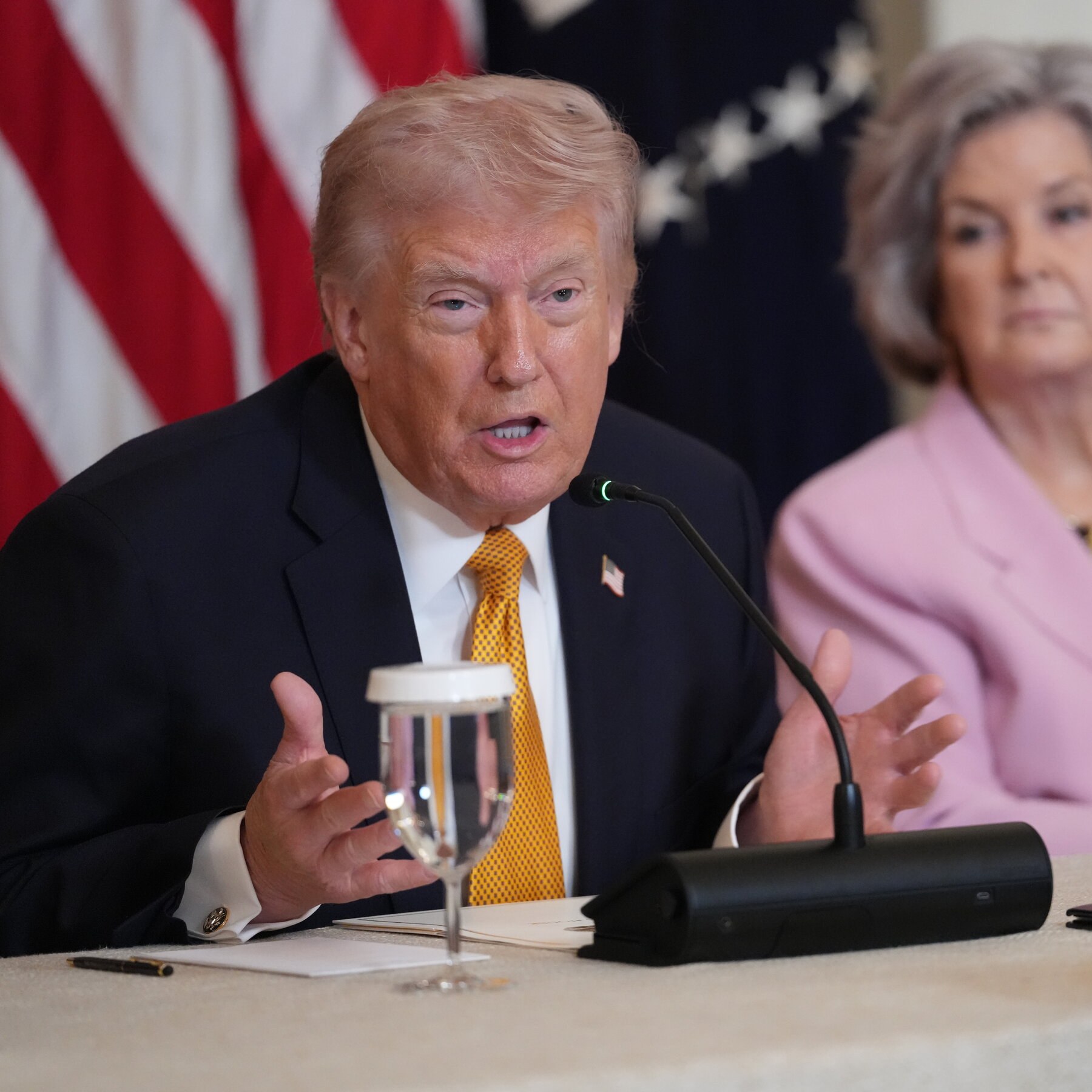
KENNEDY CENTER RENOVATION—President Donald Trump on Monday made an unusually personal appeal to the trustees of the John F. Kennedy Center for the Performing Arts, insisting they approve a full, two-year closure that would silence Washington’s busiest stage complex and allow construction crews to tackle what he termed “dangerous” mechanical systems and “tired” interior finishes.
Speaking beneath the Truman Balcony to an audience that included billionaire board members and senior White House staff, Trump blended construction-site bravado with culture-war rhetoric, declaring the 1971 building had been “let go to hell” until he forced out senior management and installed allies last winter.
“What I know best in the world is construction,” Trump said, arguing that a phased repair would cost more and take longer than a single decisive shutdown. “Close it, do it properly and reopen it.” The remarks set up a pivotal board vote scheduled for late Monday that could lock in a July closure and send the National Symphony Orchestra, Washington National Opera and hundreds of touring acts scrambling for alternate venues.
From Cultural Jewel to ‘Verge of Collapse’: How Did the Kennedy Center Reach This Point?
Opened as a living memorial to President Kennedy, the riverfront arts campus hosts roughly 2,000 performances a year and claims 3.7 million in-person visitors annually, making it among America’s busiest performing-arts destinations. Yet behind the marble facades, engineers have warned for a decade that the original HVAC plant, now 54 years old, operates “beyond its engineered life,” according to a 2023 facilities audit commissioned by Congress.
That audit catalogued $190 million in deferred maintenance, including frayed electrical cables that fail modern fire-code tests, stage rigging rated for only 60 percent of current show loads and 1,800 restroom fixtures that leak an estimated 26 million gallons of water a year. “The building isn’t unsafe today, but we’re one catastrophic equipment failure away from an emergency closure,” said a senior engineering official who requested anonymity because federal rules bar staff from commenting on pending board decisions.
Boardroom overhaul preceded infrastructure talk
Trump’s critique did not emerge in a vacuum. After taking office he replaced 31 of the 44 trustees, including naming Richard Grenell, former acting director of national intelligence, as board chair. Grenell told staff the new slate intended to “restore patriotic programming” and eliminate diversity-equity offices that Republicans argue siphoned ticket revenue into political causes. The ideological pivot, combined with Trump’s real-estate background, quickly reframed long-standing maintenance questions into a debate over whether a full closure is the only responsible path.
Union leaders counter that the facility could remain partially open by sequencing work across its five main theatres, a method used during New York’s Lincoln Center overhaul that kept stages lit for 87 percent of scheduled performances. “The President’s all-or-nothing approach feels more about messaging than engineering,” said Local 22-22 stagehands president Dana Wilson, whose members face furloughs if the July shutdown is approved.
Whether the board has legal authority to mothball a congressionally chartered cultural institution remains an open question. A bipartisan 1964 charter obliges the center to “provide for the advancement of the performing arts,” language Democrats argue precludes a voluntary two-year blackout. Two federal suits, filed in U.S. District Court for D.C., seek injunctions to stop any closure until Congress amends the charter or explicitly appropriates renovation funds.
As Monday night’s vote looms, trustees are privately weighing political optics against engineering realities. One undecided member, who spoke on condition of anonymity, summed up the tension: “We can patch the roof and keep the lights on, or we can gamble that Congress will back us when 2,000 people are out of work and the marquee is dark.”
What Would a 24-Month Shutdown Actually Cost the Arts Economy?
Using Bureau of Economic Analysis modeling, the D.C. Office of Revenue Analysis estimates every dark week at the Kennedy Center removes roughly $1.7 million in direct spending from restaurants, parking garages, hotels and ride-share platforms within a one-mile radius. Multiply that across 104 weeks and the regional hit climbs to $177 million, not counting the center’s own lost ticket revenue of about $125 million.
Employees face an even starker reality. The 2,000 workers who rely on performances—ushers, stage crews, musicians, marketing contractors—would lose an estimated $67 million in wages, according to a study commissioned by the Service Employees International Union. “It’s not just the stars on stage,” said cellist and National Symphony member Maya Cohler. “It’s the entire ecosystem that feeds families.”
Federal appropriations hang in the balance
The Kennedy Center receives an annual federal appropriation of roughly $42 million, about 15 percent of its total budget. Congress could claw back unspent funds if the facility goes dark, a scenario that would balloon the renovation’s effective price tag. Senate appropriators have already signaled they may withhold a planned $25 million capital infusion this fall unless the board keeps at least one theatre operational.
Trump officials counter that a rapid rebuild will unlock private philanthropy. Board vice-chair Sheila Johnson, co-founder of BET, pledged $10 million toward the project on Monday and predicted other benefactors will step forward once architectural renderings are released. “Nobody wants to give to a Band-Aid,” she told reporters. “They want to give to a transformation.”
Yet transformation carries risk. Construction inflation in the Mid-Atlantic region is running 18 percent above national averages, according to trade group Engineering News-Record. If the project encounters the cost overruns typical for historic cultural venues—Boston’s Symphony Hall restoration exceeded its budget by 42 percent—the final taxpayer share could approach $400 million, double the White House estimate.
Still, proponents argue the long-term gain outweighs short-term pain. A modernized facility could boost annual attendance by 15 percent, generating an extra $28 million in ticket sales and concessions, according to an internal projection shared with trustees. That optimism hinges on reopening exactly 24 months after the closure vote—an ambitious timetable that assumes no archaeological surprises along the Potomac shoreline and no litigation delays.
Is the Board Legally Allowed to Close a Congressionally Chartered Venue?
The Kennedy Center’s founding charter, signed by President Lyndon Johnson, designates the board of trustees as the governing body but also states the institution must “provide for the advancement of the performing arts.” Critics contend that shuttering the stages for two years violates that mandate unless Congress explicitly authorizes a hiatus.
Harvard cultural-property professor Jonathan Zittrain says the dispute hinges on whether trustees interpret the charter as aspirational or prescriptive. “Courts typically give nonprofit boards wide latitude, but a deliberate multi-year blackout is unprecedented for a congressionally created entity,” he noted. Zittrain points to 1995, when the Library of Congress continued limited public services during a major renovation rather than close entirely.
Two federal lawsuits seek injunctions
Attorneys general from Maryland and the District of Columbia filed separate suits last week asking U.S. District Judge James Boasberg to block any closure until Congress weighs in. The complaints cite the 1964 charter, the 1972 appropriations act that transferred land to the center, and a 1990 law requiring advance notice before any “substantial alteration” to the facility’s public mission.
The Justice Department, representing the board, counters that trustees have inherent authority to manage facilities, pointing to a 1983 opinion from the Office of Legal Counsel that allowed the Smithsonian to close the Air and Space Museum for ten months. The distinction, plaintiffs reply, is that the Smithsonian’s regents based their decision on safety findings from the U.S. Park Police, whereas the Kennedy Center has not produced an engineering report declaring the building unsafe for partial occupancy.
Adding complexity is the board’s composition. By statute, six members are ex-officio—the Secretaries of Education, State and Health and Human Services—while 37 presidential appointees serve four-year terms. Trump’s recent replacements give him effective control, but any vote to close would still need a simple majority of the full body under the bylaws. If four of the six ex-officio members abstain, as is customary when cabinet secretaries disagree with White House policy, the threshold drops to 20 votes out of 38 participating members.
A preliminary injunction hearing is set for next Monday, one day after the scheduled board vote. Legal scholars say Judge Boasberg could rule narrowly, allowing the closure to proceed if trustees submit quarterly progress reports to Congress, or broadly, enjoining any shutdown until lawmakers appropriate specific renovation funds. Either outcome will set a precedent for how much autonomy presidential appointees enjoy over cultural institutions chartered by statute.
What Happens Next if Trustees Approve the Shutdown?
If a majority votes yes, executive director Richard Grenell will immediately notify the National Park Service, the D.C. Fire Marshal and the Federal Protective Service to coordinate a phased exit beginning July 5. Musicians of the National Symphony would be furloughed with 30 days’ severance under their collective bargaining agreement, while stagehands face staggered layoffs tied to each theatre’s hand-over date.
Programming staff have already drafted contingency plans, relocating the NSO’s 2026-27 season to Strathmore in suburban Maryland and the Opera to the Auditorium Theatre in Chicago. Yet those venues combined offer only 2,800 seats—half the Kennedy Center’s 5,800—forcing subscription reductions that could slash earned revenue by 60 percent.
Construction timeline hinges on permits
General contractor Consigli has lined up 350 specialized tradespeople, but National Park Service permits for barge-mounted cranes along the Potomac can take up to 90 days. Any delay pushes reopening past the symbolic target of July 4, 2028, the 20th anniversary of the center’s last major expansion. Trump has already teased a “grand fireworks reopening” on that date, setting an external political deadline that could pressure contractors to accelerate costly overtime work.
Meanwhile, Congress retains ultimate fiscal leverage. The House Appropriations interior subcommittee will markup the center’s fiscal 2027 budget request in April. Ranking Democrat Chellie Pingree of Maine told reporters she will seek language barring federal funds “for any institution voluntarily closed without prior congressional notification.” If enacted, such a clause could strip $42 million annually, forcing the board to rely solely on private donations and ticket reserves.
Whether philanthropic pledges materialize remains uncertain. A 2020 study by the Cultural Data Project found cultural institutions see a 24 percent decline in major gifts during construction pauses, precisely when cash needs peak. “Donors like ribbon-cuttings, not scaffoldings,” said arts consultant Adrian Ellis. The board’s ability to keep big givers engaged through two years of silence may determine if the project finishes on time—or becomes a cautionary tale of overreach.
Monday night’s vote therefore carries stakes far beyond one building. A yes will test whether a presidentially controlled board can unilaterally idle a national institution. A no will send engineers back to the drawing board, searching for ways to keep the lights on while fixing what lies beneath the marble.
Frequently Asked Questions
Q: Why does Trump want to close the Kennedy Center for two years?
Trump argues a total shutdown is the fastest, cheapest way to replace failing mechanical systems and outdated interiors, drawing on his real-estate experience to promise a dramatic reopening.
Q: What repairs are actually planned inside the Kennedy Center?
Officials list new HVAC, plumbing, fire safety, electrical grids and stage technology; Trump adds new marble and removal of ‘woke’ design elements, though full architectural scope remains undefined.
Q: Who opposes the closure and what are their arguments?
Democratic lawmakers and arts unions warn lost performances could cost 2,000 jobs and $180 M in local revenue; two federal lawsuits claim the board lacks authority to shutter a congressionally chartered institution.
