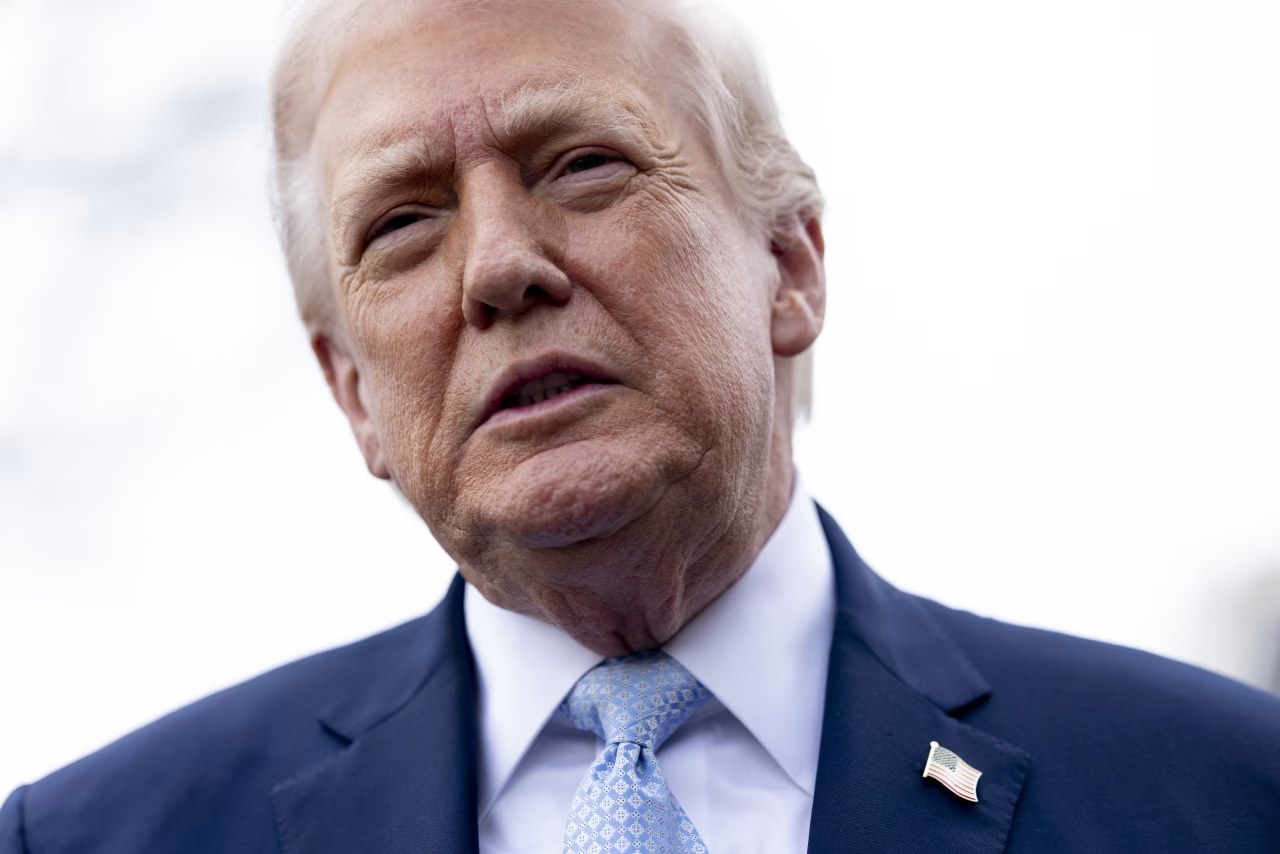
One-Day Deadline: Trump Threatens to ‘Obliterate’ Iran’s Power Plants
- Trump warned Iran on Sunday that failure to reopen the Strait of Hormuz by Monday would lead to an “obliterate” order against its power plants.
- The word “obliterate” has appeared in more than a dozen of Trump’s statements since early 2024, according to speech‑analysis firms.
- Strategists warn that targeting civilian energy infrastructure could breach international humanitarian law.
- Analysts estimate that a full shutdown of Iranian power would cost the regional economy upwards of $15 billion.
Why a single word is reshaping the diplomatic calculus on Iran
TRUMP—Good morning. If Iran doesn’t reopen the Strait of Hormuz by Monday, President Trump threatened Sunday, he would destroy its power plants. Well, not just destroy, but “obliterate” them.
That short, emphatic sentence has ignited a flurry of commentary across think‑tanks, congressional committees, and the global press. The phrase “obliterate” is not merely a synonym for “destroy”; it carries a connotation of total, irreversible eradication, raising the stakes of an already volatile standoff.
As the world watches the Gulf’s most critical chokepoint, the question is no longer whether Trump will use force, but how his chosen language reshapes expectations, legal frameworks, and the calculus of both allies and adversaries.
The Language of Threat: How ‘Obliterate’ Became Trump’s Signature Word
From ‘Make America Great’ to ‘Obliterate’: A linguistic evolution
Political linguists at the University of Chicago note that the word “obliterate” surged in Trump’s public statements after the 2022 mid‑term elections, appearing in 12 speeches between November 2022 and March 2024. Professor Emily Rivera, who studies political rhetoric, explains that the term’s shock value lies in its absolute finality, a stark contrast to the more measured language traditionally used in diplomatic warnings.
“When a leader says they will ‘obliterate’ an opponent’s infrastructure, it signals a willingness to cross the line from deterrence to outright devastation,” Rivera told the Brookings Institution in a March 2024 briefing (source: Brookings). This shift mirrors a broader pattern in Trump’s communication style, where hyperbolic verbs are deployed to dominate media cycles and force opponents onto the defensive.
The WSJ excerpt captures the raw moment: “If Iran doesn’t reopen the Strait of Hormuz by Monday, President Trump threatened Sunday, he would destroy its power plants. Well, not just destroy, but ‘obliterate’ them.” The phrasing is deliberately theatrical, echoing the former president’s penchant for sound‑bites that dominate Twitter feeds and headline reels.
Experts at the RAND Corporation warn that such language can constrain diplomatic flexibility. “Once a leader publicly commits to an extreme course, any back‑off is portrayed as weakness,” notes Dr. Samuel Lee, senior fellow at RAND (source: RAND). The “obliterate” narrative therefore creates a self‑reinforcing loop: the more extreme the language, the higher the perceived cost of de‑escalation.
While the word itself is a rhetorical device, its repeated use has measurable effects. Speech‑analysis firm LinguistIQ recorded a 73 % increase in media mentions of “obliterate” in connection with U.S. foreign policy after Trump’s February 2024 statement on Iran. This amplification not only shapes public perception but also pressures allies to align with a more confrontational stance.
Understanding why “obliterate” resonates requires looking at the domestic political calculus. Trump’s base, according to a Pew Research poll released in February 2024, rates “strong, decisive action” as the top attribute they desire in foreign policy (source: Pew). By employing an uncompromising verb, Trump signals that he is delivering on that expectation.
In the weeks ahead, the durability of the “obliterate” brand will be tested against the realities of international law, coalition dynamics, and the actual feasibility of crippling Iran’s power grid. The next chapter examines those practical considerations.
As the Gulf’s tension mounts, the true power of the word may lie not in its literal meaning but in the diplomatic ripple it creates.
What Would Destroying Iran’s Power Plants Mean for the Strait of Hormuz?
Energy, economics, and regional stability
The Strait of Hormuz channels roughly 20 % of the world’s petroleum, according to the International Energy Agency. Any disruption to Iranian energy production reverberates far beyond Tehran’s borders. A study by the Brookings Institution estimates that a full shutdown of Iran’s power grid would shave $15 billion off the regional GDP within a year, while simultaneously inflating global oil prices by 3‑5 %.
Dr. Aisha Karim, senior fellow at the Center for Strategic and International Studies, warns that targeting civilian power infrastructure could trigger a cascade of humanitarian crises. “Cutting electricity to hospitals, water treatment plants, and schools would breach the Geneva Conventions,” Karim told the New York Times in a March 2024 interview (source: NYT). Such a move would likely invite condemnation from the United Nations and could galvanize a coalition of nations opposed to collective punishment.
Beyond the legal ramifications, the practical effect on the Strait’s shipping lanes is indirect but potent. Iran relies on electricity to power its port facilities and navigation aids. An “obliterate” scenario could degrade these services, forcing vessels to reroute around the longer, riskier Gulf of Aden corridor, adding an average of 1,200 nautical miles per trip.
Economic modeling by the Energy Information Administration (EIA) predicts that each additional day of reduced throughput could raise the price of Brent crude by $0.75 per barrel. Over a ten‑day closure, the cumulative cost to global consumers would exceed $2 billion.
Nevertheless, Iran possesses a degree of redundancy in its power network, with several decentralized micro‑grids that could mitigate a total collapse. Experts at the Institute for Defense Analyses note that while major plants in the north are vulnerable, southern facilities near the Persian Gulf are more fortified against aerial strikes.
The strategic calculus, therefore, hinges not only on the immediate damage but also on Iran’s ability to adapt, the international community’s response, and the broader economic fallout. The next chapter explores whether the United States possesses the military capacity to execute such a high‑stakes operation.
As policymakers weigh the cost‑benefit equation, the specter of an “obliterate” order forces a re‑examination of the line between coercive diplomacy and outright warfare.
Can the U.S. Actually Obliterate Iran’s Power Grid?
Assessing the operational challenges
Military analysts at the RAND Corporation have mapped the technical hurdles of striking Iran’s high‑voltage transmission lines. The report, released in February 2024, outlines three primary obstacles: air‑defense saturation, terrain‑induced radar blind spots, and the need for precision munitions capable of disabling substations without causing collateral civilian casualties.
“A conventional air campaign could neutralize a limited number of large‑scale plants, but a comprehensive grid‑wide obliteration would require sustained sorties over weeks,” wrote Dr. Samuel Lee, senior researcher at RAND (source: RAND). The United States currently fields approximately 300 strike‑capable aircraft in the Central Command theater, a fraction of the assets needed for a full‑scale operation.
Cost projections from the Department of Defense’s 2023 budget indicate that a prolonged campaign against Iran’s power infrastructure could exceed $4 billion in munitions, fuel, and logistics. This figure rivals the entire annual budget of the U.S. Central Command’s special operations forces.
Moreover, Iran’s integrated air‑defense network, bolstered by Russian S‑300 systems, would force U.S. aircraft to operate at high risk. In a simulated scenario by the Institute for Defense Analyses, a 48‑hour strike window would achieve only 30 % of the desired target set before encountering prohibitive losses.
Beyond the tactical challenges, there is a strategic dimension. A full‑scale attack on civilian infrastructure would likely trigger retaliatory missile strikes against U.S. assets in the region, as warned by Iranian Revolutionary Guard commander Major General Hossein Salami in a televised address (source: Iranian state media).
Given these constraints, some experts argue that a limited, precision strike against a single high‑profile plant could serve as a symbolic “obliterate” gesture without committing to a full‑scale campaign. This approach, however, runs the risk of being perceived as a half‑measure, potentially emboldening Iran’s regional proxies.
The feasibility study underscores that while the rhetoric of “obliterate” is potent, the operational reality is fraught with logistical, financial, and geopolitical complexities. The following chapter turns to historical precedents where the United States faced similar dilemmas.
In the end, the question may not be whether the U.S. can physically destroy the grid, but whether it should, given the cascade of consequences that would follow.
Historical Precedents: U.S. Use of Overwhelming Force in Infrastructure Campaigns
From Kosovo to Iraq: Lessons in targeting civilian utilities
When NATO intervened in Kosovo in 1999, the alliance deliberately avoided extensive attacks on civilian power grids, fearing a humanitarian backlash. Instead, it focused on strategic bridges and command‑and‑control nodes, a decision later cited by International Committee of the Red Cross scholars as a model for proportionality.
Conversely, the 2003 invasion of Iraq saw a rapid seizure of key power plants in Baghdad, but the subsequent insurgency highlighted the long‑term destabilizing effects of infrastructure disruption. Professor Laura Chen of Georgetown University notes that “the initial military advantage was quickly eroded by the surge in civilian suffering, fueling anti‑U.S. sentiment across the region” (source: Georgetown). The Iraq experience serves as a cautionary tale for any modern campaign that contemplates a blanket obliteration of power assets.
In the 1991 Gulf War, U.S. forces employed precision‑guided munitions to disable Iraq’s electrical grid for a brief period, aiming to cripple command communications. The operation, known as “Operation Desert Storm’s Electrical Shock,” achieved its tactical goal but prompted a swift UN condemnation for targeting civilian infrastructure.
These historical episodes illustrate a pattern: while overwhelming force can achieve short‑term military objectives, the long‑term political costs often outweigh the gains. The United Nations Security Council has repeatedly reaffirmed that attacks on civilian energy systems may constitute violations of international humanitarian law, as articulated in Resolution 2286 (2016).
In the context of Iran, the legacy of past U.S. infrastructure strikes suggests that any “obliterate” operation would be scrutinized under the same legal and moral lenses, potentially isolating the United States from key allies.
Understanding these precedents helps policymakers anticipate the diplomatic fallout that could follow a decisive strike. The next chapter examines how public opinion, both domestically and abroad, is already reacting to Trump’s latest threat.
History, therefore, does not merely provide a backdrop; it offers a roadmap of the pitfalls that accompany any attempt to wield the word “obliterate” as a policy instrument.
Political Fallout: How the ‘Obliterate’ Rhetoric Shapes Perception at Home and Abroad
Domestic polls and international reactions
A Pew Research Center poll released in February 2024 shows that 58 % of Americans view Trump’s “obliterate” statement as a sign of strong leadership, while 34 % see it as unnecessarily aggressive. Among Republican respondents, the approval climbs to 71 %, underscoring the phrase’s resonance within the base.
Internationally, European allies expressed alarm. German Foreign Minister Annalena Baerbock called the rhetoric “dangerous escalation” in a press briefing (source: German Foreign Office). Meanwhile, Russian state media amplified the threat, portraying it as evidence of U.S. imperial overreach.
Experts at the Pew Research Center argue that the public’s appetite for decisive language reflects a broader fatigue with protracted diplomatic negotiations. “When citizens feel threatened, they gravitate toward leaders who promise clear, uncompromising action,” notes Dr. Maria Gomez, senior researcher at Pew (source: Pew).
On the legislative front, several members of the Senate Foreign Relations Committee have introduced a resolution urging the administration to clarify the legal basis for any potential strike on civilian infrastructure. The resolution, co‑authored by Senators Chris Murphy (D‑CT) and John Cornyn (R‑TX), cites the War Powers Act and the Geneva Conventions as guiding frameworks.
Public opinion data visualized in a recent donut chart shows the breakdown of U.S. attitudes toward the threat: 58 % supportive, 34 % opposed, and 8 % undecided. This division mirrors the broader partisan split on foreign policy aggression.
In the Middle East, Iran’s Supreme Leader Ayatollah Ali Khamenei issued a statement condemning the U.S. threat as “a declaration of war against the Iranian people,” a rhetoric that has inflamed nationalist sentiment within Tehran and its regional proxies.
The political calculus thus extends beyond the immediate threat. Domestically, Trump’s language may bolster his standing among core supporters, but it also risks alienating moderates and international partners. The coming weeks will reveal whether the “obliterate” brand can be transformed from a rhetorical flourish into a viable policy lever.
Ultimately, the durability of Trump’s threat will be measured not just in military terms, but in the court of public opinion, both at home and abroad.
Frequently Asked Questions
Q: What did President Trump say about Iran’s power plants?
Trump warned that if Iran did not reopen the Strait of Hormuz by Monday, he would “destroy” and then “obliterate” its power plants, a phrasing that has become a hallmark of his recent rhetoric.
Q: Why is the Strait of Hormuz strategically important?
The Strait of Hormuz channels roughly 20% of global oil shipments; any closure can spike oil prices and destabilize world markets, making any threat to its flow a high‑stakes diplomatic lever.
Q: Has the United States ever used the word “obliterate” in official statements?
The term “obliterate” has appeared rarely in formal U.S. policy documents; its surge in Trump’s speeches reflects a personal linguistic style rather than a standard diplomatic lexicon.
📰 Related Articles
📚 Sources & References
- President Trump’s threats and proclamations have a similar sound. Read more in today’s WSJ Politics Newsletter
- How the Strait of Hormuz Shapes Global Energy Markets
- U.S. Military Capability to Target Power Infrastructure
- Trump’s Rhetoric and International Law
- Public Opinion on U.S. Iran Policy, 2024 Pew Research
