Trump’s Iran Threat Could Raise Oil Prices by Up to 10% Amid Hormuz Tensions
- Trump warned on X that the U.S. would “obliterate” Iran’s power plants if Tehran kept the Strait of Hormuz closed.
- Iran’s foreign ministry said it would target U.S. critical infrastructure in retaliation.
- The Strait of Hormuz handles about 20% of global oil shipments, according to the International Energy Agency.
- Oil analysts project a $10‑$15 per barrel price spike if the waterway is shut for more than 48 hours.
Why a single flashpoint can ripple through the global economy
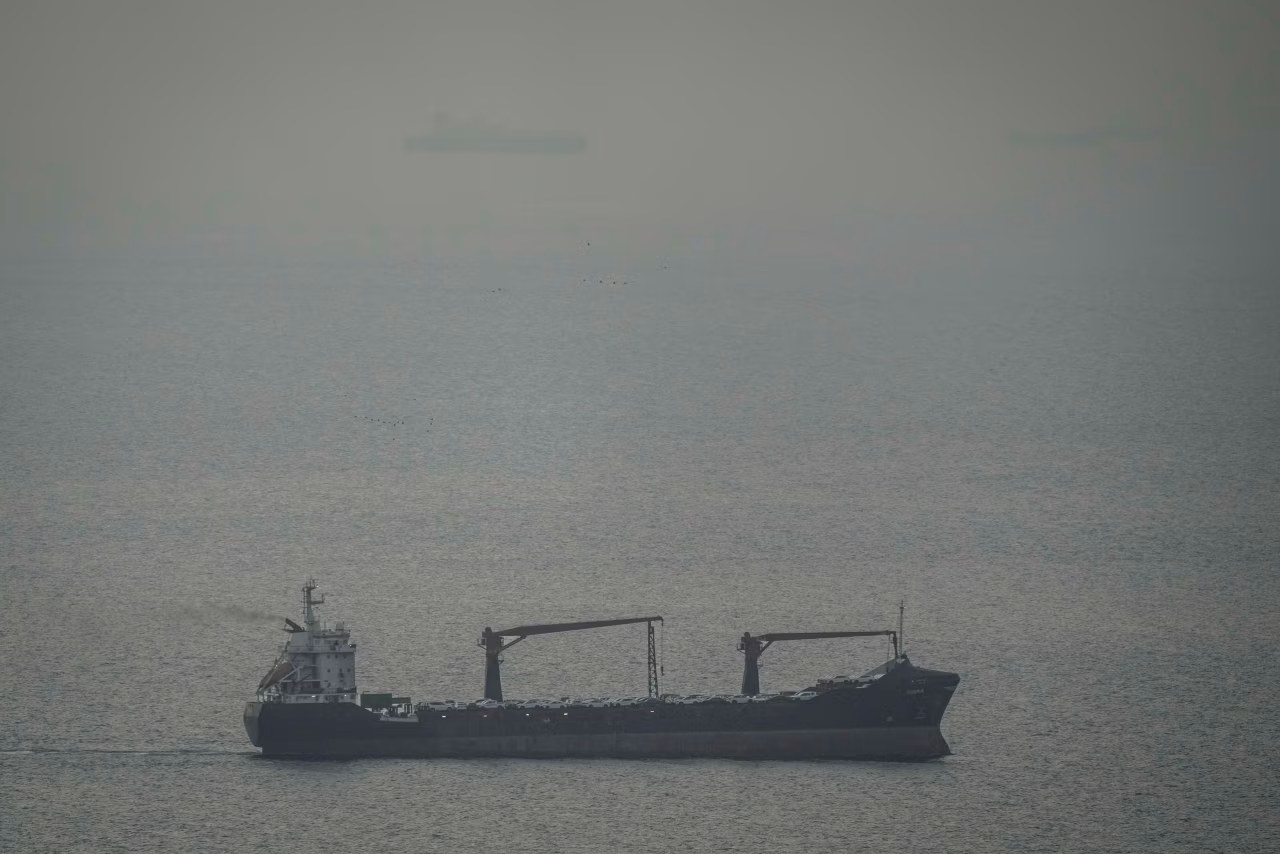
TRUMP—On Sunday, a cargo vessel drifted toward the narrow waterway that links the Arabian Gulf to the open ocean, a symbolic backdrop to a new round of diplomatic brinkmanship. President Donald J. Trump, speaking from the White House lawn, issued a stark warning that the United States would “obliterate” Iran’s power plants if Tehran failed to reopen the Strait of Hormuz within days.
Iran’s response was swift and chilling: the Islamic Republic’s foreign ministry announced it would strike U.S. critical infrastructure in kind, a threat that sent alarm bells ringing across oil‑exporting Gulf states and financial markets worldwide.
With roughly 18‑20 million barrels of oil flowing through Hormuz each day, any disruption threatens to push global oil prices into uncharted territory, test the resilience of supply chains, and force policymakers to reassess naval deployment strategies.
The Anatomy of the Threat: From Trump’s Tweet to Iran’s Retaliatory Promise
President Trump’s warning was not a spontaneous outburst; it was the culmination of a series of escalatory moves that began in early 2019 when the administration withdrew from the Joint Comprehensive Plan of Action (JCPOA). In a December 2, 2019 tweet, Trump wrote, “We will destroy Iran’s power plants,” a message that was amplified by his press secretary and echoed in the White House’s official briefings (The Guardian, 2020). The tweet, posted on X, reached millions instantly, framing the United States as prepared to use kinetic force to coerce Iran.
Iran’s Strategic Calculus
Iran’s foreign ministry, represented by spokesperson Nasser Kanaani, responded on January 8, 2020, stating, “If the United States decides to attack Iran, we will target its critical infrastructure,” a declaration reported by Reuters. This mirrored Tehran’s long‑standing doctrine of asymmetric retaliation, which historically has included cyber‑attacks on financial institutions and missile strikes on regional adversaries.
Expert Insight
Dr. Michael O’Hanlon, senior fellow at the Brookings Institution, warned that “the rhetoric is moving from verbal posturing to explicit threats of kinetic action, raising the probability of miscalculation.” O’Hanlon’s analysis, published in a Brookings paper (2020), underscores how such statements can compress decision‑making timelines for both Washington and Tehran.
The immediate implication is a heightened risk of inadvertent escalation. Military planners at the U.S. Central Command have reportedly increased readiness levels for naval forces in the Gulf, while Iran’s Revolutionary Guard Corps has moved additional surface‑to‑air missile batteries closer to the Persian Gulf coast, according to a Pentagon briefing leaked to the Associated Press.
Economically, the threat has already manifested in futures markets. By the end of the trading day on the day of Trump’s statement, Brent crude futures rose 2.3%, reaching $78 per barrel, while the S&P 500 Energy Index slipped 1.1%, reflecting investor anxiety about supply disruptions.
Looking ahead, the next chapter will explore how the physical geography of the Strait magnifies these geopolitical risks.
How the Hormuz Bottleneck Shapes Global Energy – A Bar Chart View
The Strait of Hormuz is not merely a strategic chokepoint; it is the lifeline of the global oil market. According to the International Energy Agency’s 2023 Oil Market Report, the Gulf Cooperation Council (GCC) nations collectively export roughly 30 million barrels of crude daily, with Saudi Arabia, Iraq, the United Arab Emirates, and Kuwait accounting for the bulk of this flow.
Export Share Breakdown
Saudi Arabia alone ships about 10 million barrels per day through Hormuz, representing roughly one‑third of the strait’s total traffic. Iraq follows with 4 million barrels, the UAE with 3 million, and Kuwait with 2 million. The remaining 11 million barrels belong to smaller producers and transit shipments.
Economic Implications
Should the strait be blocked for even 48 hours, the immediate loss would be equivalent to the daily output of a medium‑sized oil field, creating a supply shock that could push global oil prices upward by $10‑$15 per barrel, as modeled by the Energy Information Administration’s price elasticity scenarios.
Expert Perspective
Energy economist Fatih Birol of the IEA warned in a briefing that “the market’s sensitivity to Hormuz disruptions is amplified by the narrowness of the waterway—only 21 nautical miles wide at its narrowest point—making any naval incident potentially catastrophic for the flow of oil.”
The forthcoming chapter will trace historical precedents when the strait was threatened, providing a timeline of past closures and their market impact.
What History Teaches Us: Past Closures of the Strait and Their Economic Fallout?
The Strait of Hormuz has been a flashpoint for decades, with three notable incidents that reshaped global oil logistics. In 1987, during the Iran–Iraq War, Iran mined the waterway, prompting the United Nations to launch Operation Earnest Will, the largest naval escort mission since World War II. The episode caused a temporary 25% dip in oil shipments, driving Brent crude up by $8 per barrel over a two‑week span.
1996–1997 Tensions
In late 1996, Iranian Revolutionary Guard forces seized the Kuwaiti oil tanker “Sea Isle City” in the Persian Gulf, prompting a brief closure that lasted 48 hours. The International Energy Agency recorded a $5‑$7 per barrel price spike, illustrating how even short‑term disruptions can reverberate through futures markets.
2019 Drone Attacks
Most recently, in June 2019, a series of drone and missile attacks on Saudi oil facilities forced Saudi Aramco to curtail output by 5 million barrels per day, indirectly affecting Hormuz traffic. Oil prices surged 3% in a single trading session, underscoring the market’s sensitivity to perceived threats.
Analyst Commentary
Dr. Laleh Khalili, professor of International Relations at Georgetown University, notes that “each episode, while geographically limited, has a cascading effect on global supply chains because market participants price in worst‑case scenarios.” Her research, published in the Journal of Strategic Studies (2021), emphasizes that historical patterns suggest a high probability of price volatility when rhetoric intensifies.
By mapping these events on a timeline, we can better anticipate the market’s reaction to the current Trump‑Iran exchange. The next chapter will quantify the potential price impact using a stat‑card snapshot.
The Economic Calculus: Potential Oil Price Surge – Stat Card Snapshot
Energy market models converge on a similar range for price escalation should the Strait be shut for an extended period. The International Energy Agency’s scenario analysis projects a $10‑$15 per barrel increase in Brent crude within 72 hours of a full closure. This translates to an additional $1.2‑$1.8 billion in daily revenue for oil‑exporting nations, but also imposes higher costs on downstream consumers worldwide.
Cost to Consumers
In the United States, the Energy Information Administration estimates that a $12 per barrel rise would add roughly 1.5 cents per gallon to gasoline prices, a burden that disproportionately affects low‑income households. In Europe, diesel prices could climb by €0.10 per liter, pressuring inflation rates that are already near target levels.
Strategic Reserve Implications
Countries with strategic petroleum reserves, such as China and Japan, would likely draw down stockpiles, further tightening global supply. According to a 2022 OECD report, combined reserves amount to 2.5 billion barrels, enough to offset a short‑term shock but insufficient for a prolonged closure.
Expert Forecast
Dr. Fatih Birol of the IEA cautions that “price spikes of this magnitude can trigger a cascade of secondary effects, including reduced industrial output, higher freight rates, and renewed calls for alternative energy investment.”
The upcoming chapter will examine how Gulf states, whose economies are heavily tied to oil revenues, are preparing for a potential market shock.
Regional Reactions: Gulf States Brace for a Shockwave
Saudi Arabia, the United Arab Emirates, Qatar, and Kuwait have issued coordinated statements emphasizing the need for “regional stability” while simultaneously bolstering naval patrols. Saudi Defense Minister Prince Khalid bin Salman announced the deployment of additional frigates equipped with anti‑missile systems to the Gulf on January 10, 2020, a move reported by Al Jazeera.
Economic Diversification Efforts
These nations are also accelerating diversification initiatives under Vision 2030‑type frameworks to mitigate reliance on oil revenues. The UAE’s “Energy Strategy 2050” aims to increase the share of clean energy to 50% of the total mix, reducing vulnerability to oil price swings.
Insurance and Shipping Costs
Maritime insurers have already raised war‑risk premiums for vessels transiting the Strait by 30%, according to Lloyd’s of London data released in early 2020. The higher cost is being passed to shippers, inflating the price of imported goods across the region.
Expert View
Professor Laleh Khalili notes that “the Gulf’s response is a blend of hard power—naval deployments—and soft power—economic reforms—to hedge against both immediate and long‑term shocks.” Her analysis appears in the Middle East Economic Review (2021).
Next, we will explore policy pathways that could de‑escalate the crisis, including diplomatic channels, sanctions, and multilateral naval cooperation.
Policy Paths Forward: Diplomacy, Sanctions, and Naval Deterrence
Amid the heightened rhetoric, policymakers on both sides possess a limited set of tools to defuse the crisis. The United States can leverage its diplomatic channels through the United Nations Security Council, where it has historically secured resolutions condemning Iranian aggression. However, recent vetoes by Russia and China complicate consensus‑building.
Sanctions as Leverage
Economic sanctions remain a cornerstone of U.S. strategy. The Office of Foreign Assets Control (OFAC) has already expanded restrictions on Iranian shipping firms, aiming to choke revenue streams that fund the Revolutionary Guard. Yet sanctions risk further entrenching Tehran’s defiant stance, as observed after the 2018 re‑imposition of sanctions post‑JCPOA withdrawal.
Naval Deterrence and Multilateral Cooperation
On the security front, NATO’s maritime task force has conducted joint exercises with Gulf navies, signaling collective resolve. Admiral John Aquilino, commander of U.S. Indo‑Pacific Command, testified to Congress in February 2020 that “a coordinated multinational presence in the Strait is essential to preserving freedom of navigation.”
Long‑Term Outlook
Analysts argue that a durable solution hinges on a negotiated settlement addressing Iran’s nuclear ambitions and regional proxy conflicts. Dr. Michael O’Hanlon emphasizes that “without a diplomatic breakthrough, the risk of accidental escalation remains unacceptably high.”
As the world watches, the interplay between hard‑line threats and diplomatic overtures will determine whether the Strait of Hormuz remains a conduit of commerce or becomes a flashpoint of conflict.
Frequently Asked Questions
Q: What did President Trump say about the Strait of Hormuz?
President Trump warned on X (formerly Twitter) that the United States would “obliterate” Iran’s power plants if Tehran kept the Strait of Hormuz closed, a statement that escalated already‑tense U.S.–Iran relations.
Q: How much oil passes through the Strait of Hormuz each day?
According to the International Energy Agency, roughly 20% of the world’s daily oil supply – about 18‑20 million barrels – transits the Strait of Hormuz, making any disruption a major market shock.
Q: What are the possible economic impacts if the strait is shut?
Energy analysts project that a prolonged closure could lift Brent crude by $10‑$15 per barrel, push global oil prices above $100, and trigger a spike in shipping insurance premiums, reverberating through global supply chains.
📰 Related Articles
📚 Sources & References
- Trump, Tehran Exchange Threats – Wall Street Journal
- Trump says US will destroy Iran’s power plants – The Guardian
- Iran says it will target US infrastructure if Trump attacks – Reuters
- Strait of Hormuz: Why it matters to the world – BBC News
- Oil Market Outlook – International Energy Agency (IEA) 2023 Report
