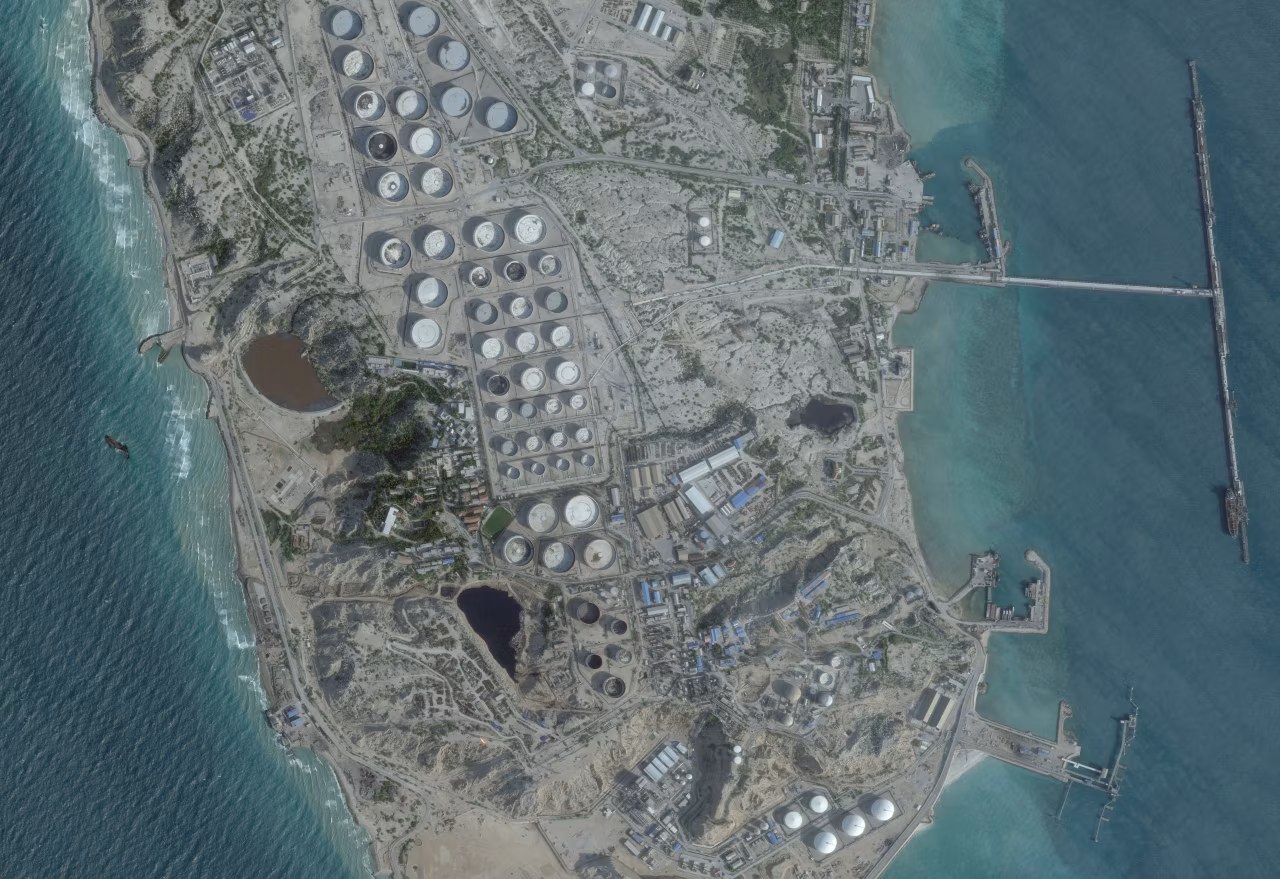
President Trump’s Dual Strikes on Iran’s Kharg Island Signaled Intent Over Key Oil Lifeline
- The U.S. military executed two strategic bombings on Iran’s Kharg Island, a critical hub for 90% of its oil exports.
- President Trump ordered the April 7 attack as a deadline loomed for Iran to reopen the vital Strait of Hormuz.
- Both the March and April 7 attacks meticulously targeted military facilities, deliberately sparing Iran’s oil infrastructure.
- The March operation struck over 90 military targets, while the April 7 strike hit more than 50, indicating sustained pressure.
A Precarious Balance: Confrontation at the Crossroads of Global Energy
IRAN—In a series of calculated maneuvers that underscored escalating tensions in the Persian Gulf, President Donald Trump authorized two distinct military operations targeting Iran’s strategically vital Kharg Island. These actions, occurring in March and again on April 7, were not mere acts of aggression but precise demonstrations of force, calibrated to send an unambiguous message to Tehran.
Kharg Island, a small landmass nestled in the northern Persian Gulf, holds disproportionate economic significance for Iran, serving as the crucial embarkation point for approximately 90% of the nation’s oil exports. The decision to target an area so intrinsically linked to Iran’s economic lifeline, even if the strikes meticulously avoided oil facilities, represented a significant escalation in the ongoing diplomatic and military standoff between Washington and Tehran. This journalistic deep dive examines the motivations behind these strikes, their strategic implications, and the broader context of regional stability.
The U.S. military’s deliberate choice to focus solely on military targets, while leaving the oil infrastructure intact, speaks volumes about the intricate balance of deterrence and de-escalation that often defines high-stakes geopolitical confrontations. This approach aimed to exert pressure and demonstrate capability without triggering an all-out economic or military crisis, yet it simultaneously amplified concerns about the long-term stability of one of the world’s most critical energy regions.
Kharg Island: Iran’s Economic Linchpin Under Pressure
The strategic significance of Kharg Island to Iran cannot be overstated; it is unequivocally the country’s most vital economic asset. Situated in the northern Persian Gulf, this diminutive landmass serves as the pivotal launch point for an astonishing 90% of Iran’s oil exports. This immense figure underscores the island’s role as the primary conduit for the nation’s petrodollars, directly fueling its economy and supporting its geopolitical endeavors. To place this in context, any disruption to Kharg Island inherently threatens the vast majority of Iran’s access to international markets for its most valuable commodity, making it a natural flashpoint in any confrontation with the Islamic Republic.The U.S. military’s decision to bomb Kharg Island, specifically on April 7 and in a preceding incident in March, even if targeting military installations, sent a clear and potent signal directly at the heart of Iran’s economic resilience. Military analysts often observe that in modern conflict, the targeting of economic lifelines, or even areas adjacent to them, serves as a powerful psychological and strategic weapon. This approach aims to demonstrate vulnerability without necessarily inflicting catastrophic economic damage that could provoke an uncontrollable escalation. The specific exclusion of oil facilities from the bombardment highlights a calculated strategy to apply pressure while avoiding an outright economic blockade or destruction that could destabilize global oil markets.
The focus on military targets, such as mine and missile-storage sites and a runway, as confirmed by U.S. military statements in March, indicated an intent to degrade Iran’s defensive and offensive capabilities in the Persian Gulf rather than overtly striking its economic jugular. However, the proximity and the very act of bombing an island so critical to national revenue unmistakably convey a message: Iran’s economic stability is intertwined with its adherence to international norms and demands, particularly concerning critical maritime passages like the Strait of Hormuz. This dual-pronged strategy aimed to leverage Iran’s economic dependency on oil exports against its regional assertiveness, setting the stage for future interactions over maritime control.
Trump’s Deadline: Pressuring Iran on the Strait of Hormuz
The underlying impetus for President Trump’s order to attack Kharg Island was a looming deadline for Iran to reopen the Strait of Hormuz. This narrow, yet supremely strategic, waterway is globally recognized as a critical chokepoint for international oil shipments. Its closure, or even the threat of it, has profound implications for global energy security and prices, affecting nations far beyond the immediate region. President Trump’s ultimatum underscored a core tenet of U.S. foreign policy in the Middle East: ensuring the unimpeded flow of commerce through international waters, particularly those vital for global energy supplies.The Strait of Hormuz connects the Persian Gulf with the Arabian Sea and the open ocean, making it indispensable for oil tankers carrying crude from major producers in the region, including Saudi Arabia, Iraq, UAE, Kuwait, and, crucially, Iran. When President Trump issued his demand, it reflected a direct challenge to Iran’s perceived leverage over this maritime artery. The U.S. government’s position, consistently articulated through various administrations, is that such international straits must remain open for transit navigation, a principle often at odds with Iran’s assertions of sovereignty and control in its immediate vicinity.
By linking the military action on Kharg Island, Iran’s primary oil export hub, to the demand concerning the Strait of Hormuz, President Trump’s administration employed a strategy of coercive diplomacy. This approach aimed to demonstrate that Washington was willing to use military force to protect global economic interests and challenge Iranian regional influence. Geopolitical observers suggested this was a clear signal that the U.S. would not tolerate any actions by Iran that threatened global maritime trade or energy supply chains. The attacks, therefore, served as a potent illustration of the high stakes involved in the ongoing disputes over the Strait’s status, signaling a proactive stance against any perceived Iranian provocations.
Precision or Provocation? Analyzing the Dual Kharg Island Attacks
The U.S. military’s dual strikes on Kharg Island, one in March and another on April 7, demonstrate a calibrated approach to military intervention. In both instances, the stated objective and execution meticulously avoided Iran’s vital oil facilities, focusing exclusively on military targets. This strategic restraint suggests a nuanced intent: to apply significant pressure and diminish Iranian military capabilities without triggering an all-out conflict or devastating Iran’s economy outright. The March attack, for example, reportedly hit more than 90 military targets, including crucial mine and missile-storage sites, with the U.S. military releasing video evidence of a strike on a runway, showcasing both the precision and the transparency of the operation.Subsequently, the April 7 attack, while also targeting military installations, struck more than 50 such sites. The reduction in the number of targets from over 90 in March to over 50 in April could indicate several strategic possibilities: a focused follow-up, a response to specific intelligence, or a recalibration of kinetic force. Regardless, the consistent emphasis on non-oil military targets across both operations speaks to a deliberate strategy to degrade Iran’s capacity for regional military action, particularly actions that could threaten shipping in the Persian Gulf and the Strait of Hormuz.
Strategic observers often analyze such actions as a form of signaling. By targeting military assets associated with potential naval warfare (mines) and long-range capabilities (missiles), the U.S. sought to diminish Iran’s ability to project power or threaten maritime transit, while explicitly avoiding the economic choke points. This differentiation between military and economic targets highlights a delicate balance in foreign policy, aiming to deter and punish without creating an irreversible escalation spiral. The repeated nature of the attacks within a short timeframe also amplified the message of sustained U.S. resolve and capability, challenging Iran’s freedom of action in its own territorial waters and beyond.
Assessing the Strategic Fallout: Beyond the Bombardment
The immediate aftermath and broader strategic implications of the U.S. military’s Kharg Island operations extend far beyond the direct impact on military sites. While oil facilities were spared, the very act of bombing an island responsible for 90% of Iran’s oil exports introduces a layer of profound uncertainty for Tehran. The psychological impact on Iran’s leadership and its military strategists would undoubtedly be substantial, forcing a re-evaluation of its vulnerability and the costs associated with its regional policies. This dynamic pushes Iran to consider the potential for economic disruption, even if not directly targeted in these specific instances.The U.S. approach highlights a strategy aimed at degrading Iran’s specific military capabilities while simultaneously applying economic pressure through the implied threat rather than overt destruction. By striking mine and missile-storage sites, the U.S. demonstrated a commitment to neutralizing perceived threats to maritime navigation. This could compel Iran to either reconsider its assertiveness in the Strait of Hormuz or face continued military and economic pressures. The implicit message is that escalatory actions by Iran, such as threatening to close the Strait, could lead to further, more damaging, U.S. responses.
For Iran, the dual Kharg Island attacks present a complex challenge. On one hand, maintaining its defiant posture is critical for internal legitimacy and regional influence. On the other hand, the financial implications of even a threatened disruption to its oil exports are immense, directly affecting the state budget and public welfare. Military experts might argue that such an approach is designed to create an untenable dilemma for Tehran: continue its current trajectory and risk broader economic and military consequences, or de-escalate and address the international community’s concerns. The reverberations from these attacks are likely to shape Iran’s calculations regarding its regional power projection, its engagement with international shipping, and its overall strategic dialogue with the United States.
A Balancing Act: Escalation and De-escalation in the Persian Gulf
The U.S. military operations against Kharg Island encapsulate the precarious balancing act inherent in modern geopolitics, particularly in volatile regions like the Persian Gulf. President Trump’s decision to order these attacks, specifically targeting military assets while explicitly sparing oil infrastructure, was a calculated move within a broader strategy of ‘maximum pressure’ against Iran. This approach seeks to coerce behavioral change from Tehran without igniting a full-scale regional conflict. The distinction between military and economic targets is crucial here; it serves as a red line, signaling the extent of U.S. willingness to use force while attempting to leave room for de-escalation.The repeated strikes on Kharg Island sent a clear message that the U.S. was prepared to act decisively to safeguard interests related to international maritime freedom and regional stability, particularly concerning the Strait of Hormuz. However, the consistent avoidance of Iran’s oil export facilities, which are responsible for 90% of its national revenue, underscores a strategic decision to prevent a catastrophic economic blow that could force Iran into an unpredictable, all-out retaliation. This precision ensures that the U.S. retains the moral and strategic high ground, framing its actions as defensive and deterrent rather than overtly aggressive or economically punitive.
Looking ahead, the long-term impact of the Kharg Island attacks on the U.S.-Iran dynamic remains a subject of intense debate among foreign policy experts. Will these actions compel Iran to adopt a more conciliatory stance regarding the Strait of Hormuz, or will they merely entrench a deeper sense of defiance? The answer will likely shape the trajectory of regional security for years to come. The delicate dance between exerting pressure and preventing outright war demands continuous assessment and recalibration, with every military strike and diplomatic demand carefully scrutinized for its potential to either stabilize or further destabilize the world’s most critical oil transit route.
Frequently Asked Questions
Q: What was the strategic importance of Kharg Island to Iran?
Kharg Island serves as the launch point for approximately 90% of Iran’s oil exports, making it the country’s most strategic economic asset. The U.S. military strikes on Kharg Island, though targeting military infrastructure, carried significant symbolic weight given the island’s economic criticality to Iran’s revenue streams.
Q: Why did President Trump order military action against Kharg Island?
President Trump ordered the Kharg Island attack as a deadline approached for Iran to reopen the Strait of Hormuz. This action was intended to pressure Iran regarding its control over this crucial maritime chokepoint, highlighting a strategic confrontation over international shipping lanes and economic leverage.
Q: What targets were hit during the U.S. military strikes on Kharg Island?
During the attacks on Kharg Island, the U.S. military specifically targeted military infrastructure, not oil facilities. In March, over 90 military targets, including mine and missile-storage sites, were hit. The April 7 attack targeted more than 50 military sites, with the U.S. military sharing video of a strike on a runway in connection with the earlier operation.
Q: How do the Kharg Island attacks relate to the Strait of Hormuz?
The Kharg Island attacks were directly linked to President Trump’s demand for Iran to reopen the Strait of Hormuz. By striking military targets near Iran’s primary oil export hub, the U.S. aimed to exert pressure on Tehran to comply, underscoring the vital role of the Strait for global energy markets and the perceived threat of its closure.
