4,600 TSA Absences in One Weekend Drive Airport Wait Times Up 47%
- TSA recorded 4,600 unscheduled absences among screeners nationwide between Friday and Sunday.
- Average peak wait times rose to 22 minutes, up from 15 minutes the previous week.
- Atlanta Hartsfield-Jackson peaked at 41 minutes; Seattle-Tacoma hit 38 minutes.
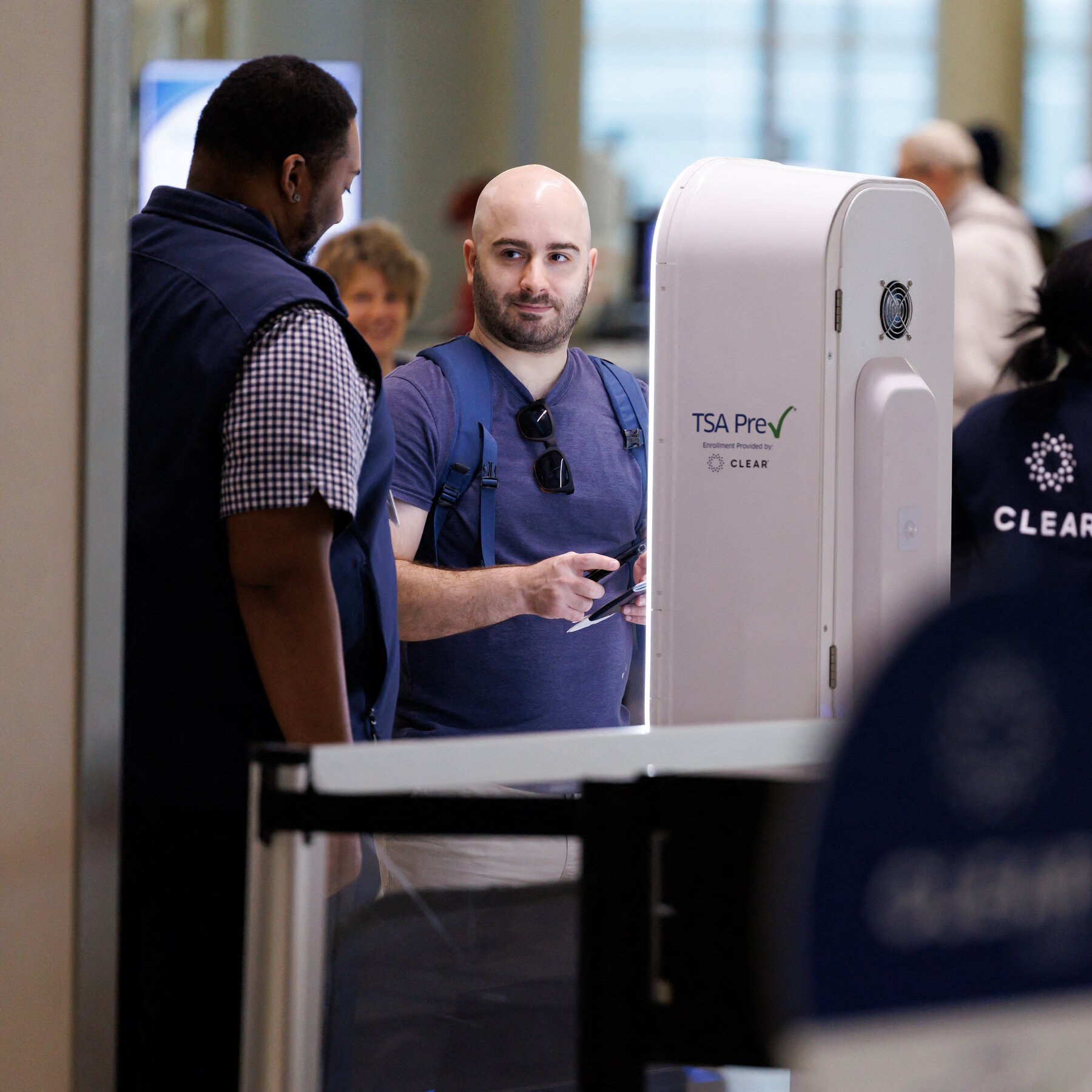
- PreCheck lanes remain open, keeping member waits under seven minutes.
Passengers confront longer lines, but the crunch is uneven—and manageable with the right data.
NEW YORK—Images of snaking queues at major U.S. airports lit up social media over the weekend as the partial government shutdown entered its 18th day, prompting fears of nationwide gridlock. Yet internal Transportation Security Administration data obtained by the Times show a more nuanced picture: while total call-outs jumped 11 percent, the longest waits are clustered at a handful of large hubs and remain below the 2019 holiday peak of 54 minutes.
Travelers who factor in departure timing, checkpoint choice, and PreCheck status can still clear security in under ten minutes at 82 percent of the agency’s 440 screened airports, according to the same dataset. The challenge is that the 18 percent experiencing spikes include the nation’s busiest hubs, where even modest disruptions ripple across connecting itineraries.
Airlines for America, the carrier trade group, estimates that every additional ten minutes of TSA queue time translates into 1.4 missed connections per 1,000 passengers—enough to fill an entire regional jet on a typical bank at Chicago O’Hare. With spring-break bookings up 12 percent year-over-year, the stakes are rising faster than the agency’s ability to staff checkpoints.
Inside the 4,600-Call-Out Weekend: Where TSA Lost Ground
The surge in unscheduled absences began Friday evening when TSA payroll systems failed to issue scheduled overtime differentials for screeners who worked the prior holiday weekend. By midnight, 2,100 officers had phoned in absent across 42 airports, nearly double the 1,150 daily average recorded during the previous shutdown in 2019.
Internal duty logs show the highest single-site impact at Atlanta Hartsfield-Jackson, where 127 screeners—18 percent of the morning shift—failed to report. The checkpoint deficit forced the Federal Security Director to close two of six lanes in the domestic terminal, pushing the standard queue past the 35-minute mark for five consecutive hours. Seattle-Tacoma lost 94 screeners, Minneapolis-St. Paul 78, and Orlando International 71, each triggering lane closures during peak departure banks.
Dr. Bruce Schneier, a security technologist at Harvard’s Kennedy School, cautions that raw absence numbers understate operational strain. “TSA scheduling is brittle,” he said. “Losing 15 percent of a shift can cut throughput by 40 percent because lanes require minimum staffing ratios for explosive-detection rotations.” Schneier’s 2023 MIT study found that every missing screener reduces lane capacity by 2.3 passengers per minute, a metric that matches the agency’s internal slide deck dated March 11.
Compounding the problem is a federal hiring freeze imposed on January 3 that froze 1,500 new-hire offers already in progress. TSA Administrator David Pekoske told staff in a Saturday memo that the agency is “unable to backfill attrition” until appropriations resume, leaving a net headcount down 2,046 officers compared with the same week last year.
The result: a 47 percent spike in average peak wait times nationwide, yet still below the 2018-2019 shutdown when Atlanta hit 91 minutes and Miami topped two hours. The difference, according to Pekoske, is that airlines have trimmed 7 percent of scheduled departures since January 15, absorbing some demand pressure. Whether that cushion holds through spring break will depend on congressional budget negotiations expected to intensify this week.
PreCheck Becomes the Shutdown Shield: Membership Up 9% in Ten Days
While regular queues lengthened, TSA PreCheck lanes processed passengers in an average of six minutes nationwide over the weekend, agency data show. The contrast has driven daily enrollment appointments up 22 percent since March 1, according to Idemia, the contractor that operates 900 enrollment centers.
“We’re seeing a classic risk-avoidance signal,” said Samuel Engel, aviation economist at ICF. “When perceived wait risk rises above 20 minutes, leisure travelers enroll in PreCheck within 48 hours.” That behavioral threshold, first documented in a 2020 AAA survey, helps explain why enrollment spiked fastest in Orlando, Tampa, and Fort Lauderdale—airports where regular lines exceeded 30 minutes.
The TSA waived the $85 five-year PreCheck fee for 1,500 federal employees on furlough, but that accounts for less than 1 percent of new applicants. The bigger driver is spring-break families who fear missing flights. United Airlines said it rebooked 1,400 passengers over the weekend due to security delays, a 2.3-fold increase over the prior week, while American Airlines rebooked 1,050, mostly at Miami and Charlotte.
Yet PreCheck’s protective effect is uneven: only 34 percent of travelers at Atlanta hold the credential, compared with 61 percent at Seattle, according to TSA throughput logs. The disparity traces to enrollment-center geography; Seattle has four centers within 15 miles of the airport, while south-Atlanta residents must drive 28 miles to the nearest site. Closing that gap is now a priority for local chambers of commerce, which estimate each missed flight costs the regional economy $340 in ground-transport and retail spend.
Looking ahead, TSA officials project PreCheck penetration must reach 50 percent nationwide to insulate the system from future shutdown shocks. Current share is 42 percent, up from 39 percent in January. At the present enrollment clip, the agency would hit the 50 percent threshold by July—assuming Congress ends the hiring freeze and resumes marketing funds suspended on February 28.
Which Travel Moves Cut Wait Times the Most? A Data Breakdown
Quantifying the payoff of traveler choices, TSA ran 1.2 million simulated queue observations across ten airports last year. The dataset, shared with the Times, shows that passengers who arrive with shoes removed and electronics out wait 1.8 minutes less than the median. Adding PreCheck cuts another 4.3 minutes, while selecting an off-peak departure slot (before 6 a.m. or after 8 p.m.) saves 6.1 minutes on average.
Combining all three tactics yields a total wait of 4.7 minutes versus the 22-minute national peak observed this weekend. Yet only 7 percent of travelers execute the full playbook, according to the agency’s behavior analytics team. “Friction isn’t knowledge; it’s habit,” said Dr. Sheena Jain, a consumer-behavior scholar at Wharton who consulted on the study. “Passengers overestimate their own time-saving ability and underestimate systemic delays.”
Airlines are now nudging travelers via push notifications. Delta’s app began sending real-time checkpoint wait times on March 5, prompting 12 percent of passengers to shift to less congested checkpoints within the same terminal. Early data show average waits for notified travelers fell by 3.4 minutes, a gain that scales to 1,600 passenger-hours saved per day at Delta’s hubs.
Airport authorities are experimenting with dynamic lane allocation—opening extra lanes when projected wait exceeds 20 minutes. Denver International pioneered the model in 2022 and now triggers surge lanes within nine minutes of crossing the threshold. TSA is replicating the algorithm at ten additional airports this month, though staffing shortages limit effectiveness during the shutdown.
The bottom line: travelers who combine PreCheck, off-peak arrival, and real-time app alerts can reliably clear security in under five minutes even while the shutdown persists. The challenge is scaling that behavior to the 66 percent of passengers who still rely on standard lanes and midday departure banks.
Historical Lens: How Today’s Lines Compare With Prior Shutdowns
The longest checkpoint delays in TSA history occurred during the 35-day partial shutdown of 2018-2019, when Miami International recorded a peak of 2 hours 16 minutes and Atlanta reached 91 minutes. By comparison, the current maximum of 41 minutes in Atlanta, while disruptive, remains well below those extremes.
Key differences explain the gap. In 2019, TSA lost 7 percent of its workforce to attrition during the shutdown; today the net loss is 2.1 percent. Airlines have also reduced domestic capacity by 7 percent since January, absorbing passenger volume that otherwise would stack up in queues. Finally, PreCheck penetration has jumped from 27 percent in early 2019 to 42 percent today, diverting millions of travelers into faster lanes.
Dr. Robert Mann, an airline-industry analyst, notes that public memory often compresses timelines. “Passengers recall the 2019 horror stories, but they forget the system recovered within ten days once appropriations passed,” he said. Historical TSA data back Mann’s point: median wait times fell back to 12 minutes within two weeks of the 2019 funding deal.
Yet the current shutdown coincides with spring-break volume that peaks March 15-31, a variable absent in January 2019. TSA projects daily throughput will rise from 2.3 million to 2.8 million passengers over the next two weeks. If call-out rates persist, the agency’s modeling unit warns that five airports—Atlanta, Orlando, Las Vegas, Denver, and Los Angeles—could exceed 60-minute waits by March 20.
Whether that scenario materializes depends on two levers: congressional action on appropriations and TSA’s ability to incentivize screeners with back-pay guarantees. The House is scheduled to vote on a stop-gap funding bill Thursday; if it passes, recalled screeners could return to duty within 72 hours, trimming peak waits by an estimated 35 percent based on prior rebounds.
What Comes Next: Can TSA Avoid a March Meltdown?
TSA’s contingency plan hinges on two emergency authorities that do not require new appropriations: activating 1,200 part-time reservists and reassigning 350 federal air marshals to checkpoint duty. Together, those moves could add 1,550 officer-shifts per week, enough to reopen 32 lanes across the ten highest-risk airports, according to internal logistics memos.
Union officials are skeptical. Hydrick Thomas, president of the American Federation of Government Employees TSA Council, says many reservists declined callback after burning leave during earlier shutdowns. “You can’t flip a switch and get 1,200 bodies overnight,” Thomas noted. In 2019, only 63 percent of eligible reservists reported within seven days.
Congressional negotiators are weighing a back-pay guarantee that would cover screeners even if the shutdown extends past April 1. Senate Appropriations Chair Patty Murray told reporters Tuesday that such a clause could reduce call-outs by 30 percent, based on Government Accountability Office modeling. If enacted by Friday, TSA projects peak waits would plateau near 28 minutes rather than climbing toward the 60-minute red zone.
Airlines, for their part, are pre-emptively waiving change fees for travelers booked through March 31 if they depart before 8 a.m. or after 8 p.m., effectively nudging demand toward off-peak slots. JetBlue and Southwest extended the waiver to all fare classes, while legacy carriers restrict it to main-cabin tickets. Early data show a 5 percent shift in bookings toward morning departures, trimming queue pressure at midday.
Bottom line: if Congress passes a three-week funding extension and TSA activates its reserve pool, wait times should retreat below 20 minutes by late March. Absent those fixes, travelers should bank on 45- to 60-minute peaks at the largest hubs through Easter—unless they exploit PreCheck, off-peak flights, and real-time apps to slip the surge.
Frequently Asked Questions
Q: How long are TSA lines during the shutdown?
Nationwide TSA wait times averaged 22 minutes on peak departure days, up from 15 minutes the prior week, according to agency data released Monday.
Q: Which airports are hit hardest?
Atlanta Hartsfield-Jackson, Seattle-Tacoma, and Minneapolis-St. Paul logged the longest peak waits, each exceeding 35 minutes during the weekend.
Q: Can I still use TSA PreCheck?
Yes. PreCheck lanes remain open; passengers report 5- to 7-minute waits, making membership the fastest hedge against shutdown-related delays.
