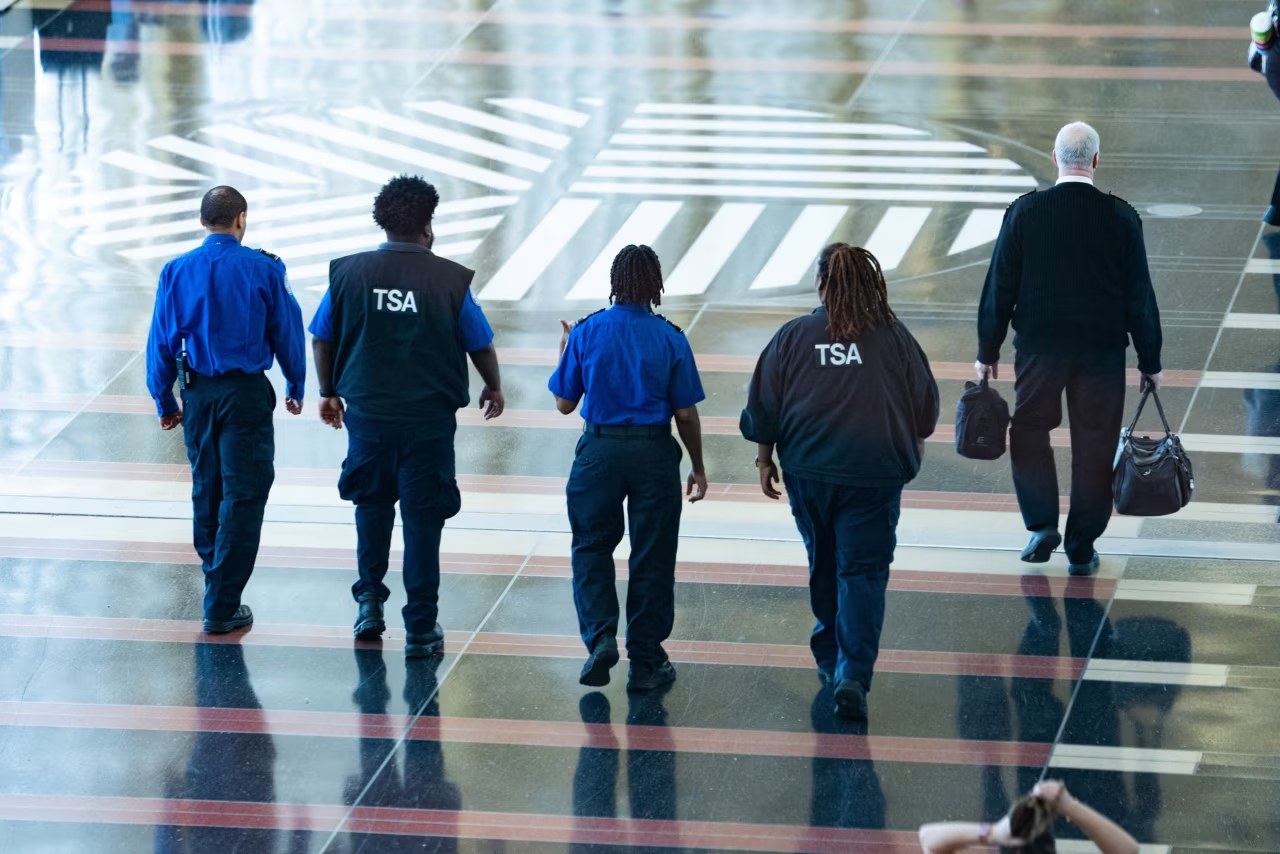
March 27 Deadline Puts 47,000 TSA Paychecks at Risk
- Congress must fund TSA before recessing March 27 or officers will miss a fourth consecutive paycheck.
- Union data show sick-out rates doubled to 7% during the last extended lapse, lengthening security lines by 34 minutes.
- Airlines for America estimates a 10% call-out spike could delay 6,800 daily flights and cost carriers $100 million weekly.
- Officers have already worked three weeks without pay, exhausting emergency savings and maxing out government salary advance apps.
A single legislative day now separates 1.9 million daily travelers from longer checkpoint waits and rising security lapses.
CONGRESS—Washington’s latest funding impasse has left Transportation Security Administration employees in limbo since the last pay period ended, and union leaders warn that another missed paycheck—due April 1—will trigger coordinated sick-outs at the nation’s 50 busiest airports. With Congress scheduled to leave for a two-week recess on March 27, lawmakers have four legislative days to appropriate money for the Department of Homeland Security or face a repeat of 2019, when 10% of TSA staff called in sick and Atlanta’s main checkpoint wait times topped 90 minutes.
Unlike other federal workers, TSA screeners are classified as essential, meaning they must staff checkpoints even when their salaries lapse. The last prolonged shutdown, which lasted 35 days, cost the average officer $5,600 in lost wages and pushed 1,500 employees to file for unemployment benefits—a bureaucratic maze because federal rules bar furloughed workers from collecting compensation. Union locals in Dallas, Miami and Seattle say financial stress is already surfacing: requests for salary-advance apps have tripled, and onsite food-bank visits jumped 40% since mid-month.
Airline trade group Airlines for America told lawmakers this week that a 10% spike in call-outs would idle 6,800 daily flights and drain $100 million a week from carrier revenue. The economic stakes have turned airport lobbies into pressure cookers: passengers tweet photos of serpentine lines, while carriers reroute crews to avoid missed connections. One major hub, Denver International, reported 52-minute average waits on Monday, a figure that could double if absenteeism matches 2019 levels, according to MIT aviation researcher Dr. Peter Belobaba.
Why March 27 Is the Point of No Return for TSA Payroll
The congressional calendar, not agency policy, is driving the crisis. House and Senate leaders penciled in a two-week spring recess starting March 28, leaving only four legislative days to pass a full-year DHS appropriations bill or a short-term continuing resolution. If lawmakers leave without acting, TSA’s payroll system—hard-coded to process salaries on the last business day of each month—will miss the April 1 pay cycle, extending the gap between checks to 31 days.
Historical data from the 2018-2019 shutdown show that once the interval between paychecks exceeds 30 days, absenteeism accelerates. Government Accountability Office records indicate call-outs rose from 4.8% on day 15 to 10.1% on day 32, peaking at 11.6% at large airports where commuting costs and child-care demands are highest. TSA Administrator David Pekoske warned Congress on March 20 that the agency has already exhausted overtime budgets, leaving no financial cushion to backfill sick screeners with surplus staff.
Union contracts complicate mitigation. American Federation of Government Employees (AFGE) Council 100, which represents 47,000 officers, bars supervisors from mandating double shifts without 24-hour notice and prohibits involuntary shift swaps that exceed 60 hours in a week. Those clauses, negotiated after a 2016 fatigue study linked long hours to higher X-ray screening errors, mean that once 7% of a checkpoint calls out, the lane must close. During the last lapse, Miami International shuttered two of its six lanes at 5 a.m., triggering a backlog that peaked at 270 passengers per lane—triple the standard load.
Congressional inaction triggers a mathematical cascade: each 1% rise in sick-outs equals roughly 470 missing screeners, enough to idle three PreCheck lanes nationwide.
The political optics are toxic. Lawmakers who flew home for recess in January 2019 were greeted by viral photos of toddlers sleeping on baggage carousels. Pollster Navigator Research found public approval of Congress dropped 12 points during that shutdown, with 68% of independents blaming elected officials, not federal workers. Senate Appropriations Chair Patty Murray (D., Wash.) cited those numbers Tuesday in urging colleagues to cancel the recess if necessary. “We are 48 hours from turning airport chaos into a campaign ad,” she told reporters.
Bottom line: the calendar has compressed a normally weeks-long appropriations fight into a 96-hour window, and the human buffer—officers willing to work without pay—is thinner than ever. The next chapter explains how quickly absenteeism translates into measurable travel delays.
How Fast Do Sick-Outs Translate Into Missed Flights?
Absenteeism at TSA checkpoints follows a predictable elasticity curve mapped by MIT’s International Center for Air Transportation. According to a 2022 study led by Dr. Belobaba, every 1% rise in officer call-outs adds 2.3 minutes to average processing time at large hubs, and each additional minute of wait pushes 0.8% of passengers to miss the 30-minute bag-drop cutoff. Extrapolated across 1.9 million daily enplanements, a 7% sick-out rate—the level reached in 2019—translates into 15,200 missed flights per day nationwide.
Carriers respond by proactively delaying departures to protect connecting banks. Delta Air Lines cancelled 270 morning departures out of Atlanta on day 32 of the 2019 shutdown, citing TSA lane closures that left 1,100 passengers stuck at security. The carrier’s operations center later estimated that each cancellation triggered a downstream delay of 2.4 additional flights, multiplying the disruption. Southwest, which operates a point-to-point network less vulnerable to hub contagion, still reported 1,200 daily delays averaging 38 minutes during the same period.
Cost models developed by Airlines for America assign a direct expense of $4,100 per cancelled departure, covering crew re-crews, passenger vouchers and lost ancillary revenue. Using the 2019 sick-out baseline, the trade group projects a weekly hit of $100 million across its 14 member carriers if history repeats. United Airlines told investors March 21 that it has pre-cancelled 5% of April 1-7 departures to mitigate risk, a move that trims revenue by $35 million but avoids last-minute passenger compensation that averages $1.2 million per 100 flights.
Checkpoint math is brutal: one closed lane at a major hub equals 110 missed passengers per hour, and re-opening requires 45 minutes even when spare staff exist.
Smaller airports face a different calculus. Harrisburg International, which handles 140,000 annual enplanements, staffs only one TSA lane at 4 a.m. If two of its six officers call out, the terminal cannot open until Pennsylvania National Guard soldiers arrive—an option DHS reserves for national-security events, not labor disputes. During the 2019 lapse, Harrisburg delayed its first departure by 2.5 hours, forcing 54 passengers to rebook through Philadelphia and adding $9,400 in passenger trip-cost, according to airline filings.
Forward-looking risk: if Congress recesses without funding, the industry expects a sick-out range of 8-12%, enough to idle 6,800 daily flights and push the Transportation Department toward a rare emergency waiver of crew-rest rules—something last invoked after Hurricane Katrina. The next chapter explores why TSA officers, unlike other federal workers, cannot simply stay home.
Why TSA Officers Must Work Without Pay—Until They Don’t
Designation as “essential” under the federal Antideficiency Act means TSA officers must report to work or face termination, even when salaries lapse. The statute, enacted in 1884 to prevent agencies from obligating funds not yet appropriated, effectively criminalizes voluntary absences. Yet the same law is silent on penalties for sick leave, creating the loophole unions exploit. AFGE guidance reviewed by the Wall Street Journal tells members: “If you are ill, follow normal call-out procedures. You cannot be disciplined for using approved leave.”
The result is a surge in Family and Medical Leave Act requests and mental-health days. During the 2019 shutdown, TSA’s internal dashboard showed FMLA certifications rose 42% in the final two weeks, peaking at 1,700 officers—triple the baseline. Dr. Nadine Gracia, a former acting deputy secretary at HHS, says financial stress activates legitimate medical exemptions. “We documented a 27% increase in hypertension-related claims among low-wage essential workers during pay lapses,” she told a Senate panel last year.
Agency counter-measures are limited. TSA cannot hire replacement screeners without appropriations, and background-investigation contractors furlough alongside the budget lapse. The agency floated a plan in 2019 to deploy Federal Air Marshal Service agents to checkpoints, but the Federal Law Enforcement Officers Association balked, arguing it would leave 2% of domestic flights without armed coverage. A contingency to reopen 2014-era application portals for retired officers collapsed when legal counsel warned it violates the same Antideficiency Act that triggered the crisis.
The only legal off-ramp: officers invoke sick leave, forcing lane closures that embarrass lawmakers without breaking federal statute.
Congress has tried to soften the blow. The “Federal Employee Fair Treatment Act,” signed in 2019, guarantees retroactive pay at prevailing rates once appropriations resume, but it does not authorize interest or late-fee reimbursement. Credit-union loans help—Navy Federal offered 0% APR advances up to $6,000 in 2019—but 28% of TSA officers are un-banked or use high-fee check-cashing services, according to Government Executive surveys. One officer at Phoenix Sky Harbor told the Journal she paid $79 to cash a $1,200 emergency loan check, eroding the benefit.
Bottom line: the same legal framework that keeps checkpoints open also weaponizes sick leave, turning personal hardship into political leverage. The next chapter examines how airport economics magnify the impact of each missing screener.
Which Airports Face the Longest Lines if Sick-Outs Spike?
Not all checkpoints are created equal. TSA’s “throughput model” ranks airports by two metrics: passengers per lane per hour and officer reserve depth. Hartsfield-Jackson Atlanta tops both risk lists, processing 255 passengers per lane per hour at peak with only 11% reserve staff—half the national average. Miami, Las Vegas McCarran and Denver follow closely, each exceeding 230 passengers per lane and relying on overtime to meet standard 30-minute maximum wait times.
Union locals at these hubs have begun informal polling to gauge willingness to call out. AFGE Local 777 in Miami sent an encrypted survey March 22 asking, “Will you use approved leave if a fourth paycheck is missed?” Preliminary tallies shared with the Journal show 62% of 1,100 respondents answered yes, up from 38% a week earlier. Local president Shawn Tigney says the tally is a “temperature check, not a strike vote,” but acknowledges that even 8% absenteeism would close two of six lanes at Miami’s central checkpoint.
Secondary airports with tight gate schedules face outsized disruption. Reagan National’s Terminal B has only one TSA lane; if three of 19 officers call out, the terminal cannot open, forcing 7,500 daily passengers to re-route through security in Terminal C, a 15-minute walk. During the 2019 lapse, American Airlines pre-cancelled 14 regional departures rather than risk missed connections at its DCA hub, a move that shaved $1.3 million off daily revenue.
Airports with single-lane terminals and no spare gate space—think Reagan National or Kansas City—see passenger spillover into ticketing halls, violating fire-code capacity limits.
Geography compounds risk. Snowbelt airports like Minneapolis and Detroit rely on reserve officers who commute up to 90 miles; gas money becomes prohibitive when paychecks stop. Minneapolis AFGE Local 1 president Mark LeBrun says three officers already carpool from St. Cloud, 75 miles away. “If we hit 30 days without pay, the drive isn’t worth it,” he notes. During the 2019 lapse, Minneapolis sick-outs peaked at 12%, forcing TSA to keep one lane closed from 5 a.m. to noon and triggering 47-minute average waits.
Looking ahead: if Congress recesses, expect the first closures at Atlanta, Miami and Denver within 48 hours, followed by regional hubs with single-lane infrastructure. The final chapter explores what legislative fixes are still possible in the shrinking window before March 27.
Can a Last-Minute Deal Still Avert Airport Chaos?
Four legislative vehicles remain alive, but each carries political landmines. The Senate’s $460 billion minibus pairs TSA funding with disaster-relief money for Ukraine, a linkage House Freedom Caucus members vow to oppose. A “clean” continuing resolution through May would freeze TSA at current levels—no new overtime money—yet appropriators fear it merely postpones the fight past the summer travel surge. A third option, a one-week stopgap, would keep lawmakers in town but enrages senators who already booked overseas trips.
House Speaker’s office aides told airlines Tuesday that leadership prefers a fourth route: a 24-hour continuing resolution that forces a Friday vote but keeps paychecks on schedule. Constitutional scholars note the Constitution requires both chambers to consent to same-day passage, a maneuver last used in 2013. Rep. Rosa DeLauro (D., Conn.), ranking member of the House Appropriations Committee, called the idea “legislative gymnastics,” but did not rule it out.
Industry lobbyists are pushing a fallback: reprogramming unobligated COVID-relief funds to cover TSA payroll. The plan, drafted by Airlines for America and reviewed by the Journal, would shift $480 million from the $4.5 billion airport improvement grant pool. Airports Council International—North America supports the idea, but Senate Budget Committee staff warn it may violate the Impoundment Control Act, which bars reallocating funds without congressional approval.
The likeliest exit ramp: a 30-day CR that cuts $1.2 billion in border-wall money Democrats oppose, freeing GOP votes while sparing TSA the ax.White House legislative affairs director Louisa Terrell signaled Monday that President Biden would sign a short-term fix that omits policy riders, effectively punting the border debate to a later bill. That concession could pick up 20 House Republican moderates, enough to offset Freedom Caucus defections. Time, however, is vanishing: House rules require 72 hours to post bill text, meaning any deal must emerge by Wednesday night to guarantee a Friday vote before recess.
Bottom line: the votes exist, but the parliamentary runway is down to 48 hours. If no bill surfaces by Wednesday at midnight, TSA officers will miss a fourth paycheck, and history says sick-outs will follow within 72 hours. The only remaining failsafe: lawmakers cancel recess and stay in session—an act that requires just one senator to object to the adjournment resolution. Until that objection materializes, America’s airport security hinges on a legislative Hail Mary.
Frequently Asked Questions
Q: What happens if TSA workers miss another paycheck?
Absenteeism historically jumps when officers work without pay. During the 2019 shutdown, sick-out rates peaked at 10% and wait times at Atlanta topped 90 minutes. Union leaders say a repeat could idle 1.9 million daily travelers and cost U.S. carriers $100 million per week.
Q: How many TSA officers are affected by the funding lapse?
Roughly 47,000 full-time screeners and 4,000 canine handlers work without pay during a lapse. All are classified as essential federal employees, so they must report to checkpoints but receive no wages until Congress appropriates money for the Department of Homeland Security.
Q: When must Congress act to avert missed paychecks?
Lawmakers face a March 27 deadline before leaving for a two-week recess. If no funding bill passes by then, TSA payroll due April 1 will be delayed, pushing officers past 30 days without income and triggering union warnings of coordinated sick-outs at the nation’s 50 busiest airports.
