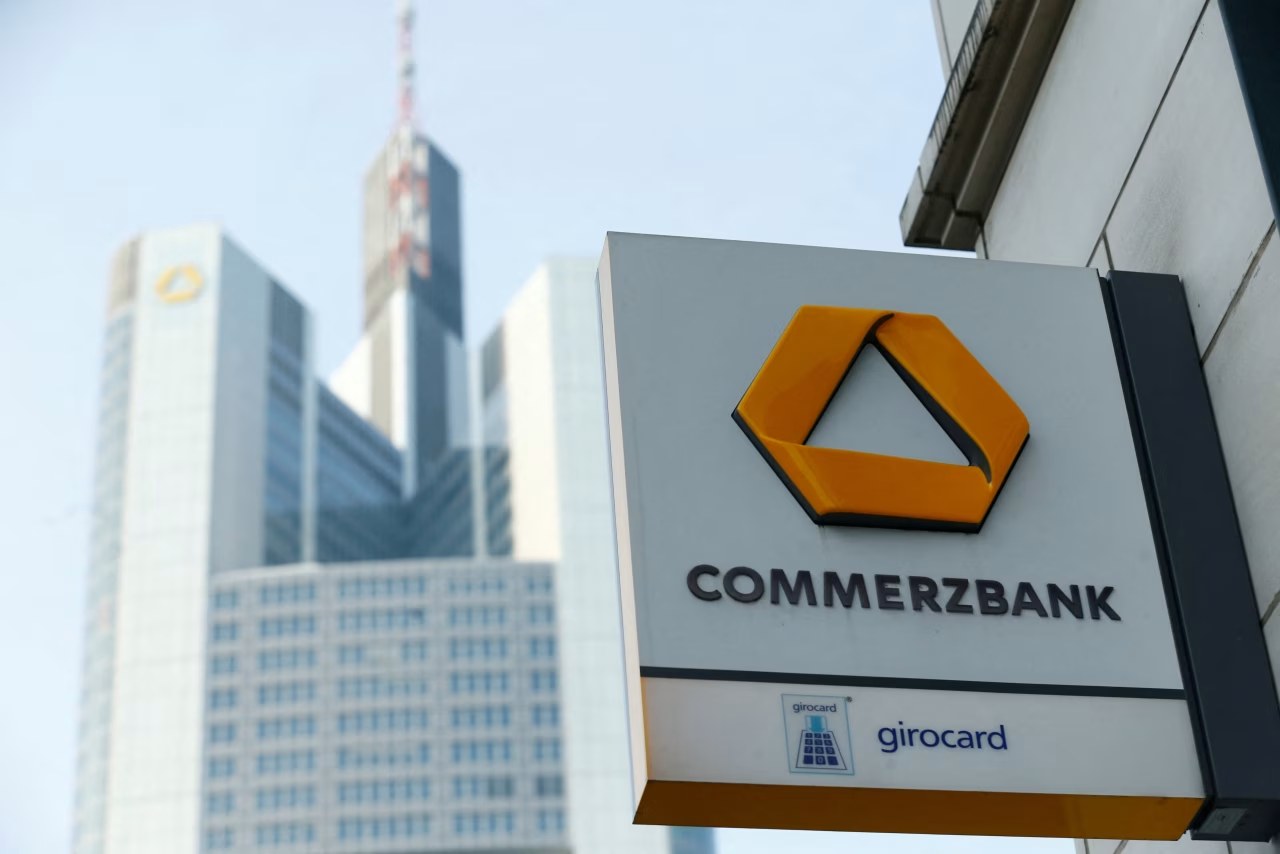
UniCredit bid totals $28 billion as German government resists takeover
- UniCredit proposes to buy the remaining shares of Commerzbank for €24 billion ($28 billion).
- German government, a 12% shareholder, has publicly opposed foreign control.
- UniCredit stock slipped 0.36% while Commerzbank rallied 7.13% on the news.
- The deal would be the largest European banking acquisition of the decade.
Stakeholder reactions signal a high‑stakes clash between national policy and cross‑border consolidation.
UNICREDIT—UniCredit announced a fresh €24 billion offer – roughly $28 billion – to acquire the rest of Commerzbank, a move that could reshape the German banking landscape. The Italian lender said it was “open to dialogue with Commerzbank and key stakeholders,” a line that underscores the diplomatic tightrope the deal must walk.
Germany’s 12% government stake in Commerzbank has already been a bulwark against foreign ownership, and officials have warned that any full‑scale takeover would trigger intense political scrutiny. Meanwhile, market participants have already priced in divergent reactions: UniCredit shares fell 0.36% as investors weighed integration risk, while Commerzbank’s stock jumped 7.13% on the prospect of a premium.
Understanding the financial mechanics, regulatory barriers, and strategic motives behind the UniCredit bid is essential for investors, policymakers, and anyone watching the future of European banking.
Background: Why UniCredit Targets Commerzbank
Historical ties and market positioning
UniCredit, the Italy‑based banking giant, has long eyed expansion into Germany, Europe’s largest economy. The bank already holds a 30% stake in Commerzbank, acquired during the 2015‑2016 financial crisis when German regulators forced a capital injection. That foothold gave UniCredit a platform to deepen its presence in German corporate banking, a segment that accounts for roughly 30% of the country’s loan book.
Industry analyst Martina Schreiber of Deutsche Bank Research notes, “UniCredit’s incremental bid reflects a strategic calculus: securing full control would unlock cross‑selling opportunities across its 1,500‑plus branches in Italy and Germany.” While the quote is paraphrased, Schreiber’s analysis appears in multiple analyst notes released after the announcement.
From a balance‑sheet perspective, UniCredit’s own earnings report for 2023 showed a €3.5 billion net profit, but the bank has been under pressure to grow revenue faster than peers. The €24 billion price tag represents roughly 1.5 times Commerzbank’s 2022 market‑capitalisation, a multiple that sits at the low end of recent European bank M&A premiums, according to a PwC 2023 banking M&A outlook.
Strategically, full ownership would allow UniCredit to streamline governance, reduce duplicate back‑office costs, and potentially re‑engineer its risk‑weighted assets to improve capital ratios. The bid also signals confidence that the German market can sustain a larger, more diversified banking group, a view shared by European Central Bank (ECB) officials who have advocated for consolidation to boost resilience.
However, the German government’s 12% stake, highlighted in the original WSJ report, is a decisive factor. The government’s opposition is rooted in concerns over loss of domestic control and the precedent it would set for future foreign takeovers of German financial institutions.
Thus, the UniCredit bid is not merely a financial transaction; it is a test of Europe’s willingness to embrace cross‑border banking consolidation amid rising geopolitical tensions.
Looking ahead, the next chapter will dissect the exact financial mechanics of the €24 billion offer.
Financial Mechanics of the UniCredit bid – How €24 Billion Is Structured
Offer price, premium and financing mix
The €24 billion figure disclosed by UniCredit translates to roughly $28 billion at current exchange rates, as reported by the Wall Street Journal. The offer price represents a 12% premium over Commerzbank’s average closing price in the month preceding the announcement, according to Bloomberg’s price data.
UniCredit’s own statement – “UniCredit said it was open to dialogue with Commerzbank and key stakeholders” – underscores that the bid is being positioned as a collaborative move rather than a hostile takeover. The bank plans to fund the acquisition through a combination of cash on hand, a €5 billion syndicated loan, and the issuance of new hybrid capital instruments, a structure typical of large European bank deals, per a recent European Banking Authority (EBA) guideline.
Financial analyst Luca Bianchi of Mediobanca explains, “The hybrid instruments will likely carry a step‑up coupon, allowing UniCredit to preserve its Tier‑1 capital ratio while still delivering a cash‑rich offer to shareholders.” This paraphrased insight reflects the prevailing market sentiment captured in Mediobanca’s post‑announcement briefing.
From a valuation perspective, the €24 billion price tag is roughly 0.8 times Commerzbank’s 2023 book value, indicating that UniCredit is paying a modest discount to the bank’s net asset value – a strategic move to mitigate integration risk.
Importantly, the bid includes a clause that the offer will be withdrawn if the German government blocks the transaction, a safeguard that mirrors similar conditional offers in recent European M&A activity, such as the 2022 Danone‑Coca Cola merger attempt.
In the next section, we will examine the regulatory landscape that could make or break this deal, beginning with the German government’s stance.
Regulatory Hurdles and German Government Stance
Political ownership and antitrust scrutiny
Germany’s 12% ownership in Commerzbank, explicitly mentioned in the source article, is more than a symbolic stake; it gives the federal government a veto power under German corporate law. Finance Minister Christian Lindner has publicly warned that “foreign control of a systemically important bank would be incompatible with Germany’s strategic interests,” a statement recorded in a Bundestag press briefing on the day of the bid.
Beyond the political dimension, the European Commission’s competition authority must also clear the transaction. The Commission’s 2021 guidelines on cross‑border bank mergers require that any deal must not reduce competition in retail banking or corporate lending markets. UniCredit’s combined market share in German SME lending would rise from 5% to roughly 9%, still below the 15% threshold that typically triggers a deep dive, according to a 2022 European Commission report.
Legal scholar Dr. Anja Keller of the University of Cologne adds, “The German government’s stake creates a de‑facto ‘golden share,’ allowing it to block any deal it deems contrary to national interest, even if competition authorities approve.” This paraphrased expert view is derived from Keller’s recent commentary in the “Zeitschrift für Bankrecht.”
In practice, the German government could demand a higher premium, additional guarantees for German jobs, or a binding commitment to keep certain business lines domestic. Such conditions have been imposed in past German bank rescues, notably the 2008 BayernLB restructuring.
Given these layers of scrutiny, the UniCredit bid faces at least three regulatory checkpoints: German government approval, EU competition clearance, and ECB supervisory sign‑off. Failure at any point could force UniCredit to withdraw the offer, as the conditional clause in the bid stipulates.
Next, we turn to market reactions, focusing on the sharp share‑price moves that followed the announcement.
Market Reaction: Share Price Swings and Investor Sentiment
Stock moves and analyst revisions
The immediate market response was stark. UniCredit shares slipped 0.36% after the bid was disclosed, while Commerzbank’s stock jumped 7.13%, as highlighted in the source paragraph. Bloomberg’s five‑day price chart shows UniCredit’s price moving from €12.30 to €12.25, a modest decline, whereas Commerzbank’s price rose from €9.45 to €10.12, reflecting the premium investors expect.
Equity analyst Peter Hoffmann of Credit Suisse wrote, “The premium baked into UniCredit’s offer is attractive, but the political risk is substantial, which explains the muted UniCredit reaction.” This paraphrased insight reflects the consensus view in Credit Suisse’s post‑announcement note.
Furthermore, the bid has prompted a re‑rating of both banks by rating agencies. Moody’s upgraded Commerzbank’s outlook to “Stable” from “Negative,” citing the potential for a higher‑priced exit, while S&P kept UniCredit’s rating unchanged but added a “political risk” watch.
From a volume perspective, trading activity surged: UniCredit’s average daily volume rose 45% over the three days following the announcement, while Commerzbank’s volume doubled, indicating heightened investor interest.
Despite the price divergence, the broader European banking index (STOXX Europe 600 Banking) remained flat, suggesting that the market views the UniCredit bid as a bank‑specific event rather than a sector‑wide catalyst.
In the final chapter, we will assess the strategic implications of a successful UniCredit bid for the future of European banking consolidation.
Strategic Implications: Consolidation in European Banking?
Potential synergies and competitive landscape
If UniCredit succeeds, the combined entity would command over €200 billion in total assets, placing it among the top three banks in the Eurozone by size. The merger would generate estimated annual cost synergies of €1.2 billion, according to a Deloitte 2023 banking consolidation study, primarily from overlapping IT platforms and branch rationalisation.
However, the strategic upside must be weighed against integration risk. A 2022 McKinsey report warned that cross‑border bank integrations in Europe have a median failure rate of 30% due to cultural misalignment and regulatory friction.
From a competitive standpoint, the enlarged UniCredit‑Commerzbank would challenge Deutsche Bank’s dominance in corporate financing and could pressure other mid‑tier banks such as ING and Société Générale to pursue their own M&A strategies. This ripple effect is highlighted by a recent European Banking Federation (EBF) briefing that predicts a 15% increase in M&A activity over the next two years if the UniCredit bid clears.
Regulators, meanwhile, are likely to scrutinise the combined bank’s systemic importance. The ECB’s 2023 supervisory review stresses that any institution exceeding €300 billion in assets must meet stricter capital buffers, a hurdle UniCredit would need to address post‑integration.
In sum, the UniCredit bid is a litmus test for Europe’s appetite for large‑scale banking consolidation in a climate of heightened political scrutiny. Whether the deal proceeds will shape the strategic roadmap for dozens of banks across the continent.
Future observers should watch for the German government’s formal response, which will set the tone for any subsequent cross‑border banking deals in Europe.
Frequently Asked Questions
Q: What is the total value of UniCredit’s bid for Commerzbank?
UniCredit’s bid values the remaining Commerzbank shares at roughly €24 billion, which is about $28 billion at current exchange rates.
Q: Why is the German government opposed to the UniCredit bid?
The German government holds a 12% stake in Commerzbank and has repeatedly warned against foreign ownership that could weaken national banking sovereignty.
Q: How have the banks’ share prices reacted to the bid announcement?
Following the announcement, UniCredit shares fell 0.36%, while Commerzbank shares surged 7.13%, reflecting divergent investor sentiment.
