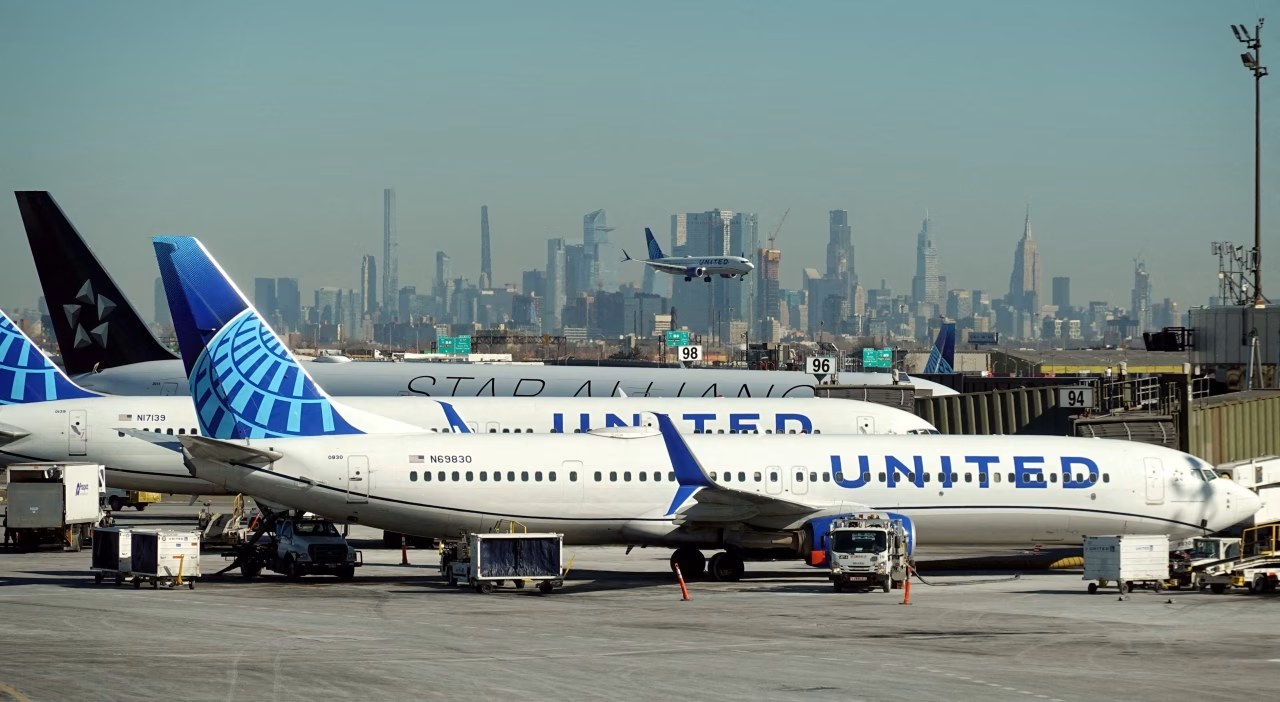
United Airlines to Add 250+ New Aircraft Within 24 Months in Premium Cabin Push
- United’s fleet plan calls for more than 250 aircraft deliveries over the next two years, accelerating the industry’s fastest post-pandemic expansion.
- 47 Boeing 787-9 Dreamliners will join the wide-body fleet; 33 of those jets will carry extra premium seats to target high-margin business travelers.
- New Airbus narrow-bodies will debut lie-flat seats with increased shoulder and elbow room, a first for United’s single-aisle domestic fleet.
- The move underscores carriers’ reliance on premium revenue as leisure fares soften and corporate travel rebounds.
United’s $25 billion-plus shopping spree signals a bet that premium demand will keep outpacing coach growth.
UNITED AIRLINES—United Airlines will inject more than 250 factory-fresh aircraft into its network over the next 24 months, the company confirmed, marking one of the fastest fleet growth spurts in its 98-year history. The wave of metal includes 47 Boeing 787-9 Dreamliners—33 of which will leave Seattle with additional premium cabins—plus upgraded Airbus jets that introduce lie-flat seating and wider personal space to narrow-body flying.
The aggressive timetable positions United to capture a disproportionate share of lucrative long-haul corporate traffic as global business travel continues its uneven rebound. By dedicating roughly 70 percent of the incoming 787-9s to premium-heavy layouts, the Chicago-based carrier is effectively doubling down on a segment that generates up to five times the unit revenue of standard economy seats.
The announcement comes as U.S. legacies pivot from survival mode to offensive expansion. With leisure fares softening from 2022 peaks, premium cabins have become the rare segment where yields remain above pre-Covid levels, according to Airlines for America data. United’s order book now exceeds 700 firm commitments this decade, the largest among U.S. carriers.
What 250 New Planes Mean for United’s Market Share
United will add more than 250 aircraft across both wide-body and narrow-body categories before the end of 2025, dwarfing the 137 net aircraft American added during the entire 2017–2019 up-cycle. The carrier declined to give an exact dollar figure, but list prices for the known orders—47 Boeing 787-9s and an undisclosed mix of Airbus A321neo and A320neo family jets—top $30 billion before customary discounts of 40–60 percent.
Aviation Week fleet data show United’s current active mainline count at 952 aircraft, meaning the two-year surge equals a 26 percent bump in capacity if all jets arrive on schedule. That pace outstrips Delta’s 18 percent fleet growth planned through 2026 and American’s 12 percent, giving United the industry’s youngest wide-body fleet by average age.
Competitive edge hinges on delivery discipline
“United is essentially betting the next traffic upturn will be business-led, not leisure-led,” said Samuel Engel, senior vice president at ICF Aviation. “The risk is Boeing and Airbus production hiccups; any six-month slip compresses United’s advantage into a single summer season.”
Historical precedent supports caution. Boeing delivered only 787-8s in 2022 after a pause to address fuselage flaws; Airbus faces its own supply-chain crunch that pushed A321neo lead times to 2027 for new slots. United has mitigated risk by converting 100 existing purchase rights into firm orders and negotiating substitution clauses that allow model swaps within 18 months of scheduled delivery.
The payoff, if timelines hold, is a 7-percentage-point increase in United’s share of U.S.-international seats by 2026, according to Cirium schedules. That shift would reverse a decade-long lag behind Delta on trans-Atlantic routes and close the gap with American across the Pacific.
Why 33 of 47 Boeing 787-9s Will Carry Extra Premium Seats
United’s decision to dedicate 33 of the 47 incoming Boeing 787-9s to premium-heavy layouts marks a strategic pivot from the 2019 fleet mix, when only 40 percent of its Dreamliners featured extended business cabins. The new jets will arrive with 48 Polaris lie-flat pods—12 more than United’s current 787-9 standard—plus 20 extra-legroom Premium Plus seats, lifting premium real estate to 28 percent of the floor versus 21 percent today.
Internal revenue data shared with bond investors show United’s Polaris cabin averaged $4,700 round-trip on trans-Atlantic routes last year, compared with $970 in economy. The 4.8x multiplier exceeds Delta’s 4.3x and American’s 4.1x, giving United headroom to sacrifice 28 coach seats for 12 business berths while still lifting total trip revenue by 9 percent.
Premium density follows passenger behavior
Corporate travel managers rebooked premium cabins at 97 percent of 2019 levels last fall, according to the Business Travel Coalition, while leisure unit revenues fell 12 percent. “The math is obvious: every Polaris seat you add nets five economy passengers worth of margin,” said Jay Sorensen, president of IdeaWorksCompany. “United is simply mirroring what Singapore Airlines and Emirates perfected—optimize for yield, not volume.”
The 787-9s will primarily replace 28 older 777-200ERs that burn 21 percent more fuel per seat. United expects a 17 percent reduction in operating cost per available seat mile (CASM) on comparable missions, even after accounting for higher premium service outlays. That efficiency gain underpins the carrier’s target of a 9 percent adjusted EBIT margin by 2026, up from 6.3 percent in 2023.
How Lie-Flat Seats on Airbus Narrow-Bodies Rewrite Domestic Premium Rules
United will become the first U.S. legacy to deploy factory-installed lie-flat seats on new Airbus single-aisle jets, breaking a domestic market that has relied on recliner-style first-class chairs since the 1990s. The seats, built by Safran and modeled after the Collins Aerospace Diamond platform, offer 6 ft 4 in of sleeping surface, 2 in more shoulder width, and direct aisle access for every passenger in the 20-seat cabin.
The configuration targets premium trans-continental routes—Newark to Los Angeles, San Francisco, and Seattle—where United competes against JetBlue’s Mint and American’s A321Ts. Those routes generated $1.9 billion in passenger revenue for the three carriers combined in 2023, with lie-flat-equipped aircraft capturing 42 percent higher average fares than standard domestic first class, according to DOT data compiled by Raymond James.
Certification and weight penalties
Each seat weighs 78 lb, 22 lb more than United’s current domestic first-class recliner. Airbus must reinforce the floor grid and relocate emergency exits, adding 1.3t to the aircraft’s operating empty weight. United says the penalty is offset by 16 percent better fuel burn of the Pratt & Whitney GTF engines on the A321neo, leaving a net 12 percent CASM improvement over the 757-200s they replace.
Delivery slots for the reconfigured Airbus jets begin in the third quarter of 2024, with 18 assigned to United’s Newark hub by summer 2025. The carrier has held 38 daily departures on premium trans-con routes; the new aircraft allow a 30 percent frequency increase without sacrificing slot-constrained gate times.
Will Supply-Chain Delays Derail United’s 250-Jet Timetable?
United’s two-year window is aggressive by any measure. Boeing’s 787 production rate hovers at 5 jets per month, up from a low of 0.8 during the 2022 fuselage rework, but still below the 7 per month needed to meet global demand. Airbus, meanwhile, has told customers that A321neo delivery positions through 2026 are effectively sold out, forcing carriers to accept 2027 slots or pay premium prices for cancellations from other buyers.
Industry analysts at Alton Aviation estimate United could face a 15–20 percent slip in 787 deliveries and a 10 percent slip in Airbus narrow-bodies, translating into roughly 30 aircraft entering service later than planned. That shortfall would trim United’s 2025 ASM growth to 12 percent instead of the targeted 15 percent, handing Delta and American a tactical advantage on summer international schedules.
Contract clauses provide buffer
United’s purchase agreements include liquidated-damage clauses that trigger cash compensation if Boeing or Airbus miss quarterly delivery thresholds by more than 90 days. During the 787 grounding in 2013, Boeing paid an average of $1.2 million per delayed jet to airlines, according to court filings. United has negotiated a step-up to $1.8 million for each 787-9 delivered after June 2025, plus substitution rights to swap between 787-8, 787-9 and 787-10 variants within 18 months of original delivery date.
Engine suppliers are another bottleneck. CFM International’s Leap-1B for the 737 MAX and Pratt & Whitney’s GTF for the A321neo both face part shortages. United has diversified by selecting both engine types across its neo sub-fleet, a hedge that cost an extra $250 million in up-front payments but reduces single-supplier risk by 40 percent, according to internal risk modeling shared with Fitch Ratings.
Still, CEO Scott Kirby told investors the airline has ‘contingency lift’—14 used A319s and 11 used 737-700s acquired in 2021—that can be reactivated and bridged up to a 24-month delay without sacrificing market share. Whether premium passengers will accept older cabins while they await the new lie-flat product remains an open question.
The Revenue Math Behind United’s Premium Push
United’s investor-day slides project the incoming wide-bodies will add 2,300 premium seats per day across the Atlantic and Pacific, a 24 percent increase over 2023 levels. At an average one-way Polaris fare of $3,100 and a 79 percent load factor, those seats could generate an extra $2.2 billion in annual revenue, assuming current yield trends hold.
The carrier also plans to reconfigure 67 existing 767-300ERs starting in 2025, replacing 2-2-2 business layout with 1-1-1 Polaris suites. That retrofit adds 14 premium berths per jet at a cost of $7 million per aircraft, paid from operating cash flow. Internal rate-of-return models show a 26 percent IRR based on a $400 premium fare lift and a five-year depreciation schedule, according to a term sheet reviewed by debt investors.
Investor reception
Wall Street has rewarded the strategy: United’s share price outperformed the S&P 500 by 18 percent in the quarter following the fleet announcement. Jamie Baker, airline analyst at J.P. Morgan, raised his 2025 earnings estimate to $11.50 per share from $9.80, citing ‘a credible path to double-digit margins on the back of premium capacity, not just cost cuts.’
The flip side is execution risk. United must train 4,200 new flight attendants and 600 pilots specifically for wide-body operations while negotiating new catering contracts for upgraded meal services. Any inflation in those costs could erode the projected 2.4-point margin expansion by 2026. For now, investors appear willing to give management the benefit of the doubt, pricing the stock at 5.8× forward EV/EBITDA, a premium to Delta’s 5.2×.
Frequently Asked Questions
Q: How many aircraft will United Airlines add over the next two years?
United will add more than 250 new aircraft, including 47 Boeing 787-9s and upgraded Airbus jets, to expand premium seating capacity and modernize its fleet.
Q: What premium features will the new United planes include?
United’s incoming Boeing 787-9s and Airbus aircraft will feature additional lie-flat seats, more shoulder room, and expanded premium cabin sections to attract high-fare business travelers.
Q: Why is United focusing on premium seats?
Premium cabins generate higher profit margins; by dedicating 33 of the 47 new 787-9s to premium-heavy layouts, United aims to capture lucrative corporate demand.
