United Natural Foods Earns $20 Million, Reversing Year-Ago $3 Million Loss
Grocery distributor lifts profit guidance but trims sales outlook, sending shares down 4.89%
UNITED NATURAL FOODS—This is a developing story. United Natural Foods swung to a second-quarter profit of $20 million, delivering 31 cents per share and reversing the prior-year loss of $3 million, or 5 cents per share United Natural Foods. The nation’s largest publicly traded organic- and specialty-food wholesaler simultaneously raised its full-year profitability guidance while lowering its sales outlook, a mixed signal that triggered a 4.89% share decline.
- Second-quarter profit: $20 million vs. $3 million loss year earlier
- Earnings per share: 31 cents vs. 5-cent loss prior year
- Share reaction: UNFI stock fell 4.89% on lowered sales guidance
- Guidance: Profit outlook raised, sales forecast reduced
Profit Rebound Driven by Cost Controls
Margin improvements offset softer top-line growth
United Natural Foods credited disciplined expense management and warehouse efficiencies for the return to profitability. The $20 million profit marks a significant turnaround from the $3 million loss recorded in the same quarter last year, demonstrating the company’s ability to navigate a challenging grocery landscape. Management told investors that streamlined distribution routes and better inventory rotation helped lift gross margins even as unit volumes declined.
The wholesale grocery sector has been under pressure as food-price inflation cools and consumers trade down from premium organic items to lower-priced conventional alternatives. By closing under-performing distribution centers, renegotiating supplier contracts and reducing headcount through attrition, UNFI lowered its fixed-cost base enough to offset roughly 2% organic volume erosion. Executives said on the earnings call that productivity software installed last summer is now guiding daily slotting and picking decisions inside its 29 U.S. distribution centers, trimming labor hours per case by mid-single-digit percentages.
Organic and specialty foods still command higher gross margins than mainstream groceries, so the product mix shift toward everyday staples would normally compress profitability. Yet the company preserved margin by pushing more volume through automated conveyor systems and consolidating outbound loads so trucks leave facilities at fuller weights. CFO John Howard noted that fuel surcharges and outbound freight optimization saved about $6 million in the quarter, a meaningful contribution toward the overall profit swing.
Looking ahead, UNFI expects the cost-containment playbook to keep delivering. The raised earnings guidance implies management believes efficiencies can outpace any further volume softness, a view that hinges on steady demand from large national customers such as Whole Foods Market, its single largest account. Independent grocers, which represent roughly one-third of revenue, have become more cautious on inventory purchases, but company officials said they do not expect additional double-digit order cuts in the back half of the fiscal year.
Quarterly Profit Turnaround
Q2 2025
-3$ million
Q2 2026
20$ million
▲ 766.7%
increase
Source: UNFI earnings release
Sales Outlook Trimmed Amid Soft Demand
Retailers reduce inventory levels across organic segment
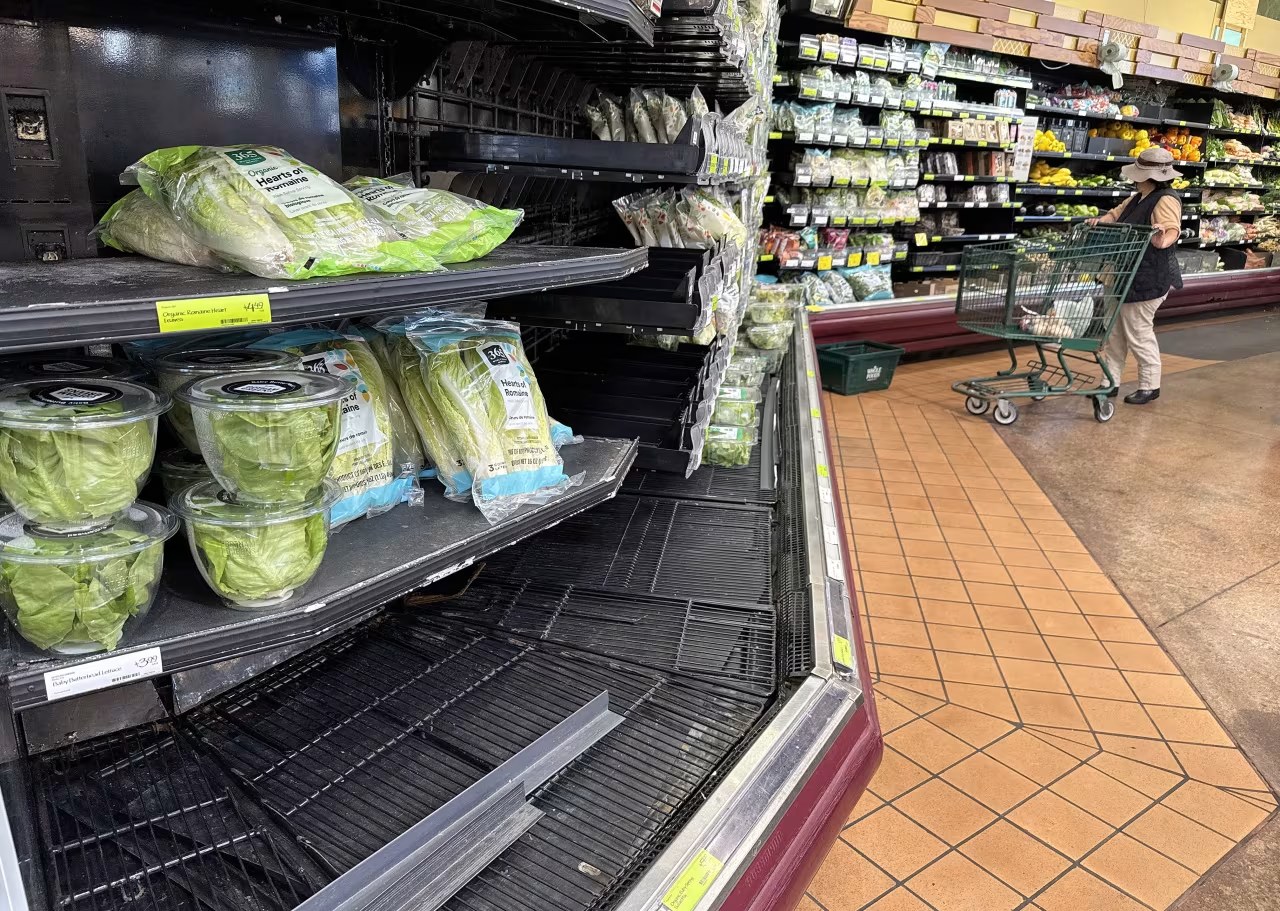
Despite the profit beat, executives lowered their full-year sales guidance, citing cautious ordering from independent grocers and a broader consumer shift toward value channels. The company did not specify the magnitude of the revenue reduction, but indicated that inflation-driven price increases were no longer enough to offset volume declines. The lowered sales forecast overshadowed the earnings optimism and pushed the stock lower.
Industry data show that after three years of double-digit growth, organic food sales across retail channels flattened in 2025 as shoppers sought cheaper proteins and pantry staples. UNFI’s internal metrics mirror the trend: pounds shipped to independent customers fell 3% in the quarter, while conventional grocery volume was flat. Because independents typically carry a higher proportion of organic SKUs than national chains, their slowdown disproportionately affects UNFI’s top line.
Management now anticipates full-year net sales to decline low-single-digit percentages compared with the prior projection of slight growth. The revision stems from both unit weakness and deflation in key categories such as dairy, produce and bulk nuts, where wholesale prices have fallen year-over-year. Although lower input costs help gross margins, they simultaneously reduce reported sales dollars, amplifying the revenue headwind.
United Natural Foods stressed that its contract structure with large national customers includes pass-through pricing clauses that protect dollar profit even when commodity costs drop. However, the same mechanism means revenue line items shrink when ingredient markets soften. Executives argued that profit dollar growth matters more to shareholders than absolute sales, a rationale that failed to appease investors focused on top-line momentum.
The company maintained that longer-term consumption of organic and specialty foods will re-accelerate as Millennials and Gen-Z households enter peak earning years. In the near term, though, grocers are keeping inventories thin to preserve cash flow, a dynamic that could extend into fiscal 2027 if macroeconomic uncertainty persists.
Investors React Negatively to Mixed Signals
Share price falls nearly 5% as traders weigh guidance divergence
United Natural Foods shares closed down 4.89%, marking one of the largest single-day declines in the past year. Portfolio managers said the market focused on the sales guidance cut rather than the improved profitability, reflecting concerns about long-term growth in the organic-food niche. Trading volume spiked to triple the 20-day average as investors reassessed valuations amid ongoing food-price inflation and shifting consumer habits.
Analysts note that UNFI trades at a discount to food-distribution peers because of its customer concentration risk with Whole Foods and its exposure to the cyclical organic segment. The lowered revenue outlook revived those concerns, overshadowing margin expansion. At least two brokerages trimmed price targets, though most kept neutral ratings, arguing that valuation already embeds modest sales declines.
Options activity surged ahead of the report, with put volume running 2.5 times normal levels, indicating some traders positioned for downside. Short interest remains elevated at roughly 15% of the float, well above the small-cap consumer-staples average of 6%, so any incremental disappointment tends to amplify selling pressure.
Management attempted to reframe the narrative toward cash generation, noting that lower working-capital needs tied to declining sales can actually accelerate free cash flow. The company expects to reduce net debt by $100 million this fiscal year, a target that now incorporates both the profit lift and the lower revenue base.
Despite the post-earnings selloff, UNFI shares have still outperformed the S&P SmallCap 600 Food & Staples Retail index over the past six months as cost cuts delivered faster than feared. Investors remain split on whether the volume headwinds represent a temporary consumer shift or a structural deceleration for organic foods, a debate that will likely determine the stock’s direction through the rest of 2026.
Post-Earnings Share Drop
-4.89%
Source: WSJ market data
Frequently Asked Questions
Q: Why did UNFI shares fall after a profit beat?
The stock slid 4.89% because management lowered its full-year sales guidance, spurring worries that volume weakness could eventually erode the newly restored profitability.
Q: How big was the profit swing?
UNFI posted a $20 million profit, or 31 cents a share, reversing the year-ago quarter’s $3 million loss of 5 cents a share.
Q: What guidance did the company change?
Management raised its fiscal-year earnings outlook while reducing the sales forecast, citing softer demand from independent grocers.
Sources & References
- Primary SourceUnited Natural Foods Boosts Profit Outlook, Lowers Sales Guidancewsj.com
