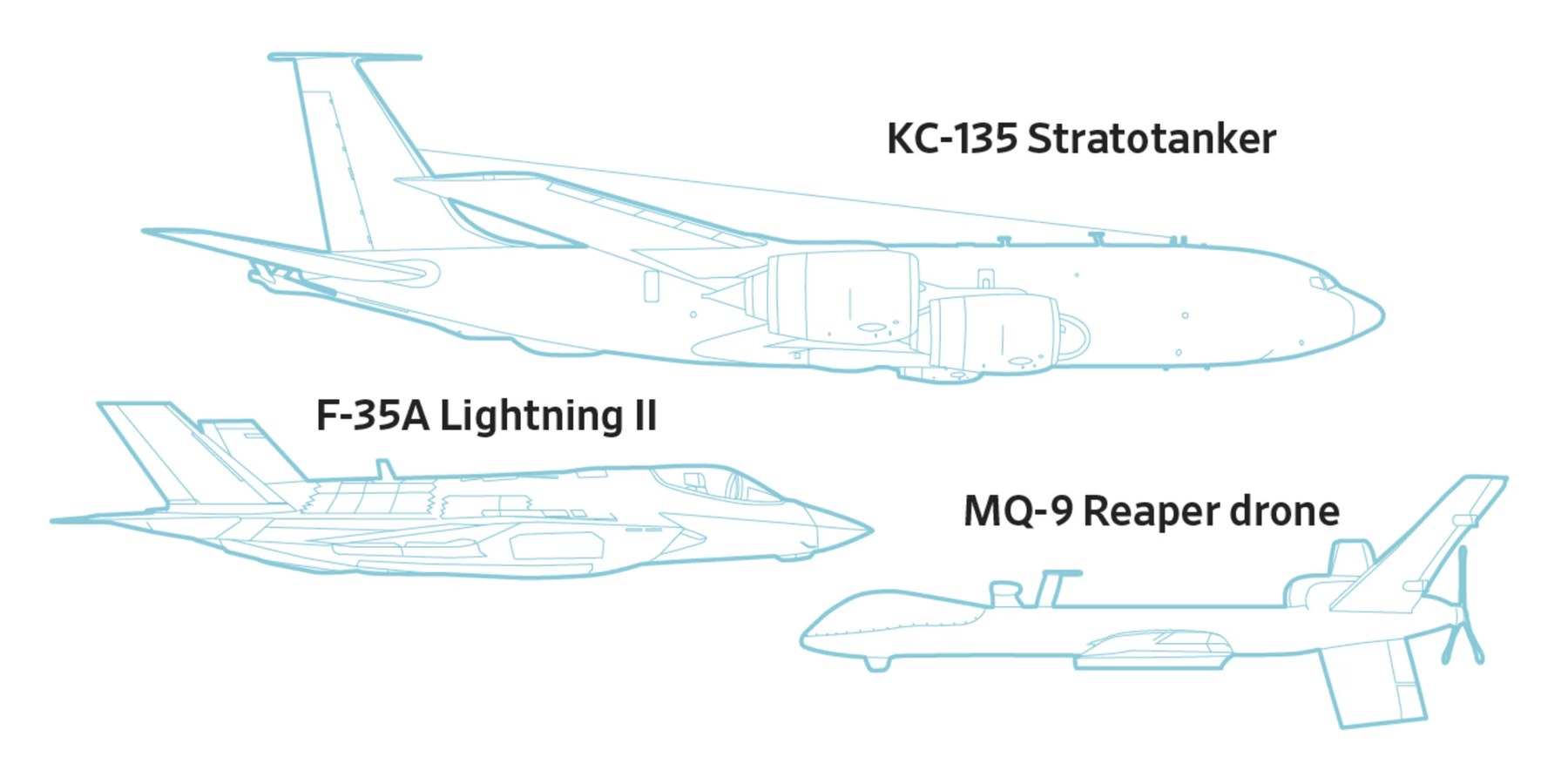
$1.4‑$2.9 billion in U.S. and Israeli equipment damage after three weeks of strikes on Iran
- Ballistic missiles and drones account for the bulk of ground damage.
- Cost estimates include a Qatari radar on a U.S. base.
- The losses highlight the vulnerability of high‑tech gear in modern warfare.
- Strategic repercussions may reshape U.S. deterrence in the Middle East.
What does a multi‑billion‑dollar hit to sophisticated gear mean for U.S. military readiness?
U.S. MILITARY—The first three weeks of the U.S. and Israel’s campaign against Iranian targets have already produced an estimated $1.4 billion to $2.9 billion in losses, according to Pentagon budget analyst Elaine McCusker. The damage, largely inflicted by Iranian ballistic missiles and drones, underscores a new era of asymmetric threats that can cripple advanced systems far from the front lines. As the war drags on, the cumulative cost and the strategic implications could ripple through the U.S. defense budget, procurement plans, and regional security architecture.
While the headline figure may seem modest compared to the trillions spent on past conflicts, the loss of sophisticated, often one‑of‑a‑kind equipment—such as radar arrays, missile‑defense platforms, and precision‑guided aircraft—has outsized effects on operational capability. Moreover, the inclusion of a Qatari radar in the estimate hints at the broader network of allied assets that can be targeted, raising questions about coalition vulnerability and the need for hardened infrastructure.
In the weeks that followed, analysts have begun to map the ripple effects across U.S. and Israeli forces. From the immediate repair of damaged hardware to the long‑term recalibration of force posture, the war’s early damage has already forced a reassessment of risk in the Middle East. The following chapters unpack the numbers, the weapons that caused them, and the strategic fallout that may shape U.S. military policy for years to come.
The Escalation: How U.S. and Israel’s Campaign Unfolded
From Targeting to Retaliation: The War’s First Three Weeks
The U.S. and Israel began a coordinated strike campaign against Iranian infrastructure more than three weeks ago, targeting missile sites, command and control nodes, and logistics hubs. This offensive was a response to a series of Iranian attacks on U.S. forces in Iraq and the broader region. The initial wave of strikes, conducted from U.S. aircraft carriers and Israeli airbases, aimed to degrade Iran’s ability to launch ballistic missiles and drones against coalition forces.
Within days, Iranian forces retaliated with a barrage of ballistic missiles and low‑flying drones, striking U.S. and Israeli assets not only on the ground but also in the air. The use of these weapons—particularly the Qassam and Fateh series of short‑range ballistic missiles—has been documented in multiple intelligence briefings. The drones, often described as “loitering munitions,” can loiter over a target area before detonation, complicating traditional air defense measures.
The damage inflicted on U.S. equipment was not limited to aircraft. A Qatari radar, housed on a U.S. air base in the Gulf, suffered significant damage, highlighting how allied infrastructure can become collateral targets. The presence of such assets in the theater underscores the interconnected nature of U.S. military operations and the vulnerability of shared facilities.
While the exact number of strikes and losses remains classified, open‑source analysis suggests that the U.S. and Israel have targeted several dozen facilities in Iran’s western provinces, including missile production sites in Khuzestan and missile launch pads in Isfahan. The rapid escalation and high‑profile nature of these attacks have drawn global attention to the potential for a broader regional conflict.
As the conflict continues, the U.S. military’s ability to sustain operations hinges on its capacity to repair or replace damaged equipment quickly. The cost estimates discussed in the next chapter provide a window into the economic toll of this high‑tech warfare.
The Cost of Loss: A $1.4‑$2.9 Billion Damage Estimate
Crunching the Numbers: How the Estimate Was Derived
Elaine McCusker, a former Pentagon budget official, has been tracking the financial impact of the conflict for the American Enterprise Institute. She estimates that the combined cost of battle damage and replacement over the first three weeks ranges from $1.4 billion to $2.9 billion. The lower bound reflects the direct cost of replacing damaged aircraft and ground systems, while the upper bound includes the cost of repairing a Qatari radar on a U.S. air base—a unique element that inflates the figure.
These numbers were derived from a mix of publicly released defense procurement data and estimates of repair costs for specific equipment types. For instance, a single F‑35 fighter jet can cost upwards of $80 million, and a Patriot missile system can exceed $200 million. While the exact number of units damaged is not publicly disclosed, the aggregate figure suggests that dozens of high‑value assets have been affected.
In addition to direct repair costs, the estimate implicitly includes the opportunity cost of reduced operational readiness. When an aircraft or radar is out of service, the entire force structure must adjust, potentially delaying missions and increasing vulnerability. This indirect cost can be significant, especially in a theater where rapid response is critical.
The figure also raises questions about the long‑term sustainability of U.S. operations in the region. If losses continue to accrue, the defense budget may need to reallocate funds from other priorities, such as cyber‑defense or space‑based assets. The strategic calculus, therefore, extends beyond immediate repairs to broader budgetary implications.
While the estimate is a snapshot of early losses, it foreshadows a potentially escalating financial burden as the conflict drags on. The next chapter will explore how these losses affect the broader strategic picture for U.S. and Israeli forces.
Who’s Paying? The Comparison of Cost Estimates
Range of Damage Estimates: What Drives the Variation?
McCusker’s range—from $1.4 billion to $2.9 billion—captures the uncertainty inherent in conflict economics. The lower estimate assumes a conservative count of damaged units, while the higher figure incorporates the cost of a Qatari radar and potential indirect costs such as logistical disruptions. Analysts note that the true figure could shift as more damage reports become available.
Comparatively, the U.S. has faced similar cost ranges in other conflicts. During the 2003 Iraq invasion, the Department of Defense estimated $7 billion in equipment losses over the first year. While the scale differs, the pattern of escalating cost as a war progresses remains consistent. The current war’s rapid damage to high‑tech gear signals a shift toward more asymmetric, precision weaponry.
Understanding the spread of estimates is essential for policymakers. A higher figure could prompt a reevaluation of force composition, such as investing more heavily in hardened infrastructure or increasing the number of aircraft on standby. Conversely, a lower figure might reassure budget committees that the war’s economic impact is manageable.
In the broader context of U.S. defense spending, a $2.9 billion hit over three weeks is a small fraction of the annual defense budget—roughly 0.5%—yet it represents a concentrated loss of critical capabilities. The next chapter examines how this loss translates into strategic vulnerability on the ground and in the air.
Strategic Fallout: What Loss of High‑Tech Gear Means for U.S. Deterrence
From the Field to the Pentagon: Reassessing Deterrence Post‑Loss
High‑tech equipment—radar arrays, missile‑defense platforms, and stealth fighters—are the backbone of modern deterrence. Their loss not only reduces immediate operational capacity but also signals to adversaries that such assets can be struck with relative ease. Iran’s use of ballistic missiles and drones to damage U.S. assets demonstrates that even well‑protected platforms are vulnerable to emerging threats.
One of the most visible consequences is the need to re‑evaluate force posture in the Middle East. The U.S. has traditionally relied on forward‑deployed aircraft carriers and joint bases to project power. With the loss of key assets, there is a growing call for increased hardening of facilities, such as underground shelters for radar systems, and for diversifying the geographic spread of critical equipment.
Moreover, the damage to a Qatari radar underscores the interconnectedness of U.S. and allied infrastructure. A strike on a shared asset can have cascading effects, potentially disrupting early warning systems and air‑traffic control for allied forces. This raises diplomatic concerns, as allies may demand stricter protection protocols or seek to relocate sensitive equipment.
From a strategic perspective, the losses also force a reconsideration of procurement priorities. The U.S. has been investing heavily in hypersonic weapons and cyber‑defense, but the recent damage suggests that investments in resilient air‑defense systems and rapid repair capabilities may be equally critical. The balance between offensive and defensive spending will likely shift as a result.
The next chapter will place these developments in a historical context, comparing the current losses to those experienced in previous U.S. conflicts, and exploring what lessons can be drawn.
Historical Lens: Comparing Current Losses to Past Conflicts
From Vietnam to Afghanistan: A Pattern of High‑Tech Losses
Throughout U.S. military history, the loss of sophisticated equipment has often foreshadowed strategic shifts. During the Vietnam War, the U.S. suffered significant losses of aircraft and helicopters due to anti‑aircraft artillery and improvised explosive devices, prompting the development of new counter‑measures such as the AGM‑88 HARM missile.
The Iraq War in 2003 saw the Department of Defense estimate $7 billion in equipment losses over the first year, largely due to improvised threats and the need to replace aging aircraft. In contrast, the current Iran conflict involves a concentrated use of missile and drone attacks against high‑tech gear, a scenario that mirrors the rapid escalation seen in the 2019 U.S. drone strike on a Syrian airbase that resulted in the loss of a Predator drone.
Statistically, the $1.4‑$2.9 billion range for the first three weeks is modest compared to the billions lost over longer conflicts, but the concentration of damage on advanced systems suggests a higher per‑unit cost. This pattern indicates that future conflicts may increasingly target the technological edge rather than sheer numbers.
Historical lessons point to the necessity of adaptive procurement and rapid repair protocols. The U.S. has responded to past losses by accelerating the development of modular aircraft designs that can be quickly repaired or swapped. Similar strategies may become essential in the current theater, where drones and missiles can strike from long distances.
As the conflict evolves, the U.S. may look to these historical precedents to guide policy decisions on force composition, budget allocation, and alliance cooperation. The following chapter will outline potential future scenarios based on the current damage trajectory.
Future Scenarios: How the Damage Could Shape U.S. Military Policy
From Repair to Resilience: A Strategic Roadmap
Given the rapid accumulation of losses, the U.S. is likely to adopt a dual approach: immediate repair and long‑term resilience. Short‑term efforts will focus on mobilizing spare parts, deploying repair teams to forward bases, and reallocating budget lines to cover unexpected costs. Long‑term strategies may involve investing in hardened infrastructure, such as underground radar shelters and mobile air‑defense units that can be rapidly redeployed.
Another potential outcome is a shift in procurement priorities toward unmanned systems and cyber‑defense. The vulnerability of manned aircraft to drones and ballistic missiles may accelerate the transition to autonomous platforms that can operate with reduced risk to personnel. Additionally, cyber‑defense budgets may increase to protect the digital command and control networks that are increasingly targeted alongside physical assets.
On the diplomatic front, the U.S. may seek to renegotiate agreements with allies to ensure the protection of shared assets. The incident involving the Qatari radar could prompt Qatar and other Gulf partners to demand more robust security guarantees or to relocate critical systems to more secure locations.
Finally, the financial impact of the losses—though a small fraction of the overall defense budget—may influence congressional debates on defense spending. A sustained high rate of equipment loss could justify increased funding for modernization programs, potentially shifting the balance between traditional weapon systems and emerging technologies.
In sum, the current damage is not merely a cost center; it is a catalyst for strategic evolution, prompting the U.S. to reimagine its approach to deterrence, procurement, and alliance security in a world where high‑tech assets can be targeted with precision from afar.
Frequently Asked Questions
Q: What is the estimated cost of U.S. equipment damage from the Iran war?
According to Pentagon budget analyst Elaine McCusker, the first three weeks of the conflict have produced losses costing between $1.4 billion and $2.9 billion, including damage to a Qatari radar on a U.S. air base.
Q: Which weapons caused most of the damage on the ground?
Iran’s ballistic missiles and drones have been identified as the primary sources of battle damage to U.S. and Israeli assets during the early stages of the war.
Q: Why was a Qatari radar included in the damage assessment?
The radar, housed on a U.S. air base in Qatar, was struck by Iranian forces and its loss was factored into the higher end of the cost estimate.
Q: How does this damage compare to other U.S. conflicts?
While the figures are significant, they are lower than losses seen in larger scale wars; however, the sophistication of the equipment and the rapid escalation raise strategic concerns.
